
Content Menu
● 1. Exterior Door Buying Guide 2026: Materials, Styles, Costs & Expert Insights
● 2. Why 2026 is the Year of the “Engineered” Exterior Door
● 3. Exterior Door Materials Compared: Solid Wood vs. Aluminum vs. Steel
● 4. Exterior Door Styles Dominating 2026 Architectural Trends
● 5. Exterior Door Cost Breakdown for 2026 (B2B Pricing Insights)
● 6. The OEM/ODM Advantage: How to Specify Custom Exterior Doors for Your Project
● 7. How to Vet a Door Manufacturer: The Jusen Quality Standard
● 8. Frequently Asked Questions
10 min read
Exterior Door Buying Guide 2026: Materials, Styles, Costs & Expert Insights
The last container we shipped to a villa developer in the Middle East had a problem. Not with the doors—those were fine. The problem was the client had specified a mahogany finish that didn’t match the aluminum window frames we were also producing for the same project. They hadn’t considered that the entry door and the window system needed to speak the same visual language.
That is the kind of oversight that costs contractors weeks and thousands in rework. This guide exists to prevent those mistakes. We are going to walk through the 2026 exterior door landscape—materials, styles, costs—from the perspective of a factory that has spent over 20 years processing solid wood and manufacturing aluminum systems. Not retail theory. Production reality.
By the end, you will know how to evaluate materials against your climate, predict where costs are heading, and vet an OEM partner who won’t compromise your project schedule. Let’s get into it.
Why 2026 is the Year of the “Engineered” Exterior Door
We have watched the specification sheets change over the last five years. In 2026, the exterior door is no longer a wooden slab with a handle. It is a thermal envelope component, a security barrier, and a design statement—all at once.
The demand shift is coming from two directions. First, energy costs. A poorly sealed entry door can account for up to 10% of a home’s heat loss. Second, extreme weather. We are shipping doors to regions now that experience 40°C temperature swings between seasons. A door that warps or cracks after one summer is a liability, not a product.
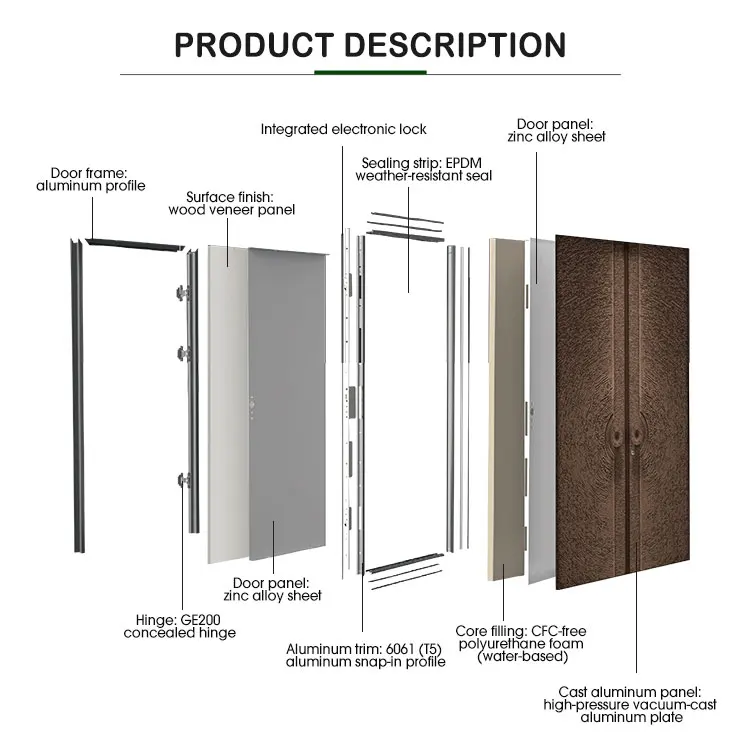
Here is where the “engineering” comes in. The surface wood grain is just the visible layer. What matters is the core construction—how the timber is dried, how the layers are laminated, how the sealing system integrates with the frame. At our factory, we operate our own wood drying workshop. We stabilize the timber to specific moisture content levels before a single cut is made. This is not a step you can skip, and it is the primary reason cheap imports fail within 18 months.
From our experience working with contractors in coastal regions, we can tell you this: the door that fails is rarely the one that looks bad. It is the one that was built with green wood and thin sealants. When you specify for 2026, you are specifying for performance, not just appearance.
Exterior Door Materials Compared: Solid Wood vs. Aluminum vs. Steel
Choosing the material is the first fork in the road. There is no universal “best” option—only the right option for your project’s climate, architectural style, and budget. Here is how we break it down for clients.
Solid Wood Entry Doors: The Premium Choice for Villas
Solid wood remains the default for high-end residential and villa projects. The aesthetic weight is unmatched. A carved mahogany or oak door signals permanence. But the maintenance misconception persists—buyers assume wood is high-maintenance. That is only true for poorly manufactured doors.
With modern UV-resistant finishes and proper sealing, a solid wood door from our line requires minimal upkeep. We know this because our spray finishing workshop applies multi-layer coatings that resist fading and moisture ingress. The key is the quality of the substrate. We have processed enough oak, mahogany, and teak to know which species perform in humid climates versus arid ones.
2026 trend: Smart wood treatments are gaining traction. Thermally modified wood, which resists rot without chemical preservatives, is becoming popular for eco-conscious projects. We offer this as an option for clients who want the wood look with enhanced durability.
Aluminum Alloy Entry Doors: The Modern Architectural Standard
For modern minimalist designs, aluminum is taking over. The slim sightlines allow for expansive glass panels that flood entryways with light. But the real advantage is the thermal break technology. Our aluminum alloy doors feature polyamide thermal break strips that separate the interior and exterior frames, drastically reducing heat transfer.
The aesthetic coordination factor is critical here. Since we manufacture both solid wood doors and aluminum windows in-house, we can match the powder coating or anodizing color of your entry door to your window system perfectly. Architects love this because it unifies the exterior facade. We have a dedicated aluminum processing workshop that handles these finishes to Pantone specifications.
2026 trend: Steel-reinforced aluminum frames are becoming standard for security-conscious buyers. This adds structural rigidity without adding visual bulk.
Steel and Fiberglass: The Practical Alternatives
We need to be honest here. Steel and fiberglass are not our primary products, but we source them for clients when the project demands it. Steel doors offer the highest security and are cost-effective for commercial applications. However, they dent easily and can rust if the coating is scratched.
Fiberglass is the best insulator of the three and resists dents, but the wood grain texture can look artificial. For coastal, high-corrosion environments, we often recommend fiberglass over wood—it is the rare case where aesthetics take a backseat to survival.
Here is a quick comparison table based on what we see in procurement specs:
| Material | Insulation (R-Value) | Durability | Maintenance | Cost Range (B2B) | Best For |
|---|---|---|---|---|---|
| Solid Wood | Good (0.8 – 1.2) | High (if dried properly) | Low-Moderate | $$$$ | Villas, luxury residences |
| Aluminum (Thermal Break) | Excellent (1.5 – 2.5) | Very High | Low | $$$ | Modern architecture, large glass |
| Steel | Moderate (0.6 – 1.0) | High (dents possible) | Moderate | $$ | Commercial, budget-conscious |
| Fiberglass | Excellent (2.0 – 3.0) | Very High | Very Low | $$$ | Coastal areas, high humidity |
Exterior Door Styles Dominating 2026 Architectural Trends
Materials are the canvas. The style is the painting. Based on the shop drawings our engineering team approves weekly, three styles are dominating 2026 projects.
The Modern Minimalist with Warm Wood Tones
This is the style we see most from interior designers. Flat panels with horizontal grain lines, flush thresholds, and concealed hinges. The goal is to create a seamless transition between the entrance and the interior floor. Our design team uses aluminum extrusions for the threshold to achieve that perfectly flat transition, eliminating the traditional step-over.
The Grand European Classic
For villa developers targeting a traditional luxury market, the double-door with carved panels and arched transoms is still king. This is where our solid wood processing expertise shines. We can handle intricate carvings and custom sizing for large-scale openings that stock manufacturers refuse. The one-stop service includes the timber door frames, ensuring the entire opening is structurally coordinated.
The Industrial-Chic Aluminum Statement
Black or dark bronze aluminum frames with clear or frosted glass. This style is popping up in urban townhouses and commercial lobbies. The key is the finish quality. Our in-house powder coating lines allow us to match specific RAL or Pantone colors, ensuring the black you see in the render is the black you get on-site.
Exterior Door Cost Breakdown for 2026 (B2B Pricing Insights)
Pricing is where the relationship between a buyer and a manufacturer gets tested. Let’s break down the actual cost drivers so you can budget accurately.
Material Costs: Wood Species and Aluminum Grades
The wood species you choose is the single biggest variable. Mahogany and Teak are at the top end. Oak is mid-range. Engineered wood composites are the budget option. We help clients navigate this by offering factory-direct pricing—since we process the raw timber ourselves, we eliminate the middleman markup. We can recommend a species that looks premium but fits a tighter budget without compromising structural integrity.
The Hidden Costs: Hardware and Glass
This is where budgets get blown. A multi-point locking system for a heavy solid wood door costs significantly more than a standard deadbolt. And the difference between single-pane and triple-pane glass in an aluminum door can be hundreds of dollars per unit.
We supply supporting hardware accessories with our doors. This is not just a convenience—it ensures the hinges are rated for the door’s weight and the locks meet the security requirements. We have seen too many projects where the contractor sourced cheap hardware separately and the door sagged within a year.
Shipping and Lead Times: The 2026 Reality
Freight costs are volatile, but the bigger risk is production lead time. A manufacturer with a crowded schedule can push your delivery by months. We keep our production lead times fast by running parallel workshops for wood and aluminum. While the wood doors are in the finishing line, the aluminum frames are being cut and assembled elsewhere. This parallel processing shortens the overall timeline.
We also offer shipping damage protection. For large glass or heavy wooden doors, transit is the riskiest phase. Our packaging is designed for sea freight, with reinforced crates and desiccant packs to prevent moisture damage.
The OEM/ODM Advantage: How to Specify Custom Exterior Doors for Your Project
Stock doors rarely fit luxury builds perfectly. The opening is off by an inch, or the hardware placement conflicts with the wall studs. This is where OEM/ODM customization becomes a strategic advantage.
When you work with us on a custom specification, here is the process:
- Design: You send us your architectural drawings or even a rough sketch. Our in-house engineers create detailed shop drawings, including joinery details and hardware schedules, within 24 hours.
- Production: Once approved, your order moves into our wood drying, spray finishing, and aluminum processing workshops. Because we control these stages, we can guarantee the quality of every layer.
- Delivery: We schedule production to align with your construction timeline and package for safe transit.
For retail dealers, we offer Private Label services. You can sell our manufactured doors under your own brand name. This allows you to expand your product line without investing in a factory. We are the engine; you are the brand.
If you are working on a project that requires custom sizing, we encourage you to Contact Our Team with your drawings. We will provide feedback on manufacturability and cost within one business day.
How to Vet a Door Manufacturer: The Jusen Quality Standard
Not all factories are created equal. We have seen the results of “trading companies” that broker orders to multiple factories—quality is inconsistent, and communication is slow. Here is the checklist we recommend every B2B buyer use:
- Do they own the factory? We do. We operate our own wood drying, spray finishing, and aluminum processing workshops. This means we control every variable, from raw material moisture content to the final coat of lacquer.
- Do they control the drying process? This is the most overlooked step. If a factory does not have a kiln drying workshop, they are buying pre-dried wood from a supplier, which adds a quality risk. We control this in-house.
- Do they offer after-sales support? Shipping damage happens, even with the best packaging. We offer a clear replacement policy and technical support to resolve issues quickly.
Our 20+ years of experience in solid wood processing and aluminum manufacturing is not just a number—it is the foundation of our stability. We welcome global distributors, builders, and architects seeking a long-term partner, not just a one-time vendor.
Frequently Asked Questions
What is the minimum order quantity (MOQ) for custom exterior doors?
We offer flexible MOQs. For retail dealers, we can accommodate smaller trial orders to test the market. For construction projects, we scale up to meet bulk requirements. The goal is to balance cost-efficiency with your project’s needs, not to force you into inventory you don’t want.
Can you manufacture exterior doors to match our aluminum windows?
Yes. This is a core advantage of our factory. Since we produce both solid wood doors and aluminum windows, we ensure color matching and style coordination between your entry doors and window systems. This unified aesthetic is a major selling point for architects and developers.
How do you handle shipping damage for large glass or wooden doors?
We use reinforced export crates and desiccant packs for moisture control. If damage occurs during transit, our after-sales team will provide a replacement or repair solution quickly. We have a clear protocol for photographic evidence and claims processing to minimize disruption to your project.
What is the typical lead time for an OEM order?
It depends on the complexity, but our parallel workshop structure keeps lead times fast. A standard solid wood door with a standard finish might take 15-20 days. A complex double door with custom carvings and glass could take 30-40 days. We provide a precise schedule after the shop drawings are approved.
Do you provide installation instructions or technical support?
Absolutely. We provide detailed shop drawings and technical documentation with every order. Our engineering team is available to Reach Out and support your installation crew to ensure proper fitting and hardware adjustment.
The Final Decision: Choosing Your 2026 Door
Here is a simple framework for your next project:
Choose a Solid Wood Door if: Your project is a luxury villa or residence where aesthetic warmth and premium materials are the primary selling points. You have a climate that does not experience extreme, prolonged humidity.
Choose an Aluminum Door if: Your project is modern, minimalist, or requires large glass panels. You need the highest thermal performance and the ability to color-match the door to the window system.
Choose Steel or Fiberglass if: You are working on a commercial project or a coastal location where corrosion resistance and impact durability trump aesthetics. This is the pragmatic choice for harsh environments.
The 2026 exterior door is a system, not a slab. The manufacturers who control their engineering, drying, and finishing processes will deliver doors that last. We have built our factory around that principle.
If you have a project in the pipeline and need a partner who understands both wood and aluminum, we invite you to discuss it with our engineering team.
References
- https://www.energy.gov/energysaver/doors“>U.S. Department of Energy – Doors and Windows Energy Efficiency
- https://www.architecturaldigest.com/story/entry-door-trends“>Architectural Digest – Entry Door Trends
- https://www.finehomebuilding.com/project-guides/doors-windows/installing-an-exterior-door“>Fine Homebuilding – Exterior Door Installation Guide
- https://www.thespruce.com/exterior-door-materials-1822210“>The Spruce – Comparing Exterior Door Materials





