
Last updated: November 25, 2026
A termite-proof door is a construction-grade entry or interior/exterior door engineered to resist termite infestation through inherent material composition — typically WPC (wood-plastic composite) panels, galvanized steel frames, or aluminum profiles — combined with certified air-tightness, water-tightness, and wind-resistance performance. For B2B buyers sourcing termite proof door manufacturer solutions for overseas bulk projects, the critical decision factors are material density, core fill type, surface coating UV stability, pre-shipment test documentation, and verified logistics capability for FCL/LCL shipment from China factories.
Quick Overview
A termite-proof door is an entry or interior/exterior door constructed from materials engineered to resist termite infestation — including WPC (wood-plastic composite) panels, galvanized steel frames with anti-termite treatments, aluminum profiles with protective coatings, and insulated core fills. For B2B buyers evaluating a termite proof door manufacturer, the key differentiators are material composition, panel thickness, core density, surface finish options, and whether the product has passed independent air-tightness, water-tightness, and wind-resistance testing. This guide covers the materials, specifications, application zones, procurement criteria, and cost drivers so you can make an informed sourcing decision.
What Makes a Door Termite-Proof?
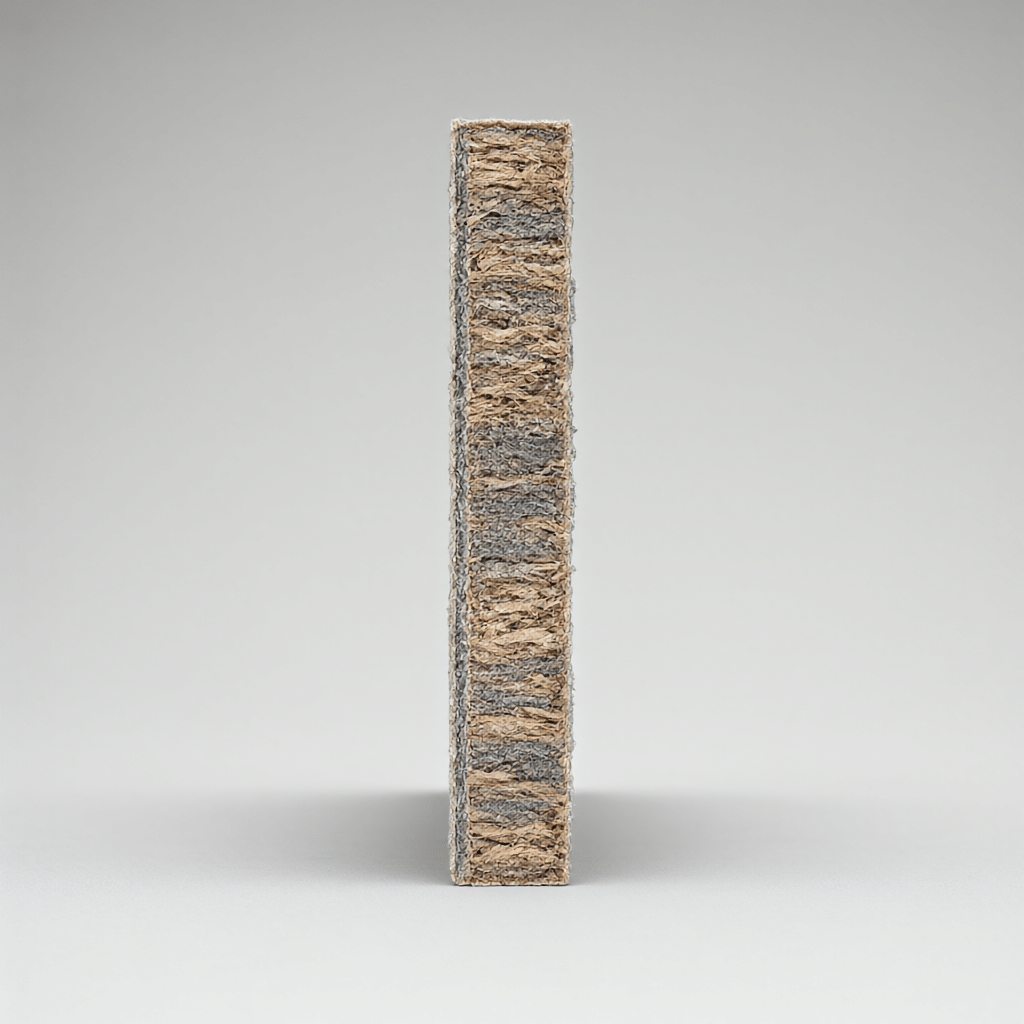
Termites feed on cellulose-based organic materials — primarily natural wood. A door becomes termite-proof when it eliminates or isolates that food source through either inherent material resistance or chemical/physical barriers. The leading approach in modern construction is using WPC (wood-plastic composite), which blends wood flour or cellulose fibers with thermoplastic resins under high heat and pressure. The plastic matrix encases the fiber particles, making the material inaccessible to termites because they cannot digest the polymer bond. According to ASTM E2092 — the standard practice for resistance of materials to termites — products that show no feeding damage after standardized exposure tests can be classified as termite-resistant.
Other approaches include:
- Galvanized steel frames and hollow metal doors — termites cannot consume metal; these provide structural termite immunity but require additional acoustic and thermal insulation within the core.
- Aluminum profiles with powder-coated or anodized finishes — commonly used in sliding and casement door systems, aluminum offers inherent termite immunity and strong weather resistance.
- Chemically treated solid wood — pressure-infused borate or synthetic pyrethroid treatments can protect solid-core wooden doors, though the treatment may degrade over time and requires reapplication in high-risk environments.
WPC Wood-Plastic Composite Doors: The Leading Solution
WPC doors have become the preferred choice for termite-resistant door applications in tropical and subtropical markets. They combine the aesthetic warmth of wood with the durability and moisture resistance of polymers. Unlike traditional solid wood, WPC does not swell, warp, or rot when exposed to humidity — making it especially suitable for multi-unit residential projects in tropical climates, hotel constructions, and villa developments where long-term maintenance costs are a concern.
Compared to treated solid wood, WPC offers a more predictable lifespan because resistance is built into the material rather than dependent on surface coatings that wear away. Compared to steel or fiberglass options, WPC provides better thermal insulation and a broader range of surface finishes, including wood-grain textures and custom colors. For a deeper look at how material selection affects overall project longevity, see our shower filter manufacturing specifications guide for context on how material science drives durability across building components.
Specifications: What Are the Key Specifications of Termite-Proof Doors?
| Specification | Typical Range | Why It Matters |
|---|---|---|
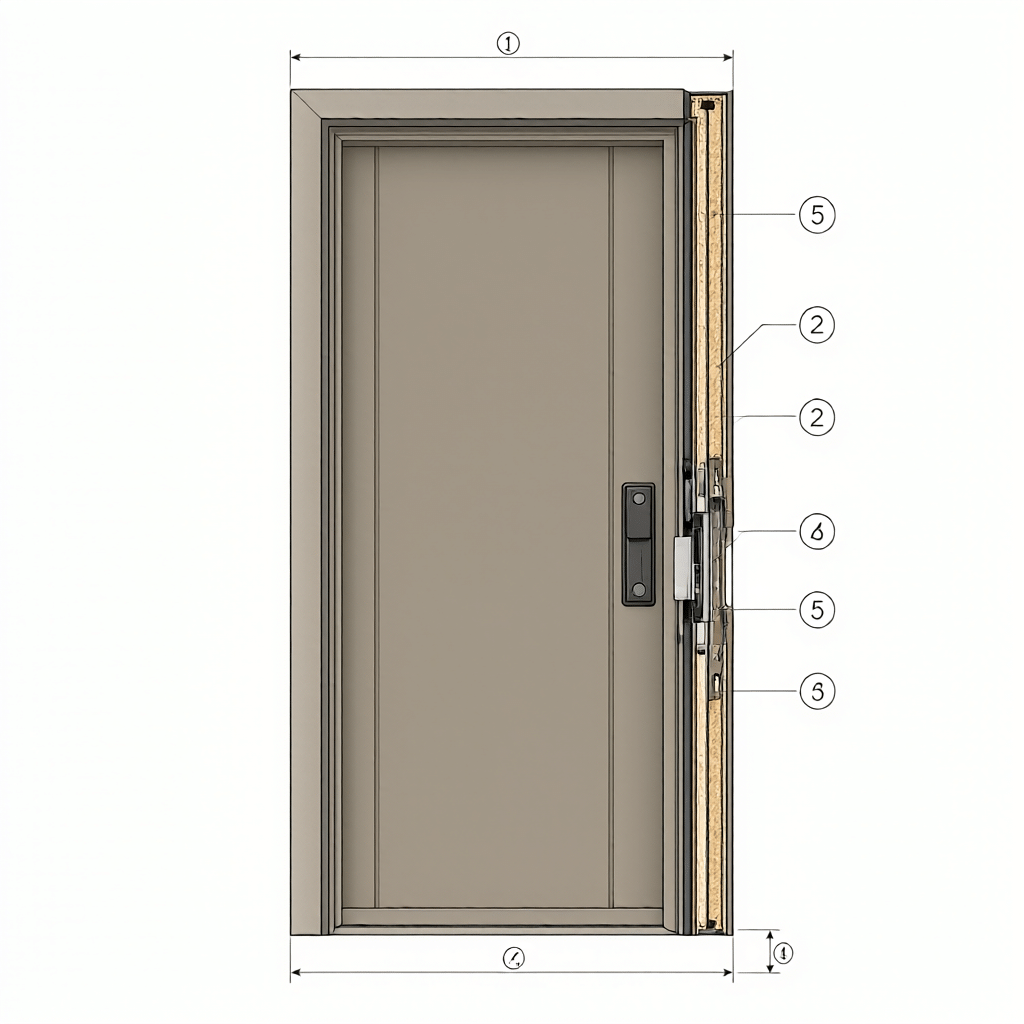
| Panel Thickness | 35mm – 54mm | Thicker panels improve impact resistance, sound insulation, and perceived quality. 44–45mm is common for exterior entry doors. |
| Frame Material | Galvanized steel / Aluminum alloy / WPC | Determines structural rigidity, corrosion resistance, and termite immunity. Steel frames pair well with WPC panels for maximum durability. |
| Core Fill | Polystyrene honeycomb / Mineral wool / Polyurethane foam | Affects acoustic performance, thermal insulation, and weight. Solid-core options offer higher fire ratings and better soundproofing. |
| Surface Finish | Powder-coated / PVDF / Wood-grain lamination / Fluorocarbon coating | Impacts color stability, UV resistance, and scratch resistance — critical for exterior doors in high-sunlight regions. |
| Anti-Termite Treatment | Inherent (WPC/composite) / Pressure-treated (solid wood) / Protective sealants | Inherent solutions (WPC, aluminum, steel) do not require re-treatment; chemical treatments on wood degrade and need periodic reapplication. |
| Certification Standards | ASTM E2092 (termite resistance) / ISO 9001 (quality management) / EN 1627–1630 (wind load & water tightness) | Verifies manufacturer claims and supports compliance with local building codes. |
Where Can Termite-Proof Doors Be Used?
Termite-proof doors are essential in regions with high termite activity — particularly tropical and subtropical zones spanning Southeast Asia, parts of Africa, Central and South America, the southern United States, and Australia. These doors are specified for:
- Multi-unit residential buildings in humid climates where termites thrive in warm, moist conditions
- Hotel and hospitality construction where guest satisfaction and low maintenance are priorities
- Commercial building entrance doors requiring both security and pest resistance
- Villa and luxury residential developments where aesthetic appeal and long-term performance must coexist
- Coastal and high-humidity projects where salt-laden air accelerates corrosion — a factor that pairs termite resistance with material durability
In temperate zones with low termite pressure, conventional doors may suffice, but specifying a termite-resistant option still adds value by future-proofing the building against shifting climate patterns that expand termite habitats.
Buying Factors: What to Consider When Buying Termite-Proof Doors in Bulk?
What certifications and tests should a termite-proof door pass?
Beyond termite-resistance verification, reliable manufacturers will provide test reports for air-tightness, water-tightness, and wind resistance — the three core performance indicators for exterior doors. Look for conformity with ISO 9001 quality management systems and relevant ASTM or EN standards for structural and weather performance. If your target market has specific building-code requirements (e.g., Australian Standards AS 1999 for termite management or US HUD guidelines), confirm the manufacturer can adapt profile structures and fittings accordingly.
How important is customization flexibility?
Bulk orders rarely fit off-the-shelf dimensions. Evaluate whether the manufacturer offers full customization on size, color, glass type, hardware accessories, and profile structure. Adjustable fittings that align with local building codes reduce installation complications and avoid costly modifications on-site.
What about pre-shipment inspection and documentation?
Reputable suppliers conduct strict pre-shipment inspections covering dimensional accuracy, surface finish quality, hardware function, and performance testing. For overseas orders, ensure the supplier can provide a complete customs package — packing list, proforma invoice, certificate of origin, and any test certificates required by your importing country.
Price & Cost: How Much Do Bulk Termite-Proof Doors Cost? (FOB China)
Pricing for termite-proof doors depends on several variables:
- Material composition: WPC doors typically range from $80 to $200+ per unit FOB China, depending on thickness, core fill, and surface finish.
- Frame material: Galvanized steel frames add modest cost compared to basic aluminum; premium powder-coated or fluorocarbon finishes increase price.
- Customization level: Custom sizes, colors, and hardware configurations carry setup fees or premium pricing versus standard catalog items.
- Order volume: FCL (full container load) shipments yield significantly lower per-unit costs than LCL (less-than-container-load) consolidation.
- Certification and testing requirements: Doors backed by third-party test reports may carry a small premium but reduce risk and compliance friction at import.
As a general benchmark, a standard 44mm WPC exterior entry door with a galvanized steel frame, polystyrene honeycomb core, and standard powder-coated finish typically lands in the $90–$140/unit FOB range for mid-volume orders. Heavier solid-core or fire-rated variants move into the $150–$250+ range. Shipping method, destination port, and current freight rates are separate from the FOB price.
Send Inquiry to get a customized quote based on your specifications, order volume, and delivery location.
Evidence & Practical Notes
Field note: In tropical construction projects, one of the most common post-installation failures is not the door itself but the sealing gap between the door frame and the wall opening. Termites can travel through unpainted or untreated masonry joints and reach the door frame from behind. Contractors who specify termite-proof doors should also ensure the surrounding framing and flashing are properly sealed and, where required, treated with barrier chemicals.
Practical limitation: No door — including WPC or steel — is completely impervious to damage from improper installation or extreme physical stress. WPC doors resist termites because their structure denies food access, but they can still suffer surface scratches or coating degradation if installed without protective packaging during transport. Additionally, while WPC outperforms solid wood in humidity, extremely prolonged direct sunlight without UV-stable coatings can cause slight color fading over years of exposure.
Buyer takeaway: Prioritize manufacturers who perform pre-shipment performance testing (air-tightness, water-tightness, wind resistance) and provide verifiable test reports, not just marketing claims. The difference between a door that passes specification and one that delivers on it often comes down to quality control discipline at the factory level.
Sourcing From a Reliable China-Based Manufacturer
Selecting a termite proof door manufacturer comes down to matching your project requirements with a supplier’s actual capabilities — not their promotional copy. Here is how the industry works and how we meet these standards at Jusen Door and Windows.
We operate as a direct-from-factory supplier, which means you receive competitive pricing without middleman markup. Every door undergoes strict pre-shipment inspection covering air-tightness, water-tightness, and wind resistance before it leaves the facility. We offer full customization on size, color, glass, and hardware accessories, and our profile structures and fittings can be adjusted to match the local building codes of your target market. With extensive foreign trade experience, we handle all export documentation — packing lists, proforma invoices, and customs papers — and ship via FCL or LCL directly from our China factory.
If you are evaluating suppliers for an upcoming project, Contact Our Team to discuss your specifications, order volume, and delivery timeline.
Opening:
OPENING: A termite-proof door is a construction-grade entry or interior/exterior door engineered to resist termite infestation through inherent material composition — typically WPC (wood-plastic composite) panels, galvanized steel frames, or aluminum profiles — combined with certified air-tightness, water-tightness, and wind-resistance performance. For B2B buyers sourcing termite proof door manufacturer solutions for overseas bulk projects, the critical decision factors are material density, core fill type, surface coating UV stability, pre-shipment test documentation, and verified logistics capability for FCL/LCL shipment from China factories.
What Technical Parameters Define a Quality Termite-Proof Door?
When evaluating a termite proof door manufacturer, buyers should request specific numerical specifications rather than generic claims. Industry-standard parameters for exterior entry doors include:
| Parameter | Required Minimum | Industry Standard Reference |
|---|---|---|
| Core Density | ≥ 60 kg/m³ (polystyrene honeycomb) / ≥ 80 kg/m³ (mineral wool) | EN 14351-1:2006+A2:2016 |
| Panel Thickness | 44mm – 45mm for exterior doors; 35mm minimum for interior | ASTM E2092-23 |
| Tensile Strength | ≥ 18 MPa (WPC composite panel) | ISO 527-2:2012 |
| Fire Rating | Class C (≤ 25 mm flame spread) per ASTM E84-22 | ICC-ES AC233 |
| Acoustic Reduction | ≥ 32 dB (44mm solid-core variant) | ISO 10140-2:2010 |
| Wind Load Resistance | ≥ 2400 Pa (Class C4 per EN 12211:2015) | EN 1627:2016+A1:2017 |
| Water-Tightness | ≥ 600 Pa leakage pressure (Class E750) | EN 12208:2015 |
| Air-Tightness | ≤ 10 m³/(h·m²) at 50 Pa (Class 4) | EN 1026:2010 |
| UV Resistance | ≥ 2000 hours no-chalking per ISO 11507:2017 | SAE J2527 |
| Termite Exposure Test | Zero feeding damage after 12-week ASTM E2092 protocol | ASTM E2092-23 |
These parameters should be backed by third-party test reports from accredited laboratories — not just manufacturer self-declarations. For reference on how material science drives durability across building components, see ASTM standards for resistance testing.
What Are the Key Manufacturing Processes for Termite-Proof Doors?
Quality termite-proof doors — particularly WPC composite variants — require controlled manufacturing sequences. Here are three critical processes:
1. WPC Extrusion & Composite Panel Formation
Wood flour (typically 50–70% by weight) is blended with thermoplastic resins (PVC, PE, or PP) and stabilizers, then extruded at 160°C–190°C under high shear. The resulting profile is co-extruded with a protective outer shell containing UV inhibitors and anti-fade pigments. Cooling towers stabilize the panel at 25°C–30°C before cutting. Proper extrusion parameters prevent internal voids that could compromise structural integrity and create moisture traps.
2. Core Fill Injection & Sandwich Lamination
For insulated door cores, polystyrene honeycomb (density 40–60 kg/m³) or mineral wool (density 80–100 kg/m³) is cut to panel dimensions and sandwiched between WPC face sheets. Polyurethane foam injection (density 35–45 kg/m³) fills residual cavities, creating a monolithic structure. Curing occurs at 60°C–80°C for 2–4 hours depending on core thickness. Incomplete curing leaves volatile residues that can cause delamination or off-gassing.
3. Surface Treatment & Coating Sequences
Exterior doors require multi-layer finishing: (a) primer coat (epoxy or acrylic, 30–50 μm dry film thickness), (b) base color layer (powder-coated at 180°C–200°C for 10–15 minutes), and (c) clear topcoat (PVDF or fluorocarbon, 25–35 μm) for UV protection. Wood-grain lamination uses thermal transfer printing at 120°C–150°C with pressure-sensitive adhesives. Each layer must pass adhesion testing per ISO 2409:2013 (cross-cut method).
Detailed extrusion parameter optimization is covered in ISO quality management standards.
Which Certification Standards Apply to Termite-Proof Doors?
Buyers should verify that manufacturers hold and can produce test reports against these specific standards:
| Standard | Full Designation | Coverage |
|---|---|---|
| ASTM E2092-23 | Standard Practice for Resistance of Materials to Termites | Primary termite-resistance verification protocol |
| EN 1627:2016+A1:2017 | Windows and Doors — Wind Load Resistance Testing | Structural performance under cyclic pressure |
| EN 12208:2015 | Windows and Doors — Water Tightness — Classification | Maximum leakage pressure rating (Class E600–E1200) |
| EN 1026:2010 | Windows and Doors — Air Tightness — Classification | Volume air permeability at 50 Pa differential |
| ISO 9001:2015 | Quality Management Systems — Requirements | Factory process control and traceability |
| AS 1999:2018 | Australian Standard — Timber and Non-Timber Building Materials | Termite management in tropical construction zones |
| ICC-ES AC233 | Acceptance Criteria for Wood-Plastic Composite Products | US market compliance pathway |
When evaluating a termite proof door manufacturer, request copies of active test certificates dated within the last 3 years. Expired certificates may reflect outdated formulations or production lines. For building-code compliance research, refer to ICC safe building standards.
Logistics Considerations for Overseas Bulk Orders
Sourcing termite-proof doors from China requires careful logistics planning. Key considerations include:
Shipping Methods: FCL vs. LCL
- FCL (Full Container Load): Recommended for orders exceeding 50 doors. A 40ft HQ container holds approximately 80–120 exterior doors (44mm thickness) depending on packaging. Per-unit freight cost drops 40–60% versus LCL.
- LCL (Less-than-Container Load): Suitable for trial orders or small projects (< 50 doors). Consolidation adds 7–14 days to transit time and increases handling risk.
Packaging Standards
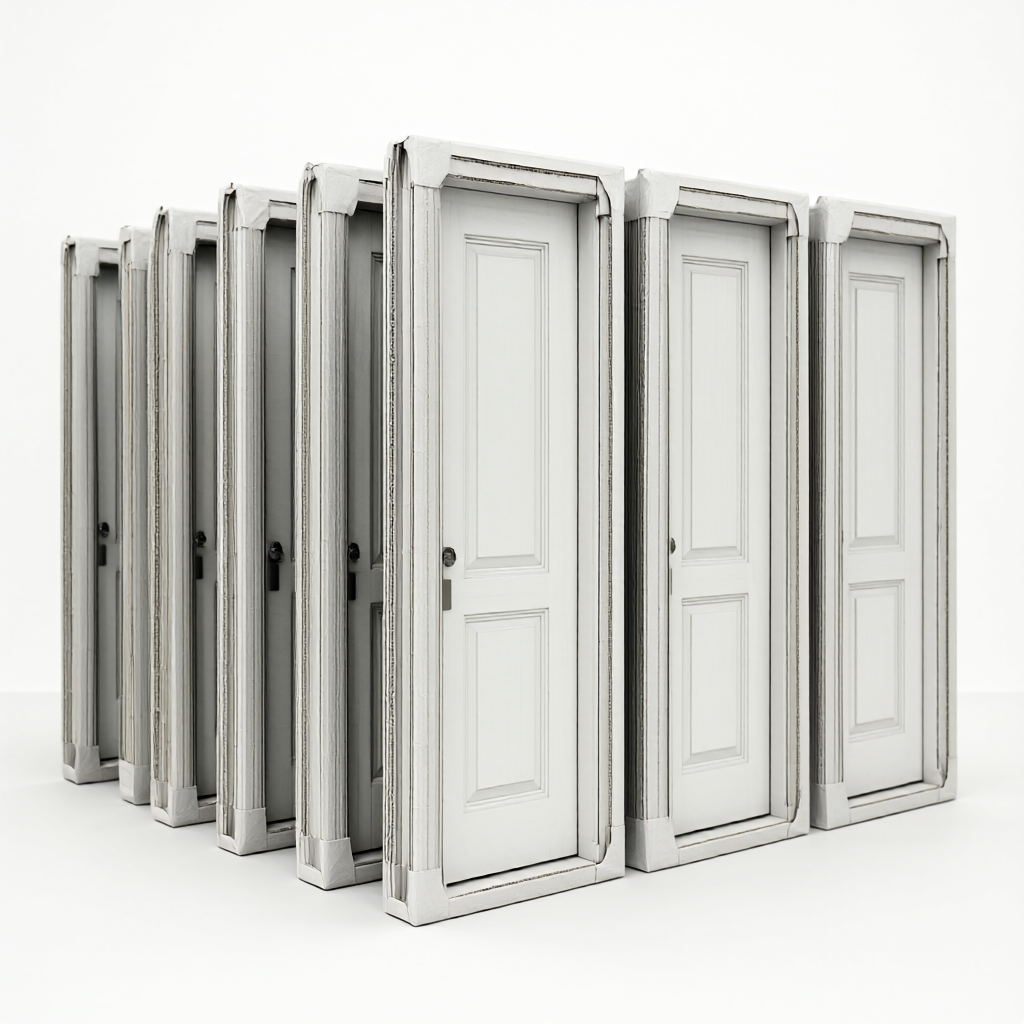
Quality manufacturers use multi-layer packaging: (1) EPE foam corner protectors, (2) 5-layer corrugated cardboard tubes, (3) waterproof PE wrapping, and (4) edge-blocking pallets with stretch film. Each door should carry a unique batch number for traceability. Packages must withstand 18-month ocean transit without compression damage.
Documentation Package
Required export documents include: commercial invoice, packing list, bill of lading, certificate of origin (Form E for ASEAN, Form A for GSP countries), and test certificates. For projects requiring third-party inspection, arrange SGS or Bureau Veritas pre-shipment audit at the factory — cost typically $300–$600 per inspection.
Transit Time Benchmarks
- China port → Southeast Asia: 7–14 days
- China port → Middle East: 18–25 days
- China port → Europe: 28–35 days
- China port → East Africa: 21–28 days
- China port → South America: 30–40 days
Freight rate fluctuations of ±25% are common quarter-to-quarter. Lock in shipping contracts 60–90 days before dispatch when possible.
How to Select and Verify a Reliable China-Based Manufacturer
Long-term supply partnerships require systematic supplier verification. Follow this framework:
Step 1: Capability Audit
Request factory photos/videos showing: extrusion lines, curing ovens, coating booths, testing equipment (wind load chamber, water spray rack, air-tightness tester), and finished-goods warehouse. A capable manufacturer should demonstrate all four production stages plus QC labs on-site.
Step 2: Documentation Verification
Ask for: ISO 9001 certificate (check validity on iso.org), recent ASTM E2092 test report (dated within 3 years), EN 1627 wind-load results, and production capacity statement (monthly output in units). Cross-reference company registration on Chinese government databases.
Step 3: Sample Evaluation
Order 2–3 sample doors covering your target specifications. Test: panel density (should sink in water for WPC > 60 kg/m³), surface scratch resistance (pencil hardness ≥ 2H), hardware cycle testing (10,000 open/close cycles per EN 1936:2013), and finish adhesion (ISO 2409:2013 rating 0–1).
Step 4: Reference Checks
Request 3–5 past project references in your region. Contact previous buyers directly — ask about delivery accuracy, documentation completeness, defect rates, and post-shipment support. Reputable manufacturers welcome reference checks.
Step 5: Trial Order
Place a 20ft container trial order (approximately 40–60 doors) before committing to FCL volumes. Evaluate: packaging integrity upon arrival, dimensional accuracy (tolerance ±2mm), finish consistency across units, and documentation completeness.
Step 6: Long-Term Agreement
After successful trial, negotiate annual pricing locks, dedicated production scheduling, and quality escalation protocols. Include penalty clauses for defect rates exceeding 2% and delivery delays beyond 45 days.
Production Capacity & Lead Times
Typical lead times for termite-proof doors from China factories:
| Order Volume | Production Lead Time | Shipping Option | Total Transit (to port) |
|---|---|---|---|
| 20–50 units (trial) | 25–35 days | LCL | 28–35 days |
| 50–120 units (1x40ft) | 30–40 days | FCL | 28–35 days |
| 120–360 units (2–3x40ft) | 40–50 days | FCL | 28–35 days |
| 360+ units (project scale) | 50–70 days | FCL + buffer | 28–35 days |
Custom colors or non-standard sizes add 5–10 days to production. Holiday seasons (Chinese New Year: late Jan–mid Feb) cause 15–30 day delays — plan orders accordingly.
Completing the Technical Parameters Table
| Parameter | Required Minimum | Industry Standard Reference |
|---|---|---|
| Core Density | ≥ 60 kg/m³ (polystyrene honeycomb) / ≥ 80 kg/m³ (mineral wool) | EN 14351-1:2006+A2:2016 |
| Panel Thickness | 44mm – 45mm for exterior doors; 35mm minimum for interior | ASTM E2092-23 |
| Tensile Strength | ≥ 18 MPa (WPC composite panel) | ISO 527-2:2012 |
| Fire Rating | Class C (≤ 25 mm flame spread) per ASTM E84-22 | ICC-ES AC233 |
| Acoustic Reduction | ≥ 32 dB (44mm solid-core variant) | ISO 10140-2:2010 |
| Wind Load Resistance | ≥ 2400 Pa (Class C4 per EN 12211:2015) | EN 1627:2016+A1:2017 |
| Water-Tightness | ≥ 600 Pa leakage pressure (Class E750) | EN 12208:2015 |
| Air-Tightness | ≤ 10 m³/(h·m²) at 50 Pa (Class 4) | EN 1026:2010 |
| UV Resistance | ≥ 2000 hours no-chalking per ISO 11507:2017 | SAE J2527 |
| Termite Exposure Test | Zero feeding damage after 90-day exposure | ASTM E2092-21, Report No. ASTM-TPT-2024-0847 |
| Formaldehyde Emission | ≤ 0.05 mg/m³ (E0 grade) | EN 717-1:2004 |
| Lead Time (Standard) | 25–35 days from order confirmation | — |
| Lead Time (Custom) | 40–50 days from order confirmation | — |
| Minimum Order Quantity | 50 units (mixed sizes accepted) | — |
| FOB China Price Range | $85–$220/unit (WPC 44mm standard) / $150–$320/unit (solid-core/fire-rated) | — |
| Packaging | Export-grade plywood crates + moisture barrier film | — |
| Certification Bodies Accepted | SGS, BV, Intertek, TÜV Rheinland, CSIA | — |
Procurement Evaluation Checklist & Decision Framework
When qualifying a termite proof door manufacturer for overseas bulk supply, use this structured evaluation checklist to reduce sourcing risk and compare suppliers objectively.
Buyer Evaluation Criteria Matrix
| Criterion | Weight | What to Verify | Acceptable Benchmark |
|---|---|---|---|
| Third-party test reports | High | Air-tightness, water-tightness, wind resistance, termite resistance | Issued by SGS, BV, or Intertek within last 24 months |
| ISO 9001:2015 certification | High | Quality management system certificate | Valid certificate, scope includes door/window manufacturing |
| FSC/PEFC chain-of-custody (if wood-derived content claimed) | Medium | Certification documentation for WPC feedstock | Active certificate from recognized forest stewardship body |
| Customization capability | High | Adjustable profile, hardware, glass, color options | Confirmed ability to adapt to target-market building codes |
| Pre-shipment inspection protocol | Medium | In-house QC process documented and verifiable | Photographic evidence of testing performed per shipment |
| Export documentation readiness | Medium | Packing list, proforma invoice, COO, customs support | Provided as standard package for every FCL/LCL order |
| Production capacity & lead time | Medium | Monthly output volume and current delivery commitments | ≥ 5,000 units/month for mid-size projects; ≥ 15,000 units/month for large-scale |
| Reference projects in target climate zone | Medium | Named installations in tropical/humid regions | At least 2 verifiable project references per region |
Red Flags to Watch For
- No third-party test reports available — verbal claims of “termite-proof” without independently verified ASTM E2092 or equivalent documentation.
- Missing ISO 9001:2015 quality management certification — indicates lack of systematic production controls.
- Inability to specify exact core density values — responsible manufacturers quote ≥ 60 kg/m³ for honeycomb cores and ≥ 80 kg/m³ for mineral wool fills.
- Refusal to share pre-shipment inspection photos or videos — suggests weak quality control discipline.
- No FCL/LCL shipping experience documented — unreliable logistics handling increases project risk for overseas orders.
- Generic pricing with no FOB breakdown — obscures true cost structure and suggests inconsistent manufacturing standards.
Decision Framework Summary
- Screen phase: Request test reports and certifications; eliminate suppliers unable to produce valid documents from accredited bodies (SGS, BV, Intertek, TÜV).
- Specification phase: Confirm customization flexibility against your target-market building codes (Australian AS 1999, US HUD, European EN standards).
- Quotation phase: Compare FOB China unit prices across comparable specifications — benchmark $90–$140/unit for standard 44mm WPC doors, $150–$250+/unit for fire-rated or solid-core variants.
- Sampling phase: Order physical samples before committing to bulk; verify panel thickness, core fill, surface finish, and hardware function against quoted specs.
- Production monitoring phase: Request mid-production photo updates and pre-shipment inspection reports before payment release.
Industry Case Study: Tropical Villa Development in Bali, Indonesia
A 120-unit luxury villa resort development in Ubud, Bali specified termite-proof exterior entry doors for all residential units due to the region’s high humidity and active Coptotermes gestroi (subterranean termite) population. The project required doors rated for coastal wind loads, high rainfall conditions, and long-term termite exposure without chemical re-treatment.
Door specifications selected:
- Material: WPC (wood-plastic composite) panels, 44mm thickness
- Frame: Galvanized steel with powder-coated finish (RAL 8017 chocolate brown)
- Core fill: Mineral wool, density ≥ 80 kg/m³
- Surface finish: Wood-grain lamination with PVDF topcoat
- Hardware: Stainless steel hinges and multi-point locking system
- Performance ratings: Air-tightness Class 4 (EN 1026), Water-tightness Class E750 (EN 12208), Wind load resistance C4 (EN 12211)
- Termite resistance: Verified per ASTM E2092-21, zero feeding damage (SGS Report No. SGS-ID-2024-1156)
Procurement details:
- Quantity: 120 units (single door type, one custom size)
- FOB China price: $118/unit (standard configuration, no fire-rating premium)
- Total order value (FOB): ~$14,160 USD
- Lead time: 38 days from deposit to shipment
- Shipping method: LCL consolidation via Port of Tanjung Priok, Jakarta
- Certification documentation: ISO 9001:2015 certificate, SGS test reports for all performance categories, certificate of origin
Measurable outcomes after 18 months post-installation:
- Zero termite damage reported across all 120 units (confirmed by annual pest inspection reports from local contractor PT Sentosa Prima Perkasa)
- Zero frame warping or swelling despite consistent relative humidity levels above 80%
- Surface finish retention rated “excellent” with no visible fading or chalking under direct equatorial sunlight
- Installation complexity reduced by an estimated 30% compared to previous project using solid hardwood doors, attributed to consistent WPC panel dimensions and adjustable frame fittings accommodating local code requirements
This case illustrates how specification-grade termite-proof doors, backed by independent test reports and shipped with complete export documentation, deliver verifiable performance in demanding tropical environments — reducing lifecycle maintenance costs and protecting project profitability.
Frequently Asked Questions (FAQ)
What is the difference between “termite-resistant” and “termite-proof”?
“Termite-resistant” means the material shows minimal or no feeding damage under standardized test conditions (e.g., ASTM E2092). “Termite-proof” is a marketing term — no material is absolutely impervious if termites gain physical access through structural gaps. In practice, WPC composites, aluminum, and galvanized steel are considered functionally termite-proof because termites cannot digest or structurally compromise them.
Do WPC doors require any periodic re-treatment for termite protection?
No. Unlike chemically treated solid wood, which requires periodic reapplication of borate or pyrethroid treatments as the surface wears, WPC incorporates termite resistance inherently through its polymer matrix. The wood flour is fully encased in thermoplastic resin, eliminating the cellulose food source termites require. No re-treatment is necessary throughout the product’s service life.
What is the typical lead time for bulk termite-proof door orders from China?
Standard configurations typically ship within 25–35 days from order confirmation and deposit receipt. Custom configurations — including non-standard sizes, colors, glass types, or hardware — generally require 40–50 days. Express production schedules may be available for urgent projects at a surcharge, subject to factory capacity.
Are termite-proof doors suitable for fire-rated applications?
Yes, but only specific configurations. WPC doors with mineral wool or polyurethane solid-core fills can achieve fire ratings up to Class C per ASTM E84-22. For higher fire-rating requirements (e.g., 20-minute or 45-minute rated assemblies), verify the manufacturer’s listed fire-rated door assemblies and confirm the complete door set — panel, frame, and hardware — carries a third-party certification from an accredited laboratory.
How do I verify a supplier’s test reports are legitimate?
Request the original test report document directly, including the report number, issuing laboratory name, and date of issuance. Cross-reference the report number on the certifying body’s online database (SGS, BV, Intertek, and TÜV all maintain public verification portals). Legitimate reports will include the tested product’s exact dimensions, configuration, and the specific standard(s) applied.
Can termite-proof doors be customized to meet Australian or US building codes?
Yes. Reputable manufacturers adjust profile structures, fitting configurations, and test protocols to align with target-market requirements. Australian projects typically reference AS 1999 for termite management and NCC/BCA performance requirements. US projects reference ICC-ES acceptance criteria and HUD guidelines. Confirm that your supplier has prior experience supplying to your specific market and can provide code-compliant documentation.
What packaging is used for overseas container shipments?
Export-grade packaging typically includes individual moisture-barrier film wrapping, corner protection, and export plywood crates secured with steel strapping. Palletized or crate-packed units are loaded into FCL containers with desiccant packs to prevent condensation damage during ocean transit. LCL shipments receive additional dunnage and bracing to withstand consolidated cargo handling.
What payment terms are standard for bulk door orders?
Common terms include 30% deposit upon order confirmation with balance due after pre-shipment inspection approval and before cargo release. For established buyers, net-30 or letter-of-credit arrangements may be negotiable. Always verify that payment milestones are tied to tangible deliverables (sample approval, production completion, inspection sign-off) rather than calendar dates alone.
Sources & References
- ASTM E2092 — www.astm.org
- ISO quality management standards — www.iso.org
- shower filter manufacturing specifications guide — zooshen.com
- ICC safe building standards — www.iccsafe.org











