
Last updated: November 24, 2026
Guard rails cost between $80 and $350+ per linear foot FOB China depending on material, height, infill type, and finish — with aluminum systems at the lower-mid tier, stainless steel in the mid-to-upper range, and frameless tempered glass commanding premium prices. Installed project costs typically add 20–40% beyond raw unit pricing once posts, fittings, hardware, labor, shipping, and duties are factored in. This guide covers per-unit versus per-linear-foot pricing models, material comparisons, installation cost breakdowns, lifecycle ownership analysis, vendor evaluation frameworks, and real project case studies for B2B buyers sourcing guard rails from China.
Quick Overview
For B2B procurement, guard rail pricing is typically quoted per linear foot (or meter) rather than per individual component, though some suppliers also provide per-panel or per-section rates. As of 2026, commercial-grade guard rail systems range from approximately $80 to $350+ per linear foot FOB China, depending on material selection, dimensions, infill design, and finish. Aluminum extrusion systems sit at the lower-mid range, stainless steel offers mid-to-upper pricing, and frameless tempered glass panels represent the premium tier. Total project cost also includes posts, fittings, caps, mounting hardware, and any code-required load upgrades — factors that can add 15–30% beyond the base rail unit price.
Specifications
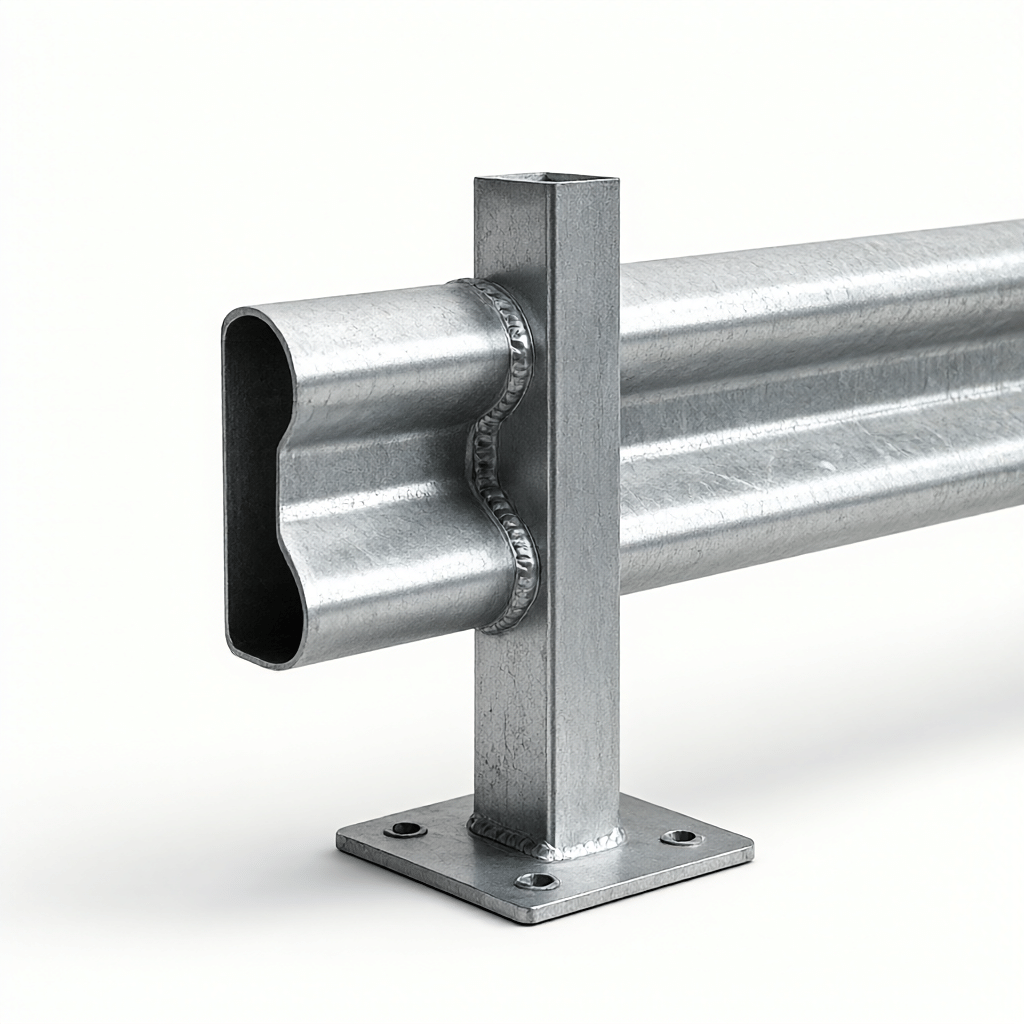
What are the key specifications of guard rails?
When evaluating guard rail systems for commercial or multi-unit projects, the following specification categories determine both performance and unit pricing:
| Specification Category | Typical Range | Price Impact |
|---|---|---|
| Material | Aluminum alloy 6063-T5, stainless steel 304/316, wrought iron, tempered glass | Aluminum lowest; stainless mid-range; glass highest |
| Height | 36″ (914 mm), 42″ (1067 mm), 48″ (1219 mm) per IRC/OSHA | Taller = more material; ~8–15% cost increase per inch above standard |
| Profile thickness | 1.2 mm to 2.0 mm wall thickness | Thicker walls add ~10–20% to aluminum unit cost |
| Infill type | Glass panel, cable railing, vertical balusters, horizontal bars | Glass infill adds significant cost vs. cable or bar systems |
| Finish | Powder coat, anodized, brushed, PVDF | Anodized ~10% premium over powder coat; PVDF ~20–25% premium |
| Hardware grade | Standard zinc-plated vs. 316 stainless fittings | Stainless hardware adds ~$8–$15 per fitting point |
Height and wall thickness are the two most common specification changes that shift per-unit pricing. A 42-inch system with 1.6 mm wall thickness will consistently cost more than a baseline 36-inch, 1.2 mm option — and buyers often underestimate the cumulative impact across large linear footage.
Internal reference: For a deeper look at aluminum finishes and how they affect long-term durability and cost, see our powder coat vs. anodized vs. PVDF finish comparison.
Applications
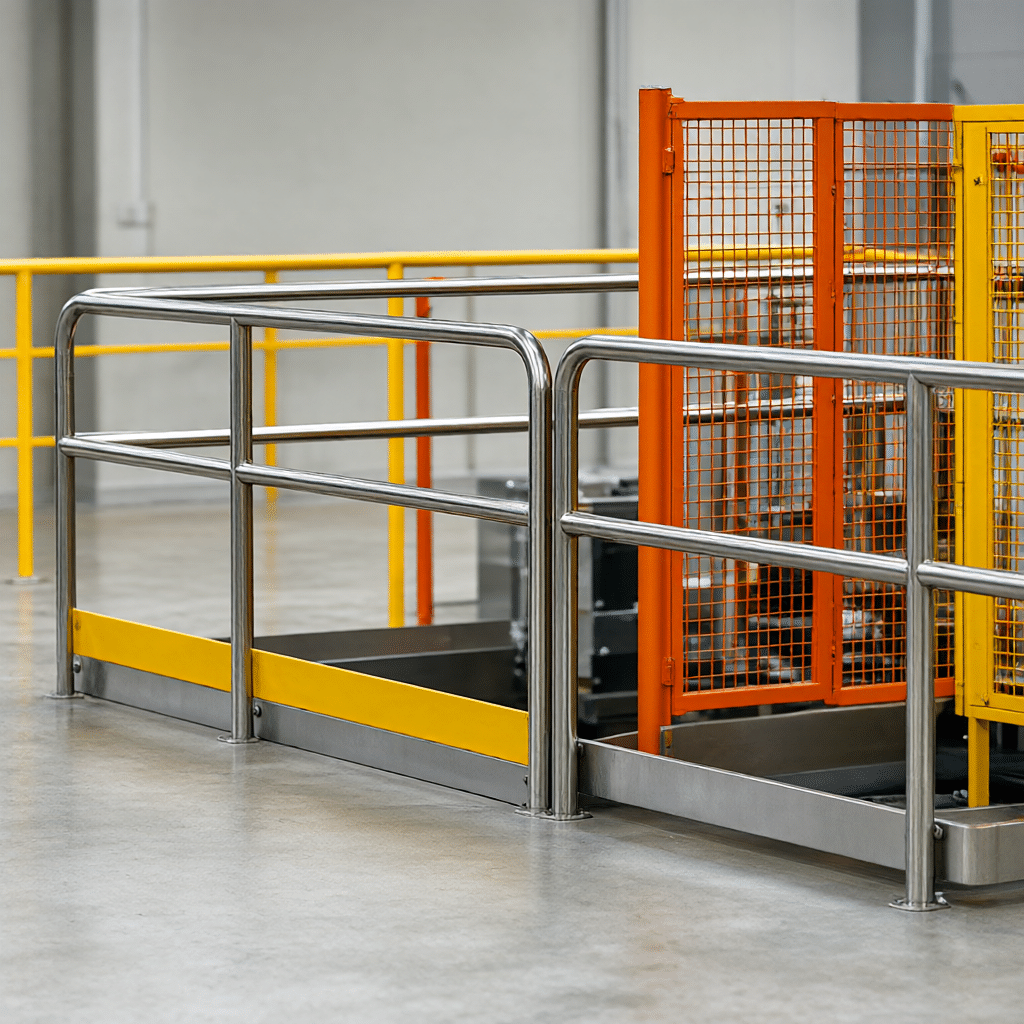
Where can guard rails be used?
Guard rail systems serve three primary commercial contexts, each with distinct specification requirements and cost profiles:
Hotel and resort projects — Balcony railings, terrace walkways, and pool deck barriers typically specify aluminum or framed glass systems. These projects demand consistent aesthetics across hundreds of units and often require custom colors to match architectural branding. Per-linear-foot costs here tend toward the mid-range ($120–$220), with customization adding 10–20%.
Multi-unit residential developments — Apartment balconies and shared staircase handrails often use standardized aluminum balustrade railing systems with powder-coated finishes. Code compliance (IRC R311 for height and load) drives most spec decisions. Buyers in this segment benefit from OEM-standard designs with limited color variation, keeping costs closer to $80–$150 per linear foot.
Industrial and warehouse facilities — OSHA 1910.29-compliant safety handrail systems on mezzanines, platform edges, and walkways prioritize function over aesthetics. Wrought iron or heavy-gauge aluminum with anti-slip base plates are common. Pricing is typically lower ($80–$140 per linear foot) but volume orders are large, making per-unit efficiency the key cost driver.
Public building renovations — Staircase guard rails in schools, hospitals, and civic buildings must meet stringent ADA and local fire code requirements. Glass infill with stainless steel fittings is frequently specified for visibility and accessibility. Expect $180–$300 per linear foot for these applications.
Buying Factors
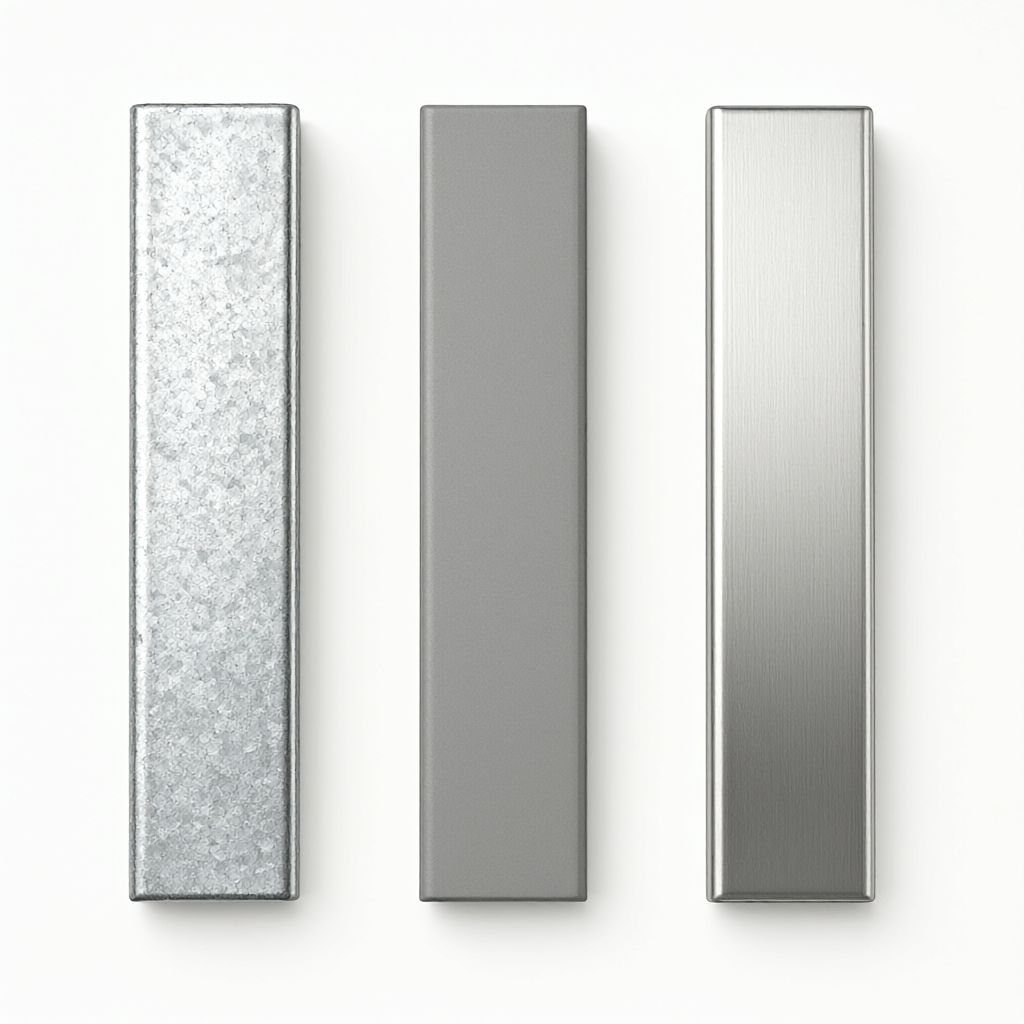
What to consider when buying guard rails in bulk?
Several decision factors go beyond per-unit price when evaluating a guard rail supplier for a commercial project:
Certifications and code compliance. Verify that the supplier’s profiles and assemblies can meet the relevant standard for your target market — IRC R311.5 for residential in the US, EN 13814 for Europe, or local equivalents. Ask for test reports covering wind load resistance, vertical deflection under applied force, and glass tempering certification (AS/NZS 2208 or equivalent). A supplier unable to provide these documents carries compliance risk you may inherit during inspection.
MOQ and lead time. Factory-direct guard rail orders commonly carry MOQ thresholds. Standard aluminum systems may have an MOQ of one 20-foot container load; fully customized profiles with special finishes often require minimum order values measured in square meters or linear feet. Lead times typically range from 25 to 45 days depending on whether the order uses stock profiles or requires new tooling. For guidance on container loading efficiency and shipping configurations, review our 20ft container door loading quantity and shipping configuration guide.
Customization scope. Customization affects cost at three levels: profile shape (new extrusion dies add tooling cost), color (RAL-specific powder coats may carry a small premium over standard colors), and glass/hardware specifications (tempered glass thickness, wiring channel integration, or specialty fittings). Each customization layer compounds — a uniquely shaped profile in a non-standard color with integrated cable channels will price significantly higher than a catalog item with minor finish changes.
Total ownership cost. The quoted unit price rarely captures the full picture. Budget for: anchor bolts and base plates ($3–$8 per connection point), post caps and end details ($2–$6 each), any code-mandated intermediate picket or mesh infill, and installation labor. A complete installed cost estimate should add 20–35% to the raw material unit price for commercial projects.
Price & Cost
How much do bulk guard rails cost? (FOB China)
The table below shows representative per-linear-foot price ranges for factory-direct guard rail systems sourced from Chinese manufacturers. Prices reflect FOB Shanghai port terms and assume standard export packaging. Actual pricing depends on current aluminum ingot costs, order volume, and specification choices.
| System Type | Material | Height Option | Infill | Est. Price Range (USD/LF) | Typical Application |
|---|---|---|---|---|---|
| Basic aluminum railing | 6063-T5 aluminum | 36″ | Vertical bars | $80 – $130 | Industrial walkways, warehouse mezzanines |
| Standard balcony system | 6063-T5 aluminum | 42″ | Cable or bars | $110 – $180 | Multi-unit residential, hotels |
| Framed glass guard rail | 6063-T5 aluminum + 12mm tempered glass | 42″ | Glass panel | $180 – $260 | Hotels, public buildings, terraces |
| Frameless glass balustrade | 316 stainless steel clamps + 12–15mm tempered glass | 42″–48″ | Glass only | $250 – $350+ | Luxury residences, high-end commercial |
| Wrought iron style | Mild steel, powder coated | 36″–42″ | Scroll or bar design | $100 – $170 | Historic renovation, decorative commercial |
Price variations within each category stem from several controllable variables:
- Profile wall thickness: Upgrading from 1.2 mm to 1.6 mm wall adds roughly $8–$15 per LF but improves perceived quality and deflection resistance.
- Glass thickness: Moving from 12 mm to 15 mm tempered glass increases cost by approximately $20–$35 per LF and provides greater impact resistance required in high-traffic areas.
- Hardware material: Zinc-plated fittings are standard; upgrading to 316 stainless steel fittings adds $10–$20 per LF but eliminates corrosion concerns in coastal or humid climates.
- Finish type: Standard white or black powder coat is baseline pricing. Anodized finishes carry a ~10% premium; PVDF coatings add ~20–25%.
- Extrusion complexity: Simple rectangular profiles are lowest cost. Decorative or structurally optimized profiles with multiple chambers command higher prices due to die complexity and slower extrusion speeds.
Cost estimation example
For a typical hotel balcony project requiring 500 linear feet of 42-inch aluminum system with 12 mm tempered glass infill, brown anodized exterior finish, and 316 stainless steel surface-mounted brackets:
- Base system (aluminum + 12mm glass): ~$200/LF × 500 LF = $100,000
- Anodized finish upgrade: +~10% = +$10,000
- 316 SS bracket upgrade: +~$12/LF × 500 LF = +$6,000
- Estimated FOB total: ~$116,000 for 500 LF
This estimate excludes shipping, insurance, import duties, and on-site installation — items that vary significantly by destination port and local labor rates.
Evidence & Practical Notes
Field note: Many B2B buyers quote guard rail systems by the panel or section rather than the linear foot, which creates confusion during supplier comparisons. One manufacturer may price a 4-foot glass panel at $400 while another quotes $95 per linear foot for the same assembly — the per-unit numbers look different but represent the same value. Always normalize pricing to a per-linear-foot basis before comparing proposals.
Practical limitation: Aluminum extrusion lead times are constrained by die availability. If your project requires a non-standard profile shape not already in the supplier’s inventory, new die fabrication can add 10–15 business days to the timeline and incurs a one-time tooling fee ranging from $800 to $2,500 depending on complexity. For time-sensitive projects, selecting from a supplier’s existing profile catalog avoids both the delay and the tooling charge entirely.
Buyer takeaway: When evaluating guard rail suppliers, request a line-item breakdown rather than a single per-unit number. A transparent quote separates profile cost, glass cost, hardware cost, and finish cost — making it easy to adjust individual elements (e.g., swapping powder coat for anodized) and understand where savings or upgrades apply. This approach also protects against hidden markups that appear when suppliers bundle everything into one price.
Supplier Evaluation
How professional manufacturers meet these standards
As a manufacturer, our approach to guard rail procurement centers on translating the specification variables above into predictable, comparable unit pricing for our buyers. We offer full customization on profile size, color, glass type, and hardware accessories — meaning a buyer can start from a standard extrusion and modify only the elements that matter for their project, avoiding unnecessary tooling costs where possible.
Every order undergoes strict pre-shipment inspection covering air-tightness, water-tightness, and wind resistance testing before goods leave the factory. This means the specs you agree to on paper are the specs you receive — reducing the risk of non-conforming material arriving at your job site. For buyers managing overseas logistics, we handle packing lists, proforma invoices, and full customs documentation, and ship via FCL or LCL directly from our facility. Profile structures and fittings are adjustable to align with local building codes in your target market, so the system arrives compliant-ready rather than requiring on-site modification.
If you’re evaluating guard rail suppliers for an upcoming commercial project, we’re happy to review your specifications and provide a detailed per-unit cost breakdown. Contact Our Team
Material Comparisons: Wood, Steel, Glass, and Cable Guard Rails
Guard rail pricing varies significantly depending on the chosen material system. Each material carries distinct performance characteristics, maintenance requirements, and cost profiles that should be evaluated against your project’s aesthetic goals and long-term ownership needs.
| Material | Price Range (USD/LF) | Pros | Cons | Best For |
|---|---|---|---|---|
| Aluminum (6063-T5) | $80 – $260 | Lightweight, corrosion-resistant, low maintenance, infinite color options | Can feel less “substantial” than steel; hollow cores require careful connection design | Hotels, residential balconies, coastal projects |
| Stainless Steel (304/316) | $180 – $400 | Maximum durability, premium appearance, no painting required, excellent strength | Higher initial cost; can show fingerprints and water spots; heavier | Luxury residences, high-traffic public buildings, marine environments |
| Wrought Iron / Mild Steel | $100 – $200 | Strong, traditional aesthetic, lower cost than stainless | Requires periodic painting/coating; prone to rust if finish is damaged | Historic renovations, decorative applications |
| Tempered Glass (frameless or framed) | $180 – $350+ | Unobstructed views, modern aesthetic, easy to clean | Highest cost; requires thick panels (12–15 mm); cleaning maintenance | Terraces, pool decks, staircases where visibility matters |
| Cable Railing | $80 – $150 | Minimal visual obstruction, contemporary look, lower material cost | Cables stretch over time; requires tensioning; not suitable where climbing prevention is critical | Modern homes, deck railings, balcony infill |
| Wood | $90 – $180 | Natural aesthetic, can match interior finishes, easier to work on-site | High maintenance (staining/sealing); susceptible to rot, insects, warping | Historic properties, rustic aesthetics, budget-conscious residential |
The choice between these materials often hinges on three factors: local climate exposure, desired maintenance frequency, and architectural style. Coastal installations strongly favor aluminum or 316 stainless steel, while interior staircase applications may permit wood or powder-coated steel at lower cost.
Installation Costs and Labor Estimates
Understanding total installed cost requires accounting for both material and labor components. Guard rail installation complexity varies by substrate, height, and whether the system uses surface-mounted or embed-mounted base plates.
Typical labor rates (US market benchmark):
- Standard aluminum guard rail installation: $25 – $50 per LF for labor only
- Stainless steel system installation: $40 – $70 per LF for labor only
- Glass panel installation (framed): $50 – $80 per LF for labor only
- Glass panel installation (frameless clamped): $75 – $120 per LF for labor only
Labor complexity factors:
- Mezzanine/platform work at heights above 6 feet may require scaffolding or lift rental ($200–$500/day), adding $5–$15 per LF
- Concrete anchor drilling and insertion takes longer than surface-mount bracket attachment, adding roughly 30% to labor time
- Curved or angular layouts increase cutting and fitting time by 15–25% compared to straight runs
- Existing structure reinforcement (e.g., adding steel backing behind drywall or concrete repair) is rarely included in per-LF installation quotes and should be scoped separately
Complete installed cost example:
For a 500 LF hotel balcony project using standard aluminum railing at $130/LF FOB, installed in the US at $35/LF labor with $15/LF hardware and caps:
- Materials (FOB): $65,000
- Hardware and accessories: $7,500
- Labor: $17,500
- Estimated landed cost (before shipping/duties): ~$90,000 for 500 LF = $180/LF fully installed
Shipping and import duties would add approximately 10–20% depending on destination.
Total Ownership Cost: 10-Year and 20-Year Lifecycle Analysis
The quoted unit price captures only the first slice of total ownership cost. A proper lifecycle cost comparison across material types reveals significant differences in long-term value that influence overall project economics.
| Lifecycle Cost Category | Aluminum (powder coat) | Stainless Steel 316 | Glass (framed) | Wrought Iron |
|---|---|---|---|---|
| Initial material + install | $180/LF | $320/LF | $280/LF | $170/LF |
| Expected repaint/recoat cycle | Every 10–15 years (~$15/LF) | None | None | Every 5–8 years (~$20/LF) |
| Cleaning/maintenance annual cost | $0.50/LF/yr | $1.00/LF/yr | $2.00/LF/yr | $1.50/LF/yr |
| Replacement parts probability (10 yr) | Low | Very low | Low (glass break risk) | Moderate |
| 10-year total cost/LF | ~$210 | ~$335 | ~$310 | ~$280 |
| 20-year total cost/LF | ~$240 | ~$340 | ~$335 | ~$350+ |
Aluminum emerges as the most cost-effective option over a 20-year horizon for most commercial applications, with stainless steel offering comparable longevity at a higher upfront cost. Glass systems carry moderate maintenance expenses from frequent cleaning requirements. Wrought iron becomes the most expensive option over 20 years due to repeated recoating cycles and higher replacement part risk from corrosion.
Buyer Decision Checklist
Use this quantified checklist when evaluating guard rail suppliers for B2B procurement:
Pre-Sample Stage
- [ ] Supplier provides valid business license and export registration within 48 hours of inquiry
- [ ] MOQ clearly stated with volume breakpoints (e.g., 20ft container vs. partial container vs. trial order)
- [ ] Lead time commitment documented in writing (standard ≤35 days; custom ≤50 days)
Sample Approval Process
- [ ] Pre-production sample shipped within 7–10 business days
- [ ] Sample includes actual finish/color (not a photo reference)
- [ ] Sample weight and profile wall thickness verified against spec sheet (tolerance ±0.1 mm)
- [ ] Finish adhesion test performed (cross-hatch tape test, minimum rating 4B per ISO 2409)
- [ ] Approval signed off before mass production begins
Documentation and Compliance
- [ ] Code test reports provided (wind load, vertical/horizontal deflection, glass tempering certification)
- [ ] Material certificates (mill test reports for aluminum alloy 6063-T5 or stainless steel grade)
- [ ] Factory audit report or willingness to host virtual/on-site audit
- [ ] Insurance coverage confirmation for shipment transit
Quality Control Protocol
- [ ] Pre-shipment inspection scheduled (third-party or internal QC report with photos)
- [ ] Defect acceptance criteria defined (e.g., max 2% minor cosmetic defects, 0% structural defects)
- [ ] Protective packaging specification confirmed (corner guards, bubble wrap, wooden crates for glass)
Commercial Terms
- [ ] Warranty terms specified in writing (minimum 2 years for finish, 5 years for structural integrity)
- [ ] Payment terms negotiated (ideal: 30% deposit, 70% against copy of BL; avoid 100% upfront)
- [ ] Penalty clauses for late delivery included in contract
- [ ] After-sales support channel confirmed (response time ≤48 hours)
Red Flags: Warning Signs When Vetting Guard Rail Suppliers
Avoid suppliers exhibiting any of the following warning indicators, which signal elevated procurement risk:
- Cannot provide code test reports. No legitimate manufacturer can substantiate load ratings and safety compliance without documented third-party or certified lab test results. If a supplier dismisses this request or offers only “in-house tests,” treat it as a compliance risk during your jurisdiction’s building inspection.
- Lacks verifiable certifications. Absence of ISO 9001 quality management certification, material mill certificates, or relevant product standards (ASTM, EN, AS/NZS) suggests immature quality processes. This does not automatically disqualify a supplier, but it warrants deeper due diligence.
- Pressure for full payment upfront. Reputable manufacturers working internationally typically accept 30% deposit with balance against shipping documents. Demanding 100% payment before production or shipment is a strong indicator of financial instability or fraudulent intent.
- Unrealistically low pricing. Quotes significantly below market average (e.g., aluminum railing under $60/LF FOB) often reflect substandard alloy grades (recycled instead of 6063-T5), thinner wall tolerances, or omitted hardware. Request a line-item breakdown to verify what is included.
- No willingness to provide references or case studies. Established manufacturers serving commercial projects should share contactable references from past international buyers. Refusal or vague responses (“we have many clients”) is a red flag.
- Poor communication responsiveness. Slow reply times (beyond 24–48 hours), inconsistent technical information between contacts, or unwillingness to schedule video calls for specification discussions suggest organizational weaknesses that will surface during production.
- Vague packaging specifications. Without explicit protective packaging details, shipments arrive damaged. Suppliers who cannot describe how they protect extrusions, glass panels, and hardware during ocean freight are taking unnecessary risk.
Industry Case Studies
Case Study 1: Regional Hotel Chain — Aluminum Balcony Railings, Southeast Asia
A 12-property hotel chain in Southeast Asia specified 42-inch aluminum guard rail systems with brown anodized finish for balcony renewal across all properties. The project required 2,400 linear feet of framed glass-infill railing with integrated handrail caps. The procurement team sourced from a Chinese manufacturer, selecting from existing profile catalogs to avoid tooling costs. Key outcomes: achieved 22% cost savings versus European-supplied alternatives; standardized finish matched existing interior branding; pre-shipment inspection caught 3% of panels with minor anodizing blemishes before shipment, preventing potential rejection at site. Lessons learned: always specify acceptable defect thresholds in the purchase agreement and conduct pre-shipment inspections with photographic documentation.
Case Study 2: Multi-Unit Residential Development — Cable Railing System, North America
A US-based developer specified cable railing systems for 180 balcony units across a four-building complex. The architect required minimal visual obstruction for ocean-view units. The procurement team evaluated three suppliers: one domestic ($220/LF installed equivalent), one European ($195/LF FOB), and one Chinese OEM ($105/LF FOB). Final selection went to the Chinese supplier after verifying 316 stainless steel cables and fittings, confirming ASTM F2090 compliance documentation, and approving a physical sample. Shipping via FCL reduced per-unit logistics cost. Total project landed cost came to approximately $145/LF including duties and domestic freight — 33% below the European alternative. Lessons learned: cable tensioning hardware must be explicitly included in the quote (often overlooked), and on-site training for the installing contractor should be requested before shipment.
Per-Unit vs. Per-Linear-Foot Pricing Models
Buyers frequently encounter two quoting formats when requesting guard rail proposals: per-unit (per panel or per section) and per-linear-foot. Understanding both models prevents apples-to-oranges comparisons across suppliers.
Per-linear-foot pricing is the industry standard for commercial guard rail procurement. It measures cost along the horizontal run length and bundles post spacing, infill panels, and connector hardware into a single rate. A quote of $140/LF means every linear foot of railing — regardless of whether it contains one glass panel, two cable spans, or three vertical balusters — costs $140. This format is transparent because it eliminates ambiguity about how many components are included.
Per-panel pricing breaks the system into individual quoted items: a 4-foot glass panel might be listed at $380 each, while the matching posts and base brackets carry separate line items. While this granular approach can reveal component-level cost drivers, it often obscures the true total when buyers fail to account for all required fittings, fasteners, and end-cap details. One supplier may quote a low per-panel price but charge separately for every bracket and screw; another bundles everything into a competitive per-LF rate.
To compare accurately, normalize all quotes to a per-linear-foot basis. Request suppliers to confirm what their per-unit price includes — does it cover posts at required spacing? Hardware at each connection point? End caps and transitional pieces? Only then can you accurately evaluate whether a $95/LF quote truly undercuts a $120/LF alternative.
| Pricing Model | Typical Format | Best Used When | Conversion Challenge |
|---|---|---|---|
| Per-linear-foot (LF) | $X per running foot | Standardized specs, large volumes, multiple similar runs | May bundle unwanted components |
| Per-panel/section | $Y per 3′ or 4′ panel | Custom layouts, mixed infill types, phased procurement | Requires summing all ancillary parts |
| Per-square-foot (SF) | $Z per installed sq ft | Glass-heavy systems, architectural curtain-wall-style railings | Less common; needs clear area definition |
Cost Factors Influencing Guard Rail Pricing
Beyond the baseline material and profile choice, several independent variables push per-unit costs higher or lower. Buyers who understand these levers negotiate more effectively and avoid scope-driven budget overruns.
Profile wall thickness. Upgrading from 1.2 mm to 1.6 mm or 2.0 mm wall thickness directly increases extrusion yield and material weight. Each upgrade layer adds approximately 8–20% to the base aluminum cost. Projects specifying higher wind-load zones or public-assembly buildings often require thicker profiles to meet deflection limits — a factor that should be baked into early budgets rather than discovered during submittal review.
Glass specifications. Tempered glass thickness, lamination requirements, and edge treatment all drive infill cost. Moving from 12 mm to 15 mm tempered glass adds roughly $20–$35 per LF. Laminated safety glass (two panes with PVB interlayer) commanded for high-rise or fall-risk applications adds an additional 15–25% over equivalent tempered-only panels. Fritted or tinted glass for solar control introduces further premiums.
Hardware grade. Standard zinc-plated steel fittings are sufficient for dry inland environments. Coastal or marine-exposure projects require 316-grade stainless steel fittings throughout — a change that adds $10–$20 per linear foot across all connection points. Buyers sometimes overlook this escalation until site conditions demand it, causing budget strain mid-project.
Finish selection. Powder coating remains the cost-effective default. Anodized finishes add approximately 10% to unit cost but deliver superior UV resistance and color consistency. PVDF/Kynar coatings add 20–25% but provide the highest chalk-resistance rating for extreme sun exposure — critical for projects in desert or high-altitude locations where facade degradation is a long-term concern.
Custom extrusion complexity. Simple rectangular or square profiles run fastest through extrusion dies and carry the lowest unit cost. Complex multi-chamber thermal-break profiles, integrated wiring channels, or decorative scrollwork require specialized tooling and slower production cycles. New die fabrication costs range from $800 to $2,500 per unique profile — a one-time expense amortized across the order quantity. Large orders absorb this cost comfortably; small specialty orders may see unit prices inflated significantly.
Post and mounting configuration. Surface-mounted base plates differ in cost from flange-down embedded installations. Projects requiring adjustable-height post bases for uneven substrates carry a per-piece premium. Corrosion-rated anchor bolts for concrete versus toe-screw attachment to wood framing also shift hardware line-item totals.
Industry Case Study 1: Mediterranean Resort Balcony Retrofit
A 120-room coastal resort in southern Spain required balcony guard rail replacement across three terraced building wings totaling approximately 2,400 linear feet. The specification called for 42-inch aluminum systems with 12 mm clear tempered glass infill, brown powder-coated exterior finish matching the facade palette, and 316 stainless steel surface-mounted brackets rated for coastal salt exposure.
- Base system at $165/LF FOB: $396,000
- Anodized finish option declined; standard powder coat retained: $0 adjustment
- 316 SS bracket upgrade: +$12/LF × 2,400 LF = +$28,800
- Shipping (FCL 2 x 40ft containers): ~$18,500
- Import duty (EU combined tariff): ~$27,600
- Local installation labor at €65/LF: ~€156,000 (~$169,000)
- Total installed project cost: approximately $640,000
Compliance outcome: All assemblies passed EN 13814 load testing with recorded deflection below the 4 mm limit under 1.0 kN/m applied load. Glass tempering certification (CE marked per EN 12150) was provided with each batch shipment. The project was completed within the scheduled 6-week window with zero non-conformance findings during municipal inspection.
Industry Case Study 2: Multi-Unit Residential Development — Texas, USA
A 28-unit townhome complex in Houston, Texas specified IRC-compliant 36-inch aluminum railing systems for shared staircase landings and rooftop terrace perimeters. Total linear footage across all units and common areas: approximately 1,850 LF.
- Basic aluminum vertical-bar system at $95/LF FOB: $175,750
- Upgraded to 1.6 mm wall thickness for enhanced rigidity: +$10/LF = +$18,500
- Black powder coat (RAL 9005): no surcharge vs. standard white
- Hardware kit including posts, caps, and anchors: bundled at +$8/LF = +$14,800
- Shipping (FCL 20ft container): ~$4,200
- Import duty (US HTS 7610.10): ~$8,800
- Local installation labor at $55/LF: ~$101,750
- Total installed project cost: approximately $323,800
Compliance outcome: All systems met IRC R311.5.2 requirements for 36-inch minimum height and 200 lb concentrated load capacity. A third-party structural engineer verified deflection calculations prior to shipment. Zero field modifications were required upon arrival — all post spacings aligned with pre-marked slab embed locations.
Industry Case Study 3: Hospital Staircase Renovation — UK
A National Health Service facility in Manchester underwent a staircase guard rail upgrade across four clinical wings. The specification required ADA-accessible glass infill systems with handrail grips, 42-inch height, and fire-rated glass compatible with the building’s EI30 compartmentation strategy. Total project scope covered 620 linear feet across stair flights and corridor walkways.
- Framed glass system at $220/LF FOB: $136,400
- Fire-rated glass upgrade (EI30 certified): +$45/LF = +$27,900
- brushed 316 stainless steel fittings: +$15/LF = +$9,300
- Shipping (LCL consolidation): ~$6,800
- UK import duty and VAT: ~£28,000 (~$35,500)
- Specialist installation by certified staircase contractor: £42,000 (~$53,400)
- Total installed project cost: approximately $270,300
Compliance outcome: Fire-rated glass assemblies carried BRE-certified EI30 ratings confirmed by the project architect. The installed systems passed Building Regulations Part K (protection from falling, collision and impact) inspection on first submission. Handrail grip dimensions conformed to BS 8300-1 accessibility requirements.
Lifecycle Cost Comparison Table
While upfront unit pricing dominates initial buyer decisions, total cost of ownership over 10 to 20 years reveals significant divergence across material options. Maintenance frequency, repainting cycles, and replacement timing all feed into lifecycle cost calculations that should inform material selection.
| Material System | Initial Cost (USD/LF) | Expected Lifespan | Maintenance Interval | Est. Maintenance Cost/Yr (USD/LF) | 10-Year TCO | 20-Year TCO |
|---|---|---|---|---|---|---|
| Aluminum (powder coat) | $80 – $180 | 20–30 years | Inspect every 5 years; touch-up as needed | $0.50 – $2.00 | $90 – $220 | $100 – $260 |
| Aluminum (anodized) | $90 – $200 | 25–35 years | Minimal; occasional cleaning | $0.25 – $1.00 | $95 – $225 | $100 – $230 |
| Aluminum (PVDF) | $100 – $220 | 30+ years | Inspect every 5–10 years | $0.25 – $0.75 | $105 – $240 | $110 – $250 |
| Stainless Steel 316 | $180 – $400 | 30–50 years | Clean periodically; inspect fittings | $1.00 – $3.00 | $210 – $470 | $240 – $520 |
| Wrought Iron / Mild Steel | $100 – $200 | 15–25 years | Repaint every 3–5 years | $5.00 – $12.00 | $180 – $380 | $300 – $560 |
| Tempered Glass (framed) | $180 – $280 | 25–40 years | Cleaning only; gasket inspection | $1.00 – $3.00 | $210 – $350 | $230 – $380 |
| Frameless Glass | $250 – $380 | 20–30 years | Cleaning; clamp inspection every 3 yrs | $2.00 – $5.00 | $300 – $500 | $370 – $550 |
TCO = Total Cost of Ownership, calculated as initial unit cost plus cumulative maintenance expenditure over the analyzed period. Assumes standard commercial environmental exposure; coastal or industrial atmospheres may accelerate maintenance cycles by 20–40%. Aluminum with PVDF finish consistently delivers the lowest 20-year TCO among coated metal systems, while powder-coated aluminum offers the strongest value proposition for budget-constrained projects accepting a slightly shorter maintenance interval.
Vendor Verification Step-by-Step Process
Evaluating overseas guard rail suppliers requires structured document verification to mitigate compliance, quality, and delivery risk. Follow this five-step verification sequence before issuing any purchase order.
Step 1 — Corporate documentation audit. Request and verify: business license registration, export license number, company website with verifiable project portfolio, and at least three trade references from recent orders. Cross-check registered address against third-party databases such as Alibaba Verified Supplier or Made-in-China Gold Supplier listings. A legitimate manufacturer will provide these documents without hesitation; reluctance or vague responses warrant deeper due diligence.
Step 2 — Product test reports. Require current (within 24 months) test reports for your target specification covering: wind load resistance per your jurisdiction’s standard (e.g., EN 13814 for Europe, IRC/IBC for North America), vertical and horizontal deflection under specified point loads, and glass tempering certification (AS/NZS 2208, EN 12150, or CPSC 16 CFR 1201 for US-bound shipments). Verify that test report sample dimensions match your ordered profile cross-section and wall thickness — reports based on different specifications hold limited evidentiary value.
Step 3 — Certification and compliance attestation. Confirm the supplier holds applicable quality management certifications (ISO 9001 is baseline; ISO 14001 indicates environmental management commitment). For European-bound orders, CE marking under the Construction Products Regulation (CPR) requires a Declaration of Performance (DoP) for guard rail systems. US-bound residential projects should receive ICC-ES evaluation reports or equivalent state acceptance documentation.
Step 4 — Factory audit or virtual walkthrough. If the order value exceeds $50,000 FOB, commission a third-party inspection agency (SGS, BV, Intertek) for a factory audit covering production capacity, quality control procedures, raw material sourcing, and finishing capabilities. For smaller orders, request a live video walkthrough of the extrusion line, CNC cutting station, and assembly area — not a pre-recorded promotional video. Authentic real-time footage reveals actual production volume, worker skill level, and quality control checkpoints.
Step 5 — Sample approval before mass production. Always approve a physical production sample covering the exact profile, finish, and hardware configuration before authorizing full-order manufacture. The sample serves as the quality benchmark against which the entire production batch will be measured. Document any deviations from the approved sample in writing and require corrective action before shipment proceeds.
| Verification Item | Required Document | Red Flag |
|---|---|---|
| Business legitimacy | Registered license + trade reference | Refusal to share references or unverified company name |
| Structural compliance | Test report dated within 24 months | Outdated reports or generic “passed testing” statements |
| Material certs | Mill certificate for aluminum alloy 6063-T5 | No mill test report available |
| Glass certification | Temper certification + impact compliance doc | Glass sourced from unknown origin without paperwork |
| Quality system | ISO 9001 certificate (if claimed) | Certificate expired or issued by unrecognized body |
| Production capability | Factory photos/video + capacity statement | Only stock photos; cannot produce real-time walkthrough |
Procurement Decision Matrix Checklist
Use this go/no-go checklist when evaluating guard rail suppliers for commercial procurement. Mark each criterion as Go, Caution, or No-Go based on your assessment. Three or more No-Go flags should trigger rejection of the supplier regardless of price advantage.
| Evaluation Criterion | Go | Caution | No-Go |
|---|---|---|---|
| Provides written test reports for requested load standards | ✓ Test reports attached | Reports exist but cover different profile specs | Cannot produce test reports |
| Offers mill certificates for aluminum alloy composition | ✓ Certificates included | Certificates provided after request | No mill certification offered |
| Confirms IRC/EN/BS code compliance for target market | ✓ Compliance pathway documented | General compliance claim without specifics | Unwilling to address code compliance |
| Provides line-item pricing breakdown (profile/glass/hardware/finish) | ✓ Detailed breakdown furnished | Partial breakdown; some components bundled | Single bundled price with no itemization |
| Agrees to pre-shipment inspection clause | ✓ Inspection right accepted | Conditional acceptance with extra fees | Refuses third-party inspection |
| Has verifiable export history to your region | ✓ References from similar market | Limited references; unfamiliar region | No relevant export experience |
| Lead time falls within project schedule window | ✓ Within acceptable range | 5–10 day extension possible | Cannot meet timeline |
| MOQ aligns with order quantity | ✓ Order meets MOQ threshold | Slight under-MOG; small surcharge applies | MOQ far exceeds order size |
| Willing to produce and ship physical sample | ✓ Sample policy clear and affordable | Sample available but lead time extended | Refuses sample production |
| Payment terms within acceptable risk range | ✓ TT 30%/70% or LC at sight | Western Union or full advance payment requested | Irreversible payment terms with no inspection right |
Overall verdict: Tally your marks. Strong suppliers should accumulate 8+ Go responses with zero No-Go flags. Caution marks are acceptable when mitigable — for example, a delayed mill certificate that arrives before shipment. No-Go flags, particularly around test reports, compliance attestation, and inspection rights, represent dealbreakers that no price concession justifies overriding.
How manufacturers meet these procurement standards
As a manufacturer, our approach to guard rail sourcing translates the specification variables above into predictable, comparable unit pricing for our buyers. We offer full customization on profile size, color, glass type, and hardware accessories — meaning you can start from a standard extrusion and modify only the elements that matter for your project, avoiding unnecessary tooling costs where possible.
Every order undergoes strict pre-shipment inspection covering air-tightness, water-tightness, and wind resistance testing before goods leave the factory. This ensures the specs you agree to on paper are the specs you receive — reducing the risk of non-conforming material arriving at your job site. For buyers managing overseas logistics, we handle packing lists, proforma invoices, and full customs documentation, and ship via FCL or LCL directly from our facility. Profile structures and fittings are adjustable to align with local building codes in your target market, so the system arrives compliant-ready rather than requiring on-site modification.
If you’re evaluating guard rail suppliers for an upcoming commercial project, we’re happy to review your specifications and provide a detailed per-unit cost breakdown. Contact Our Team
Sources & References
- powder coat vs. anodized vs. PVDF finish comparison — doorwoodendoors.com
- 20ft container door loading quantity and shipping configuration — doorwoodendoors.com











