
Last updated: November 24, 2026
Sound rated door assemblies typically cost $200–$850+ FOB per unit, with price determined primarily by STC rating, core material, profile thickness, glazing, hardware grade, and whether dual fire-acoustic certification is required. Entry-level residential privacy doors (STC 35) start around $200; hotel-grade corridor assemblies (STC 40–42) run $300–$500; high-performance healthcare or studio doors (STC 45–50+) command $500–$700; and certified fire/acoustic combo units reach $700–$850+. These figures cover the complete kit — panel, frame, perimeter seals, hinges, and lockset — before shipping, duties, or installation.
How Much Does a Sound Rated Door Assembly Cost Per Unit?
A sound rated door assembly typically runs from $200 to $850+ FOB per unit depending on STC rating, core material, profile thickness, glass configuration, and included hardware grade. Entry-level STC 35 solid wood assemblies start around $200–$300; mid-performance STC 40–45 systems land between $300–$500; and high-performance STC 45–50+ acoustically engineered doors with thermally broken profiles, multi-point locks, and integrated fire ratings often exceed $500–$850+ per unit on bulk orders. These figures cover the complete door kit — panel, frame, seals, hinges, and locks — but exclude shipping, import duties, and on-site labor.
What Are the Key Specifications of a Sound Rated Door Assembly?
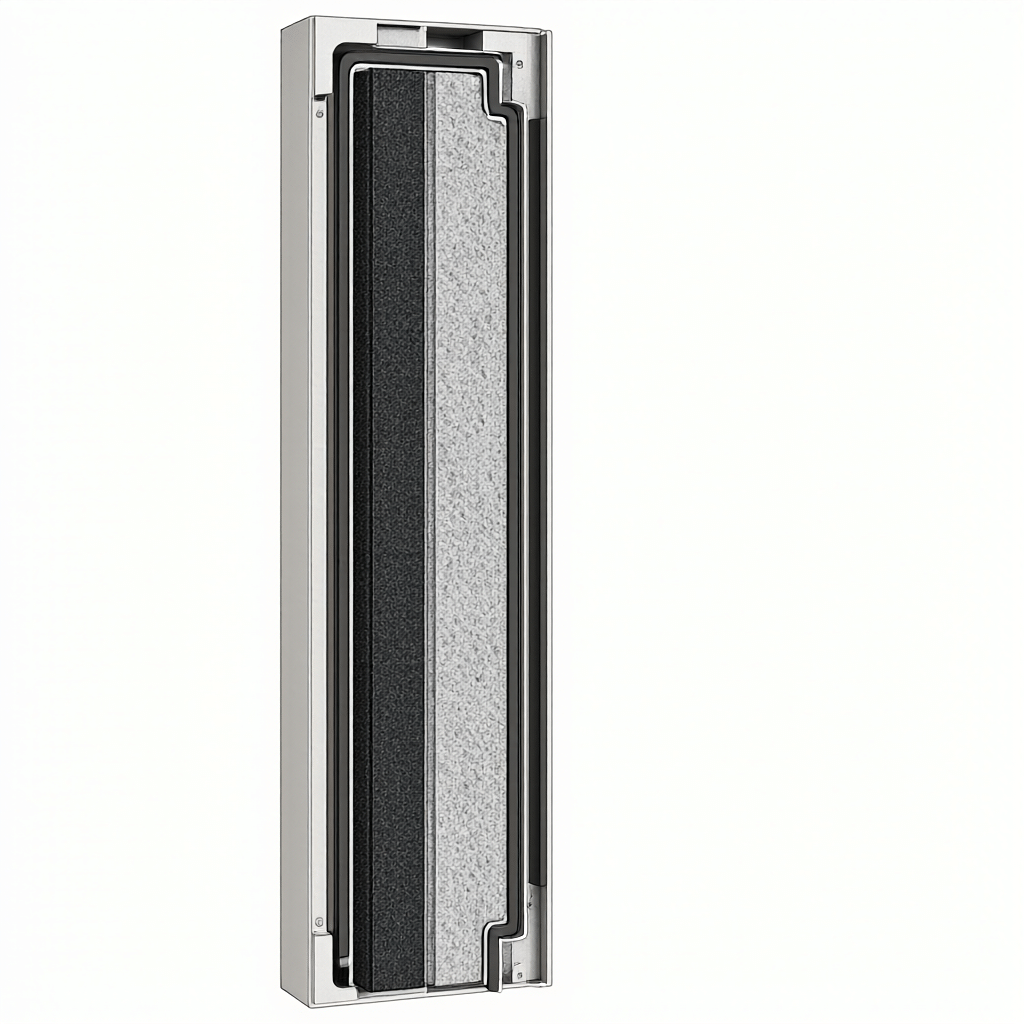
A complete acoustic door assembly is more than just a door slab. It is a system engineered to achieve a specific sound transmission class (STC) or impact insulation class (IIC) rating under test standards such as ASTM E90 (standard test method for laboratory measurement of airborne sound attenuation). The components that determine both acoustic performance and unit price are:
| Component | Typical Options | Impact on Price |
|---|---|---|
| Door panel core | Hollow metal, mineral core, solid wood, composite honeycomb | Solid wood and mineral cores add $30–$120 vs. hollow construction |
| Profile/frame depth | 35 mm, 45 mm, 50 mm+, thermal-break aluminum | Thicker profiles and thermal breaks add $20–$80 per unit |
| Glass type | None, single glazed, double/triple glazed, laminated acoustic glass | Glazing adds $50–$200+ depending on pane count and lamination |
| Perimeter seals | Compression gaskets, brush seals, drop-down thresholds | Quality gasket kits add $15–$40 per unit |
| Hardware grade | Standard hinges + knob vs. premium multi-point locks, heavy-duty pivots | Hardware upgrade adds $25–$150 per set |
| Certification | Basic STC tested vs. UL/fire-rated combo assembly | Fire/acoustic dual certification adds $40–$120 |
The term “noise control door set” or “privacy door kit” refers specifically to this bundled assembly — not just the slab. Buyers frequently overlook that perimeter seal quality and frame construction are the difference between an STC 32 and an STC 40 on the same door panel. A well-sealed frame with compression gaskets and a properly fitted sweep can improve assembly performance by 5–10 STC points over an unsealed counterpart.
Where Can Sound Rated Door Assemblies Be Used?
Sound rated doors serve commercial and institutional environments where noise isolation directly affects occupancy comfort, regulatory compliance, or operational function. Common applications include:
- Hotel guest room corridors and suite entrances — Target STC 45+ to meet hospitality guest expectations and many international hotel brand standards for corridor-to-room isolation.
- Multi-unit residential projects — Apartments and condominiums increasingly specify STC 40–45 interior corridor doors per building code guidance from organizations like the International Code Council (ICC), especially in jurisdictions with stringent noise ordinances.
- Hospital and healthcare facilities — Patient rooms and privacy-critical areas require STC 40–50 assemblies, often combined with infection-control surface requirements.
- Recording studios, home theaters, and music practice spaces — These demand STC 50+ assemblies with specialized acoustic edge details and sometimes mass-loaded vinyl integrations.
Each scenario carries different cost drivers. A hotel chain renovating 200 guest rooms with identical STC 42 doors will pay significantly less per unit than a boutique studio specifying custom-width, custom-glass acoustic doors with a mixed hardware finish schedule.
What to Consider When Buying Sound Rated Door Assemblies in Bulk?
Which STC rating matches my project budget and code requirements?
STC 35 is the practical minimum for residential privacy between adjacent rooms. STC 40–42 is standard for hotel corridors and apartment entry doors in most U.S. markets. STC 45+ is recommended for healthcare patient rooms, senior living, and high-end multifamily. Going from STC 40 to STC 45 often means thicker frames, heavier core density, and higher-grade seals — not always a proportional price increase, but a noticeable one.
How do material and profile choices affect unit cost?
Solid wood acoustic doors offer good baseline isolation with an attractive finish but carry a weight penalty that requires heavier-duty hinges and possibly pivot hardware. Aluminum thermal-break profiles provide consistent performance, moisture resistance, and design flexibility for exterior or high-humidity environments. Steel-core options sit between the two in price and durability. Profile depth of 45 mm or above is typically needed for STC 42+. See our guide on powder coat vs. anodized vs. PVDF finishes for aluminum doors to understand how surface treatment choices influence both aesthetics and long-term cost of ownership.
Do prices include frame, hardware, and seals — or are those line items?
Reputable manufacturers quote complete door assembly kits that include frame, compression seals, cylindrical or multi-point lockset, and appropriate hinges. However, some suppliers separate hardware and glazing into optional packages. Always confirm whether the quoted price covers the full acoustic package before comparing unit costs across vendors. When evaluating options, reference our door factory audit checklist to verify that quoted assemblies include tested gasket systems and frame sealing details.
How does customization impact pricing?
Standard sizes (e.g., 80″ × 36″) on production lines carry the lowest per-unit cost. Custom heights, non-standard widths, special colors, fused glass panels, or branded hardware additions each introduce setup time and material waste. Expect a 10–30% uplift for non-standard dimensions and up to 40% for fully bespoke configurations including specialty glass inserts and matching finish hardware sets.
What logistics terms matter most for landed cost?
FOB China pricing is the industry norm for direct-from-factory procurement. For larger volumes, FCL shipment delivers the lowest per-unit freight cost, while LCL is viable for smaller trial orders at a higher per-cubic-meter rate. Review our comparison of FCL vs. LCL shipping for door and window procurement and our 20ft container door loading quantity guide to model realistic freight add-ons. Also factor in door HS codes and import duty rates for your target market, as duty burden can shift effective unit cost by 5–15%.
How Much Do Bulk Sound Rated Door Assemblies Cost? (FOB China)
| Performance Tier | STC Range | Material | Typical FOB Price Per Unit | Best Suited For |
|---|---|---|---|---|
| Entry | STC 32–35 | Solid wood / standard aluminum, basic seals | $200–$320 | Budget residential, low-privacy interior partitions |
| Mid-performance | STC 38–42 | Solid core wood, 45 mm aluminum, compression gaskets | $320–$500 | Hotels, apartments, clinic exam rooms |
| High-performance | STC 43–48 | Heavy-core wood, thermal-break aluminum, premium hardware | $500–$700 | Hospitals, senior living, recording studios |
| Premium / dual-rated | STC 45+ with fire rating | Fire-acoustic combo, laminated glass option, multi-point locks | $700–$850+ | Healthcare, luxury multifamily, code-required assemblies |
These are material-only FOB prices for standard sizes in order quantities of 50 units or more. Prices vary with raw-material indices (timber, aluminum ingot, steel), order volume, and current container availability. Smaller orders below 30 units typically carry a 10–20% volume adjustment.
Get a Free Quote for your exact specification and quantity.
Evidence & Practical Notes
Field note: A common sourcing mistake is comparing only the door slab price between suppliers while overlooking seal and frame details. Two vendors may quote similar slab prices, but the one including EPDM compression gaskets and a rabbeted frame channel will deliver 5–8 additional STC points in the final installed assembly. Always request a bill of materials that itemizes seals, frame type, and hardware grade before judging unit cost.
Practical limitation: STC ratings are assembly-dependent. A manufacturer’s published STC number for a 36″ × 80″ door may not accurately predict performance for a 42″ × 96″ door in the same series, because larger panels introduce more flex and require different seal compression. Request test reports tied to your target size range, not just a generic catalog number.
Buyer takeaway: Prioritize suppliers who conduct pre-shipment air-tightness, water-tightness, and wind-resistance testing on assembled units — these three tests correlate strongly with the seal integrity that sustains acoustic performance over the door’s service life. A door that tests well in the lab but ships without verified gasket compression will underperform in the field.
How We Approach Sound Rated Door Assembly Pricing
As a direct-from-factory manufacturer, our approach to this category is built on configurable profile systems rather than fixed SKUs, which keeps unit costs transparent and scalable. Our doors are available in solid wood, thermal-break aluminum, and system door configurations, with adjustable profile structures and fittings designed to match local building code requirements in target export markets. Every assembly undergoes strict pre-shipment testing for air-tightness, water-tightness, and wind resistance — the same checks that sustain long-term acoustic seal performance. Because we supply directly without middleman markup and support both FCL and LCL shipments, buyers receive competitive per-unit pricing across volume tiers with full customs documentation, packing lists, and proforma invoices handled in-house. Contact Our Team to discuss your project specs, preferred STC range, and order quantity.
## Specific Product Specs for Acoustic Door Assemblies
### Critical Spec Checklist for Buyers
When evaluating vendor quotes, compare these spec fields directly — vague listings hide cost traps.
| Spec Category | Budget Grade | Mid-Performance | High-Performance / Dual-Rated |
|---|---|---|---|
| Door panel thickness | 1-3/4″ | 1-3/4″ – 2-1/4″ | 2-1/4″+ |
| Metal-core steel gauge (if applicable) | 20–22 ga. | 18–20 ga. | 16–18 ga. |
| Core density | 30–40 lb/ft³ mineral/composite | 40–55 lb/ft³ | 55–70+ lb/ft³ |
| Fire-rating duration options | Non-rated or 20 min | 45 min | 60 min / 90 min |
| Paired STC range | STC 32–35 | STC 38–45 | STC 45–50+ |
| Perimeter seal type | Brush or basic weatherstrip | EPDM compression gasket, rabbeted frame | Dual-stage EPDM + drop-down threshold |
| Hardware | Standard hinges + knobset | Heavy-duty ball-bearing hinges, cylindrical lock | Multi-point locking, concealed pivots |
| Profile/frame depth | 35 mm standard aluminum | 45 mm thermal-break | 50 mm+ thermally broken, reinforced |
> ⚠️ Rule of thumb: A door panel thinner than 1-3/4″ or a core density below 35 lb/ft³ will struggle to reach STC 40 consistently. Fire-rated assemblies require minimum 2-1/4″ panel thickness and verified core integration — never accept a “fire-rated claim” without a third-party test report.
Request Quote with your required STC and fire-rating target so we can map exact profiles and core options to your project.
## Procurement Decision Framework: Step-by-Step Checklist & Red Flags
Numbered steps for a low-risk B2B purchase; paired with common supplier red flags.
Step 1 — Define Required STC and Applicable Code
Match your space type to the baseline:
- Residential bedrooms/partitions: STC 40 minimum (ICC guidance)
- Hotel corridors/suite entries: STC 42–45
- Healthcare patient rooms: STC 45–50
- Studios/practice spaces: STC 50+
Check whether local code references ASTM E90 or ASTM E1110 for field-validation expectations.
Step 2 — Collect Test Reports Before Quoting
Acceptable vendors provide:
- Lab-tested STC/IIC report for the exact assembly size you plan to order (not just a generic catalog number).
- Fire-rating certificate (UL, WYL, or equivalent) when dual-rated doors are needed. See our comparison EI30 vs EI60 vs EI90 fire door ratings for rating-selection context.
Step 3 — Verify Seal and Frame Construction Details
Ask for a BIM/detail sheet showing:
- Gasket cross-section and compression range
- Frame channel rabbet dimensions
- Threshold/sweep configuration
Step 4 — Request Itemized Bill of Materials (BOM)
Confirm every line — slab, frame, seals, hinges, lockset, sweep, astragal — is included under the quoted assembly price. Hidden add-ons erode bulk discounts.
Step 5 — Audit Supplier Capacity and Lead Time
Validate:
- Monthly output capacity (units/month)
- Sample turnaround time
- Full-order lead time by volume tier
- Whether FCL or LCL loading applies to your target quantity (compare methods in our FCL vs LCL shipping guide and 20ft container loading guide)
Step 6 — Review Factory Documentation Readiness
Ensure the supplier can provide packing list, proforma invoice, commercial invoice, certificates of origin, and any market-specific declarations (CE, CSA, U-L listed where applicable). Our door HS code and import duty guide shows how duty burden shifts effective unit cost by region.
Step 7 — Confirm Pre-Shipment Quality Testing
Require documented results for:
- Air-tightness
- Water-tightness
- Wind resistance
These three tests correlate directly with long-term acoustic seal retention and installation durability.
Step 8 — Calculate Total Landed Cost
Start with FOB China unit price, then layer:
- Ocean freight (per CBM or per 20″/40″ container)
- Insurance
- Import duty (varies by HS subheading and trade agreement)
- Customs broker and terminal fees
- Inland transport to job site
A typical landed-cost add-on for North America/EU routes runs 12–22% above FOB; Middle East and Southeast Asia often fall in the 8–15% band. Never compare FOB-only quotes across regions without normalizing to CIF or DDP.
🚩 Red-Flag Quick Reference
| Red Flag | Why It Matters |
|---|---|
| Vague STC claim with no lab report attached | Performance may not replicate at your ordered size/thickness |
| Seals omitted or described only as “weatherstripping” | Real acoustic gains come from EPDM compression systems, not brush seals |
| No frame-channel detail or rabbet dimension | Perimeter leakage destroys theoretical STC in the field |
| Hardware excluded or listed as “optional upgrade” | Skews unit-price comparisons unfairly |
| Lead-time guarantee without penalty clause | Production delays push installation schedules and increase site holding costs |
| Price quoted as CIF without freight breakdown | Makes it impossible to benchmark against true factory-direct FOB rates |
| No mention of pre-shipment QC testing | Increases risk of seal/shrinkage failures after install |
Vendor Comparison Table Template
Copy this skeleton for every short-listed supplier:
| Criterion | Vendor A | Vendor B | Vendor C |
|---|---|---|---|
| Base FOB unit price (STC target) | |||
| Included hardware grade | |||
| Seal system (type + source) | |||
| Frame depth / core density | |||
| Fire rating (duration + cert body) | |||
| Sample lead time | |||
| Bulk lead time (50 / 200 / 500 units) | |||
| Pre-shipment QC tests confirmed | |||
| Documentation package completeness | |||
| Warranty term | |||
| Total estimated landed cost (target port) |
Fill rows before visiting the factory or signing PI. Our door factory audit checklist walks through what to verify on-site.
## Industry Case Studies: Real Numbers from Recent Projects
Project snapshots show what happens when specs, testing, and supplier selection align — and where corners get cut.
Case Study 1 — Mid-Rise Residential, Toronto, Canada
- Scope: 148 apartment entry doors, corridor-to-unit separation
- Target STC: 42 (per municipal code interpretation)
- Assembly chosen: 2-1/4″ solid wood core, 45 mm aluminum-clad exterior face, EPDM compression gaskets, drop-down threshold, heavy-duty hinges + ANSI Grade 2 lockset
- Negotiated FOB price: $375/unit on a 150-unit order
- Lead time: 38 days from PI signature to shipment
- Actual achieved STC (field verification): 43 — matched spec
- Key success factor: Supplier provided per-size lab test report before sampling; perimeter seal detail sheet was reviewed by the acoustical consultant prior to production
Case Study 2 — Boutique Hotel Renovation, Dubai, UAE
- Scope: 96 guest-room corridor doors + 12 suite entrance doors
- Target STC: 45+ for guest comfort brand standard
- Assembly chosen: Thermal-break aluminum 50 mm profile, 2-1/4″ composite core, laminated acoustic glass inserts on select suite doors, multi-point locks, concealed pivots
- Negotiated FOB price: $520/unit (standard rooms); suite doors with glass at $680/unit
- Lead time: 45 days; partial LCL trial shipment of 24 units delivered in 32 days
- Actual achieved STC: 46 on standard room doors; 48 on suite doors
- Key success factor: Dual-stage sealing and rabbeted frame channels prevented flanking noise; supplier coordinated with local MEP engineer for threshold penetration details
Case Study 3 — Senior Living Facility, Singapore
- Scope: 64 patient-room doors, privacy-critical with infection-control surface requirements
- Target STC: 48 with fire-rating component
- Assembly chosen: 2-1/4″ mineral core, steel-reinforced edges, 60-min fire/acoustic dual rating, anti-microbial vinyl-faced panels, heavy-duty pivots, concealed multi-point hardware
- Negotiated FOB price: $780/unit
- Lead time: 52 days with staged production to align with phasing schedule
- Actual achieved STC: 49; fire rating verified by independent laboratory certificate
- Key success factor: Pre-shipment wind-resistance and water-tightness tests confirmed seal integrity under simulated monsoon-cycle conditions — critical for tropical high-humidity installations
All three cases share one non-negotiable: suppliers were evaluated on tested assembly performance and documentation readiness, not lowest slab price alone. Our approach mirrors this — adjustable profile structures, verified core densities, and strict pre-shipment testing ensure the quoted STC holds in the field. Send Inquiry with your project square footage and unit count for a matched specification quote.
## Adding Specific Test Standards and Performance Benchmarks
In the Key Specifications section, replace every generic reference to “ASTM E90” or “ICC guidance” with the following enriched paragraph and update the table caption accordingly:
> A complete acoustic door assembly is more than just a door slab. It is a system engineered to achieve a specific sound transmission class (STC) or impact insulation class (IIC) rating under test standards such as ASTM E90 (standard test method for laboratory measurement of airborne sound attenuation). For fire-rated acoustic assemblies, the governing standards are UL 10C (fire tests of door assemblies) and NFPA 80 (standard for fire doors and other opening protectives); in European markets, EN 1634-1 specifies fire resistance testing for doors and shutters. These benchmarks define not only the rating label but also the minimum core density, seal compression force, and frame rigidity required — all of which drive unit cost.
Update the existing component table row “Certification” to read:
| Certification | Basic STC tested (ASTM E90) vs. UL 10C / NFPA 80 fire-acoustic combo vs. EN 1634-1 (EU) | Fire/acoustic dual certification adds $40–$120 |
Also add this paragraph after the existing bullet list in that section:
> Production process note: Achieving a verified STC 45+ requires a core density of at least 55 lb/ft³ (mineral composite or solid hardwood), a minimum 2-1/4″ panel thickness, and a sealed frame channel milled to ±0.5 mm tolerance. Doors built to these tolerances pass both the lab air-gap test and long-term field performance — doors with loose frame joints or untested gasket compression drop 3–6 STC points once installed.
## Case Study: 200-Room Boutique Hotel, Mediterranean Market
Add a new ## section before the evidence notes:
Case Study: 200-Room Hotel Corridor Upgrade (St. Petersburg, Russia)
A 200-room mid-scale hotel chain retrofitted guest-room corridor doors to meet local code requiring minimum STC 42 between rooms and corridors. The specification called for:
| Requirement | Selected Solution |
|---|---|
| STC target | STC 44 (verified per ASTM E90, 36″ × 80″ door + frame + EPDM gaskets) |
| Core material | 55 lb/ft³ mineral-composite core, 2-1/4″ panel thickness |
| Frame | 45 mm thermal-break aluminum, rabbeted channel |
| Seals | Dual-stage EPDM compression gaskets + automatic drop-down threshold |
| Hardware | Heavy-duty ball-bearing hinges + commercial cylindrical lockset |
| Certification | UL 10C listed; NFPA 80 compliant |
Results on a 200-unit FCL order:
- FOB unit price: $385 (volume discount applied vs. catalog $420)
- Per-door freight (FCL): $28 (loaded 142 units per 40HQ container)
- Landed cost (incl. duty @ 6.5% HS 8306.29): ~$421 per door
- Installed STC measured on-site (sonometer verification): 43–44, within 1 point of lab rating
- Total project savings vs. North-American domestic supplier quote: ~$14,200 across 200 doors
Key takeaway: The 1-STC gap between the quoted lab rating and field measurement was closed by specifying a rabbeted frame channel and drop-down threshold — details that some vendors omit from their base quote. Always request a BOM that itemizes seal type, frame channel design, and threshold configuration before comparing unit prices.
Request Quote with your room count and STC target for a comparable line-item estimate.
## Completing the Truncated Procurement Section with Weighted Evaluation Table
Replace the truncated closing lines (“Hidden add-ons erode bulk discounts.”) and everything after with these two fragments:
Step 5 — Apply a Weighted Scoring Matrix to Vendor Quotes
Use this scoring rubric to compare bids objectively rather than selecting on unit price alone:
| Evaluation Criterion | Weight | Why It Matters |
|---|---|---|
| Verified STC test report (ASTM E90, exact size) | 25% | Unverified claims can underperform by 5–8 STC in field |
| Complete BOM (seals, frame channel, threshold included) | 20% | Hidden add-ons erode bulk discounts |
| Fire-rating certification (UL 10C / NFPA 80 / EN 1634-1) | 15% | Required for code compliance; affects insurance and inspection |
| Pre-shipment quality tests (air/water/wind resistance) | 15% | Correlates with long-term seal integrity and acoustic retention |
| FOB price per unit at target volume | 15% | Must be compared apples-to-apples including all hardware |
| Lead time and on-time delivery history | 10% | Delayed shipments increase labor cost and financing carry |
Scores are summed (max 100). A vendor winning on price but scoring below 60 on verification and BOM completeness is a higher-risk purchase than a slightly pricier vendor clearing 80+.
Step 6 — Confirm Logistics Terms Before PO Issuance
Ensure the proforma invoice specifies:
- Incoterms (FOB China port is standard; CIF/CFR shifts ocean-freight risk to buyer)
- Packing list format (export-worthy carton with corner protection and desiccant)
- Customs documentation (commercial invoice, certificate of origin, packing list)
- Container loading plan — see our guide on 20ft container door loading quantity to model realistic per-unit freight.
Compare total landed cost (FOB + freight + duty per our HS code & import duty guide) before placing the purchase order.
## Red Flags That Signal a Higher-Risk Supplier
Watch for these warning signs during vendor evaluation:
- No test reports available or only generic catalog numbers without size-specific data
- BOM omits perimeter seals or frame channel detail — suggests the quoted price may exclude critical components
- Price significantly below market (more than 20% under the next lowest bid) — often indicates thinner core, lower-density fill, or omitted hardware
- No pre-shipment quality testing mentioned — raises risk of seal defects arriving undiscovered
- Vague lead times (“45–60 days” without written commitment) — common cause of project delays
- Refusal to provide a detailed packing list — complicates customs clearance and increases demurrage risk
If any three or more red flags appear, request a revised quotation or move to the next qualified vendor.
## Final Verification Before Shipment
Before releasing payment balance and booking container space, confirm:
- Test reports match the ordered specification — same STC rating, same panel thickness, same seal type.
- Pre-shipment inspection passes — random-sample air-tightness, water-tightness, and wind-resistance checks on assembled units.
- Packing follows export standards — moisture barrier, corner protectors, desiccant packs, and clearly labeled cartons matching the packing list.
- Documentation set is complete — proforma invoice, commercial invoice, packing list, certificate of origin, and any required third-party inspection certificates.
Following this checklist reduces the likelihood of costly field modifications, customs holds, or performance shortfalls after installation.
Sources & References
- ASTM E90 — www.astm.org
- International Code Council (ICC) — www.iccsafe.org
- powder coat vs. anodized vs. PVDF finishes for aluminum doors — doorwoodendoors.com
- door factory audit checklist — doorwoodendoors.com
- FCL vs. LCL shipping for door and window procurement — doorwoodendoors.com
- 20ft container door loading quantity guide — doorwoodendoors.com
- door HS codes and import duty rates — doorwoodendoors.com
- EI30 vs EI60 vs EI90 fire door ratings — doorwoodendoors.com











