
Last updated: November 25, 2026
Sourcing roller garage doors from a China-based manufacturer requires evaluating interlocking-slat gauge, foam insulation R-value, wind-load class against local building codes, motor duty rating, and verifiable pre-shipment test reports — not unit price alone. This guide breaks down the technical specifications that matter for industrial, commercial, and residential bulk orders, provides indicative FOB pricing, outlines a practical procurement checklist and RFQ framework, and walks through the manufacturing and quality-assurance steps that separate reliable manufacturers from risky suppliers.
Quick Overview
A reliable roller garage doors manufacturer supplies interlocking horizontal-slat doors that coil around a drum above the opening, built to withstand local wind loads, weather exposure, and frequent cycle use. For bulk procurement, the buyer’s focus should be on profile gauge, insulation type, motor system compatibility, and the manufacturer’s ability to adapt specifications to local building codes — not just unit price. This guide covers the specifications that matter, typical applications, what to evaluate before placing a bulk order, and realistic cost ranges sourced from China.
Specifications
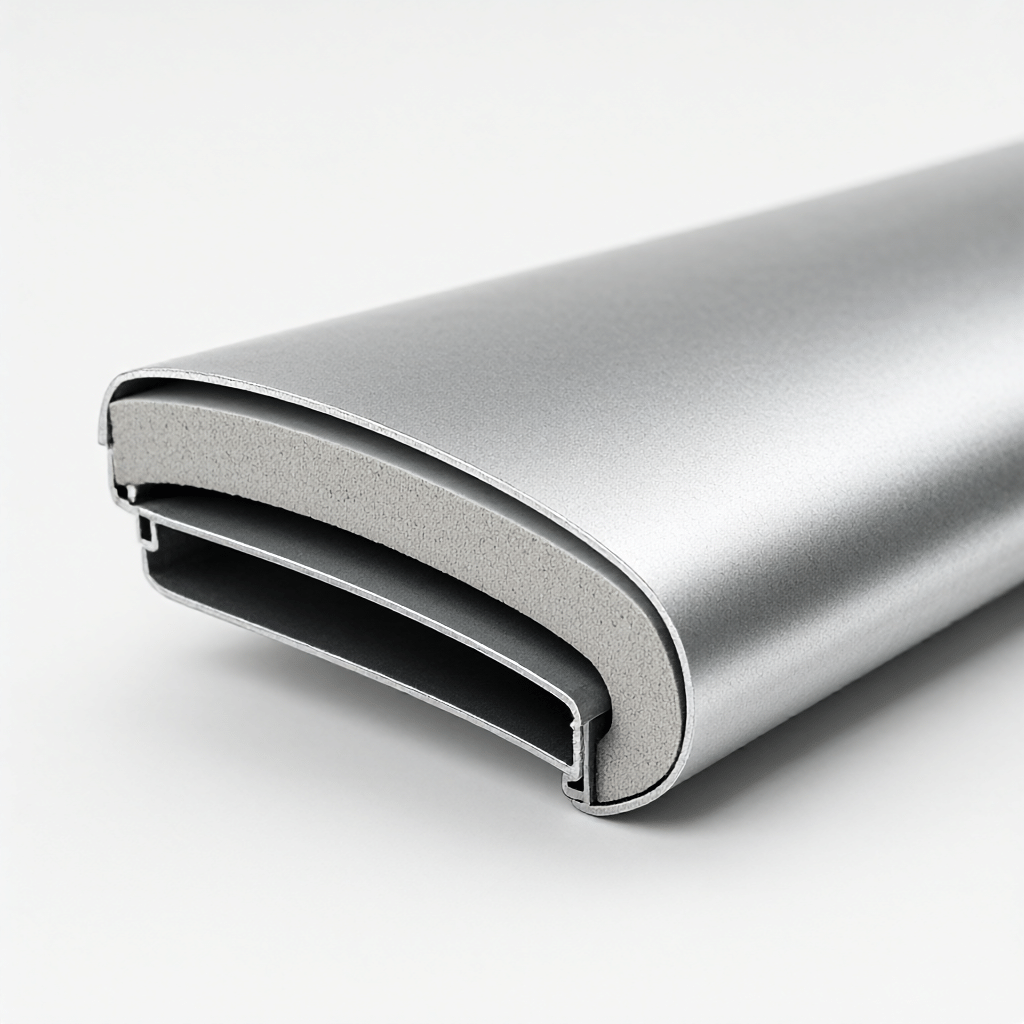
What are the key specifications of roller garage doors?
Roller (roll-up) garage doors are defined by five interrelated specification groups. Each group directly affects durability, energy performance, and compliance with local regulations.
Material and profile gauge
The slat is most commonly galvanized steel or aluminum. Galvanized steel offers higher impact resistance and is standard for industrial and warehouse settings. Aluminum is lighter and corrosion-resistant, suited to coastal or humid environments. Profile thickness typically ranges from 1.0 mm to 2.0 mm, with 1.2 mm to 1.5 mm being common for mid-range commercial applications. Thinner profiles reduce cost but compromise wind-load rating and dent resistance.
Insulation type
Two approaches dominate:
- Slatted foam-injected — polyurethane or polystyrene foam injected between slats during manufacturing. Delivers higher R-values (typically R-4 to R-12 depending on slat depth) and better structural rigidity. Preferred for climate-controlled buildings.
- Non-insulated slats — bare metal with air gaps between slats. Lower cost, lighter, suitable for unheated warehouses and storage facilities where thermal performance is not required.
Slat depth (profile height) usually ranges from 77 mm to 150 mm. Deeper profiles increase rigidity and wind resistance but require more headroom clearance above the opening.
Wind-load rating
Wind class is determined by slat interlock design, guide channel construction, and drum assembly strength. Ratings follow national standards (e.g., EN 12424 in Europe, ASTM E2092 referenced for garage door testing protocols). Typical classes range from Class 1 (low wind) to Class 4+ (high wind zones). Buyers in cyclonic or high-wind regions must verify the rated class against their local code requirements before ordering.
Motor and automation system
Industrial-grade roller doors require motors sized to the door weight and duty cycle. Key variables include:
- Motor power (typically 250 W to 750 W)
- Duty cycle rating (residential light-duty vs. commercial intermittent vs. industrial heavy-duty)
- Control type (keypad, remote, keypad + photo-eye safety sensors, integration with building management systems)
- Manual override capability for power failure scenarios
Safety and compliance features
Modern installations require photo-electric safety beams, auto-reverse mechanisms on obstruction, and emergency release systems. Compliance with ASTM E2092 for garage door assembly safety standards is a baseline expectation for manufactured products entering regulated markets.
| Specification | Industrial / Warehouse | Commercial Retail | Residential Villa |
|---|---|---|---|
| Material | Galvanized steel 1.5–2.0 mm | Galvanized steel 1.2–1.5 mm | Aluminum or steel 1.0–1.5 mm |
| Insulation | Foam-injected R-6 to R-12 | Optional foam-injected | Optional or non-insulated |
| Slat depth | 100–150 mm | 77–100 mm | 77–100 mm |
| Wind class | Class 3–4+ | Class 2–3 | Class 1–2 |
| Motor duty cycle | Heavy-duty (up to 30 cycles/day) | Medium-duty (10–20 cycles/day) | Light-duty (<10 cycles/day) |
| Safety features | Photo-eyes, auto-reverse, manual override | Photo-eyes, auto-reverse | Photo-eyes, auto-reverse |
Applications
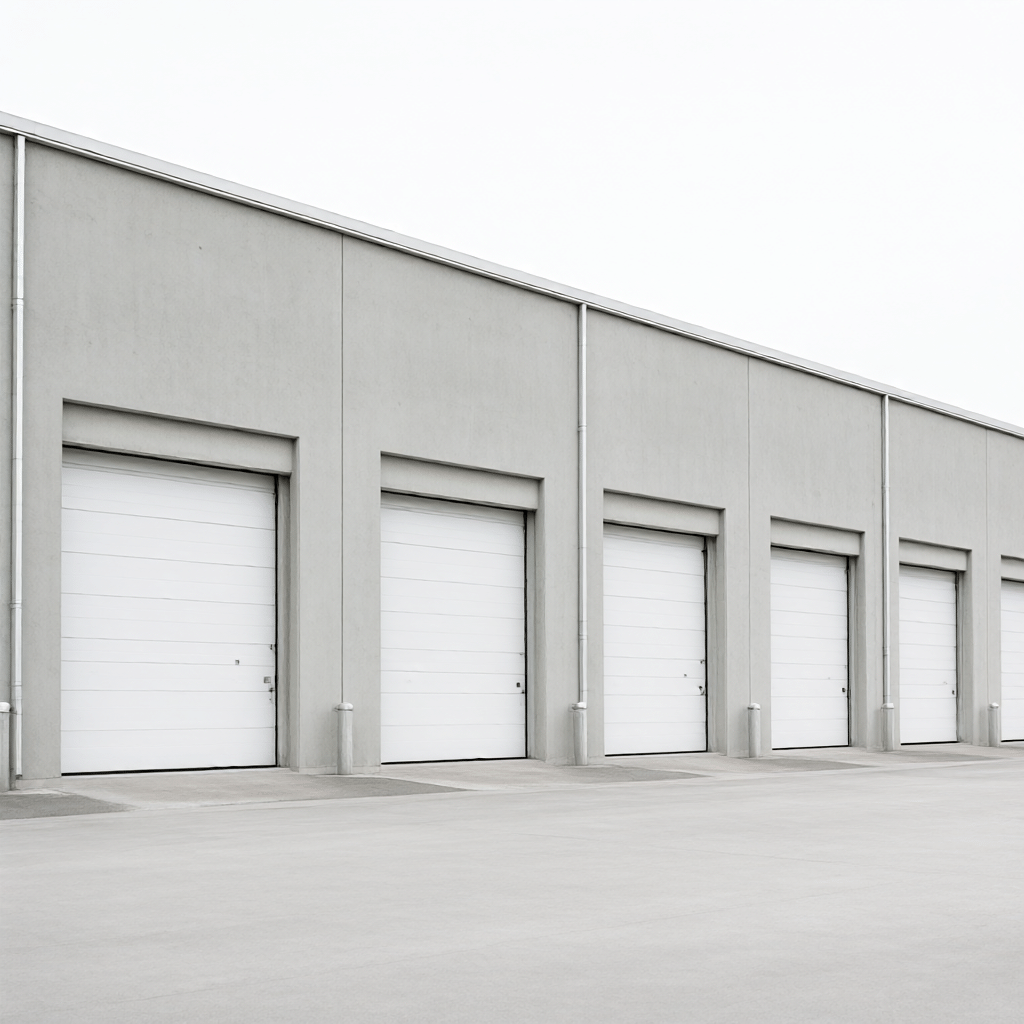
Where can roller garage doors be used?
Roller garage doors serve three broad market segments, each with distinct performance requirements.
Industrial and warehouse facilities
High-cycle operation, large opening sizes (often 4 m × 4 m and above), and resistance to forklift impact are priorities. Steel-slat, foam-insulated doors with heavy-duty motors are standard. Wind-load rating depends on regional exposure — rural warehouses in open areas may need Class 3 or 4.
Commercial buildings and retail fit-outs
Aesthetic finish matters here as much as function. Color-customized slats, quieter motor operation, and integrated branding signage are common requests. Roll-up garage door configurations suit shop fronts, service bays, and loading docks where floor space is at a premium and a compact overhead coil is preferred over sectional door tracks.
Residential developments
Villa entrances, multi-unit apartment complexes, and private garages often specify aluminum or painted steel roller doors in neutral or brand-matched colors. Insulation is valued for attached garages to reduce heat transfer into living spaces. Custom sizes and finishes drive the purchase decision more than raw durability metrics.
For projects involving other door types such as solid wood entrance doors or thermal-break aluminum casement windows, see our sourcing guides on solid-core interior door manufacturers and filtered shower head wholesale suppliers for complementary product categories.
Buying Factors
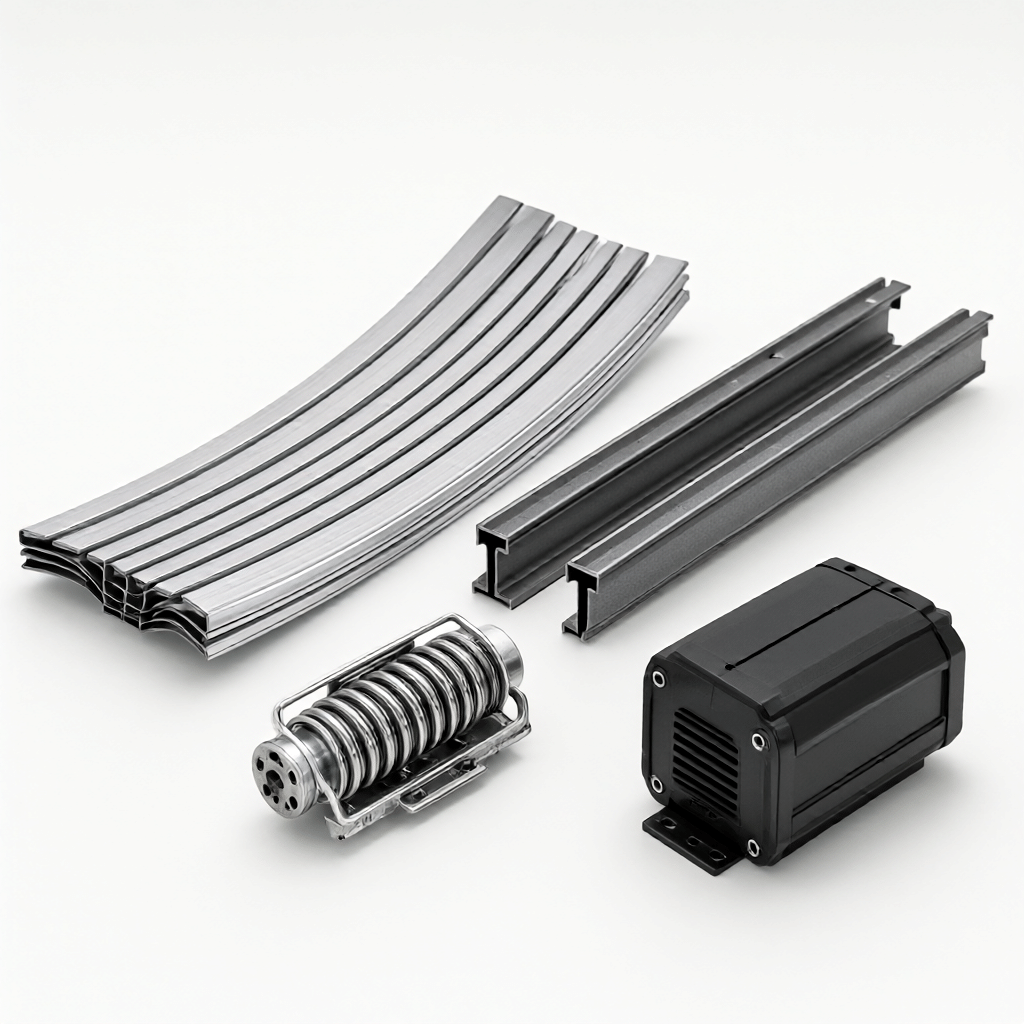
What to consider when buying roller garage doors in bulk?
Bulk procurement requires a structured evaluation framework. The following factors determine whether a supplier can deliver consistently across an entire project.
Factory-direct supply versus trading company
Direct manufacturers control quality at the source and offer greater flexibility for customization. Trading companies add markup and introduce a communication layer that can delay specification changes or quality corrections. Verify whether the supplier operates its own production line or sources from third-party factories.
Customization capability
Real estate and construction projects rarely use off-the-shelf dimensions. A capable manufacturer adjusts profile structure, slat depth, color coating, glass inserts (for visual openness in office facades), and hardware fittings to match the architect’s specification sheet. Confirm that the manufacturer has experience producing non-standard sizes without excessive lead-time penalties.
Quality testing and pre-shipment inspection
Reputable manufacturers perform cyclic life tests, air-tightness checks, water-tightness validation, and wind-resistance testing before shipment. Documentation of these tests — test reports or certificates — should be available upon request. The absence of documented testing is a red flag for bulk orders where replacement costs after installation are significant.
Trade documentation and export experience
International shipments require packing lists, proforma invoices, commercial invoices, certificates of origin, and any market-specific compliance documents. Manufacturers with established export operations handle this routinely; inexperienced suppliers may create customs delays or misdeclarations that incur demurrage charges.
Compliance adaptation to target-market codes
Building codes vary by country and region. A good manufacturer adjusts gauge, wind-class certification, and motor voltage/frequency to meet the requirements of the destination market — not just the product’s origin country standards.
Lead time and order scalability
Production timelines depend on specification complexity and order volume. Standard sizes ship faster; fully custom doors require tooling and setup time. Ask for current lead-time estimates at your expected order quantity tier before committing.
Price & Cost
How much do bulk roller garage doors cost? (FOB China)
Price is driven by material gauge, insulation type, door size, motor specification, and order quantity. Below are indicative bulk-order reference ranges for FOB China sourcing, expressed per opening unit.
| Door Size (W × H, meters) | Non-insulated (USD/unit) | Foam-insulated (USD/unit) | Motor included | MOQ indication |
|---|---|---|---|---|
| 3.0 × 2.5 | $280 – $420 | $420 – $650 | +$120 – $280 | 20+ units |
| 4.0 × 3.0 | $450 – $680 | $680 – $1,050 | +$150 – $320 | 15+ units |
| 5.0 × 4.0 | $720 – $1,100 | $1,100 – $1,750 | +$180 – $380 | 10+ units |
| 6.0 × 4.5 (custom) | $950 – $1,500 | $1,500 – $2,400 | +$200 – $450 | Negotiable |
Indicative FOB China bulk-order pricing for trade buyers — not a retail price and not a binding offer; final pricing depends on quantity, specification and order schedule.
Additional cost drivers include powder-coating color (standard white or gray is lowest-cost; RAL custom colors add a surcharge), decorative grille or glass inserts in slats, and specialized mounting hardware for irregular openings. Shipping method (FCL versus LCL) also affects landed cost — FCL yields lower per-unit freight for orders above two 20-foot container capacities.
Evidence & Practical Notes
Field note: In practice, the single most common source of post-installation complaints is underspecifying wind-load class for the building’s geographic exposure. A door rated Class 2 performs adequately in sheltered urban locations but can fail under sustained high winds in open coastal or rural sites. Always cross-reference the stated wind class with local building code requirements before confirming the order.
Practical limitation: Custom sizing introduces lead-time extension and sometimes a minimum-quantity floor that does not apply to standard sizes. When a project has twenty-five unique opening dimensions, the effective MOQ per variant may push total order value significantly higher than a buyer initially budgets — factor this into early cost modeling rather than discovering it at quotation stage.
Buyer takeaway: Request a pre-production sample or a reference test report covering the exact slat gauge, insulation type, and wind class you are specifying. A written test certificate from an accredited laboratory carries far more weight than a verbal claim, and it protects against specification drift during mass production.
Selecting a Manufacturer
Which manufacturer credentials matter most for international procurement?
When evaluating potential roller shutter door suppliers, the criteria that separate reliable partners from risky ones cluster around four areas: production ownership, customization responsiveness, quality documentation, and export readiness.
A factory-direct operation with in-house profile forming, slat production, and motor assembly gives you traceability over every component. It also means engineering adjustments — such as modifying guide-channel geometry for non-standard rough openings or swapping motor brands to meet local voltage requirements — can be executed without negotiating through a middleman.
Customization extends beyond size. Color matching to a project’s architectural palette, selecting between steel and aluminum slats for specific climate conditions, and adapting wind-load reinforcement to local code tables all require a manufacturer that treats specification variation as routine rather than exceptional.
Quality assurance should be verifiable. Pre-shipment testing for air-tightness, water-tightness, and wind resistance is not optional for bulk orders destined for regulated markets. Manufacturers who routinely document these tests and provide reports alongside shipping paperwork demonstrate mature quality systems.
Export experience matters practically. Complete customs documentation — packing list, proforma invoice, commercial invoice, certificate of origin — prevents border delays. Knowledge of FCL and LCL consolidation options further controls landed cost for orders of varying volumes.
As a manufacturer, our approach to these standards centers on direct factory supply, adjustable profile structures and fittings tailored to each target market’s building code, full-size and finish customization, and mandatory pre-shipment testing before any container leaves the facility. If you have a project specification or a set of opening dimensions, contact our team and we will prepare a specification-aligned quotation with lead-time and documentation details.
Production process overview for roller garage doors
Understanding how a roller garage door is manufactured helps buyers spot quality differences between suppliers. The typical production flow involves:
- Coil slitting and forming — Steel or aluminum coil stock is slit to width, then fed through a roll-forming line that creates the interlocking slat profile with precise gauge control (usually ±0.05 mm tolerance).
- Foam injection (insulated models) — Polyurethane foam is injected into each formed slat under pressure. Proper filling ensures no voids and delivers consistent R-values. Incomplete injection leads to reduced rigidity and wind-load failure.
- Cutting and trimming — Slat lengths are cut to specification; edges are trimmed to ensure clean interlock engagement.
- Surface treatment — Galvanized steel slats may receive a powder-coating pass (electrostatic application + curing at approximately 180°C) for corrosion resistance and color matching. Aluminum slats are typically anodized or powder-coated.
- Assembly — Slats are strung onto the drum, guide channels are fabricated and fitted, and the end-lock mechanism is installed to prevent slat separation under wind pressure.
- Pre-shipment testing — Units undergo cyclic life testing, air-tightness checks, water-tightness validation, and wind-resistance verification before packaging. Documentation of these tests should accompany shipping paperwork.
This controlled manufacturing sequence is why factory-direct sourcing often yields better consistency than trading-company intermediaries who cannot verify each production stage.
Industry standards referenced by international buyers
International procurement of roller garage doors typically requires alignment with one or more of the following standards:
| Standard | Scope | Relevance |
|---|---|---|
| ASTM E2092 | Garage door assembly safety requirements | Baseline safety compliance for North American markets |
| EN 12424 | Windows, doors, shutters — Wind resistance classification | Required for European and many export markets |
| ISO 9001 | Quality management systems | Indicates structured QC processes at the manufacturer level |
| ICC standards (ICC-ES) | Code-compliance evaluation reports | Often required for US building permit approval |
Buyers should request evidence of certification or compliance testing against the standards applicable to their target market. A manufacturer that adapts profile structure, reinforcement, and motor specifications to meet local codes demonstrates maturity in export operations.
Buyer’s red-flag checklist
When evaluating potential suppliers, flag these warning signs early:
- No documented pre-shipment test reports (air/water/wind)
- Refusal to share manufacturing facility photos or video walkthroughs
- Inability to specify exact slat gauge tolerance (claims of “about 1.2 mm” without measured ranges)
- No experience with customs documentation for your destination country
- Pressure to pay 100% upfront before any contract or specification document is signed
- Vague motor brand information (no model number, no duty-cycle rating stated)
- Inability to adjust wind-class reinforcement for high-wind zones
- Missing proforma invoice template or unclear FOB terms
If three or more red flags appear during initial communication, shortlist another supplier before investing sampling costs.
Procurement decision framework with weighted evaluation criteria
A structured scoring model reduces subjective bias when comparing multiple manufacturers. The following weighted evaluation framework allocates 100 points across six procurement dimensions:
| Evaluation Criteria | Weight | Scoring Guide |
|---|---|---|
| Factory ownership & production traceability | 20 pts | 20 = own facility with visible SLAT line; 10 = mixed (some in-house); 0 = trading company only |
| Customization flexibility (size, gauge, finish, hardware) | 18 pts | 18 = full range documented; 9 = partial; 0 = standard sizes only |
| Pre-shipment test documentation (air/water/wind) | 17 pts | 17 = full test reports provided per order; 8 = available on request; 0 = none offered |
| Export & customs documentation capability | 15 pts | 15 = complete packing list, PI, CI, CO ready; 7 = partial; 0 = unproven |
| Motor & automation brand transparency | 12 pts | 12 = named brands with specs; 6 = generic description; 0 = unspecified |
| Lead time predictability at target MOQ tier | 18 pts | 18 = confirmed timeline in writing; 9 = estimated range; 0 = vague |
Scoring threshold guidance: Suppliers scoring below 50 of 100 points carry significant procurement risk. Scores between 50–70 require additional due diligence (factory audit or third-party inspection). Scores above 70 indicate a viable candidate for trial ordering.
Apply this framework as part of your vendor prequalification step — record scores for each evaluated supplier, document the rationale, and use comparative analysis to justify the selection to project stakeholders.
Technical Specifications Deep-Dive
Industry standards and test methods for roller garage doors
Understanding which standards apply to your target market is essential before issuing an RFQ. Key referenced frameworks include:
- ASTM E2092 — Standard test method for structural performance of garage doors; used widely for wind-load and cyclic durability validation in North American markets astm.org.
- EN 12424 — European standard defining wind-load classification (Classes 1–5) for shutter and gate systems.
- ISO 9001 — Quality management system certification; relevant as a baseline indicator of a manufacturer’s process control maturity, though it does not certify product performance.
Buyers should request evidence of testing performed to these or equivalent standards before committing to large orders. A supplier that can produce a third-party test report for your specified door size, wind class, and insulation configuration carries significantly more weight than one relying on generic certificates.
Insulation performance and energy-code implications
Insulated roller doors are increasingly required for climate-controlled spaces, attached residential garages, and buildings subject to energy-code compliance (e.g., IECC in the U.S., Part L in the UK, AS/NZS 4254 in Australia). Typical performance benchmarks include:
| Insulation Type | Slat Depth | R-Value Range | Cycle Fatigue Impact | Cost Premium vs. Non-Insulated |
|---|---|---|---|---|
| Polystyrene (EPS) injected | 77–100 mm | R-4 to R-6 | Minimal added stress on motor | +$60 – $120/unit |
| Polyurethane (PUR) injected | 100–150 mm | R-6 to R-12 | Moderate; higher density improves rigidity | +$100 – $220/unit |
| Non-insulated slatted | Any | N/A (R ≈ 0) | Lowest motor load | Baseline |
Deeper slat profiles (120–150 mm) provide both higher thermal resistance and greater torsional rigidity, which directly supports higher wind-load classes. When specifying for cold-climate or conditioned-space applications, insist on PUR-injected slats with certified R-values rather than accepting vague “foam-filled” claims.
Motor selection matrix for different duty cycles
Motor undersizing is one of the most frequent causes of premature failure. Match motor power to door weight and expected daily cycle count:
| Duty Category | Cycles/Day | Typical Door Weight | Recommended Motor Power | Control Integration |
|---|---|---|---|---|
| Residential light-duty | < 10 | 80–150 kg | 250–350 W | Remote + keypad |
| Commercial medium-duty | 10–20 | 150–300 kg | 350–500 W | Keypad + photo-eyes + BMS option |
| Industrial heavy-duty | 20–50+ | 300–600+ kg | 500–750 W | Full safety suite + manual override |
Demand a written motor warranty and confirm that the manufacturer can source alternative motor brands to match your market’s voltage, frequency, and safety-certification requirements (e.g., CE, UL, AS/NZS).
Procurement Evaluation Framework
Buyer’s checklist for roller garage door manufacturers
Use the following structured checklist when scoring potential suppliers. Assign a weighted score (1–5) per criterion and calculate a composite rating before issuing any purchase order.
| # | Evaluation Criterion | Weight | Score (1–5) | Notes |
|---|---|---|---|---|
| 1 | Factory-direct ownership (not trading company) | 20% | ||
| 2 | Ability to customize slat gauge, depth, color, hardware | 15% | ||
| 3 | Pre-shipment test documentation (cyclic, air-tightness, water-tightness, wind-resistance) | 15% | ||
| 4 | Export experience and customs-documentation readiness | 10% | ||
| 5 | Compliance adaptation to destination-market codes (voltage, wind-class certs) | 10% | ||
| 6 | Lead-time transparency at your projected order volume | 10% | ||
| 7 | Reference projects or installed-case studies | 10% | ||
| 8 | Competitive and transparent FOB pricing | 10% | ||
| Composite Score | 100% |
A composite score below 3.0 / 5.0 across these criteria indicates elevated procurement risk and warrants either additional due diligence or alternative supplier shortlisting.
Common red flags in roller-door manufacturing inquiries
The following indicators suggest a supplier may not be suitable for bulk or regulated-market orders:
- Vague specification sheets — Missing slat-gauge tolerance, no declared wind-class test methodology, no R-value certification.
- No written test reports — Reliance on verbal assurance rather than third-party or internally documented test results.
- Absence of reference installations — Inability to provide photos, project locations, or contactable references.
- Payment terms requiring 100% upfront — Legitimate manufacturers typically accept a deposit with balance against shipping documents.
- Unwillingness to adapt profile or hardware — Refusal to modify guide-channel geometry, motor brand, or voltage/frequency to match your market.
- Missing export documentation capability — No familiarity with packing lists, commercial invoices, certificates of origin, or market-specific declarations.
RFQ Template (Copy-Paste for Supplier Requests)
Use the following template when sending requests for quotation to multiple manufacturers. Structured input reduces back-and-forth and enables apples-to-apples comparison.
PROJECT: [Project name / location]
APPLICATION: [Residential villa / Commercial retail / Industrial warehouse]
DOOR QUANTITY: [Total units + number of unique sizes]
SPECIFICATION PER SIZE:
Size 1 — W × H (mm): ____________
Material: [Galvanized steel / Aluminum]
Slat gauge (mm): ____________
Slat depth (mm): ____________
Insulation: [None / EPS / PUR] Target R-value: _____
Wind-load class: [per EN 12424 / ASTM E2092 / local code]
Color / finish: [RAL code or powder-coat spec]
Motor power (W): ____________ Voltage/frequency: _____
Safety features: [Photo-eyes / auto-reverse / emergency release / others]
Certifications required: [CE / UL / AS/NZS / other]
SIZE 2: [repeat above]
SIZE 3: [repeat above]
DELIVERY:
Port of discharge: ____________
Preferred incoterm: [FOB / CFR / CIF]
Target shipment date: ____________
Please quote per unit and total, with lead time, MOQ per size,
and attach relevant test reports or certification copies.
Sources & References
- ASTM E2092 — www.astm.org
- solid-core interior door manufacturers — zooshen.com
- filtered shower head wholesale suppliers — zooshen.com











