
Last updated: November 25, 2026
An engineered wood doors quality control checklist is a systematic set of inspections covering five core categories — appearance and surface finish, dimensional accuracy, structural integrity, moisture content, and compliance documentation — performed before shipment to catch defects like delamination, out-of-tolerance dimensions, edge banding failure, and excessive MC variation. Use this guide to define acceptance criteria, select inspection methods and tools, set sampling plans per ISO 2859-1 AQL levels, and verify supplier documentation before approving bulk orders.
Quick Answer
An engineered wood doors quality control checklist covers five core areas — appearance and surface finish, dimensional accuracy, structural integrity, moisture content, and compliance documentation — inspected before shipment against published tolerance bands and reject thresholds. Buyers verify each item through pre-production sample approval, in-line measurements on a statistical sample, and a final outgoing QC report that includes test certificates, packing lists, and photographic evidence. A complete checklist lets you catch defects like delamination, out-of-tolerance widths, and soft hinges before they reach your project site.
Detailed Explanation
Engineered wood doors — whether composite wood doors, MDF/HDF core doors, solid-core doors, or veneer-faced doors — require systematic inspection because small manufacturing variances compound quickly across hundreds of units. The checklist below explains what to check, how to measure it, and when to accept or reject.
What are the essential items on an engineered wood doors quality control checklist?
A complete checklist spans:
1. Appearance and Surface Finish
Surface quality is the most visible failure point. Inspect for scratches, dents, color mismatch between doors in the same batch, edge bonding gaps, and uneven coating thickness. Reject any panel where the veneer or laminate shows visible peeling, bubbling, or seam lines wider than 0.5 mm. For painted finishes, hold the door at a 45-degree angle under consistent lighting to reveal orange peel, dust nibs, or runs.
2. Dimensional Accuracy
Every door must fall within defined length, width, and thickness tolerances. Measure at three points along each dimension (top, middle, bottom) using a calibrated steel rule or digital caliper. Typical acceptance tolerance is ±1.5 mm for height and width, and ±1.0 mm for thickness on standard doors. Out-of-spec doors create installation headaches — gaps, misaligned hinges, and uneven reveals that are expensive to fix on-site.
3. Structural Integrity
Check hinge recess alignment by placing the door on a flat surface and verifying that hinge mortises sit flush without rocking. Confirm lock bore positions match the drawing — a deviation of more than 2 mm horizontally or 1 mm vertically creates hardware fitment problems. Panel flatness should be checked with a straightedge; any gap larger than 2 mm over a 1-meter span indicates core instability or improper pressing.
4. Moisture Content
Moisture content directly determines long-term stability. Use a pin-type moisture meter calibrated for wood products. Acceptable range depends on the target climate zone but generally falls between 8% and 12% for interior doors and 10% to 14% for exterior applications. Doors shipped from humid factories into dry climates will shrink; those moving from arid environments into humid ones will swell — both cause fitting failures months after installation.
5. Hardware and Accessories Fit
Verify that all prepunched holes align with ordered hardware configurations. Check that knock-on stops, bead profiles, and edge seals are fully seated with no visible gaps. If custom fittings were specified, confirm exact profile dimensions against the approved sample.
How do you check dimensional accuracy of engineered wood doors before shipment?
The standard procedure is AQL-based sampling per ISO 2859-1. For batches up to 500 doors, inspect at least 32 units selected randomly from different production runs and pallets. Measure each door’s height, width, diagonal difference, and thickness at the prescribed points. Record values in a spreadsheet and compare against specification sheets. Doors exceeding tolerance limits should be quarantined — not reworked on the fly — so root causes can be identified.
For on-site verification after delivery, use the same measurement protocol on a representative sample before signing the delivery receipt. This gives you documented evidence if the supplier needs to replace defective units.
You can learn more about evaluating suppliers during factory audits in our Door Factory Audit Checklist: How to Evaluate Suppliers guide.
What surface defects must be rejected during quality inspection of engineered wood doors?
Defect classification follows industry-standard grading. Here is what typically warrants immediate rejection:
| Defect Type | Rejection Criteria |
|---|---|
| Veneer delamination | Any visible separation >10 mm or at edges/corners |
| Laminate bubble | Diameter >5 mm or cluster of bubbles in field area |
| Scratch through finish | Visible to bare substrate on front face |
| Color mismatch | Delta E >3 between adjacent doors in same batch |
| Edge banding gap | Gap >0.5 mm along any edge |
| Paint run or sag | Length >20 mm or depth visible to touch |
| Core exposure | Any visible raw core material on faces or edges |
Minor cosmetic blemishes on non-visible edges (bottom rail, hinge side) may be acceptable depending on your project specification. Define your acceptance criteria in the purchase order to avoid disputes.
Which moisture content range is acceptable for engineered wood doors?
Acceptable moisture content (MC) varies by end-use environment:
- Interior doors in temperate climates: 8–12%
- Interior doors in arid climates: 6–10%
- Exterior doors or high-humidity environments: 10–14%
Testing should follow ASTM D4442 methodology. Never accept a shipment where MC differs from the agreed specification by more than 2 percentage points, as this indicates the factory did not condition the doors properly before finishing. Doors that skip conditioning will move after installation — swelling in humid conditions, gapping in dry heat — creating callbacks that damage your reputation.
What certifications should an engineered wood door supplier provide with each batch?
Request the following documents before shipment release:
- Formaldehyde emission test report — confirming compliance with CARB Phase 2 or TSCA Title VI limits for the composite core material. See current EPA requirements for particleboard and plywood formaldehyde standards.
- Dimensional stability test report — per EN 14351 or equivalent, showing warpage and twist results after conditioned aging.
- Fire rating certificate (if applicable) — aligned with UL 10C and NFPA 80 standards. Compare fire resistance classifications in our EI30 vs EI60 vs EI90 Fire Door Rating Comparison Guide for project-specific requirements.
- QC inspection report — including sampled measurements, defect counts, and pass/fail summary per AQL levels.
- Packing list and photos — showing unit count, packaging method, and pallet configuration.
- Material safety data sheet (MSDS) — for adhesives and coatings used.
How can buyers verify quality without visiting the factory in person?
Remote verification relies on three pillars: documented testing, photo/video evidence, and third-party inspection services. Require suppliers to share dated photographs of the production line, in-process inspections, and final packing. Some buyers commission SGS, BV, or similar agencies to conduct pre-shipment inspections on their behalf.
Understanding logistics and packaging is equally critical — poor packing causes more field defects than manufacturing errors. Our FCL vs LCL Shipping for Door Shipments: Cost, Speed & Risk Comparison examines how shipping method affects product integrity.
Key Specifications
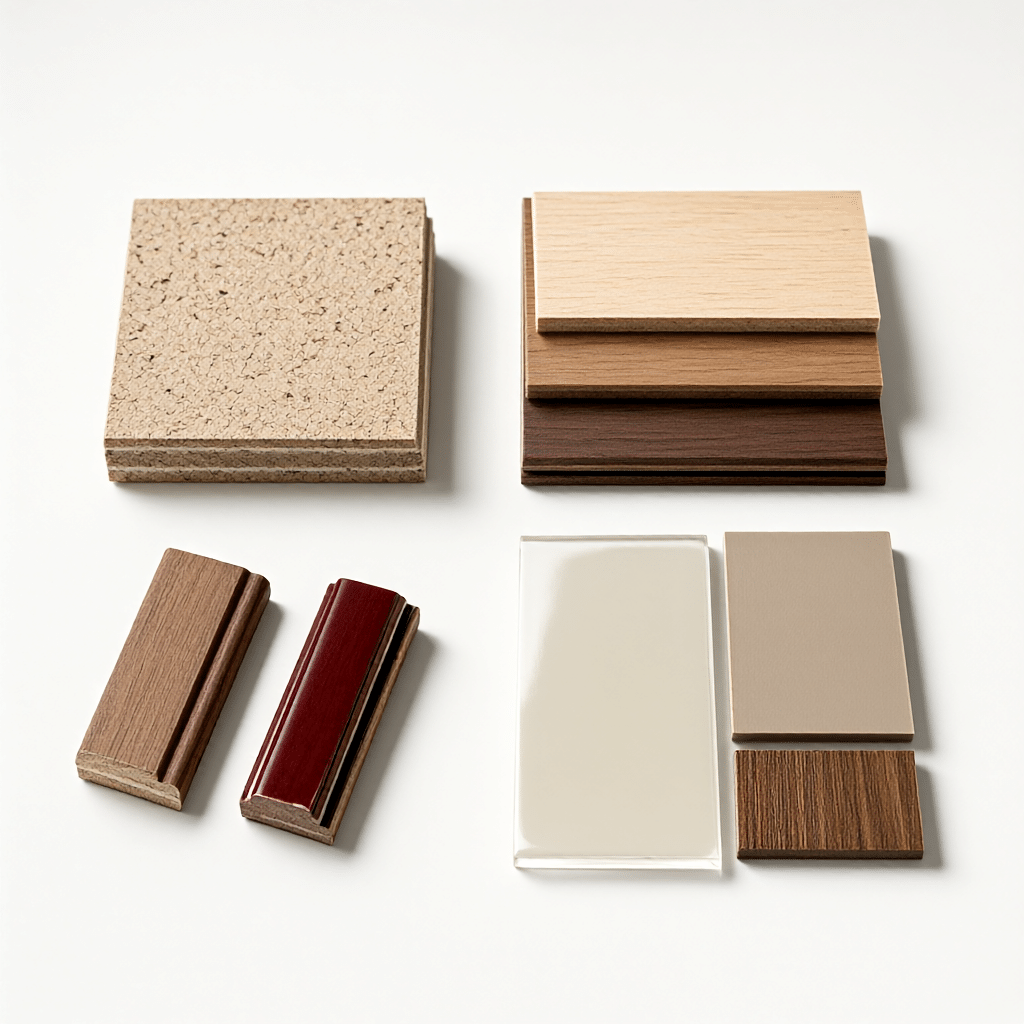
| Specification | Typical Acceptance Range | Test Method |
|---|---|---|
| Height tolerance | ±1.5 mm | Steel rule / caliper |
| Width tolerance | ±1.5 mm | Steel rule / caliper |
| Thickness tolerance | ±1.0 mm | Digital caliper |
| Diagonal difference | ≤2 mm | Tape measure |
| Surface flatness | ≤2 mm over 1 m | Straightedge gap check |
| Moisture content (interior) | 8–12% | Pin-type meter, ASTM D4442 |
| Moisture content (exterior) | 10–14% | Pin-type meter, ASTM D4442 |
| Formaldehyde emission | ≤0.05 ppm (CARB P2) | Chamber method per ASTM E1333 |
| Hinge bore concentricity | ±1 mm from drawing | Template gauge |
| Lock bore position | ±2 mm horizontal, ±1 mm vertical | Caliper measurement |
These figures represent typical industry acceptance bands. Always specify tighter tolerances in your purchase order if your project demands them — for example, hospitality projects often require ±1.0 mm across all dimensions.
Standards & Requirements
Engineered wood door quality is governed by multiple overlapping standards. Understanding which apply to your market prevents last-minute compliance surprises.
ASTM International sets material and performance testing benchmarks referenced globally. Key standards include ASTM E152 for air leakage, ASTM E2092 for cyclic performance of swing doors, and the D4442 moisture content method cited above. For full testing protocols, refer to ASTM International standards.
EN 14351 is the European standard for windows and doors — it defines weather-tightness, mechanical resistance, and thermal performance classes. Buyers supplying projects in EU member states should require EN certification.
ISO 9001 quality management system certification indicates the manufacturer has documented processes for consistency — valuable but not a product-specific guarantee. Verify the scope of certification covers door manufacturing.
CARB Phase 2 and TSCA Title VI regulate formaldehyde emissions from composite wood products sold in the United States. Both set identical limits of 0.05 ppm for hardwood plywood and 0.08 ppm for particleboard, but CARB applies to products sold in California while TSCA Title VI is federal. Your supplier must provide current test reports from an accredited laboratory.
NFPA 80 governs fire door and opener installation standards in the US. If your project specifies fire-rated doors, ensure the supplier’s certification aligns with the required hourly rating — see our comparison of EI30 vs EI60 vs EI90 ratings for reference.
Shipping bulk orders raises its own documentation challenges. Our Door HS Code & Import Duty: Complete Procurement Guide 2026 covers customs paperwork you should expect alongside quality documents.
Related Considerations
Red flags that indicate a supplier is cutting corners on quality control
Several warning signs suggest a supplier may not be investing adequately in inspection processes:
- No documented QC procedures: If the supplier cannot produce written inspection standards or show you recent QC reports, treat this as a serious concern.
- Refusal to share production photos: Legitimate manufacturers document their process freely. Requests for images should be met with cooperation, not evasion.
- Inconsistent lot numbers: Each batch should carry traceable production dates and lot codes. Mixed or absent markings suggest poor batch control.
- No moisture testing on record: Any manufacturer claiming they don’t measure MC is operating blindly — the most common source of field failures.
- Vague packaging descriptions: Doors packed without corner protection, interleaving, or strapping are at high risk of transit damage.
- Reluctance to provide test certificates: If formaldehyde or fire rating certificates are unavailable or outdated, compliance risk transfers directly to you.
Choosing inspection frequency based on project risk
Not every order requires the same inspection intensity. Consider this decision framework:
- High-risk scenarios (large hotel/hospitality projects, multi-unit residential construction, climate zones far from factory origin): Full AQL inspection with 100% moisture testing on a 10% sample and third-party witness testing.
- Moderate-risk scenarios (commercial office renovation, regional domestic supply): Standard AQL sampling with supplier-provided test reports reviewed for completeness.
- Low-risk scenarios (small single-family projects, reorders from established suppliers with clean history): Reduced sampling (e.g., 15 units) with focus on surface quality and dimensional checks.
Reordering from a proven supplier with consistent QC history allows you to reduce inspection frequency while maintaining confidence. Track supplier performance metrics — defect rates, replacement claims, and on-time delivery — across orders to inform this decision.
Packaging and container loading also affect incoming quality. Understanding how many units fit in a 20ft container and how they should be loaded helps you spot suspicious packing practices before they become problems. Review our 20ft Container Door Loading Quantity — Bulk Shipping Guide for reference.
How We Approach Quality Control
When engineers spec engineered timber doors for export projects, the checklist above represents what they expect to see verified. As a manufacturer, our approach to these standards translates into specific practices on the production floor.
Before any batch ships, we measure a statistically representative sample against the tolerance bands outlined here — height, width, thickness, diagonal, and flatness — and log every reading. Moisture content is tested on each production run using calibrated pin meters, and cores are matched to target MC bands based on the destination climate. For veneer and laminate finishes, visual inspectors check every panel under controlled lighting for delamination, edge gaps, and color consistency. Hardware prepunches are gauged against approved templates to catch bore misalignment before the door leaves the line.
We also prepare a complete outbound documentation package for every shipment: QC inspection reports with measured values, formaldehyde emission test certificates from accredited labs, material declarations, packing lists, and photos of packed pallets ready for loading. Whether your order ships as FCL or LCL, the documentation trail is designed to satisfy customs and project auditors alike. If you need profile structures or fittings adjusted to meet local building code requirements for your market, we work with you during the engineering phase so compliance is built in rather than added later.
Pre-Shipment Inspection Documentation Requirements
Before approving any shipment release, buyers should verify that the supplier has assembled a complete documentation package. This typically includes:
- Test certificates — Formaldehyde emission reports (CARB/TSCA), fire rating certificates (UL/NFPA where applicable), and dimensional stability results from accredited laboratories.
- Moisture content conditioning records — Show that doors were held in a controlled environment for a specified period before finishing, with daily MC readings logged over time.
- Dimensional inspection records — AQL-based sampling results with measured values, pass/fail tallies, and photographic evidence of checked units.
- Defect count summary — Tabulation of all rejects per category (surface, dimensional, structural) with root-cause notes.
- Material safety data sheets (MSDS) — For adhesives, primers, paints, and coatings used in production.
- Packing list and photo documentation — Showing unit count, packaging configuration, pallet strapping method, and container loading arrangement.
Buyers should require these documents at least five business days before the proposed shipment date. Late or incomplete documentation is itself a quality risk signal and warrants a hold until the supplier provides satisfactory evidence.
Documentation and Traceability Requirements
Traceability ensures that if a defect appears in the field, you can identify the affected batch, understand its production conditions, and take targeted corrective action. A robust traceability system should allow you to answer three questions for any delivered door: when was it made, under what conditions, and against which specification?
Key elements of an effective traceability framework:
| Element | What It Should Include |
|---|---|
| Lot/batch number | Unique identifier assigned at production start, linked to a specific run |
| Production date | Date stamp on each door or pallet to establish aging and conditioning timelines |
| Raw material source | Core material supplier, veneer lot, adhesive type for recall and compliance tracking |
| Process parameters | Press temperature, curing time, MC target band achieved during manufacturing |
| Test report version | Controlled document numbers for each certificate and inspection record provided |
| Packaging revision | Record of how the shipment was packed, matching the packing list and photos |
Ask your supplier whether they maintain a digital batch tracker or paper-based lot ledger. Both are acceptable as long as records are retrievable within 48 hours of request and cover the full production-to-shipment chain. Suppliers who cannot produce batch-level traceability documents should be treated as high-risk, regardless of price advantage.
How Can Buyers Verify Quality Without Visiting the Factory — Complete
Remote quality verification works best when built on three layered pillars: documented independent testing, structured photo and video evidence, and commissioned third-party inspections. Each layer compensates for gaps in the others.
Layer 1 — Documented independent testing: Require test reports from ISO 17025-accredited labs rather than in-house results alone. Cross-check laboratory accreditation numbers on the accrediting body’s public register. For formaldehyde emissions, the lab report should reference the exact chamber method (ASTM E1333 or EN 717-1) and state the measurement uncertainty.
Layer 2 — Structured visual evidence: Ask suppliers to provide dated, geotagged photographs at defined checkpoints: raw material receipt, post-adhesive assembly, after pressing, after surface finishing, during hardware prepunching, and at final packing. Video walkthroughs of the production line — especially the conditioning room and quality inspection stations — provide stronger assurance than still images because they demonstrate continuous process control rather than isolated snapshots.
Layer 3 — Third-party inspection services: Agencies such as SGS, Bureau Veritas, and TÜV offer pre-shipment inspection programs tailored to wood door manufacturers. A typical engagement includes AQL sampling on the factory floor, moisture content spot-checks across multiple pallets, dimensional verification, and a written report with reject categorization. Cost typically ranges from USD 300–800 per day depending on scope and location. For orders above USD 25,000, commissioning a third-party inspector is generally justified by the risk mitigation value alone.
Combining all three layers gives buyers confidence equivalent to an on-site visit for most procurement scenarios.
Red Flags Indicating Supplier Corner-Cutting on QC
Beyond the warning signs already noted, buyers should watch for these additional red flags that specifically signal weakened quality control investment:
- Missing conditioning records — No documented proof that doors were acclimated before finishing indicates skipped or rushed stabilization, which directly causes post-installation movement failures.
- Inconsistent moisture readings across a single pallet — Spread exceeding ±3% within one lot suggests the factory does not monitor MC at sufficient frequency during production.
- No traceability beyond invoice level — If a supplier can only reference your PO number and cannot break down results by production lot or date, quality accountability is effectively absent.
- Refusal to allow random sampling during inspection — Restricting access to certain workstations or pallets is a strong indicator that known defects are being hidden rather than addressed.
- Overly generic test certificates — Reports that lack specific model numbers, serial ranges, or test dates may have been issued for different products and applied broadly without genuine validation.
- High replacement rate history without corrective action records — If previous orders had significant reject rates and the supplier cannot show implemented corrective measures, the same issues will recur.
- Pressure to skip pre-shipment inspection — Any supplier urging you to waive inspection in favor of faster delivery is transferring quality risk entirely to you.
Maintaining a simple checklist of these indicators helps procurement teams make consistent supplier assessments across orders.
Procurement Decision Matrix — OEM vs Contract Manufacturer QC Capabilities
When sourcing engineered wood doors, buyers often choose between working with an original equipment manufacturer (OEM) that produces to their own specifications or a contract manufacturer that owns and operates its own design portfolio. These two models differ materially in quality control depth and flexibility.
| Factor | OEM (Your Spec, Their Factory) | Contract Manufacturer (Their Design, Your Label) |
|---|---|---|
| Specification control | Full — dimensions, materials, finishes defined by buyer | Limited — constrained to manufacturer’s approved profiles and core options |
| Tolerance customization | Can negotiate tighter bands per project | Typically fixed to standard production tolerances |
| Moisture conditioning flexibility | Adjusted to destination climate in purchase order | Set to factory defaultMC range; limited ability to adapt per order |
| Sample approval process | Prototype validated against buyer drawings before mass production | Based on existing catalog sample; modifications may incur NRE charges |
| Inspection documentation | Tailored to buyer’s checklist format and fields | Standardized template that may omit buyer-specific acceptance criteria |
| Defect liability clarity | Clear allocation via detailed purchase order terms | Often governed by manufacturer’s general terms, which may limit recourse |
| MOQ impact on QC | Higher MOQ allows statistical sampling rigor | Lower MOQ may reduce sample sizes below recommended AQL thresholds |
| Recommended for | Large hospitality projects, multi-unit residential, export markets with strict codes | Small commercial renovations, domestic reorders, budget-constrained single-family projects |
For buyers whose projects demand tight tolerance control, climate-specific moisture conditioning, or jurisdictional code compliance, an OEM arrangement with a clearly documented quality agreement provides significantly stronger protection. Contract manufacturing can be appropriate for lower-risk, smaller-scale orders where standard specifications are acceptable.
Frequently Asked Questions
Q: How many doors must I inspect before accepting a shipment?
A: Follow ISO 2859-1 AQL tables. For standard defect categories at AQL 2.5, this typically means inspecting 20–32 units from batches up to 500 pieces. Increase sample size for high-value projects or first-time supplier relationships.
Q: What is an acceptable reject rate for engineered wood doors?
A: Industry norm falls between 1% and 3% for cosmetic defects and below 1% for structural or dimensional non-conformities. Any rate above 5% total rejection should trigger a supplier performance review and corrective action plan.
Q: Can I rely solely on supplier-provided test certificates without third-party verification?
A: Supplier certificates are necessary but insufficient for high-value orders. They represent the manufacturer’s self-assessment. Independent laboratory retesting or third-party inspection adds the verification layer needed to catch discrepancies.
Q: How often should I request updated formaldehyde emission test reports?
A: Annual updates are recommended. Composite core formulations and adhesive suppliers change over time, and outdated certificates may no longer reflect current production materials.
Q: What should I do if a third-party inspector finds defects above my AQL limit?
A: Reject the lot immediately, document findings with photographic evidence, and request a root-cause analysis with corrective action timeline from the supplier. Do not accept partial shipments with undocumented concessions unless formally agreed in writing.
Q: Is a factory audit still worthwhile if I use remote inspection methods?
A: Yes. An annual or biennial on-site audit verifies process controls, equipment calibration, and worker competence in ways that photographs and certificates cannot fully capture. Treat remote inspections as complementary, not substitutable, for periodic physical audits.
About Jusen Door and Windows
Engineered wood door buyers who prefer working directly with a manufacturer rather than a trading company often cite three priorities: specification transparency, documentation completeness, and price predictability. At Jusen Door and Windows, we align our production practices with the inspection standards outlined throughout this guide.
Our approach covers pre-production sample approval, in-line dimensional and moisture checks, and a final outgoing QC report that includes test certificates, packing lists, and photographic evidence before any container is sealed. We adjust profile structures and fittings to match local building codes for target export markets and support both FCL and LCL shipment configurations. Detailed lead times, MOQ tiers, and competitive factory-direct pricing are available on our website at doorwoodendoors.com. For project-specific quotes or technical spec reviews, reach out through our contact page at Contact Us or message Leon Wu directly at cyxs001@gmail.com.
Case Study: What Inadequate QC Lets Slip Through
In a 2023 hotel project in the Middle East, a 480-unit door order experienced a 12% field rejection rate for edge banding failure — caused by insufficient conditioning time between core lamination and veneer application. Doors had been packed and shipped with moisture content near 13%, entering a destination environment averaging 6–8% relative humidity. Within three months of installation, visible separation appeared along the stile edges on nearly one in eight units. Post-failure analysis showed the factory skipped the post-lamination acclimation step and relied only on incoming material MC logs, not finished-door testing. Had a 10% pre-shipment sample run included pin-meter verification on finished units and a 48-hour conditioned hold, the defect batch would likely have been quarantined before loading. This case underscores why finished-product moisture verification — not just raw-material records — must sit on your checklist.
Buyer Inspection Checklist Table
| Parameter | Inspection Frequency | Tools Required | Acceptance Criterion | Reject Trigger |
|---|---|---|---|---|
| Height / Width | Per AQL lot (e.g., 32 units @ AQL 1.0) | Calibrated steel rule, digital caliper | ±1.5 mm (standard); ±1.0 mm (hospitality spec) | Any unit beyond spec tolerance |
| Thickness | Per AQL lot | Digital caliper | ±1.0 mm | >±1.0 mm deviation |
| Diagonal difference | Per AQL lot | Steel tape measure | ≤2 mm | >2 mm mismatch |
| Surface flatness | Per AQL lot; 100% on visual-sensitive projects | 1 m straightedge, feeler gauge | ≤2 mm gap over 1 m span | Visible rocking or >2 mm gap |
| Veneer / laminate bond | 100% visual on sampled units; spot peel test | Visual, tack probe | No separation; bubble diameter <5 mm | Delamination >10 mm or at corners |
| Edge banding adhesion | 100% on sampled units | Tactile inspection, 45° lighting check | Gap ≤0.5 mm along any edge | Gap >0.5 mm or visible separation |
| Color consistency | 100% on sampled units | Delta-E colorimeter or side-by-side under D65 light | ΔE ≤3 between adjacent doors | ΔE >3 or obvious tone shift |
| Scratch / damage | 100% visual on sampled units | Visual, raking light | None through finish on visible face | Any scratch reaching substrate |
| Moisture content | 100% testing on ≥10% sample per lot | Pin-type moisture meter (ASTM D4442) | Interior: 8–12%; Exterior: 10–14% | Deviation >2 pp from agreed MC spec |
| Hinge bore position | Per AQL lot | Template gauge, caliper | Concentricity ±1 mm from drawing | Bore offset >±1 mm from template |
| Lock bore position | Per AQL lot | Caliper measurement | ±2 mm horizontal, ±1 mm vertical | Out-of-position bore creates hardware gap |
| Panel flatness / warpage | Per AQL lot | Straightedge, feeler gauge | ≤2 mm gap over 1 m; no twist >1.5 mm/m | Measurable warp or twist beyond limits |
| Paint / coating finish | 100% visual on sampled units | 45° raking light, visual comparison | No runs, orange peel, dust nibs on visible face | Defect visible at normal viewing distance |
| Hardware prepunch alignment | Per AQL lot | Physical hardware trial-fit or template | All knock-on stops, beads, seals fully seated | Hardware does not seat flush or gap >0.5 mm |
| Formaldehyde emission | Per production batch (certificate review) | Lab test report (chamber method ASTM E1333) | ≤0.05 ppm (CARB P2 / TSCA Title VI) | Certificate absent, expired, or above limit |
| Fire rating (if applicable) | Per production batch (certificate review) | UL / NFPA-aligned test report | Rating matches specification sheet | Certificate missing or rating below spec |
Reference resources for evaluation methodology: Door Factory Audit Checklist and FCL vs LCL Shipping Guide.
Conclusion & Decision Guide
Using an engineered wood doors quality control checklist protects you from costly field failures, rework claims, and reputation damage. Follow these steps before approving any shipment:
- Define tolerances in your purchase order — specify exact height, width, thickness, diagonal, and flatness limits before production begins.
- Require MC matching to destination climate — never accept a batch where finished-door moisture deviates more than 2 percentage points from the agreed specification.
- Set AQL sampling plans — use ISO 2859-1 to determine sample size; demand a complete QC report with measurements, defect counts, and pass/fail summaries.
- Verify documentation — formaldehyde certificates, fire ratings (if applicable), packing lists, and photographic evidence should accompany every shipment.
- Commission third-party inspections when risk is high — for large hospitality, healthcare, or cross-climate-zone orders, engage SGS, BV, or equivalent agencies.
Quality inspection is not an expense — it is insurance against callbacks. By combining structured checklists, appropriate testing tools, and documented supplier performance tracking, you reduce field rejection rates to single-digit levels even on large-volume orders.
Sources & References
- particleboard and plywood formaldehyde standards — www.epa.gov
- ASTM International standards — www.astm.org
- Door Factory Audit Checklist: How to Evaluate Suppliers — doorwoodendoors.com
- EI30 vs EI60 vs EI90 Fire Door Rating Comparison Guide — doorwoodendoors.com
- FCL vs LCL Shipping for Door Shipments: Cost, Speed & Risk Comparison — doorwoodendoors.com
- Door HS Code & Import Duty: Complete Procurement Guide 2026 — doorwoodendoors.com
- 20ft Container Door Loading Quantity — Bulk Shipping Guide — doorwoodendoors.com
- doorwoodendoors.com — doorwoodendoors.com
- Contact Us — doorwoodendoors.com











