
Last updated: November 25, 2026
Quick Answer
The import duty on timber entrance doors varies significantly depending on the destination market, wood species, and whether a preferential trade agreement applies. For standard solid wood doors classified under HS code 4418, typical Most-Favoured-Nation (MFN) rates range from roughly 0% in many ASEAN countries to 6–20% in the United States and the European Union. Additional costs such as anti-dumping duties, value-added tax (VAT), and phytosanitary fees can substantially increase the final landed cost. Buyers should always confirm the applicable rate at the time of shipment, as tariff schedules and trade policy adjustments occur regularly.
Detailed Explanation

Import duty on wooden doors by market is not a single figure — it is determined by a combination of the product’s HS-code subheading, the wood species or construction type, the exporting country, and any bilateral or multilateral trade agreement in force between the two nations. The foundational classification sits under Chapter 44 of the Harmonized System, specifically heading 4418, which covers “Builders’ joinery and carpentry of wood.” This chapter explicitly includes doors, door frames, window frames, and shutters made from wood or other ligneous materials.
How does the HS code classification for wooden doors determine the rate?
HS code 4418 is further divided into subheadings that distinguish products by material composition and construction method. A solid hardwood door will fall under a different subheading than an engineered wood door, which may in turn differ from a composite or laminated timber door. Misclassification between 4418 and 9406 (furniture) is a common error that can lead to incorrect duty payment and potential customs penalties. Subheading differences between importing countries also mean the same door may be classified differently across borders, producing varying effective duty rates even within a regional bloc.
Buyers involved in construction project procurement should verify the precise eight- or ten-digit code with their local customs broker before placing a purchase order. Cross-referencing the correct code against the Door HS Code & Import Duty: Complete Procurement Guide 2026 provides additional clarity on how classification changes impact the final tariff burden.
What are the typical import duty percentages for wooden doors in key markets?
The following table summarises representative MFN-based duty rates for solid wood and engineered wood doors under HS 4418. These figures reflect baseline customs tariffs and exclude VAT, anti-dumping surcharges, and administrative fees.
| Destination | MFN Rate Range | Notes |
|---|---|---|
| United States | 5.3% | Higher rate for certain hardwood species; anti-dumping inquiries may apply |
| European Union | 5–8% | Varies by member state and wood species |
| United Kingdom | 5–8% | Post-Brexit UK TAR applied; aligned closely with previous EU rates |
| Australia | 5% | Phytosanitary fees and GST apply additionally |
| Middle East (GCC) | 0–5% | Saudi Arabia and UAE often apply reduced or zero rates for select origins |
| Southeast Asia (ASEAN) | 0–5% | Many ASEAN members apply 0% under ATIGA for originating goods |
| India | Up to 15% | Tiered rates based on wood species and processing level |
| Canada | ~5.5% | CETA and other FTAs may reduce the rate for eligible origins |
These figures serve as reference points for the current year. Actual rates published in national customs tariff schedules should be verified at the time of shipment release.
How do trade agreements and preferential tariffs reduce the effective import duty?
Preferential tariffs granted under free trade agreements (FTAs) or regional trade arrangements can lower the effective duty well below the MFN ceiling. In the ASEAN bloc, the ASEAN Trade in Goods Agreement (ATIGA) typically eliminates tariffs on qualifying timber joinery products for goods originating within member states. Similarly, exporters shipping from China to Australia may benefit from the China-Australia FTA (CAFTA), while shipments destined for the EU may qualify under bilateral schemes depending on the manufacturing location.
Obtaining preferential treatment requires meeting strict rules of origin criteria, commonly satisfied when the wood material undergoes substantial transformation within the exporting country and the necessary certification — such as a Form E for China-ASEAN trade or a supplier’s declaration under CAFTA — is presented at import. Without proper origin documentation, the shipment reverts to the higher MFN rate regardless of the agreement in place.
Buyers sourcing through FCL or LCL freight modes should ensure that the origin certification aligns with the agreed shipping arrangement, as documented in our FCL vs LCL Shipping for Door and Window Procurement comparison guide. The logistics pathway affects both lead time and the paperwork trail submitted to customs.
Key Specifications
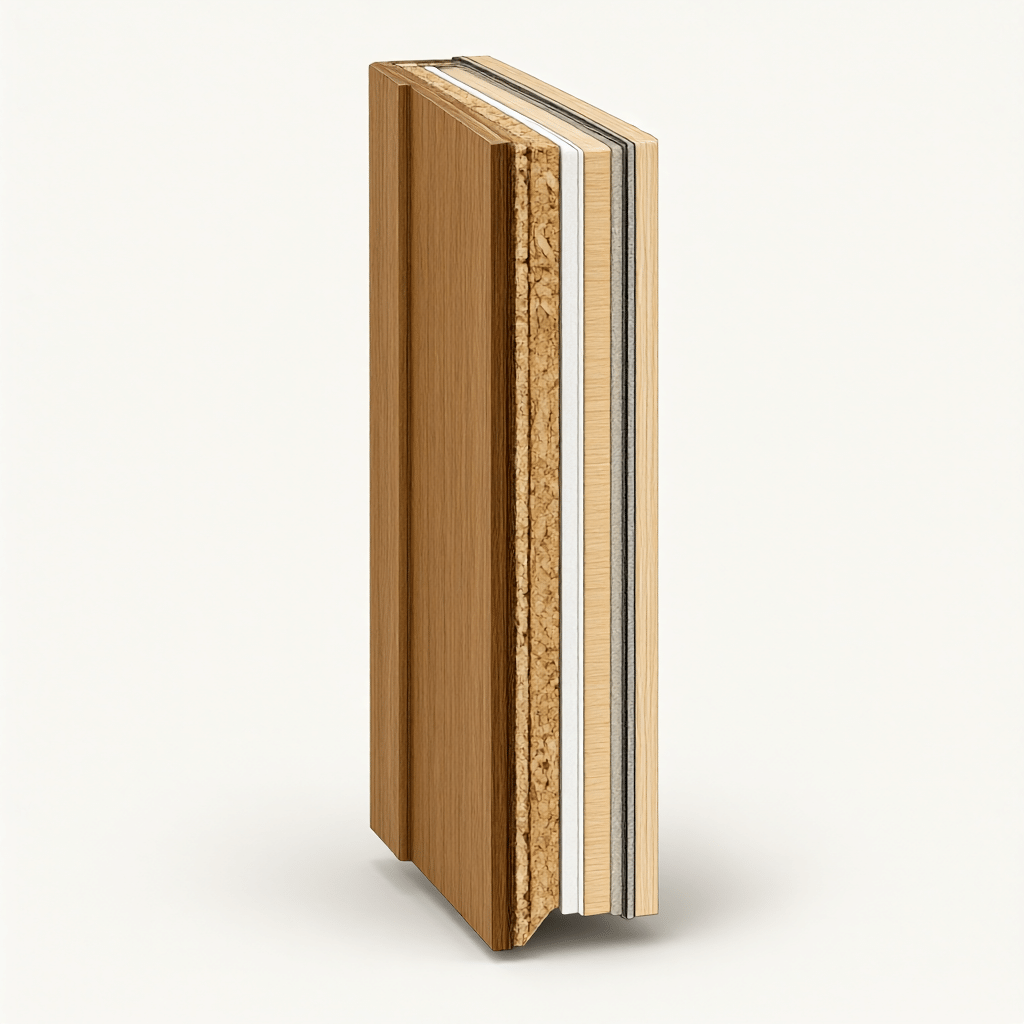
Understanding how duties are calculated and what drives landed-cost variation is essential for accurate budgeting in cross-border door procurement.
How is the customs value determined for wooden door shipments?
Customs valuation is generally based on the transaction value — the price actually paid or payable for the goods when sold for export, plus adjustments for freight, insurance, and ancillary costs up to the port of discharge. This means the declared FOB value multiplied by 1.1 (accounting for freight and insurance) typically forms the customs value used to compute the import duty percentage. For a container of plantation shutter doors valued at $15,000 FOB with $1,800 in freight and $300 in insurance, the customs value would be approximately $17,100. Applying a 5.3% US tariff yields a duty charge of roughly $906.
What additional charges beyond the base import duty apply?
Base customs duty is only one component of the total landed cost. Several supplementary levies commonly apply to wooden door imports:
- Anti-dumping and countervailing duties: Some markets impose additional duties on timber products from specific countries when domestic industry complaints allege unfair pricing. The United States has a history of anti-dumping proceedings covering certain wood categories, and buyers should verify whether the HS subheading for their order falls within any active proceeding before shipping.
- VAT / GST: Value-added tax is assessed on the sum of the customs value plus duty. In the EU, standard VAT rates range from approximately 17% to 27% depending on the member state. In Australia, GST of 10% applies to the imported goods value inclusive of duty and transport costs.
- Phytosanitary and quarantine fees: Because wood is a natural commodity susceptible to pests, most importing countries require a phytosanitary certificate issued by the exporting country’s plant protection organisation. Fumigation or heat-treatment certificates may also be mandated, particularly for solid wood entries into Australia, New Zealand, and parts of the Middle East.
- Customs processing fees: Administrative handling charges vary by port authority and shipment volume but typically add a modest fixed or percentage-based cost per entry.
A practical landed-cost illustration helps clarify how these elements combine. Consider a shipment of solid wood doors entering the United States with an FOB value of $20,000, ocean freight of $2,500, marine insurance of $400, a 5.3% MFN duty, and a 2.5% congressional surcharge sometimes applied to Chinese-origin goods. The customs value totals $22,900; the base duty amounts to $1,214; the surcharge adds $573; and US CBP merchandise processing fees apply at approximately 0.3464%, adding another $79. Total duty-related charges before VAT therefore reach roughly $1,866 on a shipment worth over $22,000. This demonstrates why accurate HS-code selection and FTA eligibility matter directly to the bottom line.
Standards & Requirements

Compliance documentation is non-negotiable for smooth customs clearance of wooden door shipments. Missing or incorrect paperwork delays release, incurs demurrage charges, and in some cases triggers mandatory re-export or destruction orders.
What documents are required for customs clearance of wooden doors?
Every shipment should include the following core documents:
- Commercial invoice with full product description, HS code, unit price, total value, and country of origin
- Packing list detailing weights, dimensions, and package counts per container
- Bill of lading or air waybill confirming the terms of carriage
- Phytosanitary certificate issued by the national plant protection body of the exporting country
- Fumigation or heat-treatment certificate where required by the importing jurisdiction
- Certificate of origin (Form E, EUR.1, or supplier declaration) when claiming FTA preference
- Insurance certificate supporting the declared customs value
- Export license if the source country requires one for timber products
Some destinations additionally request a wood species declaration or a formal statement confirming compliance with CITES regulations for protected timber varieties. Importers bringing engineered or MDF-core doors should ensure the documentation distinguishes between solid wood and composite construction, as some regulatory frameworks treat these categories differently under the same HS heading.
Are there quality and safety standards affecting wooden door imports?
While import duty rates govern the financial side of entry, product standards shape whether the goods clear inspection without rejection. In the United States, ASTM standards such as those referenced through ASTM International provide widely adopted benchmarks for wood durability, dimensional stability, and fire-resistance ratings. Projects requiring fire-rated assemblies, for instance, must demonstrate compliance with recognised performance classifications — a topic covered more deeply in our EI30 vs EI60 vs EI90 Fire Resistance Rating Comparison Guide. Building-code authorities in target markets will reference these standards during specification review, so confirming product conformity early prevents costly post-arrival disputes.
Request a detailed quotation for your project to understand exactly how duty, shipping, and compliance costs stack up for your destination market and order volume.
Related Considerations
How does country of manufacture affect the landed cost of wooden doors?
The country where the doors are manufactured determines three critical factors: the applicable MFN duty rate, eligibility for preferential FTA treatment, and the regulatory burden imposed at import. A door produced in China faces a different tariff profile than one produced in Vietnam, Malaysia, or a European manufacturer, even when the product specifications are identical. Buyers evaluating multiple sourcing options should model the complete landed cost — including duty, freight, insurance, customs clearance fees, and any anti-dumping surcharge — rather than comparing unit prices in isolation.
Container loading efficiency also influences the per-unit duty burden. As discussed in our 20ft Container Door Loading Quantity and Shipping Configuration guide, optimising stowage patterns reduces the number of containers required per project, directly lowering shipping cost allocation and the overall duty exposure for large procurement orders.
When selecting a manufacturer, verifying that they maintain structured pre-shipment quality checks and can supply complete customs documentation in advance makes a meaningful difference in clearance speed and cost predictability. A transparent factory process — covering air-tightness, water-tightness, and wind-resistance testing alongside material certification — ensures the product clears both commercial and regulatory checkpoints without delay. For buyers who need factory-level visibility before committing to volume orders, reviewing a supplier through an independent Door Factory Audit Checklist framework helps confirm operational readiness and compliance discipline.
Contact Our Team to discuss your project specifications and receive a competitiveFOB quotation tailored to your target market.
OPENING:
The import duty on wooden doors is determined by HS code 4418 classification, the exporting country’s origin status, and applicable trade agreements — typically ranging from 0% under ASEAN preferential schemes to 6–20% MFN rates in the US and EU, with additional costs including anti-dumping surcharges, VAT/GST, phytosanitary fees, and customs processing charges that can raise the total landed cost by 15–30% beyond the base tariff. Buyers should always verify the precise eight-digit subheading and FTA eligibility before placing orders, as tariff schedules and trade policy adjustments occur regularly.
How tariffs are calculated at customs clearance for wooden door shipments
Customs valuation follows the WTO Agreement on Implementation of Article VII of GATT 1994, commonly referred to as the Transaction Value method. The declared customs value equals the FOB price plus freight and insurance (CIF), then adjusted for any royalties, assists, or packing costs not included in the invoice. Once the customs value is established, the applicable duty rate — whether MFN or preferential — is applied to calculate the import duty payable. For wooden doors under HS 4418, the specific eight- or ten-digit subheading determines the exact rate; for example, solid hardwood doors may carry a higher rate than engineered wood doors even within the same chapter.
In practice, customs brokers use national tariff databases such as the US HTSUS, the EU TARIC system, or the Australian Customs Tariff to lookup the precise rate for the declared subheading combined with the country of origin. Some markets also apply ad valorem percentage duties while others use compound rates combining a fixed per-unit charge with an ad valorem component. Regardless of the method, the key principle is that the duty is always calculated on the declared customs value, not simply the unit price quoted by the supplier.
Country-of-origin rules and how they affect the final landed cost of wooden doors
Rules of origin determine whether a shipment qualifies for preferential tariff treatment under a free trade agreement. The two most common tests are the “wholly obtained” standard — applied when the wood is grown, harvested, and processed entirely within one country — and the “substantial transformation” test, which requires that manufacturing operations in the exporting country change the product’s HS classification at the subheading level. For wooden doors, substantial transformation is typically demonstrated when rough-sawn timber imported from another country is milled, assembled, and finished into a complete door unit within the factory, resulting in a new 4418 subheading.
The country-of-origin label directly affects landed cost because preferential FTA rates can reduce the duty from, for example, 5.3% MFN to 0% under CAFTA or ATIGA. However, claiming preferential treatment requires maintaining a documented audit trail — including supplier declarations, bills of materials showing wood source, mill certificates, and production records proving where assembly occurred. Without this evidence, customs authorities will assess the higher MFN rate regardless of any FTA in place. This makes supplier selection and traceability critical components of duty optimisation.
What are the specific ISO, EN, and ANSI standards governing wooden door imports?
Product conformity standards do not change the customs duty rate, but non-compliance can result in rejection at border inspection, delayed release, or mandatory remediation — all of which add hidden cost to the imported shipment. Key standards referenced by importing jurisdictions include:
| Standard | Issuing Body | Application |
|---|---|---|
| EN 14351-1 | European Committee for Standardisation | Windows and doors — Product standard, performance characteristics incl. air-tightness, water-tightness, wind resistance |
| ANSI A250.1 | American National Standards Institute | Installation of Hollow Core Wood Doors — dimensional tolerances, hardware preparation, finish quality |
| ISO 12543 | International Organization for Standardisation | Laboratory methods for assessing acoustic performance of building elements |
| EN 1634-1 | European Committee for Standardisation | Fire resistance and smoke control tests for doors and shutters |
| ASTM E84 / UL 723 | ASTM International | Surface burning characteristics of building materials — used for fire-rating classification |
| FSC Chain-of-Custody | Forest Stewardship Council | Verified sustainable forestry sourcing — increasingly required by public-sector projects |
For buyers specifying entrance doors for commercial or multi-residential construction, confirming that the manufacturer’s product data sheets reference these numbered standards provides assurance that the doors will pass both performance inspection and customs document review without delay. Projects targeting the EU market must additionally comply with the Construction Products Regulation (CPR) requiring a Declaration of Performance (DoP) for doors bearing the CE mark.
Phytosanitary certification requirements for wooden door imports
Wooden doors constructed from solid timber or engineered panels containing wood fibers are classified as regulated wood material in most importing countries. Under the International Plant Protection Convention (IPPC) framework, member states require either a phytosanitary certificate or proof of approved heat treatment (ISPM 15) for shipments entering their territory. Heat treatment must raise the core temperature of the wood to at least 56°C for a minimum of 30 continuous minutes, after which the material receives an IPPC stamp indicating compliant treatment.
Australia and New Zealand enforce particularly strict biosecurity requirements — every wooden door entry must be accompanied by a phytosanitary certificate issued by the exporting country’s national plant protection organisation, and goods may be subject to random sampling or fumigation upon arrival if documentation is incomplete. The Middle East, notably Saudi Arabia and the UAE, similarly requires phytosanitary certification for all unprocessed or semi-processed wood products. Failure to present valid documents triggers storage charges, demurrage, and potential destruction of the consignment at the importer’s expense. Buyers should therefore confirm phytosanitary requirements with their freight forwarder before shipment dispatch, not after arrival.
Full landed-cost worked example table
The following worked example illustrates how each cost component combines to produce the final landed cost for a representative shipment of solid wood entrance doors entering the United States from China under current MFN rates.
| Cost Component | Calculation Basis | Amount (USD) |
|---|---|---|
| FOB Factory Value | 200 doors × $120/unit | $24,000 |
| Ocean Freight (FCL) | 1 × 40ft container | $3,200 |
| Marine Insurance | 0.3% of FOB + freight | $79 |
| Customs Value (CIF) | FOB + freight + insurance | $27,279 |
| MFN Import Duty | 5.3% × customs value | $1,446 |
| Merchandise Processing Fee (MPF) | 0.3464% × customs value | $94 |
| Harbor Maintenance Fee (HMF) | 0.125% × customs value | $34 |
| Anti-dumping Surcharge | If applicable per CBP ruling | $0 (verify) |
| Subtotal Duties & Fees | Sum above | $1,574 |
| VAT / Sales Tax | Not applicable at US federal import level | $0 |
| Total Landed Cost | CIF + duties + fees | $28,853 |
| Landed Cost Per Door | Total ÷ 200 units | $144.27 |
For shipments destined for the European Union, the same FOB value would incur a comparable duty (approximately 5–8%), followed by member-state VAT assessed on the sum of customs value plus duty — for instance, German 19% VAT on a €30,000 customs value including duty yields approximately €5,700 in VAT alone. In Australia, a 10% GST applies to the combined customs value plus duty and transport costs. These supplementary taxes represent the single largest variable in landed-cost modelling and should always be calculated using the destination-market rate published at the time of import.
Structured procurement checklist for wooden door importers
Before committing to a cross-border purchase order for wooden doors, buyers should complete the following qualification and compliance steps to minimise customs delays, duty overpayment, and post-arrival disputes.
Phase 1 — Supplier Qualification
- [ ] Confirm the manufacturer holds valid ISO 9001 certification and product testing reports referencing EN 14351-1, ANSI A250.1, or equivalent standards
- [ ] Verify ability to supply phytosanitary certificates and ISPM 15 heat-treatment marks for the target destination
- [ ] Request a recent factory audit report or schedule an on-site visit using a Door Factory Audit Checklist framework
- [ ] Confirm OEM/ODM capability, lead times, and minimum order quantities aligned with project timelines
Phase 2 — Documentation Preparation
- [ ] Obtain the correct eight-digit HS subheading for the specific door construction type
- [ ] Secure a proforma invoice showing unit price, total value, Incoterms, and country of origin
- [ ] Prepare a detailed packing list with gross weights, net weights, and container load plan
- [ ] Arrange phytosanitary certification and fumigation/heat-treatment certificates before shipment
- [ ] Prepare certificate of origin documentation (Form E, EUR.1, or supplier declaration) for FTA claims
Phase 3 — Risk Mitigation
- [ ] Verify whether the exporting country is subject to active anti-dumping or countervailing duties for the selected HS subheading
- [ ] Confirm destination-market VAT/GST rate and whether it is recoverable against the buyer’s tax position
- [ ] Ensure marine cargo insurance covers total CIF value plus 10% margin
- [ ] Model landed cost per unit under both MFN and preferential FTA rates to confirm budget alignment
- [ ] Engage a licensed customs broker in the destination country before goods arrive to prevent clearance hold-ups
Completing these steps before payment reduces the probability of duty misclassification, documentary rejection at border, and unexpected tax liabilities that can erode project margins.
Supplier verification and manufacturer qualification criteria
When evaluating potential wooden door suppliers for international procurement, buyers should assess the following criteria to ensure the manufacturer can deliver products that meet both performance standards and customs compliance expectations.
| Verification Area | Key Questions to Ask | Expected Evidence |
|---|---|---|
| Production Capability | What is monthly output capacity? Can you handle project-scale orders without compromising quality? | Production schedules, past project references, equipment inventory |
| Quality Control Process | Do you conduct pre-shipment inspections for air-tightness, water-tightness, and wind resistance? | Test reports, QC checklists, third-party inspection certificates |
| Compliance Documentation | Can you provide phytosanitary certificates, FSC chain-of-custody, and CE Declarations of Performance on request? | Sample certificates, IPPC stamps, DoP templates |
| FTASourcing Experience | Have you shipped to our target market before under preferential origin terms? | Past shipping records, Form E samples, customer references in destination country |
| Lead Time & Logistics | What is standard lead time from order confirmation to vessel loading? Do you offer FCL and LCL shipment options? | Production timeline, packaging specifications, container loading plan |
| After-Sales Support | What warranty terms apply? How are replacement parts or repair kits handled for overseas buyers? | Warranty document, spare parts catalogue, response time commitment |
A supplier that transparently addresses these criteria demonstrates operational maturity and reduces the risk of customs clearance failure, delayed delivery, or product non-conformance — each of which carries significant financial consequences beyond the unit price differential.
Contact Our Team to discuss your project specifications and receive a competitive FOB quotation tailored to your target market.
Completing the tariff-calculation explanation
Customs valuation follows the WTO Agreement on Implementation of Article VII of GATT 1994 and uses the transaction-value method as the primary basis. For wooden door shipments, this means the declared FOB price plus freight and insurance (CIF value) forms the assessable customs value. A practical formula widely used by clearing agents is:
> Customs Value = FOB Price + International Freight + Marine Insurance
> Import Duty Payable = Customs Value × Applicable MFN or Preferential Rate
> VAT / GST = (Customs Value + Duty Payable) × Local VAT Rate
Many importers overlook that some jurisdictions also apply a customs processing fee or merchandise processing fee on top — for example, US CBP charges approximately 0.3464% of the dutiable value. Adding all elements together gives a clear picture of the real duty exposure before the goods are released.
How do country-of-origin rules affect the final landed cost?
Origin rules determine whether a shipment qualifies for the lower preferential rate or falls back to the higher MFN rate. In practice, buyers sourcing doors from China benefit significantly when the destination has a functioning FTA:
- China → ASEAN (ATIGA): Goods that undergo sufficient transformation in China and carry a valid Form E certificate enjoy duty-free entry into most ASEAN member states.
- China → Australia (CAFTA): Form E or supplier declaration reduces the effective duty below the standard 5% MFN rate.
- China → EU: Preference access is limited unless the product qualifies under specific bilateral arrangements; otherwise the standard 5–8% applies.
- China → United States: No general FTA preference exists for wood doors, so the MFN rate applies unless the buyer qualifies for a special programme such as Section 301 exclusions (which are periodically updated).
Countries of origin must therefore be treated as part of the procurement strategy rather than an afterthought. A supplier based in Vietnam producing the same door design may carry a materially different tariff profile compared with one based in China, even though the physical product is identical.
What additional costs beyond the base import duty apply?
Base customs duty is only one component of the total landed cost. Several supplementary levies commonly apply to wooden door imports:
- Anti-dumping and countervailing duties: Some markets impose additional duties on timber products from specific countries when domestic industry complaints allege unfair pricing. The United States has a history of anti-dumping proceedings covering certain wood categories, and buyers should verify whether the HS subheading for their order falls within any active proceeding before shipping.
- VAT / GST: Value-added tax is assessed on the sum of the customs value plus duty. In the EU, standard VAT rates range from approximately 17% to 27% depending on the member state. In Australia, GST of 10% applies to the imported goods value inclusive of duty and transport costs.
- Phytosanitary and quarantine fees: Because wood is a natural commodity susceptible to pests, most importing countries require a phytosanitary certificate issued by the exporting country’s plant protection organisation. Fumigation or heat-treatment certificates may also be mandated, particularly for solid wood entries into Australia, New Zealand, and parts of the Middle East. Non-compliance with ISPM 15 regulations can result in container rejection or mandatory re-export at the importer’s expense.
- Customs processing fees: Administrative handling charges vary by port authority and shipment volume but typically add a modest fixed or percentage-based cost per entry.
Landed-cost worked-example for wooden door shipments
A single numerical illustration helps quantify the cumulative impact of each charge element:
| Cost Element | Calculation Basis | Amount (USD) |
|---|---|---|
| FOB Door Value | 150 solid wood entrance doors @ $95/unit | $14,250 |
| Ocean Freight | FCL from China to Los Angeles | $2,100 |
| Marine Insurance | 110% of CIF value | $175 |
| Customs Value (CIF) | FOB + Freight + Insurance | $16,525 |
| US MFN Duty (5.3%) | 5.3% × Customs Value | $876 |
| Merchandise Processing Fee (0.3464%) | 0.3464% × Customs Value | $57 |
| Harbor Maintenance Fee (0.125%) | 0.125% × Customs Value | $21 |
| Subtotal Duties & Fees | Sum above | $954 |
| US VAT-equivalent (none; sales tax varies by state) | N/A for federal import | $0 |
| Total Landed Cost (excl. inland delivery) | FOB + Freight + Insurance + Duties | $17,479 |
| Effective blended duty rate | Total Duties ÷ FOB Value | ~6.7% |
In markets with VAT such as the EU, the same goods valued at €15,000 CIF would incur an estimated €750–€1,200 in import duty (5–8%) followed by 19–27% VAT on the dutiable base, producing a substantially higher cash outflow at border despite a similar headline tariff.
Structured procurement & customs-clearance checklist
Buyers should adopt a systematic workflow before and during shipment to avoid clearance delays and unexpected costs:
Supplier qualification steps
- Request audited factory documentation (ISO 9001, FSC chain-of-custody where relevant).
- Verify the supplier can provide accurate HS-code recommendations backed by technical specifications.
- Confirm the factory holds phytosanitary and fumigation certification capability for the target export markets.
- Review past export records to assess compliance history with customs authorities.
Document checklist for customs clearance
- [ ] Commercial invoice (full description, HS code, unit price, total value, country of origin)
- [ ] Packing list (weights, dimensions, package counts per container)
- [ ] Bill of lading or air waybill
- [ ] Phytosanitary certificate (national plant protection organisation)
- [ ] Fumigation / heat-treatment certificate (ISPM 15 compliant)
- [ ] Certificate of origin (Form E, EUR.1, or supplier declaration)
- [ ] Insurance certificate
- [ ] Export license (if required by source country)
- [ ] Wood species declaration (where requested by importing authority)
Risk-mitigation guidelines
- Lock in the HS subheading and confirm it with your customs broker prior to production.
- Map every document requirement against the destination country’s current import regulations.
- Budget for phytosanitary inspection fees and potential quarantine hold time.
- Model landed cost under both MFN and preferred-F-rate scenarios to identify the cost gap early.
- Retain copies of all certificates for audit trails; many ports now conduct post-clearance audits.
For guidance on evaluating manufacturing readiness, reference a dedicated Door Factory Audit Checklist for B2B Procurement. Understanding quality-management discipline before ordering helps ensure that products arriving at port carry complete and correct documentation — a factor that often matters as much as the duty rate itself.
Submit Inquiry to receive a complete customs-documentation pack for your target market alongside a competitive quotation.
Standards governing wooden-door construction and performance
Specification alignment with recognised standards reduces the risk of non-compliance at both production and import stages. Key references include:
- EN 14351-1: European standard for windows and doors — product standard, characteristics. Performance classifications for air tightness, water tightness, and wind resistance fall under this framework. Doors rated to EN 14351-1 meet consistent test protocols recognised across EU member states.
- ANSI A250.1: American National Standards Institute standard for interior wood flush doors, covering dimensional tolerances, surface quality, and core construction. US buyers often specify ANSI compliance alongside ASTM durability benchmarks.
- ASTM D143: Standard test methods for small clear specimens of timber, providing baseline data for moisture content, specific gravity, and bending strength of door-core materials.
- ASTM E2072 / UL 10C: Fire-resistance test procedures for overhead and side-hung door assemblies. Projects requiring EI30, EI60, or EI90 ratings must demonstrate conformity to these classifications — see our EI30 vs EI60 vs EI90 Fire Resistance Rating Comparison Guide for details.
- ISPM 15: International standard for wood packaging material, mandating heat treatment or fumigation of pallets and crates used in shipping. Compliance is routinely checked at borders.
Manufacturers that calibrate their pre-shipment inspection routines to these standards typically experience smoother customs passage because inspectors can quickly verify both product specification and accompanying test reports. When a supplier declares air-tightness, water-tightness, and wind-resistance testing results before dispatch, importers gain confidence that the consignment will not be held for additional laboratory verification upon arrival.
How we approach compliant wooden-door supply
As a manufacturer operating directly from the factory floor, our focus is on aligning product quality with the regulatory expectations of each destination market. Buyers working with us receive:
- Accurate HS-code classification guidance for every order, reducing misdeclaration risk at customs.
- Full documentation packs prepared in advance — packing lists, proforma invoices, certificates of origin, phytosanitary records, and fumigation certificates — so shipments clear borders without delay.
- Profile structures and fitting configurations adjusted to meet local building codes, whether the project targets EN 14351-1 performance in Europe or ANSI/ASTM benchmarks in North America.
- Strict pre-shipment inspection covering air-tightness, water-tightness, and wind-resistance tests before containers are sealed.
- Flexible shipping through FCL or LCL, with origin-certification paperwork matched to the chosen logistics route.
Because we operate without middleman markup and offer full customisation on size, colour, glass type, and hardware accessories, procurement teams can consolidate multiple door specifications into a single production run while keeping landed costs predictable. To understand exactly how duty, shipping, and compliance costs stack up for your destination market and order volume, reach out through our contact page or contact our team directly.
Sources & References
- ASTM International — www.astm.org
- Door HS Code & Import Duty: Complete Procurement Guide 2026 — doorwoodendoors.com
- FCL vs LCL Shipping for Door and Window Procurement — doorwoodendoors.com
- EI30 vs EI60 vs EI90 Fire Resistance Rating Comparison Guide — doorwoodendoors.com
- 20ft Container Door Loading Quantity and Shipping Configuration guide — doorwoodendoors.com
- Door Factory Audit Checklist — doorwoodendoors.com











