10 min read
Aluminum Window Thickness Standard: A Manufacturer’s Guide to Specifying Compliant, Durable Profiles
When you’re specifying windows for a high-end villa or a commercial high-rise, how do you verify the structural integrity of your aluminum frames? Aesthetics matter, but the wall thickness of the aluminum profile is the silent determinant of safety, insulation, and longevity. The challenge? The “standard” shifts depending on whether you’re building in China, Europe, or North America.
At Jusen Doors & Windows Manufacturing Co., Ltd., we’ve spent over 20 years navigating these international specifications daily. As a manufacturer operating our own aluminum processing workshops, we don’t just read standards—we apply them to every extrusion, cut, and assembly we ship. This guide breaks down the aluminum window thickness standard across major global markets and explains exactly how we apply these specifications to our custom OEM/ODM manufacturing process, ensuring your project meets local building codes without overpaying for unnecessary material.
—
Decoding the “Wall Thickness” vs. “Overall Depth” Confusion
In B2B procurement, miscommunication often occurs when buyers confuse the profile wall thickness (material strength) with the frame depth (installation width). Getting this distinction clear upfront prevents costly errors in shop drawings and on-site installation.
The Main Frame Wall Thickness (Material Gauge)
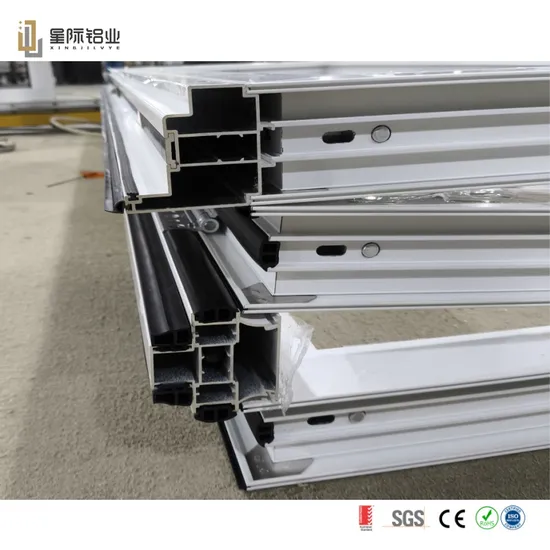
The wall thickness refers to the actual gauge of the aluminum alloy itself—the metal that prevents deformation under wind load. For exterior windows, this typically ranges from 1.4mm to 2.0mm. Anything below 1.4mm risks flexing, which compromises the seal integrity and allows air and water infiltration over time.
When we send you shop drawings, our engineering team provides detailed cross-section views that clearly mark the wall thickness at every critical point. There’s no ambiguity in your construction documents—you’ll see exactly where the 1.4mm or 1.8mm material sits and how it transfers structural loads.
Overall Frame Depth (Profile Width)
The overall depth—often referenced as the “series” (55mm, 65mm, 70mm, etc.)—is the measurement from the interior to exterior face of the installed frame. This dimension impacts thermal performance and structural rigidity differently than wall thickness. A deeper profile allows for wider thermal break strips, thicker glass units, and more robust gasket channels.
We produce various series depths tailored to the specific climatic conditions of your project site. For a coastal villa in Florida versus a mountain resort in Switzerland, the optimal depth and wall thickness combination will differ significantly. Our team calculates this based on your local climate data, not a one-size-fits-all approach.
Thermal Break Strip Thickness
For broken-bridge aluminum systems, the PA66 nylon reinforced strips create a thermal barrier between interior and exterior aluminum sections. The width of this strip (typically 14mm, 20mm, or 24mm) is integral to the energy efficiency calculation.
As a full one-stop OEM/ODM service provider, we source the highest grade thermal break materials to ensure our aluminum windows meet strict international energy codes—not just the minimum thickness requirements, but the performance outcomes those standards are designed to achieve.
—
Global Standard Comparison: GB, EN, and AAMA Specifications
Because we export globally, we must adapt to the standards of your specific market. Here’s how the Chinese National Standard (where we manufacture) compares with the European Norm and American Standard (where you build).
Chinese National Standard (GB/T 8478)
China’s GB/T 8478 specifies a minimum wall thickness of 1.4mm for external windows and 1.6mm for external doors. This is the baseline our factory uses for domestic and regional projects. The standard also addresses deflection limits under wind load, requiring structural calculations for larger spans or high-rise applications.
We know the GB standards inside out—we’ve been manufacturing to them for two decades. This allows us to produce cost-effective solutions without compromising quality for projects that only require Chinese compliance.
European Norm (EN 14024 / EN 13126)
European standards focus more on performance than a single thickness number. Generally, 1.4mm to 1.6mm is accepted for standard residential use, but the EN framework requires structural calculations for larger spans. The key difference: European standards mandate specific test methods for air permeability, water tightness, and wind load resistance—not just material thickness.
Our in-house design and engineering team is proficient in European design codes. We calculate the required thickness based on wind load calculations for your specific villa or commercial project, ensuring compliance with EN standards through documented structural verification, not guesswork.
American Standard (AAMA/WDMA)
The US market uses performance grades—R (Residential), LC (Light Commercial), CW (Commercial Window), and AW (Architectural Window)—rather than a single thickness number. Each grade dictates minimum wall thickness requirements based on the building height and wind zone.
For our global contractors and real estate developers in North America, we tailor our aluminum window profiles to meet the specific AW performance requirements. This means ensuring the wall thickness is sufficient for high-rise wind loads, which often translates to 1.8mm or 2.0mm profiles for curtain wall applications.
| Standard | Min. Wall Thickness (Exterior Window) | Key Focus | Typical Application |
|---|---|---|---|
| GB/T 8478 (China) | 1.4mm | Material thickness baseline | Residential, low-rise commercial |
| EN 14024 (Europe) | 1.4mm – 1.6mm | Performance testing & documentation | Residential, mid-rise commercial |
| AAMA/WDMA (USA) | 1.4mm – 2.0mm (grade-dependent) | Performance grade (R to AW) | High-rise, architectural projects |
—
How Thickness Impacts Performance: Wind Load, Insulation, and Safety
Understanding the “why” behind the standards helps architects and builders justify material choices to clients. Here’s what actually happens when you spec thinner or thicker profiles.
Structural Integrity and Wind Load Resistance
Thicker walls resist bending and flexing. In high-rise buildings or coastal areas with typhoons, the standard minimum thickness is often insufficient. When wind pressure hits a large glass pane, the frame transfers that load to the building structure. If the aluminum wall is too thin, the frame deflects, causing glass stress and potential seal failure.
We utilize advanced aluminum processing workshops to manufacture profiles that exceed minimum standards for projects requiring high structural performance. Our team helps you select the right gauge to prevent curtain wall failure—we’ve seen what happens when corners are cut, and we won’t let that happen on your project.
Soundproofing and Thermal Insulation
A stable frame—thanks to proper thickness—ensures a tight seal for the gaskets, preventing air and water infiltration. This directly impacts U-values (thermal transmittance) and STC ratings (sound transmission class). A thin frame that flexes under temperature changes will eventually create gaps where conditioned air escapes and outside noise enters.
We supply high-end custom doors and windows for villas and hotels where acoustic comfort is paramount. Our profiles are engineered to hold multi-layered insulating glass units securely, maximizing the performance of the entire window system. The frame isn’t just a holder for glass—it’s an active component of the building envelope.
Hardware Compatibility and Long-Term Durability
A thicker profile allows for heavier, more durable hardware systems—hinges, multi-point locks, and friction stays. Thin profiles can warp over time, causing hardware failure and operational issues. Imagine a multi-point locking system on a 2.4-meter tall sliding door: if the frame flexes, the locking points misalign, and the door becomes difficult or impossible to secure.
We supply supporting hardware accessories alongside our windows. By controlling the profile thickness, we ensure that the hardware we install operates smoothly for decades without sagging or misalignment. This integration between frame and hardware is something we’ve refined over 20 years of manufacturing.
—
The Jusen Approach: Customizing Thickness for OEM & ODM Projects
Generic standards are a starting point, not a final answer. Here’s how we solve the specific problems you face when specifying windows for real projects.
Project-Based Calculations, Not Guesswork
We don’t rely solely on “standard” sizes. For large glass panes or specific wind zones, we perform structural calculations to determine the optimal wall thickness. This isn’t a marketing claim—it’s a documented engineering process.
When you Contact Our Team, our engineers analyze your architectural drawings and provide a detailed calculation report alongside the shop drawings within 24 hours. You’ll see exactly why we recommend a specific thickness for your project’s unique conditions, backed by numbers and code references.
Flexible MOQs and Custom Molds
A common concern: does custom thickness require expensive new molds? The answer depends on how the customization is achieved. We balance standard extrusion dies with custom fabrication techniques to achieve the required thickness without excessive tooling costs.
We’re a manufacturer with flexible MOQs. Whether you need a standard 1.4mm profile for a budget project or a reinforced 2.0mm profile for a luxury villa, we adapt our production lines to meet your volume and specification requirements. Our aluminum processing workshop handles the full range—from cutting and machining to surface treatment—under one roof.
Private Label and Logistics Support
Customization extends beyond metal thickness. It includes the finish, the branding, and the packaging. Our OEM/ODM services include private label options—we can anodize or powder-coat the aluminum in custom colors and package the windows with your branding for construction project bulk supply.
For contractors and developers managing multiple projects, this means consistent quality and branding across every site. We handle the logistics coordination, including shipping damage protection, so your windows arrive ready for installation.
—
Frequently Asked Questions
Is a 1.4mm wall thickness enough for exterior windows?
Yes, 1.4mm is the general minimum for most residential exterior windows under standard conditions. However, for high-rise buildings or areas with severe weather, we recommend upgrading to 1.6mm or 1.8mm for safety and longevity. We calculate this based on your project location, not a generic rule.
What is the difference between 1.4mm and 2.0mm aluminum window profiles?
The main differences are flexural strength and the ability to support larger glass panes. A 2.0mm profile is significantly more rigid, reducing the risk of frame distortion under high wind pressure. This makes it suitable for large sliding doors and commercial applications where spans exceed standard residential dimensions.
Does Jusen provide custom aluminum window thickness for OEM projects?
Absolutely. As a manufacturer with our own aluminum processing workshops, we support ODM and OEM customization. We can adjust the profile design and wall thickness to meet your project’s specific structural calculations and local building codes. This isn’t a premium add-on—it’s a standard part of our engineering service.
How do I know which thickness standard applies to my country?
Our engineering team can help you determine this. When you submit an inquiry, we review your project details and advise on whether to follow GB, EN, or AAMA standards to ensure your project passes local inspections. We’ve shipped to over 30 countries, so we know the compliance landscape.
Does the thickness of the aluminum frame affect the U-value (thermal performance)?
Yes, indirectly. A thicker frame allows for a deeper thermal break cavity and better gasket sealing, which reduces thermal bridging. We design our profiles to optimize the balance between structural thickness and thermal efficiency—you don’t need to sacrifice one for the other.
What about aluminum window thickness for sliding doors versus casement windows?
Sliding doors typically require thicker profiles (1.6mm to 2.0mm) because they span larger openings and carry heavier glass. Casement windows can often use 1.4mm profiles, but the final specification depends on the glass weight and wind load. We’ll specify the correct thickness for each opening type in your project.
—
Decision Guide: Choosing the Right Thickness for Your Project
Choose a 1.4mm profile if:
- Your project is residential or low-rise commercial (under 3 stories)
- You’re in a moderate wind zone (not coastal or typhoon-prone)
- Your glass spans are standard sizes (under 1.5m² per sash)
- You’re working with a tight budget and need cost-effective compliance
Choose a 1.6mm profile if:
- Your project is mid-rise (4-10 stories) or in a coastal area
- You’re using larger glass panes (1.5m² to 2.5m² per sash)
- You need to meet EN or AAMA performance standards
- You want a balance between structural integrity and cost
Choose a 1.8mm to 2.0mm profile if:
- Your project is high-rise (10+ stories) or in extreme weather zones
- You’re specifying large sliding doors or floor-to-ceiling windows
- You need AW-grade performance for architectural applications
- You’re building luxury villas where long-term durability is non-negotiable
—
Selecting the right aluminum window thickness isn’t about picking the thickest option—it’s about choosing the most technically sound one for your project’s environment and size. Jusen Doors & Windows Manufacturing Co., Ltd. isn’t just a supplier; we’re a manufacturing partner with 20+ years of experience in solid wood processing and aluminum window manufacturing. Our engineering support helps you navigate these standards, ensuring your project passes inspections and performs for decades.
Ready to specify the right windows for your project? Let our engineers review your drawings and provide a compliant, cost-effective solution.
—
References
- National Standard of the People’s Republic of China. “GB/T 8478-2020 Aluminum Alloy Windows.” https://www.chinesestandard.net/PDF/English/GBT8478-2020.pdf“>https://www.chinesestandard.net/PDF/English/GBT8478-2020.pdf
- European Committee for Standardization. “EN 14024:2004 – Metal profiles with thermal barrier – Mechanical performance – Requirements, proof and tests for assessment.” https://standards.iteh.ai/catalog/standards/cen/e5f8e3b0-3d3a-4e6e-8c1a-7b5e4e9a5f2c/en-14024-2004“>https://standards.iteh.ai/catalog/standards/cen/e5f8e3b0-3d3a-4e6e-8c1a-7b5e4e9a5f2c/en-14024-2004
- American Architectural Manufacturers Association. “AAMA/WDMA/CSA 101/I.S.2/A440-17 – North American Fenestration Standard.” https://aamanet.org/“>https://aamanet.org/
- Aluminum Association. “Aluminum Standards and Data.” https://www.aluminum.org/resources/standards“>https://www.aluminum.org/resources/standards
- International Organization for Standardization. “ISO 10077-1:2017 Thermal performance of windows, doors and shutters.” https://www.iso.org/standard/69628.html“>https://www.iso.org/standard/69628.html