Wooden Door Price: What to Expect in 2026
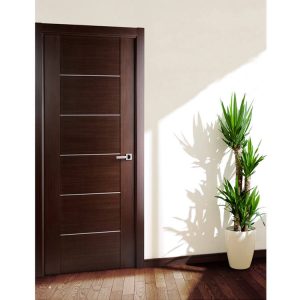
A wooden door typically costs between $150 and $2,500 for the door unit itself, with the final price depending heavily on wood species, core construction, finish, and hardware. For a standard 80-inch interior door, you can expect to pay $200–$800 for a decent engineered wood door, $500–$1,500 for a solid wood door in common species like oak or maple, and $1,500–$4,000+ for premium hardwoods or oversized custom builds. These figures represent the door slab or pre-hung unit only, not installation labor.
The wide range surprises most first-time buyers. Understanding what drives the price is the difference between paying a fair factory price and overpaying through a retail markup.
Wooden Door Types and Their Price Ranges
Solid Wood Doors
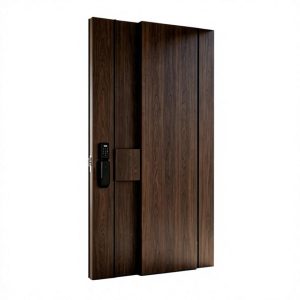
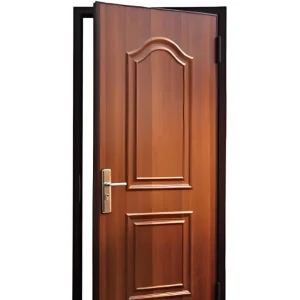
Solid wood doors are constructed entirely from natural timber. The price depends almost entirely on the species you select.
- Pine and poplar are the entry-level solid woods. They are soft, prone to denting, and require regular maintenance. A solid pine door slab runs $300–$600. These are common in budget-conscious projects where a solid feel matters more than longevity.
- Oak, maple, and ash represent the mid-tier. These hardwoods offer good durability and a classic grain pattern. Expect $600–$1,500 for a standard flush or panel door.
- Walnut, cherry, and mahogany sit at the premium end. Their rich color and stable grain command $1,200–$2,500 per door before hardware.
- Exotic species like teak, ipe, or wenge can push beyond $3,000, especially in thick slabs or with book-matched veneers.
The construction method matters as much as the species. A solid door can be a single piece of timber (rare and expensive due to warping risk) or, more commonly, stile-and-rail construction with floating panels. The latter is superior because it allows the wood to expand and contract seasonally without cracking.
Engineered Wood Doors
Engineered doors combine a solid wood frame with veneer faces over a core that is either solid wood strips or manufactured board. This is the sweet spot for most commercial and residential projects.
- Solid-core engineered doors have a core of bonded wood strips, topped with a hardwood veneer. They perform nearly identically to solid wood in terms of sound insulation and weight, but cost 30–40% less because they use less premium timber. Typical price: $300–$700.
- Hollow-core engineered doors use a honeycomb cardboard or foam core inside a wood frame. They are lightweight, inexpensive, and prone to sounding hollow when knocked. Price: $80–$200. These are suitable for interior closets or rooms where sound transmission is not a concern.
The veneer quality is the hidden variable. A door with a 0.6mm real wood veneer looks nearly identical to solid wood but costs far less. Thicker veneers (2–3mm) can be sanded and refinished once or twice, extending the door’s life.
Pre-Hung vs. Slab Doors
A slab door is just the door panel. You reuse your existing frame and hinges. This saves money but requires the new door to match the old frame’s dimensions and hinge locations precisely.
A pre-hung door comes with the frame, hinges, and often the strike plate already installed. This adds $100–$300 to the cost but eliminates fitting issues. For new construction or renovations where the frame is damaged, pre-hung is the practical choice. For simple replacements where the existing frame is sound, a slab door saves money.
Wooden Door Cost Comparison Table
| Door Type | Typical Price Range (Standard 80″ Door) | Key Features | Best Use Case |
|---|---|---|---|
| Hollow Core Engineered | $80 – $200 | Lightweight, low sound insulation, prone to damage | Interior closets, utility rooms, budget projects |
| Solid Core Engineered | $300 – $700 | Good weight, sound dampening, stable, veneer finish | Interior doors, offices, apartments |
| Solid Pine / Poplar | $300 – $600 | Natural wood, soft surface, requires maintenance | Budget solid wood projects, rustic aesthetics |
| Solid Oak / Maple / Ash | $600 – $1,500 | Durable, attractive grain, long lifespan | Entry doors, high-traffic interiors, premium homes |
| Solid Walnut / Cherry / Mahogany | $1,200 – $2,500 | Rich color, prestigious appearance, stable | Luxury residences, executive offices |
| Custom / Oversized / Exotic | $2,500 – $5,000+ | Any dimension, premium species, specialized joinery | Villa entrances, double doors, architectural statements |
Prices reflect the door unit only. Installation, hardware, finishing, and shipping are additional.
How to Choose the Right Wooden Door for Your Project
Match the Door to the Location
The door’s environment determines the minimum quality you need. An exterior door faces rain, UV radiation, and temperature swings. It needs solid or solid-core construction with proper weatherstripping. An interior door in a climate-controlled office faces far less stress, so engineered construction is appropriate.
For exterior applications, pay attention to the door’s core and edge treatment. A solid wood door with a factory-applied UV-resistant finish will outperform a field-finished door. Check that the bottom edge is sealed, as moisture wicks up through exposed end grain.
Understand the Cost Drivers
Five variables control most of the price difference between doors:
- Wood species — Premium hardwoods cost 2–4 times more than softwoods due to scarcity, harvesting difficulty, and milling yield.
- Core construction — Hollow cores are cheap to produce; solid cores require more material and labor.
- Finish — Factory-applied finishes (stain, paint, or UV-cured lacquer) add $50–$200 per door. Unfinished doors are cheaper but shift the finishing cost and risk to you.
- Hardware — Hinges, locksets, and handles range from $30 per set for basic items to $500+ for architectural-grade hardware. The door price often excludes these.
- Size and customization — Standard sizes benefit from mass production. Any non-standard dimension, panel configuration, or glass opening moves you into custom territory with associated setup costs.
Compare Quotes Like a Professional
When you receive quotes from different suppliers, they rarely compare directly. Standardize the comparison by asking every supplier for:
- Door slab or pre-hung unit price
- Finish (unfinished, primed, or factory finished)
- Hardware included or excluded
- Frame material and construction
- Glass options if applicable
- Packaging and palletizing charges
- Incoterms (who pays freight and insurance)
- Lead time
A quote that appears 20% cheaper may simply exclude finishing, hardware, or proper export packaging. Build a checklist and demand line-item pricing.
Additional Considerations for Bulk Buyers
Cost-Saving Strategies for Volume Orders
Bulk purchasing changes the pricing dynamic. Manufacturers price in tiers, and the discount curve is not linear.
- 50–100 doors may yield 5–10% off retail pricing.
- 200–500 doors typically unlocks factory pricing with 15–25% savings.
- 1,000+ doors puts you in project pricing territory where manufacturers will discuss tooling, custom specifications, and dedicated production slots.
The most effective way to reduce per-door cost is to limit variations. A project with three door sizes and one finish is dramatically cheaper per unit than one with ten sizes and multiple finishes. Every changeover on the production line costs time and material.
Shipping and Logistics for Bulk Orders
Wooden doors are bulky and relatively heavy. Freight often represents 10–20% of the delivered cost for international orders. For a 40-foot container, you can typically fit 150–250 pre-hung doors or 300–500 slab doors, depending on dimensions and packaging.
Full container load (FCL) shipping is almost always more economical per door than less-than-container-load (LCL) for orders above roughly 80 doors. The per-unit freight cost drops because you pay for the container, not the space your cargo occupies.
Doors must be properly packaged for ocean freight. Professional suppliers wrap each door in protective material, use edge protectors, and brace the load inside the container. Poor packaging leads to transit damage that negates any price advantage.
Quality Considerations and Long-Term Value
The cheapest door is rarely the most economical over its lifespan. A $150 hollow-core door in a high-traffic corridor may need replacement in 3–5 years. A $600 solid-core door in the same location could last 15–20 years with minimal maintenance.
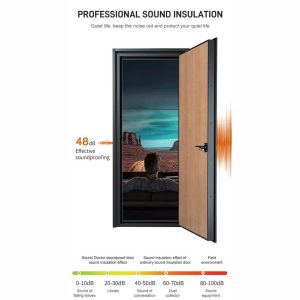
For interior applications, evaluate the door’s acoustic performance. A solid-core door reduces sound transmission by roughly 20–30 decibels compared to a hollow-core door. In office or hospitality settings, this difference directly affects occupant satisfaction.
For exterior doors, examine the joinery. Mortise-and-tenon joints with proper weatherproofing outperform dowel or staple construction. Check for a warranty that covers delamination, warping, or finish failure. Reputable manufacturers offer 1–5 year warranties on construction and finish.
Customs Documentation and Compliance
International buyers must verify that their chosen door meets local building codes and fire regulations. Some jurisdictions require fire-rated doors in specific locations, which demands specialized construction and certification. Wood sourcing regulations, such as those addressing illegal logging, may require documentation of the timber’s origin. FSC certification is one way suppliers demonstrate responsible sourcing, though it adds a small premium to the door cost.
Ensure your supplier can provide a packing list, commercial invoice, and certificate of origin. These documents are essential for customs clearance and duty assessment.
Evidence & Practical Notes
Field note: In our experience working with overseas buyers, the single most common cause of budget overrun is not the door price itself but the mismatch between quoted specifications and delivered product. A supplier quoting a “wooden door” at a rock-bottom price often delivers a hollow-core door with a thin veneer, while the buyer assumed solid construction. Always specify the core type, veneer thickness, and finish in writing.
Practical limitation: Wood is a natural material with inherent variation in grain, color, and moisture content. No two doors will be identical. Even within a single production batch, color matching can vary slightly. Buyers who require perfect uniformity across hundreds of doors should consider painted finishes or specify veneer selection services, which typically add a small surcharge.
Buyer takeaway: The best way to evaluate a wooden door price is to compare doors with identical specifications from multiple suppliers. If you cannot define the core, veneer, finish, and hardware in writing, you cannot compare prices meaningfully. Invest time in writing a clear specification before requesting quotes, and you will save both time and money in the evaluation process.
How We Meet These Standards at Jusen Door and Windows
As a factory-direct manufacturer of wooden doors and aluminum windows, we operate on a model that addresses the cost drivers discussed above. Because we sell directly from our factory, there is no middleman markup layered onto the door price. When you request a quote, you are seeing the manufacturer’s price, not a distributor’s retail price.
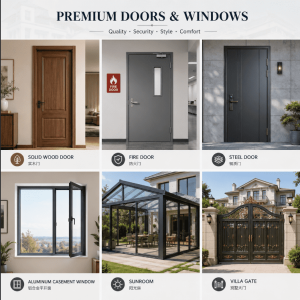
Our production capabilities include solid wood doors, engineered doors, and custom villa doors. We handle full customization on size, color, glass, and hardware accessories. If your project requires a specific wood species, a non-standard dimension, or particular hardware integration, we can adjust the profile structure and fittings to match your requirements. This flexibility extends to matching local building codes in your target market.
For bulk buyers, our experience in foreign trade means we provide complete documentation, including packing lists, proforma invoices, and full customs paperwork. We ship both FCL and LCL, delivering directly from our factory in China. Every order undergoes strict pre-shipment inspection covering air-tightness, water-tightness, and wind resistance, so you are not paying for doors that fail on arrival.
If you are evaluating suppliers for a project that requires 50 doors or 5,000, we can provide detailed specifications and pricing that allow you to compare apples to apples.
Frequently Asked Questions About Wooden Door Pricing
How much does a wooden door cost on average?
For a standard interior door, plan on $200–$800 for a quality engineered wood door and $500–$1,500 for a solid hardwood door. Exterior-grade doors with weatherproofing and glazing run higher. These figures are for the door unit alone. Installation typically adds $150–$400 per door, depending on local labor rates and whether the frame needs adjustment.
Are engineered wood doors cheaper than solid wood doors?
Yes. Engineered doors use a thin layer of real wood veneer over a manufactured core, consuming far less premium timber. A solid-core engineered door typically costs 30–40% less than an equivalent solid wood door while offering similar weight and sound insulation. The trade-off is that the veneer can only be refinished a limited number of times before it wears through.
Why do wooden door prices vary so much between suppliers?
The variation comes from differences in core construction, veneer quality, finish, hardware, and manufacturing location. A door quoted at $150 may be hollow-core with a paper-thin veneer, while a $500 door from another supplier may have a solid wood core and a 2mm veneer. Additionally, factory-direct suppliers avoid retail markups that can add 30–50% to a door’s price.
What is the cost difference between pre-hung and slab wooden doors?
A pre-hung door adds $100–$300 to the slab price because it includes the frame, hinges, and assembly labor. The practical difference is that pre-hung doors are easier to install correctly, while slab doors require the existing frame to be in good condition and dimensionally accurate. For renovations with sound frames, slab doors save money. For new construction, pre-hung is usually the better value.
How can I get the best price for wooden doors in bulk?
Standardize your specifications and order in larger quantities. Limit the number of sizes and finishes to reduce production changeovers. Request quotes from factory-direct manufacturers rather than distributors, and compare line-item pricing for door, finish, hardware, packaging, and freight. Orders above 100 units typically unlock volume discounts that make a meaningful difference in per-door cost.