Content Menu
● 1. The Engineering Behind Wood-Look Exterior Doors
● 2. Product Range: From Modern Villas to Classic Estates
● 3. The Jusen Advantage: Why Contractors Choose Our Factory
● 4. Cost Efficiency and Logistics: Protecting Your Bottom Line
● 5. Real-World Applications and Case Scenarios
● 6. What Buyers Ask Us About Wood-Look Doors
● 7. A Decision Guide for Your Project
11 min read
The last time a developer from Sydney called us, he was not asking about price. He had already received three quotes from local suppliers for “wood-look” entry doors. What he wanted to know was why one sample had a wood grain that looked painted on, while the other had a texture you could feel with your fingernail. That difference, he learned, is the difference between a door that looks like wood from across the street and a door that looks like wood up close. For a luxury villa project, that distinction matters.
We are Jusen Doors & Windows Manufacturing Co., Ltd. For over 20 years, we have built solid wood doors and aluminum windows for contractors, distributors, and developers across global markets. Our factory in China operates our own wood drying, spray finishing, and aluminum processing workshops. That vertical integration is not a marketing phrase—it is the reason we can control the finish quality on exterior doors that look like wood, batch after batch. [1]
This guide explains how we engineer wood-look doors, what to specify for your project, and how to source them without the usual supply chain headaches. If you need a custom quote for a specific project, send us your drawings. We respond within 24 hours.
The Engineering Behind Wood-Look Exterior Doors
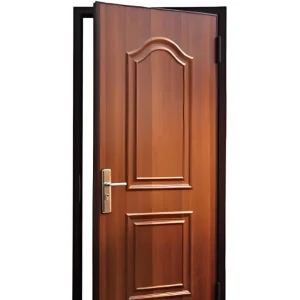
There are two ways to make a door that looks like wood. One is to use actual timber. The other is to apply a wood grain finish to a more stable substrate—typically aluminum. We manufacture both, but for exterior applications, our aluminum wood grain doors are increasingly the preferred choice for contractors who are tired of call-backs.
Aluminum Wood Grain: Thermal Transfer Printing
The process we use is called thermal transfer printing, or sublimation. A film with the wood pattern is wrapped around a powder-coated aluminum profile. The profile goes into an oven at around 200°C. The heat causes the ink in the film to sublimate—turning from solid to gas—and penetrate the powder coating layer. The result is not a surface print. The wood grain becomes part of the coating itself.
Why does this matter for you? Because a printed surface scratches off. A sublimated grain does not. We have tested panels with steel wool and standard cleaning chemicals. The pattern remains intact. For coastal projects with salt spray or desert projects with sand abrasion, this is the difference between a door that looks new in five years and one that looks worn in eighteen months.
The Finish Process: UV Resistance and Color Consistency
The most common complaint we hear from builders about wood-look doors is fading. A dark walnut door turns a chalky grey after two summers. That happens when the coating lacks UV stabilizers.
Our spray finishing lines apply polyester powder coatings with high-grade UV-resistant pigments. We control the film thickness to between 60 and 80 microns. This is not guesswork—we measure it with a coating thickness gauge on every batch. If a client specifies a custom color, we create a physical sample panel first. We keep that panel as the reference standard for production. When your doors arrive on site, we want them to match that sample exactly.
Choosing the Right Core: Solid Wood vs. Aluminum Substrate
Here is an imperfect insight from two decades of manufacturing: wood-look does not mean wood core. For exterior doors, an aluminum core with a wood grain finish often outperforms real timber. Aluminum does not warp, twist, or absorb moisture. In tropical climates like Singapore or Miami, a solid wood door—even a well-sealed one—will eventually move. An aluminum door will not.
But aluminum has a weakness: thermal conductivity. A bare aluminum door in a cold climate will transfer heat and form condensation. That is why we offer thermal break profiles—polyamide strips that separate the interior and exterior aluminum shells. This reduces heat transfer significantly compared to non-thermal-break aluminum. For projects in Canada or Scandinavia, we recommend specifying thermal break. For projects in the Middle East or Southeast Asia, the standard profile is usually sufficient.
We have 20+ years of experience advising clients on substrate selection. If you are unsure which core suits your climate zone, contact our team with your project location. We will recommend the right construction.
Product Range: From Modern Villas to Classic Estates
Our product line covers the full spectrum of architectural styles. The key is that every door is manufactured to your specifications, not pulled from a standard catalog.
Custom Wood Grain Aluminum Entry Doors for Modern Architecture
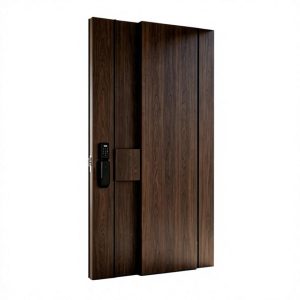
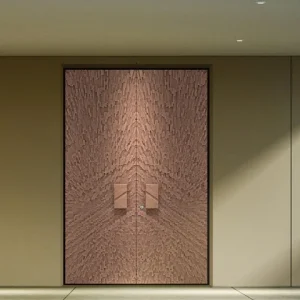
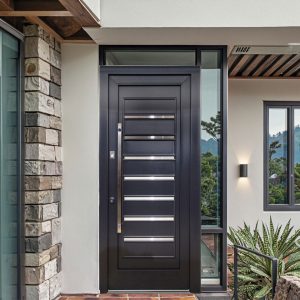
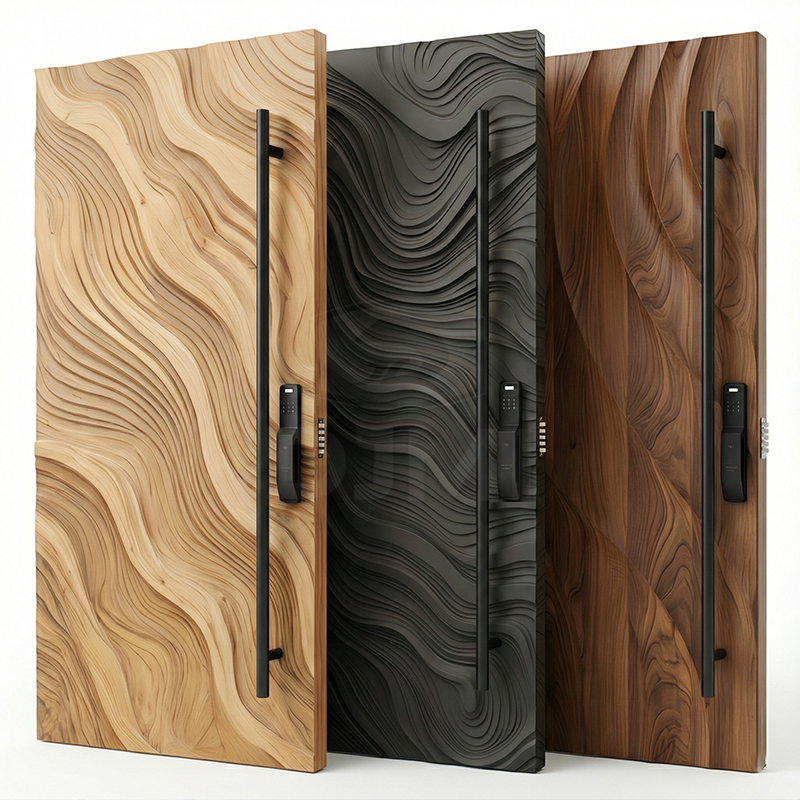
Contemporary projects demand slim sightlines and large glass panels. Our aluminum entry doors can achieve frame widths as narrow as 50mm while maintaining structural rigidity. We offer wood grain finishes in a range of species—Walnut, Teak, Oak, Rosewood, and custom matches. For villa real estate developers, we can produce 200 identical doors with consistent grain orientation and color. Our in-house design team will adjust frame depth, hardware placement, and glass specifications to match your architectural drawings.
Aluminum-Clad Timber Doors for Heritage and High-End Resorts
For projects where the interior side must showcase real wood, we offer aluminum-clad timber doors. The structural core is solid wood—often engineered timber for stability—while the exterior is protected by an aluminum shell with a wood grain finish. This gives you the warmth of timber on the inside and the durability of aluminum on the outside. The joinery between the timber core and aluminum shell is complex. We handle it in-house, ensuring no water ingress at the interface.
Matching Doors with Aluminum Windows
A front door that looks like wood is undermined by silver aluminum windows next to it. We manufacture both. Our aluminum windows can be finished with the same wood grain pattern as the entry doors, creating a unified exterior aesthetic.
This one-stop approach simplifies your supply chain. Instead of coordinating two factories and hoping the colors match, you get doors and windows from one source. We also supply timber door frames and supporting hardware accessories—hinges, locks, handles—so you have a single point of accountability for the entire entry system.
The Jusen Advantage: Why Contractors Choose Our Factory
Sourcing wood-look exterior doors from China involves more than comparing unit prices. It is about finding a factory that can deliver consistent quality at scale, meet your deadlines, and protect your brand.
True OEM & ODM Customization
We do not sell stock doors. Every order is produced to your specifications. For retail dealers and distributors, we offer private labeling—your brand on the hardware, packaging, and documentation. For architects, we adapt our production line to your custom sizes and designs. If it is not in our standard range, we will engineer it.
Flexible MOQs and Fast Lead Times
Construction projects move in phases. You may need 50 doors for the first phase and 150 for the second. Our MOQ policy is flexible. We accommodate pilot projects for new distributors and scale up for large developments. Production lead times for aluminum wood grain doors typically range from 25 to 40 days, depending on quantity and customization level. We have shipped urgent orders in 20 days when the schedule demanded it.
Engineering Support: Getting the Details Right Before Production
Mistakes in door sizing are expensive. A door that is 5mm too wide will not fit the frame. A frame that is not square will cause the door to bind. Our engineering team provides customized shop drawings for approval before production begins. We flag potential issues—such as insufficient clearance for floor thresholds or hardware interference—before they become site problems. Formal quotations and shop drawings are provided within 24 hours of receiving your inquiry.
Cost Efficiency and Logistics: Protecting Your Bottom Line
The price advantage of sourcing from our factory is significant. But the total cost of ownership depends on more than the unit price.
Factory-Direct Pricing vs. Middlemen
We own the entire production chain: wood drying, spray finishing, aluminum processing, and assembly. There are no sub-contractors adding margin. This vertical integration allows us to offer high-end custom doors at prices that let contractors maintain healthy profit margins. When you compare our quotes to those from trading companies—who source from multiple factories—you will notice the difference.
Export Packaging and Global Shipping Networks
A wood grain finish is durable, but it is not indestructible. We protect every door with a specialized film on the exposed surfaces, corner protectors, and wooden crates for container shipment. Our export documentation team handles the paperwork—bill of lading, packing list, commercial invoice, and any certificates of origin required by your country. We have shipped to over 40 countries and know the specific packing requirements for different routes. [2]
| Comparison | Solid Wood Door | Aluminum Wood Grain Door (Our Product) |
|---|---|---|
| Maintenance | High—requires staining/sealing | Low—wipe clean with mild detergent |
| Durability | Susceptible to warping, cracking | Stable—no warping, no rot |
| UV Resistance | Fades without regular coating | High-grade UV-resistant powder coating |
| Thermal Performance | Good with proper core | Excellent with thermal break option |
| Weight | Heavy—requires robust hinges | Lighter—easier installation |
| Cost Over 10 Years | Higher (maintenance + repairs) | Lower (minimal upkeep) |
| Aesthetic Match | Natural grain, varies per tree | Consistent grain, customizable |
Real-World Applications and Case Scenarios
We work with three main types of clients. Here is how each typically uses our wood-look exterior doors.
Bulk Supply for Villa Real Estate Developers
A developer building 50 luxury villas needs consistency. They cannot have door #12 look different from door #38. Our quality control process ensures color matching across the entire batch. We retain a reference sample from the first production run and check every subsequent batch against it. For large projects, we offer staged delivery—shipping doors in phases to match your construction schedule, so you are not paying for storage or risking damage on site.
Custom Designs for Interior Designers
Interior designers often want a specific wood species imitation that is not in standard catalogs—perhaps a rare African hardwood or a particular shade of grey-washed oak. Our in-house design team develops custom finishes to match your samples. We can produce a physical sample for approval before mass production. This is a critical step for high-end residential projects where the entry door sets the tone for the entire interior.
Distribution Partnerships for Retail Dealers
For dealers who want to stock wood-look doors, we offer private label manufacturing. You get doors with your brand name, packaging, and warranty documentation. We work with you to define a standard product range that suits your local market, then maintain inventory levels to ensure fast restocking. Our flexible MOQ means you can test the market with a smaller initial order before committing to volume.
What Buyers Ask Us About Wood-Look Doors
Are exterior doors that look like wood more expensive than real wood?
Not necessarily. Our aluminum wood grain doors often have a lower upfront cost than high-grade solid wood doors. More importantly, the total cost of ownership is significantly lower. Solid wood requires regular staining, sealing, and occasional repairs. Our aluminum doors need minimal maintenance. Over a 10-year period, the aluminum option is almost always more cost-effective for large projects. [3]
Can you match a specific wood color from a sample?
Yes. We can match to a physical sample, a Pantone reference, or an architectural specification. We create a custom finish and send you a physical sample panel for approval before mass production. This sample becomes the reference standard for your entire order.
What is the minimum order quantity for custom exterior doors?
Our MOQ is flexible. For standard sizes and finishes, we can accommodate small pilot orders—often as low as 10 to 20 doors. For fully custom designs with new tooling or unique finishes, the MOQ may be higher. We work with each client to find a balance between their budget and our production efficiency.
How do you ensure the wood grain finish doesn’t fade in harsh sunlight?
We use high-grade polyester powder coatings with UV-resistant pigments. The thermal transfer printing process embeds the grain into the coating layer, so it does not scratch off. We also control the coating thickness to ensure durability. For extreme climates, we can recommend a PVDF coating option, which offers even higher UV resistance. [4]
Can you supply matching aluminum windows for the same project?
Yes. We manufacture both doors and windows. We offer matching wood grain finishes across both product lines, ensuring a seamless aesthetic. This also simplifies your procurement—one supplier, one point of accountability, one quality standard.
A Decision Guide for Your Project
Choosing between door types depends on your priorities:
- Choose solid wood if the interior side of the door must showcase natural timber grain and you have a maintenance budget for regular care.
- Choose aluminum wood grain if you need durability, low maintenance, and consistent aesthetics across a large project.
- Choose aluminum-clad timber if you want real wood on the interior but aluminum protection on the exterior.
- Choose thermal break aluminum if your project is in a cold climate and you need to minimize heat loss.
For most modern villa projects, aluminum wood grain doors represent the best balance of aesthetics, durability, and cost. We have seen too many solid wood doors fail at the five-year mark due to moisture or sun damage. A well-made aluminum wood grain door will still look new at that point.
The Bottom Line on Wood-Look Exterior Doors
Exterior doors that look like wood are not a compromise. They are an engineering solution. The key is working with a manufacturer who controls the finish process from raw material to final inspection. We have invested in our own spray finishing lines and aluminum processing workshops for a reason—because we knew that outsourcing those steps would mean losing control over quality.
When you source from Jusen Doors, you get a partner who understands the technical details. We know how the coating behaves in different climates. We know how to pack for international shipping. We know how to match colors across large batches. That knowledge is built into every door we ship.
If you have a project in planning, send us your drawings. We will provide a formal quotation and engineering review within 24 hours. No obligation, just a clear picture of what your project will cost and how we will build it.
—
References
[1] Jusen Doors & Windows Manufacturing Co., Ltd. — About Us. https://doorwoodendoors.com
[2] International Trade Administration — Export Documentation Requirements. https://www.trade.gov/export-solutions
[3] U.S. Department of Energy — Energy-Efficient Door Selection Guide. https://www.energy.gov/energysaver/energy-efficient-door-selection
[4] Powder Coating Institute — UV Resistance and Outdoor Durability. https://www.powdercoating.org/page/WhyPowderCoating