10 min read
Wood Door Types and Materials: A Complete Guide for B2B Buyers
Why Understanding Wood Door Types and Materials Matters for Your Project
Every construction or design project begins with a material decision. The wood door you choose must satisfy performance requirements like thermal insulation, acoustic control, and long-term durability, while also meeting aesthetic expectations. It is not just about picking a species — it is about matching the door’s construction to the environment where it will be installed. For example, an exterior entry door in a cold climate must resist moisture and temperature swings, while an interior bedroom door prioritizes sound dampening and finish quality.
The cost–quality tradeoff in wood selection can be complex. Solid mahogany demands a higher upfront investment but offers unmatched longevity. Engineered cores reduce material costs and improve dimensional stability, making them ideal for large-scale projects. This is where our 20 years of solid wood processing experience becomes your advantage. In our daily work, we guide contractors and developers through these tradeoffs, providing data and samples that clarify which option fits their budget and performance goals [1]. We do not just manufacture doors — we help you choose the right one for your project’s success.
Solid Wood Doors – Premium Types and Species We Offer
Common Solid Wood Species – Oak, Mahogany, Teak, Walnut, Cherry
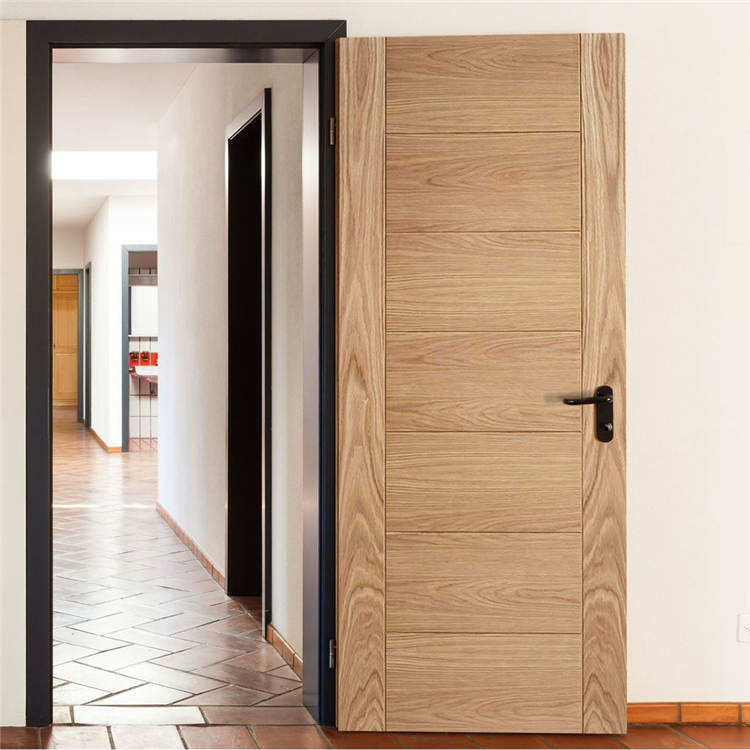
Solid wood doors are the premium choice for entryways and luxury interiors. The species you select determines the door’s hardness, grain pattern, and resistance to humidity. We work with oak for its strength and prominent grain, mahogany for its stability and deep red tone, teak for its natural oil resistance, walnut for its rich chocolate color, and cherry for its fine texture that darkens beautifully over time. Each species behaves differently during manufacturing, which is why our self-built wood drying workshop is critical. We control moisture content to below 8% before processing, preventing cracking and warping after installation. This is a process we have refined over two decades in our factory.
Solid Wood Door Construction – Stile & Rail vs. Plank Doors
The construction method affects both appearance and durability. Stile and rail doors combine vertical and horizontal solid wood pieces with a panel insert, offering classic architectural detailing suitable for traditional and custom designs. Plank doors use vertical boards joined together, providing a simpler, rustic look. Our manufacturing capability includes both methods, with dedicated assembly lines in our spraying and joinery workshops. We can produce solid wood doors in any size, with mortise-and-tenon joints for long-term strength.
When to Specify Solid Wood – Entry Doors, Luxury Interiors, High-End Villa Projects
Solid wood doors are specified for primary entrances, luxury hotel lobbies, and high-end villa projects where the door itself is a statement piece. Our OEM and ODM services allow us to execute custom designs — from carved panels to customized stain colors — exactly matching the specifications of architects and villa developers. We have supplied solid wood door sets for luxury residential communities in Europe and North America, where the client required matching frame profiles and hardware integration.
Engineered Wood Doors – Stability, Affordability, and Customization
Types – MDF, HDF, Plywood Core, and Hollow Core Doors
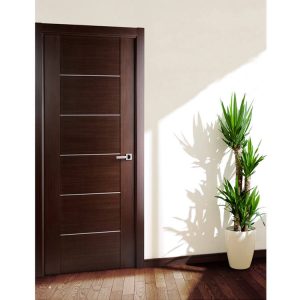
Engineered wood doors are constructed with a core of MDF, HDF, plywood, or hollow paper honeycomb, topped with a veneer. These solutions are popular in commercial and residential projects where cost and weight are factors. MDF and plywood cores offer better screw-holding capacity for hardware, while hollow cores reduce weight for easier installation. Our product line includes all these core options, allowing us to match the door to the specific load-bearing and acoustic requirements of each floor plan.
Benefits for Large-Scale Projects – Consistent Quality & Reduced Warping
Unlike solid wood, which can contain natural variations in grain and moisture response, engineered cores provide uniform density and reduced expansion. This is especially beneficial for large-scale construction projects where hundreds of doors must behave identically. We have produced engineered doors for hotel chains and apartment complexes where consistent color and fitting are non-negotiable.
Jusen’s Engineered Door Solutions – Flexible MOQ and Bulk Supply Options
Our lead time and logistics are set up to support both small custom orders and bulk project supply. With our own workshops, we maintain short lead times even for medium-volume orders. For large-scale construction, we can arrange phased shipments directly to your job site, reducing storage costs. We have shipped container loads of engineered doors from our factory to clients in Southeast Asia and the Middle East, ensuring each batch meets the approved sample [1].
Veneer and Composite Wood Doors – Aesthetic Flexibility with Structural Integrity
Real Wood Veneer vs. Laminate – Which Finish for Your Client?
Real wood veneer uses a thin slice of the actual species — oak, walnut, or teak — bonded to an engineered core. It provides the look and feel of solid wood at a lower weight and cost, making it ideal for interior doors where visual appearance matters but budget constraints apply. Laminate finishes use printed layers that mimic wood grain; these are more scratch-resistant and easier to maintain, suitable for high-traffic commercial corridors. Our independent design team can match virtually any color or grain pattern you specify, whether it is a RAL color code or a photograph of a historical wood finish.
Composite Cores – Particleboard, MDF, and Honeycomb Options
The core material directly impacts the door’s thermal and acoustic performance. Particleboard cores offer good density for sound blocking. Honeycomb cores are ultra-lightweight, ideal for internal doors where weight on hinges is a concern. We produce all three core types in our own facility, so material selection is not limited by what a subcontractor can supply [2].
Private Label and Custom Finishes – Our Design Team Can Match Any Specification
Many of our retail dealer and contractor clients prefer private labeling. When you order a container of doors, we apply your brand name and packaging. For projects requiring a specific stain or paint finish, our spray workshop replicates it precisely. We even provide pre-finished doors with UV-cured coatings for faster installation on site.
Key Materials and Components That Define Door Quality
Timber Species Comparison – Hardness, Grain, and Durability
| Species | Janka Hardness (lbf) | Grain | Moisture Resistance | Best Use |
|---|---|---|---|---|
| Oak | 1290 | Prominent, open | Moderate | Interior & exterior |
| Mahogany | 900-1000 | Fine, interlocked | High | Exterior luxury |
| Teak | 1000-1155 | Straight, tight | Very high | Marine & exterior |
| Walnut | 1010 | Open, coarse | Moderate | High-end interior |
| Cherry | 950 | Fine, closed | Low | Interior, paint-grade |
Adhesives, Veneers, and Core Bonding – Our Quality Control Process
The longevity of an engineered door depends on the adhesive bonding the veneer to its core. We use Type I waterproof adhesives for exterior doors and Type II for interior applications. Every incoming batch of veneer is checked for thickness consistency and color match. Our quality team also monitors the pressing cycle — time, temperature, and pressure — to ensure delamination does not occur after installation [3].
Hardware Integration – Jusen Supplies Complete Timber Door Frames & Accessories
A door is only as good as its frame and hardware. Our product line includes timber door frames machined to match your door dimensions exactly, along with hinges, handles, and locksets. This one-stop supply eliminates the risk of incompatibility between door and frame, speeding up installation for your contractors. We can pre-machine the frames for hinges and striker plates, reducing on-site labor.
Our Manufacturing Capabilities – How We Turn Raw Wood into Precision Doors
Factory Scale – Self-Built Workshops (Drying, Spraying, Aluminum Processing)
Our manufacturing campus is organized into three core workshops. The wood drying workshop houses industrial kilns that reduce moisture content to project-specific levels — typically 6-8% for heated interiors. The spraying workshop is equipped with dust-free booths and automated spray lines for UV-cured or polyurethane finishes. Our aluminum processing workshop produces matching window frames and door components, ensuring uniform quality across a building envelope [4].
Advanced Equipment & Annual Capacity – Supporting Global Project Volumes
We operate CNC routers for precision cutting, profile sanders for consistent surfaces, and edge banders for engineered panels. With an annual production capacity exceeding 50,000 doors, we can handle simultaneous projects for different clients. Our team of over 200 skilled workers manages each order through a batch-tracking system, so you know exactly where your doors are in the production cycle.
Quality Control Systems – From Moisture Testing to Final Inspection
Quality begins when raw lumber arrives — we reject any stock with excessive checking or insect damage. Every batch of engineered cores undergoes a flatness check. After assembly, each door is visually inspected under bright light for surface defects, and a random sample is tested for formaldehyde emissions where required. This approach has earned repeat business from contractors who rely on consistent quality across multiple project phases.
Why B2B Buyers Worldwide Choose Jusen for Wood Door Sourcing
OEM & ODM Services – Custom Size, Design, and Private Label
When you submit your specifications — whether it is a non-standard height, a specific panel design, or a particular stain color — we respond with a detailed construction drawing and a formal quotation within 24 hours. Our independent design team works directly with you to finalize details before production begins. This service is available for both OEM (build our design with your brand) and ODM (build your design from scratch) [5].
North America Overseas Warehouses – Faster Delivery, Lower Logistics Risk
We maintain stock inventory in our North America warehouses, allowing us to deliver partial orders within days rather than weeks. This is particularly useful for retail dealers who need to fulfill customer orders quickly. For container shipments, we consolidate products to minimize freight costs, and we provide real-time tracking updates.
Full Damage After-Sales Guarantee – Peace of Mind for Contractors and Developers
Shipping damage is an unfortunate reality in door logistics. We back every order with a full damage after-sales guarantee. If a door arrives damaged, we replace it promptly at our cost, with no paperwork delays. This commitment builds trust with developers who cannot afford to hold up project timelines due to damaged materials.
Frequently Asked Questions About Wood Door Types and Materials
Q: What is the best wood species for an exterior wood door in cold climates?
A: Mahogany or oak with proper sealing. Our wood drying workshop ensures moisture consistency below 8%, which helps prevent cracking from interior heating and exterior humidity [6].
Q: Are engineered wood doors as durable as solid wood?
A: With modern cores, engineered doors offer superior dimensional stability — they are less likely to warp in large projects. We use Type I adhesives for exterior-grade engineered doors, so they withstand weather changes well.
Q: Can Jusen custom-make wood doors with our own design specifications?
A: Yes, we support full OEM and ODM. Submit your drawings or photos, and our team sends you a construction drawing with pricing within 24 hours.
Q: What is the typical lead time for a bulk wood door order?
A: For standard sizes, we ship from our warehouse in 2-3 weeks. For custom orders, lead time typically ranges from 30 to 45 days, depending on volume and finish complexity. Contact us for your specific timeline.
Q: Do you supply matching door frames and hardware?
A: Yes, we provide complete timber door frames and supporting hardware accessories, including hinges, handles, locks, and weatherstripping, all pre-fitted for easy installation.
Q: How does Jusen ensure consistent color and grain across a large project?
A: Our spray workshop batches every order together, using the same stain batch from a single supplier. We also take sample panels mid-production for approval before completing the full run.
Decision Guide
- Choose a solid wood door if your project requires maximum prestige, the door will be exposed to direct weather, and the client values natural grain variation.
- Choose an engineered wood door if you need consistent quality across a large number of units, require better dimensional stability, or have budget constraints.
- Choose a veneer or composite door if you want solid wood appearance at lower weight, or need fast delivery with matching private label packaging.
References
[1] Jusen Doors & Windows – Product Catalog and Manufacturing Process Overview (https://doorwoodendoors.com)
[2] “Moisture Content and Wood Stability” – Wood Products Council (https://www.woodworks.org)
[3] “Adhesive Types for Wood Door Manufacturing” – Jowat Corporation (https://www.jowat.com)
[4] “Spray Finishing Systems for Wood Products” – Graco Inc. (https://www.graco.com)
[5] “OEM vs ODM in Building Materials Procurement” – International Trade Centre (https://www.intracen.org)
[6] “Understanding Janka Hardness Ratings for Hardwood Species” – American Hardwood Export Council (https://www.ahec.org)
Why Source from Jusen Doors?
20+ Years
Manufacturing experience in Foshan, China’s door industry hub
ISO 9001 & CE
Internationally certified quality management system
150,000+ Sets/Year
Annual production capacity with 5 automated lines
Ready to Source Quality Doors?
Send us your specifications for a free quotation and product catalog. Samples available within 15-20 days.
About the Author: Jusen Doors is a B2B door manufacturer with 20+ years of experience exporting to 50+ countries. Our factory in Foshan, Guangdong, produces 150,000+ door sets annually with ISO 9001:2015, CE, and UL certifications.
Contact: info@doorwoodendoors.com | Request Quote