Core Conclusion: Choosing the Right Wholesale Entry Door
For B2B buyers—contractors, builders, property managers, and distributors—the best wholesale entry door is the one that balances three variables: project-specific performance requirements, total landed cost, and supplier reliability. There is no universal “best” material. Steel offers the highest security and lowest cost; fiberglass provides the best dimensional stability and insulation; wood delivers premium aesthetics; and iron offers unmatched durability and design statement.
The selection process should start with your project’s code requirements (wind load, fire rating, energy efficiency) and end with a supplier audit covering testing standards, customization capability, and logistics. This guide breaks down each material, configuration, and buying criterion so you can make a decision based on data rather than sales pitches.
Types of Wholesale Entry Doors: A Detailed Breakdown
When sourcing in bulk, the material choice determines not just the unit cost but also the lead time, warranty risk, and installation complexity. Here is how the four dominant materials compare in a wholesale context.
Steel Doors
Steel doors are the workhorse of commercial and multi-family projects. A typical steel door consists of a galvanized steel skin over a polyurethane or polystyrene foam core. The primary advantage is structural rigidity—steel resists forced entry better than fiberglass or wood. They are also the most affordable option at scale, and the foam core provides reasonable insulation.
The trade-off is maintenance. If the skin is scratched or dented, it can rust. For coastal environments or high-traffic commercial entrances, this is a critical consideration. Steel doors also transfer heat and cold more readily than fiberglass unless they use a thermal-break frame.
Fiberglass Doors
Fiberglass doors are the fastest-growing segment in wholesale entry doors. The skin is compression-molded to mimic wood grain, but it will not warp, rot, or split. The core is typically polyurethane foam, which gives fiberglass the highest R-value per inch among all entry door materials.
For buyers, the key benefits are low maintenance and dimensional stability. A fiberglass door will not expand or contract with humidity changes, which means fewer warranty callbacks for sticking or misaligned hardware. The downside is cost—fiberglass runs 20–40% higher than steel per unit—and a less “solid” feel upon closing unless the door is specified with a heavier core.
Wood Doors
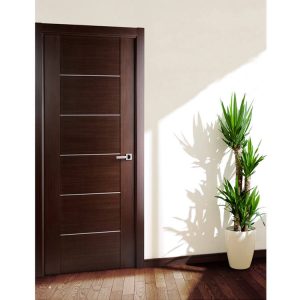
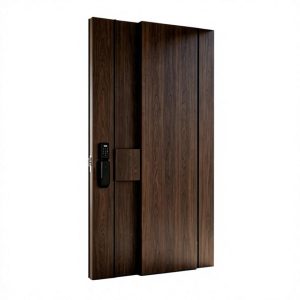
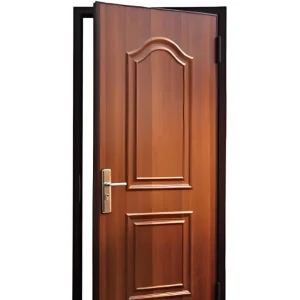
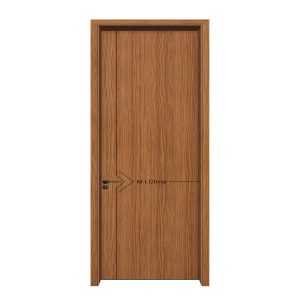
Solid wood and engineered wood doors remain the standard for high-end residential and hospitality projects. Stile-and-rail construction, where panels are framed by solid wood rails, allows for deep customization: carvings, custom stains, and premium veneers.
The critical issue for wholesale buyers is consistency and lead time. Wood is a natural product; grain and color will vary between batches. This requires a supplier with strong quality control for grading and finishing. Wood also demands more maintenance (repainting/staining) and is the most expensive option when specified with a thermal-break aluminum frame or impact-rated glass.
Aluminum Doors
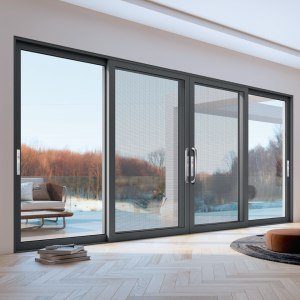
Thermal-break aluminum doors are the standard for modern architecture and large-format entrances. The aluminum frame is separated by a polyamide thermal barrier, which reduces heat transfer. These doors are preferred for double entry front door configurations and projects requiring slim sightlines and large glass areas.
Aluminum is incredibly strong and corrosion-resistant, making it ideal for coastal and high-wind zones. However, the frame is the primary insulator; the glass panel does the heavy lifting for thermal performance. For wholesale buyers, aluminum doors require more careful specification of glazing (double or triple-pane, low-E coatings) to meet energy codes.
Double Entry Doors vs Single Entry Doors: Which is Best?
The choice between a single door and a double wide entry doors configuration is driven by two factors: architectural scale and functional flow.
Single Entry Doors (36″–42″ Wide)
A single door is the most cost-effective and space-efficient option. It simplifies hardware specification (one lockset, one hinge set) and is easier to automate for accessibility. For most residential and small commercial projects, a single door with a single sidelight provides the grandeur of a double door without the cost.
Double Entry Front Doors (60″–72″ Wide)
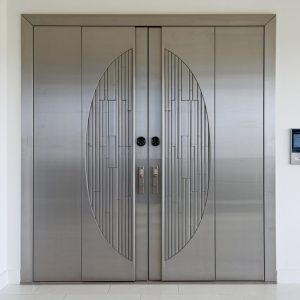
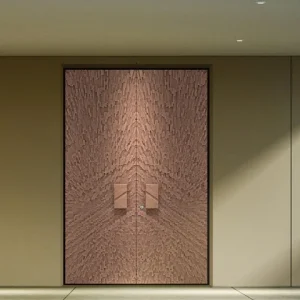
Double doors—also known as French or hinged pairs—make a statement. They are necessary for moving large furniture, equipment, or for high-traffic commercial entrances. The primary trade-off is operational complexity. One leaf is typically fixed (inactive) with flush bolts, while the other is active. This creates more potential failure points: the flush bolts, the astragal (the vertical seam), and the alignment over time.
For a craftsman double entry doors aesthetic, double doors allow for wider stiles and more dramatic panel layouts. However, for high-wind zones, double doors require specialized multi-point locking systems and impact-rated hardware to pass code. If your project does not require the width, a single door with sidelights is the more robust, lower-maintenance choice.
Iron Entry Doors: Black Iron and Craftsman Styles
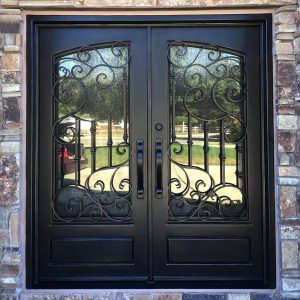
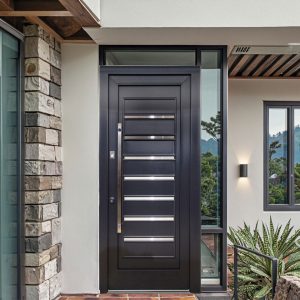
Iron front entry doors occupy a premium niche. They are fabricated from steel or wrought iron, often with a black iron front door finish, and are characterized by their strength and intricate design.
The key benefit is absolute durability. A properly galvanized and powder-coated iron door will outlast the building envelope. They are also inherently secure; the steel frame and integrated bars resist forced entry.
However, there are two critical considerations for wholesale buyers. First, thermal performance. Iron and steel are excellent conductors. A solid iron door without a thermal break will act as a heat sink, dramatically reducing the door’s overall R-value. You must specify a door with a foam-insulated core and thermal-break frame to meet modern energy codes.
Second, weight. A double iron door can weigh several hundred pounds. This requires reinforced framing and heavy-duty hinges, increasing installation cost. For projects seeking the craftsman look—characterized by square panels, exposed hardware, and geometric glass—fiberglass doors with an iron-look finish or steel doors with a wood-grain texture are lighter, more energy-efficient alternatives.
Glass Inserts and Sidelights: Options and Suppliers
The glass specification is often an afterthought, but it determines the door’s energy efficiency and code compliance.
Glass Insert Types
- Single-pane: Only suitable for interior or climate-controlled vestibules. Not acceptable for exterior entry doors in most jurisdictions.
- Double-pane (Insulated Glass Unit): The minimum standard. An IGU consists of two panes separated by a spacer and filled with argon or krypton gas. This provides insulation and prevents condensation.
- Triple-pane: Used in extreme climates (e.g., Canada, Northern Europe) to achieve very low U-factors.
- Impact-rated (Hurricane): Required in Miami-Dade County and other high-wind zones. This glass has a polymer interlayer (like car windshields) that prevents shattering. It is significantly heavier and more expensive.
Sidelight Configurations
A single sidelight (typically 12″–18″ wide) is the most common configuration, flanking the door on one or both sides. Sidelights are not just aesthetic; they allow natural light into the foyer without compromising the entry’s security.
Supplier Considerations for Glass
When sourcing entry door glass inserts suppliers, verify three things:
- Certification: Does the glass meet the local building code (e.g., ANSI Z97.1 for safety glazing)?
- Seal Warranty: What is the warranty on the IGU seal? A failed seal causes fogging and requires full door replacement.
- Customization: Can the supplier provide custom shapes, obscure glass for privacy, or decorative muntins (the grids inside the glass)?
A factory that controls both the door and the glass assembly—rather than outsourcing glazing—is better positioned to guarantee the final product’s air and water tightness.
Comparison Table: Wholesale Entry Door Options
| Door Type | Material Core | Typical R-Value | Relative Cost per Unit | Best Use Case | Primary Risk |
|---|---|---|---|---|---|
| Steel | Polyurethane foam | R-5 to R-10 | $ (Lowest) | Multi-family, commercial back entrances, budget projects | Dents, rust, thermal bridging |
| Fiberglass | Polyurethane foam | R-10 to R-15 | $$ (Moderate) | Residential, mixed-use, coastal climates | Higher upfront cost |
| Wood (Stile & Rail) | Wood core / foam-filled | R-5 to R-8 | $$$ (High) | Luxury residential, hospitality, historic renovations | Warping, maintenance, lead time |
| Aluminum (Thermal Break) | Polyamide thermal break | R-5 to R-8 (frame) | $$$ (High) | Modern architecture, large glass panels, high-wind zones | Condensation risk in cold climates |
| Iron (Steel) | Foam-filled / thermal break | R-3 to R-6 | $$$$ (Premium) | Statement entrances, high-security commercial | Weight, thermal performance, cost |
Note: R-values vary significantly with glass type and core density. Always verify against the manufacturer’s NFRC-certified spec sheet.
Buying Guide: How to Source Wholesale Entry Doors
Sourcing wholesale is not the same as buying a single door. The process demands a structured evaluation of the supplier’s capability, not just their price list.
Step 1: Verify Manufacturing and Quality Standards
For exterior doors, the critical performance metrics are air-tightness, water-tightness, and wind resistance. In China, these are tested per GB/T 7106 standards; in North America, you will look for AAMA/WDMA/CSA certification or ENERGY STAR labeling.
Ask the supplier for their test reports. A reputable factory will have third-party lab results showing the door’s performance class (e.g., Class 8 air-tightness, Class 6 water-tightness). If they cannot provide these, proceed with caution.
Step 2: Evaluate Customization and OEM/ODM Capabilities
Your project may require specific sizes that are non-standard. A supplier with in-house extrusion and fabrication capabilities can adjust the profile structure to meet your local building codes—for example, reinforcing the frame for hurricane zones or adjusting the thermal break width for colder climates.
Confirm whether the supplier offers OEM (your design, their manufacturing) and ODM (their design, your branding) services. This is essential for distributors who need private labeling.
Step 3: Calculate Total Landed Cost
The unit price is only a fraction of the total cost. For a 50-door order, calculate:
- Door Price: The quoted FOB (Free on Board) price.
- Freight: FCL (Full Container Load) is more cost-effective per unit than LCL (Less than Container Load) for large orders.
- Customs and Duties: Varies by country and material composition.
- Taxes: VAT or sales tax applicable at the port of entry.
A factory that can handle FCL and LCL shipment and provides full customs documentation (packing list, proforma invoice, bill of lading) will save you significant logistics headaches.
Step 4: Inspection on Delivery
Before accepting a shipment, inspect for common defects:
- Damaged edges: Check for dents, scratches, or crushed corners from improper forklift handling.
- Glass seal integrity: Look for any signs of seal failure or condensation between panes.
- Hardware alignment: Verify that hinges and locks operate smoothly. A misaligned door indicates frame distortion during shipping.
Document any damage with photos and note it on the bill of lading before signing. This is your evidence for a freight claim.
Step 5: The Supplier Scorecard
When comparing quotes, use a weighted scorecard. For a contractor prioritizing speed, lead time might be 40% of the score. For a distributor, customization and warranty terms might weigh heavier.
| Criterion | Weight (Example) | Supplier A | Supplier B |
|---|---|---|---|
| Unit Price | 25% | 8/10 | 6/10 |
| Lead Time | 20% | 7/10 | 9/10 |
| Custom Capability | 20% | 9/10 | 5/10 |
| Test Reports | 20% | 8/10 | 4/10 |
| Warranty Terms | 15% | 6/10 | 7/10 |
| Total | 100% | 7.6 | 6.1 |
Additional Considerations
For buyers evaluating premium brands, mastercraft entry doors are a recognized benchmark for stile-and-rail construction. When comparing against factory-direct options, the key difference is often the supply chain margin, not the material quality.
For projects requiring a black iron front door aesthetic, remember that powder-coated finishes are more durable than painted ones. Ask the supplier for a salt-spray test report to verify corrosion resistance.
When specifying entry doors with single sidelight configurations, ensure the sidelight glass is tempered or laminated to meet safety glazing codes.
Finally, for craftsman double entry doors, pay close attention to the astragal design. A poor astragal will allow water and air infiltration at the center seam, negating the door’s performance rating.
How We Meet These Standards
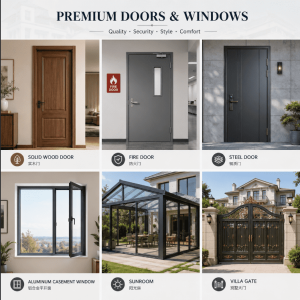
As a factory-direct manufacturer, our approach to wholesale entry doors is built around the testing and logistics requirements that professional buyers need. We produce thermal-break aluminum doors, system windows, and custom villa doors, with full OEM and ODM support.
When you order from us, you are not paying a distributor’s markup. Our pricing reflects the factory floor. We offer full customization on size, color, glass, and hardware, and our adjustable profile structure allows us to engineer doors that meet your local building codes—whether that means reinforcing for hurricane wind loads or optimizing the thermal break for cold climates.
Before shipment, every batch undergoes strict inspection for air-tightness, water-tightness, and wind resistance. We provide complete export documentation, including packing lists and proforma invoices, and can arrange both FCL and LCL shipment directly from our factory in China.
If you are comparing suppliers, we suggest you request our test reports and a sample order to verify the quality against your own benchmarks. We are confident that the data will speak for itself.