Core Conclusion: Choosing the Right Oak Door for Your Project
If you need a door for an exterior opening, white oak doors are the stronger choice because of their natural rot resistance and dimensional stability. If you are working on interior spaces where humidity fluctuations are minimal, solid oak doors offer the same premium look at a more accessible price point. For wide openings where a swinging door is impractical, exterior accordion doors provide a space-saving alternative, though they use engineered construction rather than solid wood. The rest of this guide breaks down the material differences, performance trade-offs, and sourcing considerations so you can match the door construction to the specific demands of your project.
White Oak vs. Solid Oak: What’s the Difference?
The confusion here is understandable because the terms overlap. “White oak” refers to a specific species group. “Solid oak” refers to construction—the door is made from solid wood rather than a veneer over a core. A white oak door can be solid, but a solid oak door might be made from red oak, which is a different species with different performance characteristics.
The material distinction matters for exterior use. White oak has a Janka hardness rating of about 1,360 lbf, while red oak sits at around 1,290 lbf. More importantly, white oak’s cellular structure contains tyloses—natural blockages that make the wood highly resistant to water penetration. This is why white oak has historically been used in shipbuilding and barrel-making. Red oak, lacking these tyloses, is more porous and will absorb moisture more readily, making it a poor choice for exterior doors unless it is heavily sealed and protected.
For interior doors, the difference is less critical. Both species will perform well in climate-controlled environments. The aesthetic difference is subtle: white oak tends to have a more olive or grey undertone with a tighter grain, while red oak has a pinkish cast and a more pronounced, wavy grain pattern. Many buyers choose red oak for interior doors specifically because that bold grain takes stain well and matches traditional or rustic interiors.
When a manufacturer labels a door “solid oak,” you should ask which species is used. If the door is intended for exterior service and the answer is not white oak, you need to understand the sealing requirements and expected lifespan before committing.
Interior Oak Doors: Solid Oak Doors for Inside Spaces
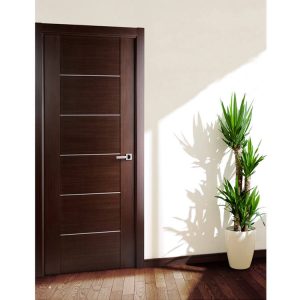
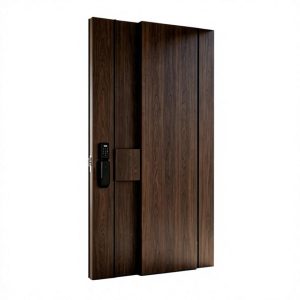
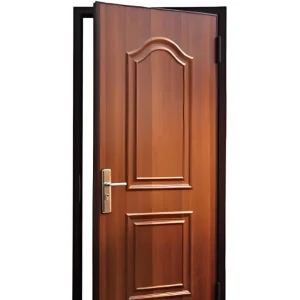
For interior applications, solid oak doors are the conventional premium choice. A solid wood door provides better acoustic insulation than hollow-core or engineered alternatives, and it can be trimmed to fit slightly out-of-square openings without exposing a hollow core.
The main consideration with interior solid oak doors is movement. Wood responds to humidity changes, expanding and contracting across the grain. A solid door slab will move more than an engineered door with a stable core. In climates with significant seasonal humidity swings, a solid oak door can warp or develop gaps at the panel joints. This is manageable with proper acclimation before installation and a good finish on all six sides, but it is a real consideration.
For interior applications, the species choice comes down to appearance. White oak interior doors offer a cleaner, more contemporary look with subtle grain figure. Red oak reads as more traditional. Both accept paint well, but if you plan to stain, the underlying species will significantly affect the final color. White oak stained dark takes on an elegant, almost smoky character. Red oak stained dark can look muddier due to the pronounced grain.
A practical middle ground for interior doors is a solid oak frame with engineered or veneered panels. This construction offers the look and feel of solid wood at the edges where it matters—around the lock, hinges, and stiles—while the panels resist warping. If budget allows, go with all-solid construction. If you are doing a large project with many doors, the hybrid approach can save money without a visible difference in appearance.
Exterior Oak Doors: Solid Oak Entrance Doors and Weather Resistance
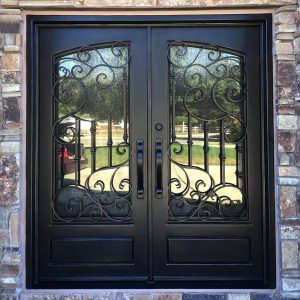
Solid oak entrance doors are a statement piece, but they demand respect for the elements. An exterior door faces direct sun, rain, wind, and temperature extremes. The wood must be properly specified, finished, and maintained.
White oak is the only oak species we recommend for exterior use without qualification. Its natural resistance to moisture penetration makes it far more forgiving than red oak. However, even white oak is not naturally rot-proof like cedar or teak. It requires a high-quality exterior-grade finish—typically a marine varnish or a penetrating oil designed for exterior wood—and that finish must be maintained every one to three years depending on sun exposure.
The construction of an exterior solid oak door is as important as the species. Look for:
- Thick stiles and rails: A minimum of 5 inches wide for the vertical stiles, with mortise-and-tenon joinery. This provides structural integrity and prevents racking.
- Proper panel fit: Panels should float in their grooves with space for expansion. If panels are glued rigidly into the frame, they will crack as the wood moves.
- Weatherstripping: A solid wood door needs a quality weatherstripping system around the perimeter. The door itself will not form an airtight seal against the frame.
- Glazing considerations: If the door has glass, the glazing must be set in a way that allows for wood movement without compromising the seal. Double-glazed, low-E glass is standard for energy efficiency.
Security is another factor. A solid oak door is inherently strong, but the locking hardware and hinge reinforcement matter more. Look for doors with a reinforced lock block, and plan to use a multi-point locking system for exterior doors. The weight of a solid oak door—typically 100 to 150 pounds depending on size—requires heavy-duty hinges, usually three or four per door.
Exterior Accordion Doors: A Space-Saving Alternative
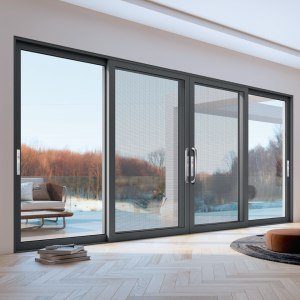
Exterior accordion doors—sometimes called bi-fold or folding doors—serve a different purpose than a traditional oak door. They are designed for wide openings where a swinging door would take up too much interior or exterior space. A typical application is a living room opening onto a patio or garden, where the entire wall can open up.
These doors are almost never made from solid oak. The engineering requirements of a folding system demand stability that solid wood cannot provide. Instead, exterior accordion doors use aluminum or uPVC frames, often with thermal breaks, and infill panels of glass or aluminum composite. If oak is desired, it is typically a veneer applied to an aluminum core, or the oak is used only for the interior-facing trim.
The benefits are clear:
- Space efficiency: The door folds neatly to one side, maximizing the opening.
- Natural light: Large glass panels flood the interior with light.
- Indoor-outdoor flow: The threshold can be level, creating a seamless transition.
The trade-offs are equally clear. Accordion doors cost significantly more per square foot than a solid oak door. They have more moving parts—rollers, tracks, hinges—that require maintenance. And their thermal performance, while good with modern thermal-break construction, is not as strong as a well-sealed solid door with weatherstripping.
Choose an exterior accordion door when you have a wide opening and the indoor-outdoor connection is a priority. Choose a solid white oak door when you need a single, secure, thermally efficient entry point. They are not competing products; they solve different problems.
Comparison Table: Oak Door Options at a Glance
| Attribute | Solid White Oak Door | Solid Red Oak Door | Exterior Accordion Door |
|---|---|---|---|
| Exterior suitability | Excellent with proper finish | Poor to fair; requires heavy maintenance | Good; designed for exterior use |
| Interior suitability | Excellent | Excellent | Rarely used; overkill for interior |
| Moisture resistance | High (tyloses block water) | Low to moderate | High (engineered materials) |
| Durability | Very high; Janka 1,360 lbf | High; Janka 1,290 lbf | High for frame; glass is fragile |
| Insulation (R-value) | Good; depends on thickness | Good; depends on thickness | Moderate; glass panels lose heat |
| Security | Excellent; solid core | Excellent; solid core | Moderate; multiple locking points needed |
| Maintenance | Refinish every 1-3 years | Refinish frequently; risk of rot | Clean tracks and seals; low wood maintenance |
| Cost per door | Highest | Moderate | Highest per square foot |
| Best application | Front entrance, exterior doors | Interior doors, cabinets | Wide openings, patio access |
Buying Considerations: What to Look for in a Supplier
When sourcing oak doors, whether for a single property or a construction project, the supplier’s quality control and manufacturing processes matter as much as the wood itself.
Wood grade and moisture content. Ask about the wood grade. Clear or select grade means fewer knots and a more uniform appearance. For exterior doors, moisture content should be between 8% and 12% at the time of manufacture. Wood that is too wet will shrink and crack; wood that is too dry will absorb moisture and swell.
Joinery and construction. For solid doors, insist on mortise-and-tenon joinery with waterproof adhesive. Dowel or biscuit joints are weaker and can fail over time. For exterior doors, the tenons should be long and the joints should be reinforced with screws or dowels.
Finish quality. A factory-applied finish is almost always better than a site-applied finish. Factory finishing happens in controlled conditions with proper curing time. If you are buying unfinished doors, factor in the cost and time of professional finishing.
Glazing and hardware. If the door includes glass, verify that the glazing is properly sealed. Double-glazed units with low-E coating are standard for exterior doors. Hardware should be heavy-duty, with reinforced lock blocks and multiple hinge points.
Customization capability. Door openings are rarely standard. A good supplier will offer custom sizing, the ability to adjust the profile structure, and options for glass type, hardware, and finish. This is particularly important for exterior doors, where the rough opening may not match standard dimensions.
For a full understanding of how door dimensions affect cost and lead time, review our door size guide and price reference before requesting quotes. These resources will help you specify accurately and compare supplier pricing on an apples-to-apples basis.
How We Meet These Standards
As a factory that manufactures and exports oak doors, we see the full range of quality—from carefully crafted doors to products that will fail within a few seasons. Our approach is straightforward: we build doors to the standards described above, and we verify them before shipment.
When you order from us, you are working directly with the manufacturer. There is no middleman markup, and you have direct access to the people who control the production process. We offer full customization on size, color, glass, and hardware. If your project requires a specific profile structure or fittings to match local building codes, we can adjust the construction accordingly.
Quality assurance is a fixed part of our process, not an optional extra. Every door goes through pre-shipment inspection, including air-tightness, water-tightness, and wind resistance tests for exterior units. We provide packing lists, proforma invoices, and full customs documentation with every order, and we ship both FCL and LCL directly from our factory in China.
For buyers sourcing oak doors for a project, the key questions are: Can the supplier produce to your exact specifications? Can they prove the quality of the product before it ships? And can they handle the logistics of international delivery? We answer yes to all three.
If you are comparing suppliers for a project, we would welcome the opportunity to quote against your specifications. Send us your door sizes, the number of units, and your preferred finish, and we will respond with a detailed quotation.
Frequently Asked Questions
How much do white oak doors cost compared to solid oak doors?
White oak doors typically cost 20% to 40% more than red oak doors of equivalent construction, because white oak is less abundant and more difficult to mill. The exact difference varies by region, grade, and finish. For a custom exterior door, expect to pay a significant premium over a standard stock door. For interior doors, the price difference is smaller and may be worth it if you prefer the white oak aesthetic.
Are solid oak doors suitable for exterior use?
Yes, but with conditions. White oak is suitable for exterior use with proper finishing and maintenance. Red oak is not recommended for exterior use because its open grain absorbs moisture, leading to rot and decay. Even white oak doors require a high-quality exterior finish, reapplied every one to three years, and should be protected from direct, prolonged rain exposure where possible.
How durable are white oak doors?
White oak is one of the most durable domestic hardwoods. Its Janka hardness of about 1,360 lbf means it resists dents and scratches well. Its natural resistance to moisture makes it dimensionally stable, which is the primary cause of door failure. With proper installation and maintenance, a solid white oak door can last 50 years or more.
What maintenance do oak doors require?
Interior oak doors require minimal maintenance—occasional cleaning with a damp cloth and periodic re-oiling or re-waxing if they have an oil finish. Exterior oak doors require more attention. The finish must be inspected annually and reapplied when it shows wear, typically every one to three years. If the finish fails and the wood is exposed to moisture, you risk rot and warping.
What is the lead time for custom oak doors?
Lead time varies significantly by manufacturer and order complexity. A standard size door in a common finish might ship in two to four weeks. A fully custom door with special glazing, hardware, and finish can take six to twelve weeks. Factory-direct suppliers often have shorter lead times than distributors because they control the production schedule. Always confirm lead time before placing an order, and factor in shipping time for international orders.
Can oak doors be painted or stained?
Yes. White oak takes both paint and stain well. If you plan to paint, the wood should be properly primed and sealed to prevent tannin bleed-through, which can discolor light paint. If you plan to stain, the grain pattern will show through, so choose a species and cut that matches your aesthetic. White oak tends to take stain more evenly than red oak, which can appear blotchy with some stains unless a wood conditioner is used.
What is the difference between solid and engineered white oak doors?
A solid white oak door is made entirely from solid wood. An engineered door has a solid oak frame with a veneer over a stable core, such as MDF or a stave-core construction. Engineered doors are more dimensionally stable and less prone to warping, making them a good choice for large doors or humid climates. Solid doors are heavier, feel more substantial, and can be trimmed to fit. For exterior doors, engineered construction with a solid oak frame is often the best balance of appearance and performance.