Core Conclusion: What You Need to Know Before Buying Solid Wood Doors
A solid wood door is exactly what the name implies: a door constructed entirely from natural wood, as opposed to a hollow core door or one made from engineered wood products like MDF. For commercial and residential projects, they remain the reference point for aesthetics, durability, and long-term value.
The decision, however, is rarely about choosing “solid wood” as a single category. You are choosing a wood species, a construction method, a finish, and a hardware specification. Each choice carries trade-offs between cost, performance, and maintenance. Before you request a quote, you need to settle four questions: Where will the door be installed? What performance levels are non-negotiable? What is the realistic maintenance budget? And does the project require specific certifications?
This guide walks through the types, the materials, and the buying criteria so you can specify the right door for the right opening without overpaying or under-specifying.
Types of Solid Wood Doors: A Detailed Breakdown
The term “solid wood door” covers several distinct constructions. Understanding the difference is critical because price and performance vary significantly.
Solid Stile and Rail Doors
This is the traditional method. The door frame (stiles and rails) is machined from solid timber, and the interior panels are also solid wood. The panels are typically set into grooves, allowing them to expand and contract with humidity changes without cracking.
Stile and rail doors are the preferred choice for exterior applications and high-end interiors. They resist warping better than simpler constructions because the joinery accommodates natural wood movement. You will find them in paneled designs, from classic four-panel to contemporary flat-panel configurations.
Solid Flush Doors
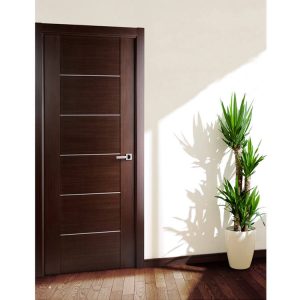
A flush door has a smooth, flat surface on both sides. In a solid version, the entire core is made from solid wood blocks or boards, often edge-glued and laminated under pressure. The surface is then veneered with a chosen wood species.
These doors offer a clean, modern aesthetic. They are heavier and more stable than hollow core flush doors, providing better sound insulation. However, the large, uninterrupted surface is more susceptible to visible warping if the wood is not properly seasoned or if the door is exposed to significant moisture differentials.
Engineered Solid Wood Doors
This category is often misunderstood. An engineered solid door uses a solid wood core, but the core may be constructed from finger-jointed or laminated wood strips rather than a single piece. The visible face is a veneer of the specified species (oak, walnut, etc.).
This is not a lower-quality option. In fact, engineered construction is often superior for large doors or doors in climates with extreme humidity swings. The lamination process cancels out opposing grain tensions, making the door less prone to warping than a single-slab door. For commercial projects, engineered solid doors offer predictable performance at a more controlled cost than old-growth single-board doors.
Solid Core vs. Solid Wood: A Review
Do not confuse these terms. A solid core door has a solid interior, but the interior is typically made from particleboard, MDF, or a wood composite. The exterior is a wood veneer. A solid wood door is wood throughout.
Solid core doors are cheaper and offer decent soundproofing, but they cannot be planed, sanded, or refinished the way solid wood can. If a solid core door gets damaged, repair is difficult. A solid wood door can be sanded and refinished multiple times over its lifespan, which is a significant factor in lifecycle cost.
Solid Wood Doors vs. Alternatives: A Comparison Table
To make an informed choice, you need to see how solid wood stacks up against the common alternatives.
| Attribute | Solid Wood | Solid Core (Veneer) | Hollow Core | MDF |
|---|---|---|---|---|
| Construction | 100% natural wood | Composite core, wood veneer skin | Cardboard honeycomb core, wood veneer skin | Compressed wood fibers with resin |
| Durability | High; can be refinished | Moderate; surface damage is hard to repair | Low; dents and punctures easily | Moderate; susceptible to moisture damage |
| Weight & Feel | Heavy, substantial | Heavy | Light, hollow sound | Medium-heavy |
| Sound Insulation | Excellent | Good to Excellent | Poor to Fair | Fair to Good |
| Moisture Resistance | Depends on species and finish; teak and mahogany are excellent | Moderate; risk of edge swelling if exposed | Poor | Poor; swells and degrades with water exposure |
| Cost | Highest | Mid-range | Lowest | Low to Mid-range |
| Best Use | Exterior doors, high-end interiors, acoustic barriers | Interior doors where budget meets performance | Interior rooms where budget is the only constraint | Painted interior doors, flat surfaces |
The honest trade-off: Solid wood costs more upfront. But it is the only option on this list that can be repaired, re-sanded, and refinished. For a commercial building with a 20-year lifecycle, the total cost of ownership for a solid wood door often beats cheaper alternatives that need replacement in 5–10 years.
How to Choose the Right Solid Wood Door for Your Project
Best Wood Species for Solid Wood Doors
The species determines appearance, hardness, stability, and price. There is no single “best” — only the best fit for your conditions.
Oak — The default choice for durability and classic appearance. White oak is dense and has good natural water resistance due to its closed cellular structure. Red oak is slightly less water-resistant but still strong. Oak accepts stains well and is widely available, keeping costs moderate.
Mahogany — A premium choice for exterior doors. True mahogany (Swietenia) is stable, rot-resistant, and has a rich, deep color. It machines beautifully and holds fine detail. Expect a significant price premium over oak. Be aware that “mahogany” is a loosely used term; sapele and other African species are often sold under this name at lower prices with similar performance.
Teak — The gold standard for weather resistance. Teak contains natural oils that repel water, insects, and rot. It is dimensionally stable in extreme climates. The cost is high, and the wood has a distinct, slightly oily surface that requires specific adhesives and finishes. Choose teak for doors directly exposed to harsh weather with no overhang.
Pine — The budget option. Pine is soft, lightweight, and easy to work. It dents easily and requires a robust finish for exterior use. For interior doors, pine offers a warm, rustic look at a fraction of the cost of hardwoods. For exterior doors, it is generally a poor choice unless cost is the absolute priority and the door is heavily protected.
Walnut and Cherry — Interior favorites. They offer rich color and are softer than oak, making them easier to scratch. Use them where aesthetics matter more than impact resistance.
Construction Methods and Performance Factors
Insulation and Soundproofing
A solid wood door is a dense barrier. Its thermal performance depends on the species and thickness. A standard 45mm (1.75-inch) solid wood door provides significantly better insulation than a hollow core door, but it will not match a well-sealed aluminum or steel door with a thermal break.
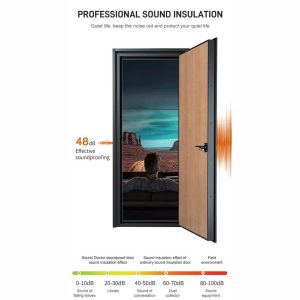
For soundproofing, mass is the key variable. Solid wood doors are excellent acoustic barriers, but the seal around the door matters just as much. For a noisy street side or a conference room, specify perimeter seals and an automatic door bottom. A 45mm solid wood door with proper seals will typically outperform a 40mm hollow core door by a wide margin, but do not expect it to match a purpose-built acoustic door rated with a specific Sound Transmission Class (STC).
Moisture and Humidity
Wood moves with humidity. A door installed in a dry interior will shrink slightly; a door exposed to rain will swell. The risk of warping is managed through three factors: the species (teak and mahogany are stable; pine is not), the construction (stile and rail allows movement; flush doors resist it less), and the finish (a proper seal on all six sides, including the top and bottom edges).
Durability and Maintenance
A solid wood door will last decades if maintained. The finish is the sacrificial layer. Exterior doors need refinishing every 2–4 years depending on sun exposure and finish quality. Interior doors need far less attention. When specifying for commercial use, factor in the cost of periodic refinishing versus the cost of replacing a cheaper door.
Customization Options: Size, Color, Glass, Hardware
Solid wood doors are inherently customizable. The manufacturing process allows for non-standard sizes, which is a major advantage for renovation projects or buildings with unusual openings.
- Size: Custom widths and heights are standard in the industry. Always measure the rough opening and work backward to the door size, accounting for frame and clearance.
- Glass: You can specify glass lites in virtually any configuration. For exterior doors, use double-glazed insulated glass with a low-E coating. For interior doors, frosted or patterned glass provides privacy while allowing light transfer.
- Color and Finish: Wood can be stained to match any specification or painted. If you need a specific color match across a large project, provide a physical sample to the manufacturer.
- Hardware: Solid wood doors are heavy. You must specify hinges rated for the door weight. A 45mm solid oak door can weigh 40–60 kg depending on size. Standard residential hinges will fail. Specify heavy-duty ball-bearing hinges — three per door for anything over 30 kg.
Cost Factors and Budget Planning
The cost of a solid wood door is driven by four variables:
- Species: Pine is the entry point. Oak is the mid-range standard. Mahogany and teak are premium.
- Construction: Stile and rail is more labor-intensive than flush. Paneled designs cost more than flat designs.
- Size: Larger doors require more material and more substantial hardware.
- Finish and Glass: Pre-finishing adds cost but ensures a consistent, factory-controlled result. Glass lites add cost per unit.
For budget planning, get quotes for the door slab, the frame, the hardware, and the finish as separate line items. This allows you to adjust one variable without renegotiating the entire package.
Wooden Back Doors and Bedroom Doors: Specific Considerations
Wooden Back Doors
The back door is the workhorse of a building. It faces weather, frequent use, and often, a lack of the overhang protection that a front door enjoys.
For a wooden back door, prioritize the following:
- Weather Resistance: Choose a stable, rot-resistant species. Teak and mahogany are ideal. If budget dictates oak, ensure it is white oak and that the finish is meticulously maintained.
- Security: The door is only as strong as its lock. Specify a multi-point locking system. The solid wood core provides excellent resistance to forced entry, but the frame and hinges must be reinforced. Use screws that penetrate deep into the wall framing, not just the door frame.
- Threshold and Seal: The bottom of the door is the most vulnerable point. Specify an aluminum or bronze threshold with a weather seal. This prevents water ingress and drafts.
Wooden Bedroom Doors
For bedroom doors, the priorities shift from weather to privacy and acoustics.
- Soundproofing: A solid wood door is the right starting point. The construction should be stile and rail for a tight fit. The gap under the door is the primary sound leak. An automatic door bottom that drops a seal when the door closes will make a measurable difference.
- Privacy: For a bedroom, solid wood provides complete visual privacy. If you want light transmission, specify a small frosted glass lite near the top.
- Hardware: Bedroom doors need a privacy lock (latch with an emergency release) rather than a keyed lock. The hinge weight issue remains — a solid oak bedroom door still needs three heavy-duty hinges.
Additional Considerations: Sourcing and Supplier Evaluation
Quality Standards and Certifications
When sourcing solid wood doors for a commercial project, certifications are not optional paperwork — they are a specification requirement.
- FSC Certification: Confirms the wood is sourced from responsibly managed forests. Many commercial projects in the US and EU require this for LEED or BREEAM points.
- CARB Compliance: Applies to composite wood products. For solid wood doors, this is less relevant, but if your door uses any engineered components, verify CARB Phase 2 compliance for formaldehyde emissions.
- Fire Ratings: Solid wood doors can achieve fire ratings, but it depends on the species, thickness, and construction. If a door assembly requires a fire rating, you must specify this upfront. A standard solid wood door is not automatically fire-rated. The entire assembly — door, frame, and hardware — must be tested together to standards like NFPA 80 or local equivalents.
Supplier Evaluation for B2B Buyers
Evaluating a door manufacturer requires more than checking a price list. Here is a practical framework for vetting suppliers.
Manufacturing Capability
Ask about the factory’s production process. Do they season and kiln-dry their lumber to the correct moisture content (typically 8–12% for interior, 12–15% for exterior)? Do they machine in-house or outsource? A supplier with full control over the process will deliver more consistent quality.
Pre-Shipment Inspection
For international sourcing, specify a pre-shipment inspection regime. This should include checking dimensions, moisture content, finish quality, and hardware installation. Ask the supplier if they can provide test reports for air-tightness, water-tightness, and wind resistance — these are standard tests for exterior doors in many markets.
Customization and Compliance
Confirm the supplier can adjust profile structures and fittings to match your local building codes. A factory that only produces for its domestic market may not be able to accommodate specific hardware prep or frame dimensions required in your region.
Logistics and Documentation
For overseas orders, verify the supplier can provide the full export documentation: packing list, proforma invoice, and customs paperwork. Ask about their experience with both FCL (Full Container Load) and LCL (Less than Container Load) shipments. A supplier experienced in foreign trade will handle the logistics without surprises.
Here is how we meet these standards. As a manufacturer, our approach to solid wood doors is built around direct factory supply and full customization. We produce solid wood doors, thermal-break aluminum doors and windows, and system windows for commercial and residential projects. Our factory handles custom sizes, colors, glass configurations, and hardware accessories to match your specification. We run pre-shipment inspections covering air-tightness, water-tightness, and wind resistance, and we adjust our profile structures and fittings to comply with the building codes of your target market. For international buyers, we provide complete export documentation and ship via FCL or LCL directly from our China factory.
If you are evaluating suppliers for a project, we can provide a detailed quotation with a clear breakdown of door slab, frame, hardware, and finish costs.
Or contact our team directly via WhatsApp to discuss your project requirements.