Solid Wood Doors: What to Know Before You Buy
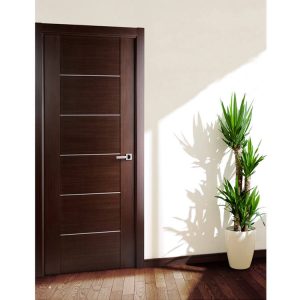
A solid wood door is exactly what the name implies: a door constructed entirely from natural wood, typically with a thickness of 1¾ to 2¼ inches. No hollow cores, no particleboard filler, no fiberglass skins. For exterior use, buyers choose solid wood primarily for three reasons: appearance, insulation value, and the ability to be refinished over decades of service.
The trade-off is straightforward. Solid wood doors cost more, weigh significantly more, and require more maintenance than their composite or metal counterparts. They also move with seasonal humidity changes, which means installation tolerances and hardware selection matter more than with engineered alternatives. If you are sourcing doors for a project, understanding these trade-offs before you compare prices will save you from costly specification errors.
Types of Solid Wood Doors: Which One Fits Your Project?
The term “solid wood door” covers several distinct constructions. They differ in how the wood is assembled, which directly affects stability, weight, and price.
Stile-and-Rail Construction
This is the traditional method for premium exterior doors. The frame consists of vertical stiles and horizontal rails, typically 4 to 6 inches wide, joined with mortise-and-tenon connections. The panels between the frame members can be flat, raised, or recessed.
Stile-and-rail doors handle seasonal wood movement better than solid slab doors because the panels are designed to expand and contract within the frame. This makes them the safest choice for exterior applications in climates with significant humidity swings. Most high-end mahogany entry doors use this construction.
Flush Doors
A flush solid wood door is made from edge-glued solid lumber, sanded flat on both faces. It has no panels or frame detailing. These doors are simpler and usually less expensive than stile-and-rail, but they are more prone to cupping and warping in exterior exposure. If you choose a flush door for an exterior opening, you need a well-protected location—a covered entry, not a fully exposed wall.
Paneled Doors
Paneled doors are a subcategory of stile-and-rail construction, distinguished by the number and arrangement of panels. A two-panel door is common for craftsman-style homes; six-panel doors are a classic colonial choice. The panel count is purely aesthetic—it does not change structural performance. What matters is the joinery quality and the wood species.
Solid Core vs. Solid Wood: Know the Difference
In the door industry, “solid core” is not the same as “solid wood.” A solid core door has a wood-composite or particleboard interior, veneered with a thin layer of real wood on both faces. It is heavy and feels substantial, but it is not a solid wood door. If your specification requires natural wood that can be sanded and refinished multiple times, a veneered door will not meet that requirement. Confirm with your supplier which construction you are actually quoting.
Mahogany vs. Other Hardwoods: A Detailed Comparison
Wood species selection is the single most important decision in a solid wood door purchase. The species determines durability, dimensional stability, appearance, and cost.
Why Mahogany Dominates the Exterior Door Market
Mahogany is the benchmark for exterior solid wood doors for several measurable reasons. Genuine mahogany (Swietenia macrophylla) has a natural resistance to rot and insect attack due to its extractive content. Its density—typically 30 to 40 percent heavier than oak—gives it excellent screw-holding strength, which matters for heavy door hardware. And its interlocked grain structure makes it more dimensionally stable than many domestic hardwoods, meaning it is less likely to warp or cup across seasonal changes.
The appearance factor is also significant. Mahogany has a rich, reddish-brown color with a straight, fine grain that takes stain uniformly. It does not require a heavy paint film to protect it; a clear or semi-transparent finish is sufficient, which lets the natural figure show.
Mahogany vs. Oak
Oak is harder than mahogany on the Janka scale (about 1,290 vs. 800-900), which sounds like an advantage. In practice, oak’s hardness is less relevant for doors than its dimensional stability—and oak is notably less stable. Oak also has an open grain that requires a pore-filling treatment before finishing, or the surface will show tiny pits. Without proper sealing, oak is more susceptible to moisture infiltration at end grain, which leads to splitting around hardware and panel joints.
Choose oak if you want a light, prominent grain pattern and are working with a limited budget. Choose mahogany if you want stability, rot resistance, and a finish that looks uniform from a few feet away.
Mahogany vs. Walnut
Walnut is a premium domestic hardwood with a dark, chocolate-brown color that darkens further with age. It is stable and machines beautifully. However, walnut is not naturally rot-resistant. For exterior exposure, walnut requires a high-quality finish system and diligent maintenance. Mahogany is the safer choice for exterior use; walnut is better suited for interior doors or protected exterior entries.
Sapele and Other “Mahogany-Type” Woods
True mahogany is a CITES-regulated species, which has pushed many manufacturers toward Sapele (Entandrophragma cylindricum). Sapele is an African hardwood with a similar reddish-brown color and interlocked grain, but it is denser and harder than true mahogany. It is also significantly less expensive. For exterior doors, Sapele is an excellent practical choice—it offers comparable rot resistance and stability at a lower price point. If your supplier offers “mahogany” at a surprisingly low price, confirm whether it is genuine mahogany or Sapele.
Solid Wood Door Comparison Table
| Wood Species | Janka Hardness | Rot Resistance | Dimensional Stability | Typical Cost Index | Best For |
|---|---|---|---|---|---|
| Genuine Mahogany | 800-900 | High (natural) | Excellent | $$$$ | Premium exterior doors, visible entries |
| Sapele | 1,410 | High (natural) | Excellent | $$$ | Exterior doors where cost matters |
| White Oak | 1,290 | Moderate (needs sealing) | Good | $$ | Painted exterior doors, budget projects |
| Red Oak | 1,290 | Low | Fair | $$ | Interior doors only; poor for exterior |
| Walnut | 1,010 | Low | Good | $$$ | Interior or protected entries |
| Teak | 1,000-1,155 | Very High (natural) | Excellent | $$$$$ | Extreme weather exposure, marine settings |
Cost indices are relative comparisons within a single market; absolute prices vary by region, availability, and finishing requirements.
How to Choose the Right Solid Wood Door for Exterior Use
The selection process comes down to four variables: exposure, climate, hardware, and budget. Work through them in order.
Assess the Exposure Level
Is the door fully exposed to rain and direct sun, or is it under a covered porch? A fully exposed door demands the most rot-resistant species (mahogany, Sapele, teak) and a stile-and-rail construction. A covered door gives you more flexibility—oak or walnut become viable options if you are willing to maintain the finish.
Understand Wood Movement and Fitting Tolerances
Solid wood absorbs and releases moisture continuously. A door that fits perfectly in winter (when wood is dry and slightly shrunken) may bind in summer (when wood swells). This is not a defect—it is the physical behavior of wood. When specifying an exterior solid wood door, you need a fitting tolerance of roughly 3 to 5 mm on the hinge side and latch side to accommodate seasonal movement. Your supplier should provide guidance on this; if they do not, consider it a red flag.
Account for Weight and Hardware Requirements
A solid mahogany door in stile-and-rail construction weighs substantially more than a hollow-core or fiberglass unit. This has direct consequences:
- Hinges must be rated for the door weight. A typical exterior solid wood door needs three 4-inch ball-bearing hinges, not the standard two hinges used on lighter doors.
- The door frame and jamb must be structurally sound enough to carry the weight. In some renovations, this means reinforcing the rough opening.
- Automatic door closers and panic hardware must be selected based on door weight, not just door size.
Calculate the Total Cost, Not Just the Door Price
The door slab is typically 30 to 40 percent of the total installed cost. Budget for:
- Factory finishing (stain, sealer, topcoat) — this is not optional for exterior use
- Heavy-duty hinges and hardware
- A quality weatherstripping system
- Professional installation, including shimming and anchoring
- Freight and delivery, which is significant for heavy doors
Regional price variations are substantial. A solid mahogany door that costs $1,800 in a coastal market with established millwork suppliers may cost $2,400 in a market where it must be shipped long distance. Always request delivered pricing, not ex-works pricing.
Check Sustainability and Certification
Mahogany is a CITES-listed species, which means legitimate suppliers must document the legal harvest chain. For B2B buyers, this is not an optional concern—it is a compliance issue. Ask your supplier for documentation that the wood is legally sourced. FSC certification provides an additional layer of assurance for sustainability-focused projects.
Frequently Asked Questions About Solid Wood Doors
How long does a solid wood door last?
With proper finishing and maintenance, a solid mahogany or Sapele exterior door can last 30 to 50 years or more. The finish will need refreshing every 2 to 4 years depending on sun exposure. The wood itself, if protected from moisture infiltration, will outlast most other building components.
What is the difference between solid wood and engineered wood doors?
Engineered wood doors use a composite core or layered construction with a wood veneer surface. They are more dimensionally stable than solid wood, meaning they will not warp or swell as much. However, they cannot be sanded and refinished as many times as solid wood. If the veneer is ever breached by moisture, the composite core can swell and delaminate. Solid wood can be repaired and refinished indefinitely.
Do solid wood doors provide good insulation?
Yes, but with a caveat. Solid wood has natural insulating properties—a 1¾-inch solid wood door has an R-value around 2.5 to 3.0, which is comparable to a basic insulated steel door. However, the door-to-frame seal is often the weak point. A well-sealed solid wood door performs better than a poorly sealed steel door, regardless of the door’s nominal R-value.
Can I get a solid wood door with glass panels?
Yes, most manufacturers offer solid wood doors with glazed openings. The glass is typically triple-glazed or double-glazed with low-E coating for thermal performance. The critical detail is the glazing method—the glass must be installed with a proper drainage system to prevent water from sitting against the wood. Ask your supplier how the glass is set and whether the glazing system is tested for water penetration.
How do I verify the quality of a solid wood door before ordering?
Request a sample or visit the factory if possible. Check the joinery: stile-and-rail connections should be tight, with no gaps at the joints. Look at the end grain of the wood—it should be sealed, not raw. Ask for the moisture content reading; it should be between 8 and 12 percent for exterior doors. And confirm the warranty terms: a reputable manufacturer will offer a structural warranty of at least 5 years, with longer coverage on the finish system.
Additional Considerations: Exterior Mahogany Doors and Beyond
When sourcing exterior mahogany doors, the specification details are where projects succeed or fail. Here are the factors that experienced buyers check before committing to an order.
Construction Quality Indicators
A solid mahogany door’s performance depends more on how it is built than on the wood itself. Look for:
- Mortise-and-tenon joints with waterproof adhesive, not just dowels or staples
- Kiln-dried lumber with a stated moisture content
- Panels that are floated in the frame (not glued) to allow natural movement
- Edge-gluing on stiles and rails that is staggered, not aligned
These details are invisible in a product photo but determine whether the door will develop cracks, gaps, or joint failure within the first few years.
Finish System: The First Line of Defense
The finish is the door’s primary weather protection. A quality exterior finish system includes:
- A wood preservative or sealer applied to all surfaces, including top and bottom edges
- A stain or paint layer with UV protection
- A durable topcoat (polyurethane or marine-grade varnish) on exterior faces
Ask your supplier whether the factory applies the complete system or whether the door ships raw. Factory-applied finishes are generally more consistent than field-applied finishes because they are applied in controlled conditions.
Hardware and Fittings
For exterior solid wood doors, hardware is not an afterthought. The weight of the door dictates hinge requirements. The lock should be a multi-point locking system for security and weather sealing. And the threshold should be adjustable to maintain a tight seal as the door settles.
If you are sourcing for a project in a specific market, confirm that the hardware and profile structure can be adjusted to match local building codes. This is particularly relevant for international buyers, where door swing direction, egress requirements, and fire ratings vary by jurisdiction.
Sourcing Considerations for B2B Buyers
For volume buyers, the supplier relationship matters as much as the product. Look for manufacturers that can provide:
- Pre-shipment inspection certificates covering air-tightness, water-tightness, and wind resistance
- Complete export documentation, including packing lists and proforma invoices
- Flexible shipping options, whether full container load or less-than-container load
As a manufacturer of solid wood and thermal-break aluminum doors, we approach these requirements directly. Our factory produces custom solid wood doors in mahogany, Sapele, and other hardwoods, with full control over size, finish, and hardware specifications. We test each door for air-tightness, water-tightness, and wind resistance before shipment, and we provide complete customs documentation for international orders. Our profile structures and fittings are adjustable to match local building codes in your target market.
If you are comparing suppliers for a project, we welcome the opportunity to discuss your specifications. Send us your door sizes, wood species preferences, and performance requirements, and we will respond with a detailed quotation.