What Is a Solid Core Exterior Door?
A solid core exterior door is a door constructed with a solid interior core—typically wood composite, particleboard, or laminated veneer—sandwiched between veneer faces. Unlike hollow-core doors, which have a honeycomb cardboard interior, solid core doors offer meaningful weight, insulation, and sound-dampening properties. They are commonly sold as pre-hung units (door plus frame) or as slabs (door only) in standard sizes like 36×80 or 30×80.
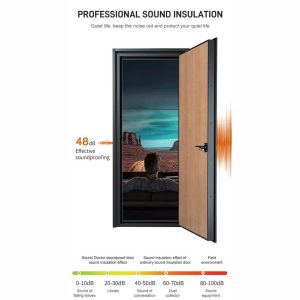
For exterior applications, the solid core provides three practical benefits: thermal insulation, acoustic performance, and dimensional stability. A solid core door reduces heat transfer through the entryway, blocks more exterior noise, and resists the warping that plagues hollow doors when exposed to temperature swings and moisture. However, not all solid core doors are created equal—the core material, face material, and edge construction determine how well the door performs over time.
Solid Core vs. Hollow Core vs. Solid Wood
The distinction between these three door types comes down to internal construction and material cost.
Hollow core doors are lightweight, inexpensive, and used almost exclusively for interiors. They consist of a thin veneer over a cardboard honeycomb structure. They offer minimal insulation, no meaningful sound barrier, and can dent or puncture with impact. They are not suitable for exterior use.
Solid core doors use an engineered wood core—typically particleboard, MDF (medium-density fiberboard), or laminated veneer lumber. The core is dense and heavy, giving the door solid feel and performance. The face can be wood veneer, fiberglass, or steel. This is the category that most budget-conscious exterior door buyers should consider.
Solid wood doors are milled from a single piece or staved construction of natural lumber. They offer the most premium appearance and can be refinished multiple times over their lifespan. However, they are significantly more expensive, heavier, and more susceptible to seasonal movement—expansion and contraction—than engineered cores. Solid wood also requires more maintenance, particularly in climates with high humidity or direct sun exposure.
For exterior use, a solid core door with a fiberglass or steel face often outperforms solid wood in terms of stability and maintenance, while a solid wood door wins on aesthetics and refinishing potential.
Slab vs. Pre-Hung: Which Should You Buy?
A door slab is just the door panel itself. A pre-hung unit includes the door, the frame (jamb), and often the weatherstripping and threshold. The choice depends on your existing framing and installation scenario.
Choose a slab if:
- You are replacing an existing door and the current frame, hinges, and strike plate are in good condition.
- You want to match a non-standard opening size.
- You are working with a contractor who will build the frame on-site.
- You have a historic or custom opening that doesn’t match standard jamb dimensions.
Choose a pre-hung unit if:
- You are doing new construction or adding a new entryway.
- The existing frame is rotted, warped, or out of square.
- You want a guaranteed weather seal with factory-installed weatherstripping.
- You want a simpler installation process—slide the unit into the rough opening, shim, and secure.
The cost difference matters. A pre-hung unit typically costs 30–50% more than a slab alone because it includes the frame, hinges, and threshold. However, if you are paying a contractor for installation, the labor savings with a pre-hung unit can offset the material cost difference. For exterior doors, the frame and weatherstripping are where most air and water leaks occur—a factory-assembled unit reduces the risk of installation errors.
Material Comparison: Wood, Fiberglass, and Steel
The face material of a solid core exterior door determines its durability, maintenance, and appearance. Here is how the three main options compare.
Wood-Faced Solid Core
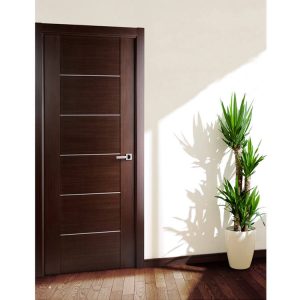
A wood veneer over a solid engineered core gives you the appearance of solid wood at a lower cost and with better dimensional stability. Common veneer species include oak, mahogany, walnut, and maple. The door can be stained or painted, and the veneer can be refinished several times before replacement is needed.
The main risk is moisture. If the finish fails, water can penetrate the veneer and cause delamination or core swelling. Wood-faced doors require periodic refinishing—typically every 2–5 years depending on sun exposure and climate.
Fiberglass-Faced Solid Core
Fiberglass doors use a compression-molded fiberglass skin over a polyurethane foam or solid core. They offer the look of wood grain without the maintenance. Fiberglass does not warp, rot, crack, or swell. It is the most dimensionally stable option available.
The insulation performance of fiberglass doors is excellent, particularly when the core is polyurethane foam. They also accept paint well, though they cannot be stained to a natural wood look unless the manufacturer offers a wood-grain texture that mimics stained wood.
Fiberglass is the best choice for coastal climates, high-humidity regions, and buyers who want minimal maintenance over a 20–30 year lifespan.
Steel-Faced Solid Core
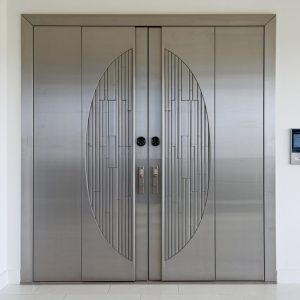
Steel doors consist of a galvanized steel skin over a foam or solid core. They offer the highest security and the lowest cost among exterior door options. Steel is also highly resistant to moisture and insects.
The drawbacks are dents and thermal performance. Steel dents on impact, and the dents cannot be easily repaired. Steel also conducts heat and cold, so the door’s insulation depends almost entirely on the core. A steel door with a thin foam core will have poor thermal performance compared to a fiberglass door with a thick polyurethane core. Look for steel doors with a thermal break—a non-conductive separation between the interior and exterior steel skins.
Standard Sizes and Glass Options
Exterior door slabs follow standard nominal dimensions. The most common is 36×80 (36 inches wide by 80 inches tall), which is the standard for single entry doors in most residential construction. The 30×80 size is common for side doors, patio access, and utility entries.
When measuring for a slab, note that the actual dimensions are slightly smaller than the nominal size. A “36×80” slab typically measures approximately 35-7/8 inches wide by 79-7/8 inches tall to allow for clearance in the frame. Always measure the existing door slab, not the rough opening, when ordering a replacement.
Glass options significantly expand the functionality of a solid core exterior door. A 36×80 exterior door slab with glass is a popular choice for entryways that need natural light. Glass options include:
- Single lite: One large glass panel, typically 10×10, 12×12, or 12×16 inches.
- Full lite: A door that is mostly glass, with a narrow stile around the perimeter.
- Sidelites: Separate narrow glass panels flanking the door, not part of the slab itself.
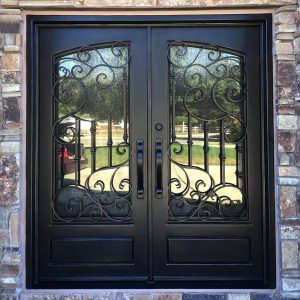
- French doors: A pair of full-lite doors that open outward or inward, often used for patios or garden entrances. An exterior door french configuration is a common request for homeowners who want maximum light and a wide opening.
For glass in a solid core door, the glazing matters as much as the glass itself. Look for double-pane, low-E glass with argon gas fill for insulation. Tempered glass is required by code in most jurisdictions for door glazing. If the door is in a location with impact risk (hurricane zones, near a golf course), consider impact-rated glass.
Comparison Table: Solid Core Exterior Door Options
| Door Type | Core Material | Face Material | Insulation (Relative) | Maintenance | Price Range (Relative) | Best For |
|---|---|---|---|---|---|---|
| Wood-Faced Solid Core | Particleboard/MDF | Wood Veneer | Moderate | Moderate (refinish every 2–5 years) | $$ | Traditional aesthetics, stainable finishes |
| Fiberglass-Faced Solid Core | Polyurethane Foam | Fiberglass | High | Low (no refinishing needed) | $$$ | Coastal/humid climates, energy efficiency |
| Steel-Faced Solid Core | Foam or Solid | Galvanized Steel | Low to Moderate | Low (but dents) | $ | Security on a budget, low-maintenance |
| Solid Wood | Natural Lumber | Wood | Moderate | High (regular refinishing) | $$$$ | Premium appearance, historic renovations |
| Full-Lite Fiberglass | Polyurethane Foam | Fiberglass with Glass Panel | Moderate (glass reduces insulation) | Low | $$$ | Natural light, modern entryways |
How to Choose the Right Solid Core Door for Your Project
The decision comes down to four factors: climate, security needs, maintenance tolerance, and budget.
Climate matters most. In cold climates (US Climate Zones 5–7), energy efficiency should drive the decision. A fiberglass door with polyurethane foam core and low-E glass will outperform a steel door with a thin core. Look for doors with an R-value of 5 or higher—though note that R-values vary by manufacturer and include the entire door assembly, not just the core.
In hot-humid climates (zones 1–3), moisture resistance is the priority. Fiberglass is the clear winner—it will not warp, rot, or swell. Wood-faced doors in these climates require vigilant finish maintenance. Steel doors are acceptable but can sweat on the interior surface when air conditioning meets humid exterior air.
In coastal climates, salt air accelerates corrosion and finish failure. Fiberglass is the most durable choice. Steel doors can corrode if the galvanized coating is scratched. Wood-faced doors need high-quality marine-grade finishes.
Security needs depend on your location and risk tolerance. Steel offers the highest resistance to forced entry, but only if the frame and hardware are equally robust. A solid core door—regardless of face material—with a quality deadbolt and reinforced strike plate provides substantial security. The door is rarely the weakest point; the frame and hinges are.
Maintenance tolerance is about your willingness to refinish. If you want a set-and-forget door, choose fiberglass. If you enjoy the look of natural wood and accept the maintenance cycle, a wood-faced solid core door is a reasonable choice.
Budget planning must account for more than the slab. The total cost includes hinges, lockset, weatherstripping, threshold, and installation. A $300 steel slab can become a $1,200 installed door once hardware and labor are added. A $900 fiberglass slab can become a $2,000+ installed door. Set your budget for the complete assembly, not just the slab.
Evaluating Manufacturers and Suppliers
When sourcing solid core exterior doors, whether for a single project or bulk procurement, the manufacturer’s quality control matters as much as the product specification. Here is what to verify before committing to a supplier.
Check the core specification. A solid core door is only as good as its core. Particleboard cores offer adequate density but are susceptible to moisture damage if the edge seal fails. MDF cores are denser and more moisture-resistant. Laminated veneer lumber (LVL) cores offer the best screw-holding power and dimensional stability. Ask the manufacturer for the core density and the edge-sealing process.
Verify dimensional tolerances. Door slabs should be square within 1/16 inch and flat within 1/8 inch. Warped or twisted slabs will not seal properly and will cause operational problems. Ask for the manufacturer’s tolerance specifications and their inspection process.
Check the glazing system. For doors with glass, the glazing method determines long-term performance. A wet-glazed system (using sealant) is generally more durable than a dry-glazed system (using gaskets). Ask about the glass unit specification—double-pane, low-E coating, argon fill, and tempered glass.
Review the warranty. A solid core exterior door should carry a warranty of at least 5 years against defects in materials and workmanship. Fiberglass doors often carry 20–30 year warranties. Steel doors typically have limited warranties that exclude dents and scratches. Read the warranty exclusions carefully—moisture damage from failed finishes is commonly excluded.
Evaluate the manufacturer’s testing. Reputable manufacturers test their doors for air infiltration, water penetration, and structural performance. Ask for test reports from accredited laboratories. For commercial or multi-family projects, these reports are often required by code.
As a manufacturer of solid wood, thermal-break aluminum, and system doors and windows, our approach at Jusen Door and Windows aligns with these standards. We supply solid core exterior door slabs and pre-hung units directly from our factory, which means we control the core material specification, the glazing system, and the quality inspection process. We run pre-shipment checks on air-tightness, water-tightness, and wind resistance—tests that matter for exterior doors in real weather conditions.
For buyers sourcing from overseas, we provide full customs documentation, packing lists, and proforma invoices. Our profile structures and fittings can be adjusted to match local building codes in your target market. If you are comparing suppliers and need a door that meets specific performance requirements, we can work from your specifications rather than offering only off-the-shelf options.
We also handle FCL and LCL shipments, so whether you need a container of standard 36×80 slabs or a mixed order with custom sizes and glass configurations, the logistics can be arranged to match your project timeline.
If you are evaluating manufacturers for a project, request their core specifications, test reports, and warranty terms in writing. Compare those documents against the performance you actually need—not against marketing claims.
Frequently Asked Questions
What is the difference between a solid core and a solid wood door?
A solid core door has an engineered wood core (particleboard, MDF, or LVL) covered with a veneer face. A solid wood door is milled entirely from natural lumber. Solid core doors are more dimensionally stable, less expensive, and less susceptible to seasonal movement. Solid wood doors offer premium aesthetics and can be refinished more times but require more maintenance.
Should I buy a slab or a pre-hung door?
Buy a slab if your existing frame is sound and you want to match a non-standard opening. Buy a pre-hung unit for new construction, or if the existing frame is damaged or out of square. Pre-hung units provide a better weather seal because the frame, weatherstripping, and threshold are factory-assembled.
What are the standard sizes for exterior door slabs?
The most common sizes are 36×80 (standard entry) and 30×80 (side or utility doors). Actual dimensions are slightly smaller than nominal—a 36×80 slab measures about 35-7/8 x 79-7/8 inches. Always measure the existing slab, not the rough opening.
Can I get a solid core exterior door slab with glass?
Yes. A 36×80 exterior door slab with glass is a common configuration. Options include single lites (10×10, 12×12, 12×16 inches), full-lite doors, and French door pairs. For exterior use, specify double-pane, low-E glass with argon fill and tempered glazing.
What is the best material for energy efficiency?
Fiberglass doors with polyurethane foam cores generally offer the highest insulation values. Steel doors conduct heat through the skin, so their insulation depends on the core thickness. Wood-faced solid core doors fall between the two. For cold climates, prioritize fiberglass; for moderate climates, steel can be adequate if the core is sufficiently thick.
How do I measure for a 36×80 exterior door slab?
Measure the existing slab’s width and height at three points (top, middle, bottom) and use the largest measurement. Check for square by measuring diagonals—they should be within 1/8 inch of each other. Measure the door thickness (typically 1-3/4 inches for exterior doors). If replacing an existing door, match the hinge locations and bore positions of the old door.
Are solid core doors more secure than hollow core doors?
Yes, significantly. The dense core resists impact and makes it difficult to kick through. However, the frame and hardware are the weakest points. A solid core door with a quality deadbolt and reinforced strike plate is substantially more secure than a hollow core door with standard hardware.
What is the R-value of a solid core exterior door?
R-value varies by manufacturer, core material, and glass configuration. A typical solid core door without glass has an R-value in the range of 3–7, depending on core density and face material. Adding glass reduces the overall R-value of the door assembly. Verify the manufacturer’s published R-value for the specific door model you are considering.
If you are sourcing solid core exterior doors for a project and need specifications that meet your local building code, contact our team with your requirements.