Rustic Exterior Doors: Core Buying Comparison
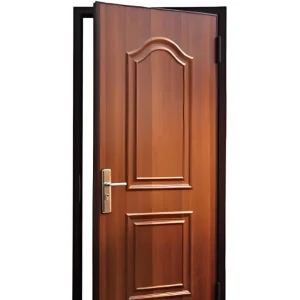
A rustic exterior door is an entry or patio door built with a weathered, natural, or handcrafted appearance — typically solid wood such as cedar, knotty alder, or mahogany, or a wood-look finish over a stable core. What separates it from a standard exterior door is not only the surface: it is the combination of visible grain or texture, heavier slab proportions, decorative or divided glass, and hardware chosen for character rather than uniformity.
For B2B buyers, the practical difference shows up in specification risk. A standard flush or smooth-skin door is largely a dimensional and thermal purchase. A rustic exterior door with glass adds variables that must be pinned down before the order is placed: wood species and moisture content, glass configuration, slab versus prehung construction, finish stage, and swing direction. Every one of those variables affects price, lead time, code compliance, and warranty exposure.
The core comparison for a sourcing decision comes down to five levers:
- Material: solid wood (cedar, knotty alder, mahogany) versus wood-look composite or aluminum with a wood-grain finish.
- Glass: single insert, 4-panel divided lite, arched top, decorative art glass, or blinds-between-glass.
- Construction: slab only versus prehung in a frame with sill and weatherseal.
- Finish: unfinished (site-finished) versus factory-finished.
- Swing: inward versus outward opening.
Get these five right and the rest of the specification — hardware, threshold, screen, packaging — falls into place. Get them wrong and the most common failure is not aesthetic; it is a door that will not pass the local code review, will not seal against the project’s climate, or will arrive on site in a finish stage that no one planned to handle.
This guide compares those options directly, then closes with a supplier evaluation framework and a terms table buyers can use in a request for quotation.
Materials and Construction: Cedar, Solid Wood, and Wood-Look
Material choice drives three things buyers actually care about: how the door performs in the target climate, how it must be maintained, and what it costs to ship and install.
Cedar is a common starting point for rustic exterior doors because it is naturally resistant to moisture and decay and takes stain and clear finish well. Western red cedar is dimensionally stable for a softwood and holds a handcrafted, knotty look that suits the rustic aesthetic. The trade-off is softness: cedar dents and scratches more readily than dense hardwoods, so it suits projects where the weathered look is acceptable and where the door is protected by an overhang or recessed entry.
Knotty alder is chosen for a warmer, smoother rustic appearance with visible knots but a finer grain than cedar. It machines and finishes cleanly, which matters when the door carries decorative glass and the joinery around the glass is visible. Alder is softer than mahogany and should be specified with a robust finish system in wet or high-UV exposures.
Mahogany and similar dense hardwoods offer the best combination of stability, hardness, and rot resistance among the solid-wood options, at the highest material cost. For coastal projects or heavily exposed entries, the premium is usually justified by service life.
Wood-look alternatives — composite skins, fiberglass with a grain texture, or thermal-break aluminum with a sublimated wood finish — trade authentic grain for dimensional stability and lower maintenance. They are the correct answer when the project needs the rustic appearance but cannot accept seasonal movement, repainting cycles, or the weight of a solid hardwood slab.
One construction point cuts across all materials: moisture content and stile-and-rail joinery. Solid wood exterior doors should be specified with a moisture content appropriate to the destination climate and assembled with joints that allow for seasonal movement. Doors built for a dry market and shipped to a humid one move after installation. Buyers sourcing across climate zones should confirm this with the factory rather than assume it.
Glass Configurations: Decorative Panels, Inserts, and Blinds
Glass is where rustic exterior doors diverge most from standard doors, and where specification errors are most expensive to correct.
Decorative art glass uses textured, seeded, or patterned glass to obscure the interior while admitting light. For entry doors, this is often the default because it balances privacy with the rustic look. Buyers should confirm the glass is tempered where code requires safety glazing in door assemblies.
Divided-lite configurations — most commonly a 4-panel arrangement, or a single large insert — change the character of the door and its structural requirements. An exterior door with 4 glass panels carries more muntin and glazing bar work, which adds labor and cost. A single exterior door glass insert gives a cleaner, more contemporary-rustic look and is easier to seal.
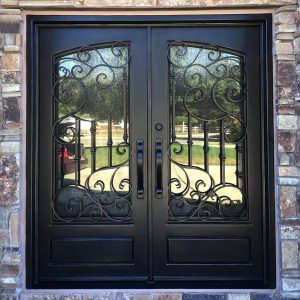
Arched exterior doors with glass use a curved top rail and matching arched glazing. These are typically custom, not stock, and the arch radius must be specified precisely because the frame, the glass, and the rough opening all have to agree. Arched units also cost more to crate and ship because of the non-rectangular footprint.
Blinds-between-glass seals venetian blinds inside the insulated glass unit. This is popular for exterior doors with glass and blinds because the blinds never need dusting and cannot be damaged by weather. The trade-off is that a failed seal means replacing the entire glass unit, so buyers should confirm the glazing warranty terms separately from the door warranty.
On thermal performance, the glass is usually the weakest part of the assembly. Double glazing with a low-emissivity coating and a warm-edge spacer is the practical baseline for conditioned buildings; triple glazing is specified where the project’s energy target or climate demands it. Buyers should ask for the U-factor of the complete door assembly, not just the glass, because the frame, sill, and weatherseal contribute to the total.
Terms buyers should know
| Term | What it means | Why it matters when buying |
|---|---|---|
| Slab | The door leaf only, no frame, hinges, or sill | Cheaper to ship and easier to fit into an existing frame, but requires site labor and a separate frame specification |
| Prehung | The leaf supplied already mounted in its frame with hinges and sill | Faster installation and a controlled fit between leaf, frame, and weatherseal, but bulkier to crate and ship |
| Rough opening | The framed gap in the wall that the door unit fits into | Must be confirmed before ordering; a mismatch here is the most common cause of on-site rework |
| U-factor | The rate of heat transfer through the complete door assembly | Determines whether the door meets the project’s energy target; glass-only ratings are not sufficient |
Sizes and Dimensions: From 36×78 to 8-Foot and Custom
Door dimensions in this category are usually written as width-by-height in inches, and the numbers buyers see most often map to specific applications.
A 36×78 exterior door with glass is the traditional North American entry size — 36 inches wide, 78 inches high. It suits standard residential rough openings and is the safest choice where the project uses stock framing. A 36×96 exterior door with glass is the same width but 8 feet tall, used where ceiling height or architectural proportion calls for a taller entry. This is the same family as an 8 foot exterior door with glass, and it is a common upgrade on higher-end residential work.
A 64×80 exterior door is a double-door or wide-entry configuration — two 32-inch leaves, or a single wide unit, at standard height. This size is frequently specified for patio and main entries where a single 36-inch door is too narrow for the traffic or the design intent. A 4ft exterior door (48 inches) falls between single and double and is usually a custom or semi-custom order.
The 2668 exterior door notation follows a different convention: 2 feet 6 inches by 6 feet 8 inches, or 30 by 80 inches. Buyers working with suppliers who use metric or regional notation should confirm which convention is in use before the order is confirmed, because 2668 and 36×78 are not interchangeable.
Beyond these, most rustic exterior doors with glass are custom. Custom sizing is standard practice in this category, but it shifts risk to the buyer: the rough opening, the frame, and the leaf all become project-specific, and returns or exchanges are rarely practical on a custom unit.
Two practical rules apply regardless of size. First, confirm the rough opening on site before releasing the order, not after. Second, where the door is an egress door, the clear opening width and height are governed by the applicable building code, and the door size must be checked against it. Buyers should verify the current local requirement rather than rely on a supplier’s general statement.
Finish and Swing: Unfinished, Prefinished, Inward, and Outward
Unfinished exterior doors ship bare and are finished on site after installation. The advantage is that the finish coat bridges the joint between door and frame, giving a more continuous seal at the edges — a real benefit in wet climates. The disadvantage is that site finishing depends on the installer’s quality and schedule, and an unfinished door that sits exposed before coating will absorb moisture and may move.
Factory-finished doors arrive with a controlled, consistent coating applied in a spray booth, often with a multi-coat system and a warranty on the finish. This shortens the site program and removes finish quality from the installer’s scope. The trade-off is that any on-site cutting or fitting exposes raw wood that must be touched up, and shipping damage to a finished surface is more visible.
For most B2B projects, factory-finished is the lower-risk default unless the project has a specific reason to control the finish on site. Where unfinished is chosen, the buyer should confirm the door is shipped with edge sealing and that the site has a finish schedule before delivery.
Inward-opening doors are the North American norm: they swing into the building, the hinges are concealed from outside, and the door is protected by the entry recess. They are easier to weatherseal and are the standard choice for residential entries.
Outward-opening exterior doors with glass swing away from the building. They are common in coastal and high-wind regions and in some European and Caribbean markets, where an outward swing resists wind-driven rain and positive pressure better. The trade-offs are real: hinges are exposed to weather, the door can be blocked by exterior steps or landscaping, and local code and egress practice must be checked. Outward swing also changes the handing notation, so buyers must specify the hinge side from the exterior view to avoid a mirrored unit.
Comparison Table: Rustic Exterior Door Options
| Option | Typical use | Relative cost | Key trade-off |
|---|---|---|---|
| Cedar, single 36×78, single glass insert, unfinished | Standard residential entry | Low to mid | Soft wood; requires site finishing and periodic re-coating |
| Knotty alder, 36×96, 4-panel decorative glass, factory-finished | Tall residential entry | Mid to high | Custom height increases lead time; finish touch-up needed after fitting |
| Mahogany, 64×80 double, arched decorative glass, prehung | Premium main entry | High | Highest material and freight cost; heavy unit needs two-person handling |
| Wood-look composite or aluminum, 36×78, blinds-between-glass | Coastal or low-maintenance projects | Mid | Less authentic grain; glazing unit replacement is all-or-nothing |
| Solid wood, outward opening, single glass insert | High-wind or coastal exposure | Mid to high | Exposed hinges; handing must be specified from exterior view |
Regional and Project Considerations: Canada, Mobile AL, and More
Climate and code, not aesthetics, should drive the final specification for exterior doors in Canada and in Gulf Coast markets like Mobile, AL. The two environments stress a door in opposite ways.
Canada combines freeze-thaw cycling, snow load, and code-driven thermal requirements. Buyers sourcing exterior doors for Canada should confirm the door assembly’s U-factor against the applicable provincial energy requirement, specify a thermal break in any metal component, and choose a finish system rated for freeze-thaw movement. Solid wood doors for Canadian projects should be specified with moisture content matched to the destination and shipped with edge sealing intact. Freight into Canada also requires correct commercial documentation, so buyers should confirm the supplier can provide a packing list, commercial invoice, and the paperwork the customs broker needs.
Mobile, AL sits in a hot, humid, hurricane-exposed coastal zone. The priorities invert: wind-driven rain resistance, corrosion-resistant hardware (stainless or marine-grade), and a finish that resists UV fading and moisture-driven movement. Outward-opening configurations are worth evaluating here for their wind-driven rain performance, subject to local code. Buyers should also confirm impact or wind-load requirements with the authority having jurisdiction before specifying glass, because the glazing specification follows from that requirement.
Elsewhere, the same logic applies: identify the dominant climate stressor (freeze-thaw, humidity, salt, UV, or wind), then specify material, finish, and hardware against it. Buyers who start from the climate and work backward to the door get a specification that holds up; buyers who start from a catalog photo usually do not.
On cost, the honest answer is that installed cost varies too widely to quote a single number. The variables that move it most are wood species, glass complexity (a single insert versus an arched decorative panel), prehung versus slab, and hardware tier. Buyers preparing a budget should price the door, the freight, the finish stage, and the installation labor as separate line items rather than as one delivered figure.
Buying Checklist and Supplier Evaluation
Before releasing a purchase order for rustic exterior doors with glass, work through this checklist with the supplier:
- Confirm the rough opening dimensions and compare them to the quoted unit, not to the nominal door size.
- Confirm the glass specification: tempered where required, U-factor for the complete assembly, and whether blinds-between-glass is covered under the glazing warranty.
- Confirm the finish stage (unfinished or factory-finished) and who is responsible for touch-up after fitting.
- Confirm hinge handing from the correct viewing side, especially on outward-opening units.
- Confirm the door meets the local egress and energy requirements for the destination.
- Confirm the shipment terms: FCL or LCL, crating method, and which customs documents the supplier will issue.
- Confirm the lead time against the project schedule, including freight transit, not just production.
On supplier evaluation, the questions that separate capable manufacturers from trading intermediaries are specific: Can they adjust the profile structure and fittings to match the target market’s building code? Do they run pre-shipment performance tests — air-tightness, water-tightness, and wind resistance — and will they share the results? Can they issue a packing list, proforma invoice, and full customs documentation? Do they offer OEM and ODM work, or only stock sizes?
This is where our own approach is relevant. As a manufacturer, we supply directly from our factory rather than through a middleman, which keeps pricing on the door itself rather than on a chain of markups. We build to custom size, color, glass, and hardware specifications, and we adjust profile structure and fittings to suit the building codes of the destination market — which matters most for buyers sourcing for Canada or the Gulf Coast. Before shipment, units go through air-tightness, water-tightness, and wind resistance testing, and we handle both FCL and LCL shipments with the packing list, proforma invoice, and customs documents buyers need for clearance. We work with OEM, ODM, and private-label programs as well as bulk supply for construction projects.
If you are comparing suppliers for a project, the fastest way to get a like-for-like comparison is to send your specification — size, species, glass, finish, swing, and destination — and ask for a quoted unit with the test and documentation scope stated. Get a Quote and we will respond against your actual project requirements.
FAQ
What are rustic exterior doors and how do they differ from standard exterior doors?
Rustic exterior doors use weathered or handcrafted solid wood — cedar, knotty alder, mahogany — or wood-look finishes, with visible grain, heavier proportions, and often decorative glass. Standard exterior doors are typically smooth-skin or flush units specified mainly on dimension and thermal performance. The rustic category adds material, glass, and finish variables that must be specified individually.
Which glass options are available for rustic exterior doors?
Decorative art glass, single glass inserts, 4-panel divided-lite configurations, arched glazing, and blinds-between-glass. Tempered glass is required where safety glazing rules apply, and the U-factor of the complete door assembly — not just the glass — determines energy performance.
What sizes are common for rustic exterior doors with glass?
36×78 and 36×96 (including the 8-foot family), 64×80 for double or wide entries, 4ft (48-inch) units, and the 2668 notation (30×80). Most rustic doors with glass are custom, so confirm the rough opening before ordering.
Should I choose an unfinished exterior door or a prefinished one?
Factory-finished is the lower-risk default for most B2B projects because finish quality is controlled and the site program is shorter. Unfinished doors allow the finish coat to bridge the door-frame joint, which helps in wet climates, but depend on site finishing quality and schedule.
What is the difference between slab and prehung exterior doors with glass?
A slab is the door leaf only and requires a separate frame and site fitting. A prehung unit arrives mounted in its frame with hinges and sill, giving a controlled fit and faster installation but a bulkier, more expensive shipment.
How do I choose between inward and outward opening exterior doors with glass?
Inward opening is the North American residential norm, protects the hinges, and seals easily. Outward opening suits high-wind and coastal exposures and some international markets, but exposes the hinges and must be checked against local code and egress practice. Specify handing from the correct viewing side.
What should buyers in Canada or Mobile, AL consider when sourcing rustic exterior doors?
For Canada, prioritize U-factor against provincial energy requirements, thermal breaks, freeze-thaw-rated finishes, and correct customs documentation. For Mobile, AL, prioritize wind-driven rain resistance, corrosion-resistant hardware, UV-stable finishes, and confirming wind or impact glass requirements with the local authority.
How do I compare suppliers for rustic exterior doors with glass?
Compare on code adaptability for the destination market, whether pre-shipment air-tightness, water-tightness, and wind resistance testing is performed and documented, the ability to issue a packing list, proforma invoice, and full customs documents, and whether OEM, ODM, and custom sizing are offered. Request a quoted unit against your exact specification so comparisons are like-for-like.