What Are Rustic Doors?
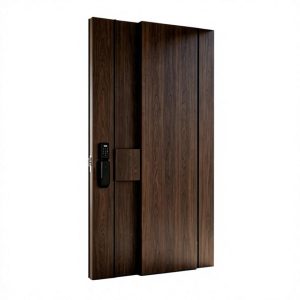
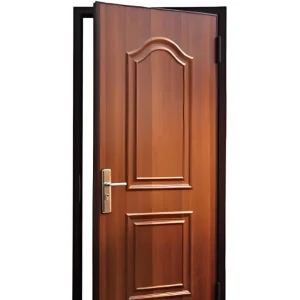
Rustic doors are solid wood or wood-clad doors designed with a natural, weathered, or handcrafted appearance. Unlike smooth, factory-finished doors, rustic styles embrace visible grain, knots, hand-planed surfaces, and distressed or reclaimed finishes. Common designs include barn-style sliding doors, plank-and-batten constructions, and paneled doors with heavy iron hardware.
For B2B buyers, the category matters because rustic doors occupy a specific price and specification bracket. They are not architectural-grade doors with precision tolerances, nor are they budget hollow-core units. They sit in the mid-to-premium segment where material selection and finish quality determine most of the cost.
Rustic doors serve both interior and exterior applications. Interior uses include room dividers, pantries, and closet fronts. Exterior applications require engineered construction—proper sealing, weather-resistant finishes, and appropriate glass options—to perform against moisture and temperature swings.
Rustic Door Price Ranges
Pricing for rustic doors varies substantially based on material, construction method, size, and finish complexity. Buyers should plan around the following decision-level ranges:
| Door Type | Price Range (per unit) | What Determines Cost |
|---|---|---|
| Stock interior rustic doors | $200–$600 | Pine or fir, standard sizes, factory finish |
| Semi-custom interior doors | $600–$1,500 | Hardwood species, custom dimensions, distressed finish |
| Custom exterior rustic doors | $1,500–$4,000 | Solid hardwood, weather sealing, insulated glass, pre-hung unit |
| Double farmhouse doors | $3,000–$8,000 | Pair of oversized slabs, heavy hardware, exterior-grade construction |
| Reclaimed wood doors | $2,000–$6,000 | Source availability, milling complexity, certification |
These figures represent typical export pricing from manufacturers for mid-volume orders. Domestic custom millwork in North America or Europe will run 30–60% higher for comparable specifications.
The largest price drivers are wood species (pine versus oak versus mahogany), whether the door is pre-hung or slab-only, and the finish system. A factory-applied UV-cured finish adds durability but increases cost. Distressing and hand-finishing require labor hours that scale with door count.
Key Specifications to Consider
Standard Dimensions
Most rustic door manufacturers work to common residential and commercial openings:
- Interior slab doors: 30″ × 80″, 32″ × 80″, 36″ × 80″ (762 × 2032 mm, 813 × 2032 mm, 914 × 2032 mm)
- Exterior doors: 36″ × 80″ is standard; 42″ × 80″ and 48″ × 96″ are common for double units
- Thickness: Interior slabs typically 1¾” (44 mm); exterior doors 1¾” to 2¼” (44–57 mm) for better insulation and stability
Custom sizing is the norm for rustic doors rather than the exception. Manufacturers can produce any dimension, but non-standard widths and heights increase cost and lead time because they require dedicated setup.
Wood Types and Stability
Solid wood moves with humidity. A door that fits perfectly in a dry factory may bind or gap after installation in a humid climate. Buyers should specify wood that has been kiln-dried to 8–12% moisture content, matching the average conditions of the destination region.
Common species for rustic doors include:
- Pine and fir: Affordable, lightweight, takes stain well. Best for interior use or protected exterior applications.
- Oak: Hard, durable, prominent grain. Good for exterior doors when properly sealed.
- Mahogany and sapele: Naturally rot-resistant, stable, premium appearance. Preferred for exterior rustic doors in coastal or high-humidity areas.
- Reclaimed barn wood: Characterful but variable in quality; requires careful milling to ensure flatness and structural integrity.
Hardware and Hinge Load Ratings
Rustic doors are heavy. A solid oak door at 36″ × 80″ × 1¾” weighs approximately 80–120 pounds. Double farmhouse doors can exceed 200 pounds per leaf.
Standard residential hinges rated for interior hollow-core doors will fail on rustic solid wood units. Specify hinges with load ratings matched to the actual door weight. For doors over 100 pounds, use three hinges per leaf with ball bearings or heavy-duty pivot hinges. Sliding barn doors require track systems rated for the door weight plus a safety margin of at least 25%.
Exterior Performance
Rustic doors used as exterior entrances must incorporate:
- Weatherstripping around all edges to control air and water infiltration
- Sill pans and threshold sealing to prevent water damage at the bottom edge
- Insulated glass for units with glazing—double-pane low-E glass is standard for most climates
- Moisture-resistant finish systems—exterior-grade urethane or paint, not interior stains
Solid wood has lower insulation value than insulated steel or fiberglass doors. If energy efficiency is a priority, specify a thicker slab (2¼”) or a wood-clad construction with an insulated core.
Customization Options for Rustic Doors
Rustic doors are inherently customizable. The category assumes a level of bespoke specification that standard interior doors do not offer.
Size and configuration. Single doors, double doors, sliding barn doors, and Dutch doors are all available. Double farmhouse doors are a popular rustic style, typically opening outward or inward with a center meeting stile.
Glass options. Rustic doors can incorporate windows in various configurations—full-lite, half-lite, or small accent panes. For exterior doors, specify tempered insulated glass. For interior doors, single-pane or decorative glass is acceptable. Built-in screens are available for exterior doors, allowing ventilation without removing the door. These use retractable screen systems integrated into the door frame.
Finish and distressing. The rustic aesthetic ranges from lightly brushed natural grain to heavily distressed surfaces with simulated wear marks, nail holes, and saw marks. Finish color can match any reference sample. Buyers should request finish samples before committing to a production run, as monitor colors and photographs do not accurately represent wood tones.
Hardware. Iron hinges, handles, and latches are the standard accompaniment to rustic doors. Black wrought-iron-style hardware suits most designs. Buyers can supply their own hardware or select from the manufacturer’s catalog. If supplying hardware, confirm hinge size and screw placement with the door drawings before production.
MOQ, Lead Time, and Ordering
Bulk ordering of rustic doors follows different parameters than standard door procurement.
Minimum order quantity. Factory-direct manufacturers typically require a minimum order of 10–20 units for custom rustic doors. Stock designs may allow lower quantities. For project-specific orders with unique dimensions or finishes, expect the MOQ to be on the higher end.
Lead time. Custom rustic door production runs 3–6 weeks from approved drawings and samples. Add 2–5 weeks for ocean freight depending on destination. Reclaimed wood doors take longer because material sourcing is unpredictable. Buyers should confirm lead time in writing before placing an order, and request a production schedule with milestone dates.
Ordering process. The standard sequence for custom orders is:
- Submit door specifications (dimensions, wood species, finish, glass, hardware)
- Receive a quotation with unit pricing and delivery terms
- Approve drawings and finish samples
- Production begins after deposit payment
- Pre-shipment inspection before container loading
- Balance payment against shipping documents
Related Rustic Door Styles
Several door types fall within the rustic category. Buyers should understand the distinctions to specify accurately.
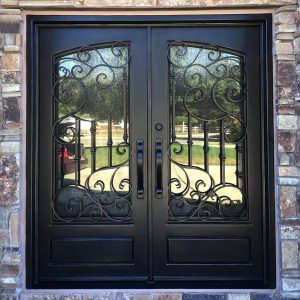
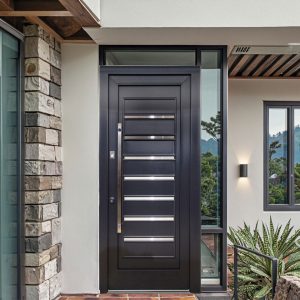
Exterior rustic doors. These are solid wood entrance doors with weather protection features. They may be single or double units, with or without glass. Look for pre-hung configurations with factory-installed weatherstripping for easier installation and better performance.
Craftsman doors. Craftsman style is related to rustic but distinct. It features clean lines, square or slightly tapered stiles, and often incorporates glass panels in the upper portion. Craftsman doors suit bungalow and Arts-and-Crafts architecture. They use the same solid wood construction as rustic doors but with a more refined finish.
Double farmhouse doors. These are wide entry doors (typically 60–72 inches total width) that open as a pair. They suit large openings and create a dramatic entrance. Farmhouse doors require careful attention to the center meeting point—proper weatherstripping and a flush bolt or astragal are essential for exterior applications.
Doors with built-in screens. Retractable screen systems can be integrated into rustic exterior doors. The screen rolls into a housing within the door frame and pulls across the opening when needed. This is a functional option for climates where natural ventilation is desirable. It adds cost but eliminates the need for a separate storm door.
How to Choose a Reliable Rustic Door Supplier
Evaluating suppliers requires looking beyond price. The cheapest quotation is rarely the most economical when door failures, delays, or communication issues are factored in.
Verify material claims. Ask for documentation of wood species and moisture content. A supplier that cannot specify the exact wood and its drying process cannot guarantee dimensional stability.
Request finish samples. A photograph of a distressed finish tells you nothing about the actual surface quality. Request physical samples of both the wood and the finish before committing to a production order.
Check inspection procedures. Reputable manufacturers perform pre-shipment quality control. For rustic doors, inspection should cover dimensional accuracy, finish consistency, hardware function, and weather sealing on exterior units. Ask what tests are performed and whether you can arrange third-party inspection.
Confirm documentation capability. For international orders, the supplier should provide packing lists, proforma invoices, and full customs documentation. This matters for smooth clearance and accurate duty calculation.
Assess communication responsiveness. A supplier that takes days to answer specification questions during the quotation phase will not improve during production. Response time is a reliable indicator of service quality.
Understand the factory relationship. Trading companies and middlemen add cost without adding manufacturing capability. Factory-direct suppliers offer better pricing and more accurate production information.
Here is how we meet these standards. Jusen Door and Windows Manufacturing Co., Ltd. produces rustic doors and a full range of solid wood and aluminum door systems as a factory-direct manufacturer. We handle custom sizing, wood species selection, finish matching, and hardware specification directly. Our pre-shipment inspection includes air-tightness, water-tightness, and wind resistance testing on exterior units—the same checks we apply to our aluminum and system window products.
We support OEM and ODM projects, private label branding, and bulk supply for construction projects. For international buyers, we provide complete export documentation and offer both FCL and LCL shipping options. Our profile structures and fittings can be adjusted to match local building codes in your target market.
If you are evaluating rustic doors for a project, send us your specifications for a quotation. We will confirm pricing, lead time, and MOQ based on your actual requirements.