Content Menu
● 1. Top Risks When Sourcing Perfect Doors from Overseas
● 2. Quality Risks: Material Substitution, Defect Rates
● 3. Supply Chain Risks: Delays, Capacity Constraints
● 4. Compliance Risks: Certifications, Standards, IP
● 5. Risk Mitigation Strategies for Buyers
● 6. How We Minimize Risks for Our Clients
● FAQ
11 min read
When a contractor in Melbourne opens a quote from a Chinese factory, the first thing they check is not the price. It is whether the door profile matches the local wind-load requirements. The second thing they check is the lead time. The third is whether the glass specification matches the energy rating they promised the client. This is what “perfect doors” actually means in a B2B context — not a single product, but the right fit across performance, budget, aesthetics, and code compliance.
Buyers juggle multiple variables: material, glazing, hardware, lead times, local codes. Often, they compromise on one to get another. This guide breaks down the procurement framework — materials, customization, pricing, logistics, and supplier vetting — so you can specify with confidence.
Top Risks When Sourcing Perfect Doors from Overseas
The biggest risk in importing doors is not receiving a bad product. It is receiving a product that looks right but fails performance tests on site. Air leakage, water ingress, and hardware failure do not show up in photographs. They show up after installation, when replacement costs are highest.
Three risks dominate overseas door sourcing: quality inconsistency across batches, misaligned specifications, and documentation errors that delay customs clearance. Each one is preventable with the right supplier vetting process.
Quality Risks: Material Substitution, Defect Rates
Material substitution is the most common hidden issue. A supplier quotes for 6063-T5 aluminum but ships with a lower-grade alloy to cut costs. The profile looks identical. The structural performance does not match. For solid wood doors, the risk is moisture content — wood shipped above 12% moisture content will warp after installation.
Defect rates vary significantly between factories. A well-managed production line holds defect rates below 2%. A poorly managed one can exceed 8%. The difference is not in the machinery — it is in the inspection process. Buyers should request defect rate data and third-party inspection reports before committing to a large order.
Supply Chain Risks: Delays, Capacity Constraints
Production delays rarely come from the factory being slow. They come from material procurement issues or overbooking. A factory that accepts more orders than its capacity can handle will push your timeline. Ask for current production load before placing an order.
Raw material availability also matters. Thermal-break aluminum requires polyamide strips; solid wood requires specific timber grades. If the supplier has not secured materials before your order, expect delays. The best suppliers maintain buffer stock of common profiles and glass configurations.
Compliance Risks: Certifications, Standards, IP
Building codes differ by market. European buyers need CE marking; North American buyers need ASTM compliance; Australian projects require AS2047 for window and door performance. A factory that only knows its domestic standards will struggle to adapt.
Intellectual property is another risk. If you provide custom designs, ensure the supplier signs an NDA. Some factories reuse client designs for other buyers, which can lead to identical doors appearing in your competitor’s project. Use watermarked drawings and specify that tooling and molds remain your property.
Quality Risks: Material Substitution, Defect Rates
Material substitution is the most common hidden issue. A supplier quotes for 6063-T5 aluminum but ships with a lower-grade alloy to cut costs. The profile looks identical. The structural performance does not match. For solid wood doors, the risk is moisture content — wood shipped above 12% moisture content will warp after installation.
Defect rates vary significantly between factories. A well-managed production line holds defect rates below 2%. A poorly managed one can exceed 8%. The difference is not in the machinery — it is in the inspection process. Buyers should request defect rate data and third-party inspection reports before committing to a large order.
Performance Testing: Air, Water, and Wind Resistance
Three core performance tests define door quality internationally. Air permeability tests (EN 12207 / ASTM E283) measure how much air passes through the closed assembly. Water tightness tests (EN 12208 / ASTM E547) check resistance to water penetration under pressure. Wind resistance tests (EN 12210 / ASTM E330) verify structural integrity under load.
These tests matter differently by project type. A ground-floor villa in a sheltered area needs basic wind resistance. A 20-story building facing the coast needs the highest rating. Buyers should request test reports matching their project’s requirements — not just any report the supplier has on file.
Material Selection: Solid Wood, Aluminum, or System Profiles
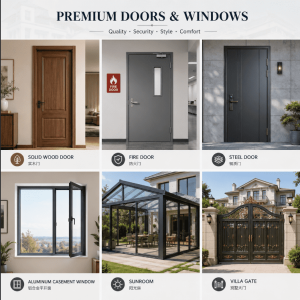
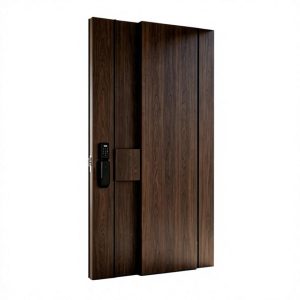
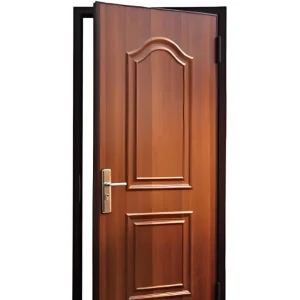
Solid wood doors offer aesthetic warmth and natural insulation. They require more maintenance and are sensitive to humidity. For high-humidity areas, buyers should prioritize moisture resistance over appearance — a sealed engineered wood product may outperform solid timber.
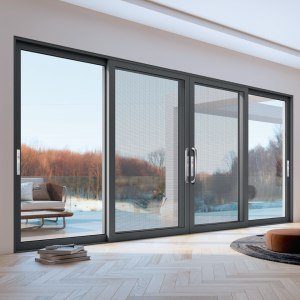
Thermal-break aluminum doors combine durability with slim sightlines. The polyamide break separates the interior and exterior frames, reducing heat transfer. These are the standard choice for modern commercial and residential projects where energy efficiency matters.
System windows and doors integrate frames, glazing, and hardware into a tested assembly. They offer the highest performance but come at a premium. Choose these for projects requiring certified energy ratings or acoustic performance.
Budget Tiers: Entry, Mid-Range, and Premium
Entry-level doors use standard profiles, basic hardware, and single-glazing options. They suit budget-conscious projects where performance requirements are minimal. Expect shorter lifespans and higher maintenance costs.
Mid-range doors add thermal breaks, better hardware, and double glazing. This tier covers most commercial and high-end residential projects. The price difference from entry-level is justified by improved energy performance and durability.
Premium doors feature system profiles, multi-point locking, acoustic glazing, and designer hardware. These are specified for luxury villas, flagship commercial spaces, and projects where the door is a design statement.
Supply Chain Risks: Delays, Capacity Constraints
Production delays rarely come from the factory being slow. They come from material procurement issues or overbooking. A factory that accepts more orders than its capacity can handle will push your timeline. Ask for current production load before placing an order.
Raw material availability also matters. Thermal-break aluminum requires polyamide strips; solid wood requires specific timber grades. If the supplier has not secured materials before your order, expect delays. The best suppliers maintain buffer stock of common profiles and glass configurations.
FCL vs. LCL: Which Shipping Method Fits Your Order Size?
Full Container Load (FCL) shipping makes sense for orders exceeding approximately 20 cubic meters. Per-unit costs drop, transit times are shorter, and the risk of damage decreases because your goods are not handled multiple times during consolidation.
Less than Container Load (LCL) suits smaller orders or sample shipments. You pay for space rather than a full container, but wait for the consolidator to fill the container. Transit times run longer, and handling increases damage risk. For door orders, request corner protection, moisture barriers, and wooden crating regardless of shipping method.
MOQs and Production Cycles: What to Expect from a Factory
Minimum order quantities vary by product type. Custom solid wood doors often require higher MOQs due to timber sourcing and machining setup. Aluminum systems may offer more flexibility since profiles can be cut to length from stock.
Production lead times follow a similar pattern. Solid wood doors need longer drying and finishing cycles — typically 30 to 45 days. Aluminum doors run 20 to 30 days, depending on customization level. System doors with certified performance test requirements may need additional time for documentation.
Compliance Risks: Certifications, Standards, IP
Building codes differ by market. European buyers need CE marking; North American buyers need ASTM compliance; Australian projects require AS2047 for window and door performance. A factory that only knows its domestic standards will struggle to adapt.
Intellectual property is another risk. If you provide custom designs, ensure the supplier signs an NDA. Some factories reuse client designs for other buyers, which can lead to identical doors appearing in your competitor’s project. Use watermarked drawings and specify that tooling and molds remain your property.
Documentation: Packing Lists, Invoices, and Customs
Shipping documentation determines whether your cargo clears customs smoothly or sits in a warehouse accruing storage fees. A complete shipment package includes a packing list, proforma invoice, commercial invoice, bill of lading, and certificates of origin.
Buyers should request these documents before shipment, not after. Review them for consistency — a mismatch between invoice value and declared value triggers customs inspection. Ensure the supplier provides HS codes that match your market’s tariff classification.
Adjustable Profiles and Local Building Codes
Every market has unique building code requirements. Window-to-wall ratios, egress dimensions, and wind-load ratings differ between regions. A good supplier adjusts profile structures and fittings to match local codes rather than shipping a one-size-fits-all product.
Ask suppliers whether they have experience with your target market. Have they supplied projects in your region before? What adjustments did they make? This conversation reveals whether the factory understands your compliance landscape or merely claims to.
Risk Mitigation Strategies for Buyers
The procurement framework for doors follows a simple logic: verify before you commit. Sample orders confirm quality. Test reports confirm performance. Documentation reviews confirm compliance. Each step costs time but saves money in the long run.
How to Evaluate Door Suppliers
Start with a request for information covering five areas: product range, testing capabilities, production capacity, export experience, and reference projects. Compare responses side by side. A supplier that cannot articulate its testing process likely does not have one.
Request samples before bulk orders. Inspect the sample personally — check hinge alignment, surface finish, glazing seal, and hardware operation. Weigh the door. A lighter door often indicates thinner profiles or lower-grade materials.
Questions to Ask Before Ordering
- What is your current production load, and when can you guarantee a production slot?
- Can you provide test reports for air, water, and wind resistance from an accredited laboratory?
- What is your defect rate for the product category I am ordering?
- How do you handle defects found during pre-shipment inspection?
- Can you adjust profile structures to meet my local building codes?
- What is your packaging specification for sea freight?
Avoid Suppliers Who…
- Cannot provide test reports or deflect questions about performance testing.
- Quote prices significantly below market rates without explaining the cost difference.
- Promise unrealistic lead times — under 20 days for custom aluminum doors is a red flag.
- Require full payment before production without a quality inspection clause.
- Lack export experience or cannot provide proper shipping documentation.
Choose A if… Choose B if…
Choose a factory-direct supplier if you need competitive pricing, customization flexibility, and direct communication. Choose a local distributor if you need immediate stock availability, local warranty support, and small quantities. For large projects with specific requirements, factory-direct sourcing almost always wins on cost and customization.
How We Minimize Risks for Our Clients
As a manufacturer, our approach to this is straightforward: we eliminate the layers between you and the production floor. Jusen Door and Windows Manufacturing Co., Ltd. supplies directly from our factory — no trading company markup, no miscommunication through intermediaries. You talk to the people who build your doors.
Direct Factory Supply: Removing the Middleman Markup
When you source through a trading company, you pay for the product plus a markup layer that adds 10% to 20% to the final price. That markup does not improve your product — it reduces your margin. We supply directly from our factory, so our pricing reflects the actual cost of materials and labor. For serious buyers, we can break down that cost transparently.
Customization Without Compromise
We offer full customization on size, color, glass, and hardware accessories — whether you need OEM, ODM, or private label. Our profile structures and fittings are adjustable to match local building codes in your target market. You do not have to re-engineer your specs; we adapt our production to your requirements.
Rigorous Pre-Shipment Inspection
Every order goes through air-tightness, water-tightness, and wind resistance testing before it leaves our factory. We provide full documentation: packing list, proforma invoice, and customs-ready paperwork for smooth import. If a batch fails inspection, it does not ship — that is our standard, not an exception.
Flexible Logistics and Export Experience
With years of foreign trade experience, we handle both FCL and LCL shipments with direct delivery from our China factory. We work with your timeline, not the other way around. During the planning stage, we help you schedule production to meet your installation deadline.
FAQ
What is the best door replacement company?
The “best” depends on your project type. For B2B buyers, the best partner offers factory-direct pricing, full customization, and documented quality control. Look for suppliers with test reports and export experience — not just attractive website photos.
What color door means your house is paid off?
A red or black front door has historically been a status symbol in some cultures. For B2B projects, color choice should follow architectural style and material compatibility, not superstition. RAL or NCS color matching systems ensure consistency across batches.
How much should a quality front door cost?
Entry-level aluminum doors start at the low end of the commercial spectrum. Mid-range thermal-break aluminum doors cost more but deliver significantly better energy performance. Premium solid wood doors sit at the top. Factory-direct sourcing typically reduces the final price by 10% to 20% compared to distributor pricing.
What is the new trend for interior doors?
Flush minimalist doors, floor-to-ceiling heights, sliding pocket doors, and matte black hardware are current trends. Sustainable materials are gaining traction. These trends affect manufacturing specs — taller doors require reinforced frames, and matte finishes need specific coating processes.
What is the typical MOQ for custom doors?
MOQs vary by factory and product type. Custom solid wood doors often require higher MOQs due to timber sourcing. Aluminum systems may offer more flexibility. Ask your supplier for specific MOQs based on your project volume — a serious factory will work with you on this.
How do I ensure my doors meet local building codes?
Request test reports for air, water, and wind resistance before ordering. Confirm the supplier can adjust profile structures and fittings to match your market’s requirements. A good supplier adapts its product to your codes — not the other way around.
What documents should I request from a door supplier?
Request a packing list, proforma invoice, commercial invoice, bill of lading, and certificates of origin. Add test reports for performance certification. These documents ensure smooth customs clearance and provide quality assurance throughout the process.
—
The perfect door for your project is not the most expensive one. It is the one that meets performance requirements, fits the budget, matches the aesthetic, and arrives on schedule. The right supplier makes this possible. Whether you are a contractor, builder, or distributor, working directly with a factory gives you control over cost, quality, and timeline.
References
- EN 12207:2016, “Windows and doors — Air permeability — Classification.” European Committee for Standardization. https://www.en-standard.eu
- ASTM E283-19, “Standard Test Method for Determining Rate of Air Leakage Through Exterior Windows, Skylights, and Doors.” ASTM International. https://www.astm.org
- EN 12208:2000, “Windows and doors — Water tightness — Classification.” European Committee for Standardization. https://www.en-standard.eu
- AS2047-2014, “Windows and external glazed doors in buildings.” Standards Australia. https://www.standards.org.au
- ASTM E330/E330M-14, “Standard Test Method for Structural Performance of Exterior Windows, Doors, Skylights and Curtain Walls by Uniform Static Air Pressure Difference.” ASTM International. https://www.astm.org