Content Menu
● 1. 1. Understanding Natural Wood Doors: Types and Applications
● 2. 2. How Much Does a Real Wood Door Cost? Pricing Framework for B2B Buyers
● 3. 3. How to Evaluate Natural Wood Doors Suppliers
● 4. 4. Price Competitiveness: The Factory-Direct Advantage
● 5. 5. Logistics and Lead Times: Planning for Stable Supply
● 6. 6. Interior Wood Doors & Wood Doors with Glass: Application-Specific Guidance
● 7. 7. Why Natural Wood Doors Are Worth It: Long-Term Value for Projects
● 8. 8. Sourcing Natural Wood Doors from a Manufacturing Partner
● 9. 9.
14 min read
A procurement manager for a hotel chain in Dubai once told me their biggest problem wasn’t finding wood doors. It was finding a factory that could deliver 400 matching doors across three different finishes without a single shade variation. That conversation sums up what B2B wood door sourcing is actually about: consistency at scale.
Natural wood doors bring warmth and permanence to residential, hospitality, and commercial spaces. But for buyers who specify and purchase them in volume, the real questions are technical: Which species will hold up in a coastal climate? What construction type meets fire-rating requirements? And how do you verify a factory can actually deliver what its sample promised?
This guide covers species selection, construction methods, performance standards, pricing structures, and supplier evaluation frameworks. By the end, you will know exactly what to request in an RFQ and how to assess a supplier’s stable supply capability.
1. Understanding Natural Wood Doors: Types and Applications
Natural wood doors are available in three primary construction types — solid wood, engineered wood, and hollow-core — each suited to different applications and budgets.
1.1 Wood Species Selection for Different Applications
The species you choose determines the door’s appearance, durability, and cost. For interior applications, oak, maple, cherry, and walnut are popular choices. Oak offers prominent grain and high impact resistance. Walnut provides a rich, dark tone that suits luxury interiors but costs more. Maple has a subtle, uniform grain that takes paint well.
For exterior doors, teak and mahogany lead the market. Teak contains natural oils that resist moisture and insects. Mahogany offers dimensional stability and rot resistance, though its price has risen steadily over the past decade. Treated oak works as a budget-friendly exterior option but requires more maintenance.
The Janka hardness scale helps compare species. White oak scores 1,360; hard maple scores 1,450; black walnut scores 1,010. Higher numbers mean better dent resistance but also make machining more difficult — a factor that affects fabrication cost.
1.2 Construction Types: Solid Wood vs. Engineered Wood vs. Hollow-Core
Solid wood doors use stile-and-rail construction where vertical stiles and horizontal rails frame interior panels. Joinery methods include dowel, mortise-and-tenon, and biscuit joints. Mortise-and-tenon offers the strongest mechanical connection and is preferred for exterior doors that face wind loads and temperature swings.
Engineered wood doors consist of a veneer layer over a core of MDF, particleboard, or laminated veneer lumber. This construction resists warping better than solid wood, particularly in large formats like double doors or 8-foot-tall entries. The trade-off: veneer cannot be refinished as many times as solid wood.
Hollow-core doors contain a honeycomb cardboard interior. They cost the least and weigh 60–70% less than solid doors. But they offer poor acoustic insulation and will not meet fire-rating requirements beyond 20 minutes. Use them only for interior closets or low-traffic areas.
1.3 Performance Criteria: Acoustic, Thermal, and Fire Ratings
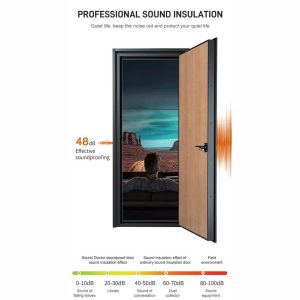
Sound transmission class (STC) measures a door’s acoustic performance. A standard hollow-core door achieves roughly STC 20–25. Solid wood doors reach STC 25–30. For hotel rooms or office meeting spaces, request STC 30 or higher and check the frame and seals — gaps around the door reduce acoustic performance more than the door itself.
For exterior doors, the U-value measures thermal insulation. A solid wood door typically achieves a U-value of 0.45–0.60 W/m²K depending on thickness and glazing. Double-glazed inserts with low-E coating improve this significantly.
Fire ratings are a separate consideration. A 20-minute rated door requires a solid-core construction and specific hardware. The frame, intumescent seals, and hinges matter as much as the door leaf itself. Do not assume that a thicker door automatically means better fire protection.
2. How Much Does a Real Wood Door Cost? Pricing Framework for B2B Buyers
A real wood door typically costs between $150 and $1,200 per unit for interior applications, and $400 to $2,500 for exterior doors, depending on species, construction, size, and finish.
2.1 Key Cost Drivers
Wood species is the largest cost factor. Domestic oak might cost $5–8 per square foot of raw material; imported mahogany can reach $12–18. Construction type adds another layer — solid stile-and-rail requires more material and labor than a veneered engineered core.
Custom sizes increase cost because they require dedicated tooling and material cutting. Oversized doors above 42 inches wide or 96 inches tall often need additional internal bracing. Glass inserts, louvers, and hardware cutouts add labor time. Pre-finished doors cost more than unfinished ones but save on-site labor.
Volume matters. A factory producing 200 identical doors per month achieves better material utilization than one producing 20 different models. This is where MOQ structures come into play.
2.2 Typical Price Ranges by Segment
| Segment | Construction | Typical Price (per unit) | Best For |
|---|---|---|---|
| Budget | Hollow-core or thin veneer | $100–$250 | Low-traffic interiors |
| Mid-range | Engineered core, hardwood veneer | $250–$600 | Commercial interiors, apartments |
| Premium | Solid hardwood, stile-and-rail | $600–$1,500 | Hotels, luxury residences, exterior |
These are market indicators, not fixed quotes. Prices vary by region, species availability, and finish complexity. Always request an itemized RFQ that breaks down material, labor, finish, and packaging costs separately.
2.3 Total Cost of Ownership
The unit price represents only a fraction of total project cost. Shipping and insurance add 10–25% depending on route and container type. Customs duties vary by country — the US imposes 3.2% on wood doors under HTS 4418.20; the EU applies 2.7%.
Installation labor and hardware typically add $100–$300 per door. Maintenance is where wood differs from alternatives: a solid wood door can be sanded and refinished every 5–10 years, extending its life to 30 years or more. A hollow-core door cannot be refinished at all — it gets replaced.
Fire-rated doors cost more upfront but may reduce insurance premiums. For commercial buildings, the lifecycle cost of a quality solid wood door often beats cheaper alternatives because replacement frequency drops dramatically.
3. How to Evaluate Natural Wood Doors Suppliers
A factory’s true capability shows in its production capacity, quality control systems, and export documentation — not in its marketing materials.
3.1 Factory Qualification Checklist
Start with production capacity. Ask for monthly output in units, number of production lines, and kiln-drying capacity. A factory with 5,000-square-meters of workshop space and 50 workers can typically produce 3,000–5,000 doors monthly. These numbers tell you whether the factory can handle your order size.
Quality control systems matter more than certifications. Ask about in-process inspection points, moisture content checks, and final pre-shipment testing. A factory that cannot describe its QC process in specific terms likely does not have one.
Certifications to request: FSC for sustainable sourcing, ISO 9001 for quality management, CE marking for European markets, and specific fire-rating certificates (e.g., UL, BS EN 1634) if required.
Export experience is critical but often overlooked. The factory should provide packing lists, proforma invoices, and full customs documentation without prompting. Ask for references from buyers in your region — a factory shipping regularly to the US or EU understands the documentation and packaging standards required.
3.2 Red Flags to Avoid
Avoid suppliers who cannot provide a written pre-shipment inspection protocol. Avoid those who quote prices without asking about your project’s specifics — this signals they will cut corners later. And avoid factories that cannot name their kiln-drying process.
Moisture content is the most common defect in wood doors. The factory should kiln-dry lumber to 8–12% moisture content before machining. If the supplier cannot state their target moisture range, the doors will likely warp or crack after installation.
3.3 Pre-Shipment Inspection and Testing Protocols
For exterior doors, request air-tightness, water-tightness, and wind-resistance testing per ASTM E283, E547, and E330 standards respectively. These tests simulate real weather conditions and reveal sealing quality.
For interior doors, the key checks are moisture content verification (using a pin-type moisture meter), finish adhesion testing, and dimensional accuracy verification. Third-party inspection options include SGS, BV, and TÜV — clarify who selects and pays for the inspector before signing the contract.
4. Price Competitiveness: The Factory-Direct Advantage
Natural wood doors are priced through supply chains that can include multiple intermediaries, each adding a markup layer.
4.1 How Distribution Channels Affect Price
A factory-direct purchase eliminates distributor and retailer margins, which typically add 20–40% to the factory price. When you buy from a trading company, you pay for their overhead, warehousing, and profit. The same door can differ by 30% or more between factory-direct and retail channels.
Direct supply also means faster communication. When a specification changes mid-order, you want to talk to someone who can make decisions — not a middleman who must relay requests to the factory.
4.2 Volume Discounts and MOQ Structures
Typical MOQ for solid wood doors ranges from 50 to 200 units per model. Custom sizes and finishes often require higher MOQs because they need dedicated tooling and material runs.
Order volume affects per-unit pricing significantly. A 100-door order might cost 10–15% less per unit than a 20-door order. At 500 doors, the discount can reach 20–25%. Mixed-container (LCL) shipments work for smaller orders but cost more per unit for freight and carry higher damage risk from co-loading.
Sample orders usually cost 2–5 times the bulk unit price, and the cost is often credited against the bulk order. Confirm this policy before ordering.
4.3 Hidden Costs to Negotiate Upfront
Tooling or mold costs for custom profiles can run $500–$2,000 depending on complexity. Finish matching and color-sample approvals add time and cost — a custom stain may require 3–5 iterations before approval. Packaging upgrades for glass inserts add $5–$15 per door.
Payment terms matter. T/T with 30% deposit and 70% balance against the Bill of Lading is standard. L/C terms work for larger orders but require more documentation.
5. Logistics and Lead Times: Planning for Stable Supply
Production lead times for natural wood doors range from 3 to 8 weeks depending on order complexity.
5.1 Production Lead Times by Order Type
Standard models with existing tooling produce fastest — typically 15–25 days for a container order. Custom sizes and finishes add 1–2 weeks for material selection and drying. Large project orders benefit from phased production: the factory produces in batches and ships as each batch clears inspection.
Build buffer time for QC and third-party inspections. A typical container order needs 3–5 days for final inspection and documentation before loading.
5.2 Shipping Options: FCL vs. LCL
Full container load (FCL) offers cost efficiency at scale, lower damage risk, and dedicated space. A 40-foot container holds roughly 80–120 interior doors depending on size and packaging. Less than container load (LCL) suits smaller orders but involves longer transit times and consolidation risks — your cargo may be handled multiple times.
Incoterms matter: FOB shifts risk to the buyer once cargo is loaded; CIF includes insurance; DDP delivers to your door but costs more. Choose based on your logistics capability and risk tolerance.
5.3 Documentation and Customs Clearance
Export documentation for wood doors includes the packing list, proforma invoice, bill of lading, and certificate of origin. Some markets require phytosanitary certificates for wood products — confirm this before shipping.
Experienced exporters prepare these documents proactively and know the specific requirements for major markets like the US, EU, and Middle East. They also adjust profiles and fittings to match local building codes — a capability that saves buyers significant compliance headaches.
6. Interior Wood Doors & Wood Doors with Glass: Application-Specific Guidance
6.1 Interior Natural Wood Doors
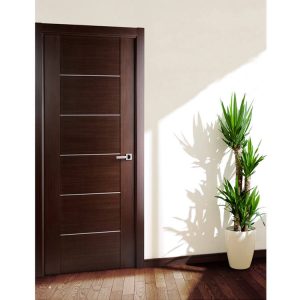
For residential and hospitality projects, panel doors, flush doors, and French doors are the most specified styles. Acoustic considerations drive the choice for bedrooms and meeting rooms — solid core construction paired with perimeter seals delivers STC 30+.
Finish options range from matte to high-gloss. Matte finishes hide fingerprints better and are easier to maintain in high-traffic areas. Hardware compatibility matters: solid wood doors are heavy, so choose hinges rated for the door weight. A solid oak door weighing 40 kg requires at least three 4-inch hinges with ball bearings.
6.2 Wood Doors with Glass
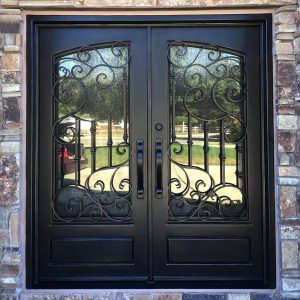
Glass inserts add natural light but affect both thermal and acoustic performance. Clear glass maximizes light transmission; frosted or tinted glass adds privacy. Double-glazed units with low-E coating improve insulation for exterior applications.
The frame construction around glass inserts is critical. Poor sealing leads to drafts, condensation, and premature failure. Look for doors with properly bedded glazing — the glass should sit in a channel with setting blocks and be sealed with a quality sealant.
6.3 Exterior Natural Wood Doors
Exterior doors face the harshest conditions: UV exposure, rain, and temperature swings. Teak and mahogany are the top choices for weather resistance. Finishing systems matter more than the wood itself — a UV-resistant marine-grade varnish or a quality exterior paint system protects the wood and extends its life.
Weather-stripping and thresholds determine air and water tightness. Multi-point locking systems with corrosion-resistant hardware are essential for exterior doors. A poorly sealed exterior door wastes energy and leads to water damage regardless of the wood quality.
7. Why Natural Wood Doors Are Worth It: Long-Term Value for Projects
Natural wood doors deliver their value over decades, not months. A solid wood door with proper finishing lasts 30 years or more. Repairability is the key advantage: sanding and refinishing restore appearance without replacement. Compare this to hollow-core doors that must be replaced entirely after damage.
The aesthetic value is equally significant. Natural grain patterns cannot be replicated by laminates or thermofoil. In hospitality and residential projects, natural wood signals quality and permanence to clients. Property value increases when high-quality doors are specified.
Sustainability favors wood when sourced responsibly. FSC-certified wood is a renewable material with a lower carbon footprint than aluminum, steel, or PVC. At end of life, wood can be recycled, reused, or composted. For green building certifications like LEED and BREEAM, FSC-certified wood contributes to credit achievement.
8. Sourcing Natural Wood Doors from a Manufacturing Partner
8.1 What to Look for in a Supplier Partner
A reliable supplier demonstrates four things: consistent production output, customization depth, documented quality control, and export experience. Ask for production schedules, QC checklists, and sample documentation before committing to a large order.
Your supplier should respond to RFQs with itemized breakdowns — material, labor, finish, packaging, and freight. Vague quotes signal either inexperience or an intention to add costs later.
8.2 How We Meet These Standards at Our Factory
As a direct factory supplier, our structure eliminates middleman markups — when you order from us, you communicate directly with the production team. This means faster decisions and no information loss between trading company and factory.
Our pre-shipment inspection includes air-tightness, water-tightness, and wind-resistance testing, ensuring doors perform in real-world conditions. We verify moisture content and finish adhesion on every batch before packing.
We provide full export documentation: packing lists, proforma invoices, and customs paperwork. Our foreign trade experience means we understand the documentation expectations of international buyers and prepare everything proactively.
We support FCL and LCL shipments with direct delivery from our China factory. We also adjust profile structures and fittings to match local building codes in target markets — a capability that saves buyers from costly compliance issues.
8.3 Our Customization and OEM/ODM Capabilities
We offer full customization on size, color, glass, and hardware accessories. OEM production works to your drawings and specifications. ODM support provides in-house design assistance for new models or modifications.
Private label branding and packaging are available for distributors. Our adjustable profile structures and fittings comply with regional building codes, and we handle project-scale bulk supply for construction and development firms.
9.
Frequently Asked Questions
9.1 How much does a real wood door cost?
A real wood door costs $150–$1,200 for interior applications and $400–$2,500 for exterior doors. The range depends on species (oak vs. mahogany), construction (solid vs. engineered), size, finish, and order volume. Budget for 10–25% additional cost for shipping and customs. For accurate pricing, send an RFQ with your exact specifications — species, dimensions, finish, glass requirements, and quantity.
9.2 Can you still buy solid wood doors?
Yes. Solid wood doors remain widely available, particularly from factories and specialty manufacturers. The key distinction is between solid wood (stile-and-rail construction with real wood panels) and solid-core (engineered with a wood-based core under a veneer). Availability depends on species and order volume — most factories require minimum orders of 50–200 units.
9.3 What type of wood is best for doors?
For interior doors: oak, maple, cherry, and walnut offer the best combination of aesthetics, stability, and machinability. For exterior doors: teak and mahogany provide the best weather resistance. If budget is a concern, engineered wood with a hardwood veneer offers good performance at a lower price point.
9.4 Are solid wood doors worth it?
For premium projects and high-traffic areas, yes. Solid wood doors can be refinished multiple times, last 30+ years, and add property value. The lifecycle cost often beats cheaper alternatives because replacement frequency drops dramatically. For budget-constrained projects with low traffic, engineered wood offers acceptable performance at a lower cost.
9.5 What is the typical MOQ for custom natural wood doors?
Typical MOQs range from 50 to 200 units per model. Standard models with existing tooling may have lower MOQs. Custom sizes and finishes require higher volumes because of dedicated tooling costs. Sample orders cost 2–5 times the bulk unit price but are often credited against the bulk order.
9.6 How long does it take to produce and ship a bulk order?
Production takes 3–8 weeks depending on order complexity. Standard models produce in 15–25 days; custom orders take longer. Ocean freight from China to the US West Coast takes 15–20 days, to Europe 25–35 days. Add 3–5 days for inspections and documentation. Plan for 6–10 weeks total from order confirmation to delivery.
9.7 Can I get doors that meet local building codes in my country?
Yes, if your supplier offers adjustable profile structures and fittings. Fire ratings, acoustic ratings, and thermal performance can be engineered to meet local requirements. Ask for documentation supporting compliance — a competent factory will provide test reports and certificates relevant to your target market.
10. Conclusion and Next Steps
Sourcing natural wood doors requires attention to species selection, construction types, cost drivers, factory qualification, and logistics. The key insight: a stable supply chain depends on factory-direct sourcing, clear specifications, and documented quality control.
Before ordering, prepare an itemized RFQ that specifies species, construction, dimensions, finish, glass, hardware, quantity, and target delivery date. Evaluate suppliers against the qualification checklist in Section 3. And verify inspection protocols before signing.
Choose a factory-direct supplier if you need consistent quality at scale, want to avoid middleman markups, and require direct communication with production. Choose a local distributor if your order is small, you need immediate delivery, and you prioritize in-person support over cost efficiency.
For bulk orders, custom sizes, or project-specific requirements, contact our team with your specifications. We will provide an itemized quote and production timeline.
—
References
- Janka Hardness Scale. The Wood Database. https://www.wood-database.com/wood-articles/janka-hardness/
- ASTM E283 Standard Test Method for Determining Rate of Air Leakage. ASTM International. https://www.astm.org/e0283-04r12.html
- ASTM E330 Standard Test Method for Structural Performance of Exterior Windows, Doors, Skylights. ASTM International. https://www.astm.org/e0330-14.html
- STC Ratings for Doors. Acoustical Surfaces. https://www.acousticalsurfaces.com/soundproofing-tips/stc-ratings-for-doors/
- HTS 4418.20: Wood doors and their frames. United States International Trade Commission. https://hts.usitc.gov/
- FSC Certification. Forest Stewardship Council. https://fsc.org/en/what-we-do
- BS EN 1634 Fire Resistance Tests for Door and Shutter Assemblies. European Standards. https://www.en-standard.eu/bs-en-1634-1-2014-fire-resistance-and-smoke-control-tests-for-door-and-shutter-assemblies-openable-windows-and-festoon-elements/
- LEED v4 Materials and Resources Credits. US Green Building Council. https://www.usgbc.org/leed