The Bottom Line: Choosing a Modern Double Door
If you want a direct answer: the best modern double door for a front entryway is one that balances your local climate requirements, security needs, and architectural style. For most buyers in 2026, that means a thermal-break aluminum or steel door with double-glazed, low-E glass and a multi-point locking system. These options offer the clean lines and slim sightlines that define modern aesthetics without compromising on energy efficiency or structural integrity. Solid wood remains a premium choice for those prioritizing warmth and traditional craftsmanship, but it requires more maintenance. Impact-resistant variants are a worthwhile investment in hurricane-prone or high-wind regions, as the cost of upgrading is often far less than the cost of storm damage.
This guide breaks down the types, materials, and specifications you need to compare before making a purchase decision.
Types of Modern Double Doors
Modern double doors are defined by their configuration, material, and glazing. Here is how the main categories compare for exterior use.
Glass Front Double Doors
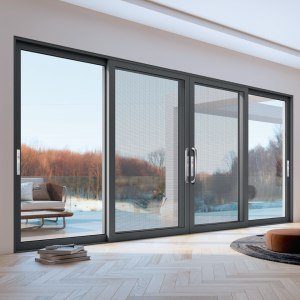
Glass front double doors are the most common interpretation of a “modern” entry. They typically feature large panels of glass framed by aluminum, steel, or wood. The primary appeal is the influx of natural light and a visual connection to the outdoors.
- Pros: Maximizes natural light, creates a sense of openness, offers a sleek, contemporary aesthetic.
- Cons: Can be a thermal weak point if the glazing is not specified correctly. Requires careful consideration of privacy and solar heat gain.
The key is not the amount of glass, but the quality of the glass unit itself. A double-glazed unit with a low-E coating is non-negotiable for energy performance. For security, laminated or tempered glass is standard. We will cover glass specifications in detail below.
Impact Front Double Doors
Impact front double doors are engineered to withstand extreme weather events, specifically hurricanes and severe storms. They are constructed with impact-resistant glass and reinforced frames. The glass is typically a laminated unit with a polyvinyl butyral (PVB) or SentryGlas interlayer that holds the glass together upon impact.
- Pros: Provides superior protection against wind-borne debris and pressure changes. Can also offer enhanced security against forced entry.
- Cons: Higher upfront cost. The frames and hardware are heavier, which can be a consideration for installation.
If you live in a region governed by the Florida Building Code, the Texas Department of Insurance, or similar high-velocity hurricane zone (HVHZ) regulations, impact-rated doors are not just an option; they are a requirement. Even outside these zones, the added structural rigidity is a tangible benefit.
Black Front Double Doors with Glass
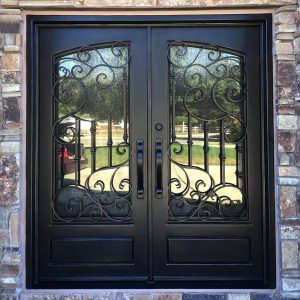
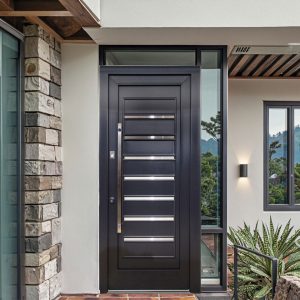
The black frame aesthetic has dominated modern architecture for several years and shows no sign of fading. “Black front double doors with glass” typically refers to aluminum or steel frames with a dark, powder-coated finish framing clear or frosted glass panels.
- Pros: High visual contrast against light-colored exteriors like white stucco, brick, or light wood siding. The dark frame recedes visually, making the glass appear larger. Powder-coated black finishes are also very durable.
- Cons: Dark frames can absorb more heat in direct sunlight, though with a thermal break, this is mitigated.
The choice of black is not just about color; it is about the finish quality. A high-quality powder coat or anodized finish will resist fading and chipping far better than a simple painted finish.
Material and Construction: What to Look For
The frame material dictates the door’s structural performance, insulation value, and maintenance requirements.
Aluminum and Thermal Break Technology
Aluminum is the default material for modern double doors because it allows for the slimmest frames and largest glass panels. However, raw aluminum is a poor insulator. The solution is a thermal break—a polyamide strip inserted between the interior and exterior aluminum profiles. This interrupts the flow of heat and cold, dramatically improving the door’s overall U-factor (a measure of heat transfer; lower is better).
When comparing aluminum doors, always verify they are “thermal-break” models. Non-thermal aluminum is only acceptable in mild climates.
Steel and Steel-Reinforced Options
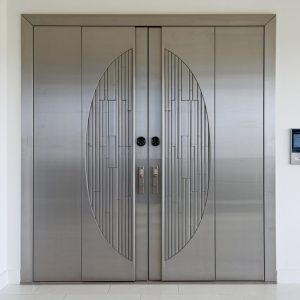
Steel doors offer exceptional strength and security. They can be fabricated with slim profiles similar to aluminum but are often heavier. A steel frame with a steel core provides a very high level of forced-entry resistance.
- Trade-off: Steel is prone to dents and scratches. While modern finishes are durable, a significant impact can damage the surface, and rust can become an issue if the protective layer is compromised.
Wood and Wood-Clad Options
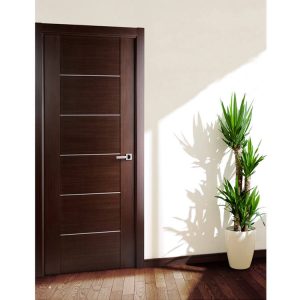
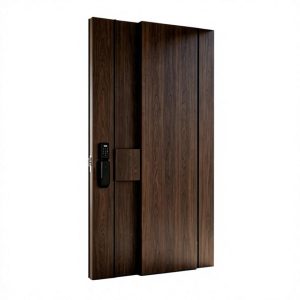
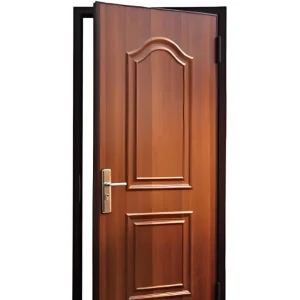
Solid wood double doors (or wood with an aluminum or fiberglass exterior cladding) offer a classic, warm aesthetic that aluminum and steel cannot replicate. Woods like mahogany, oak, and walnut are common.
- Trade-off: Wood is a natural insulator, but it is also the highest-maintenance option. It requires periodic refinishing to protect against moisture, UV rays, and insects. Wood-clad doors offer a solution: the exterior is clad in aluminum for low maintenance, while the interior exposes the natural wood grain.
The Role of Hardware and Reinforcements
The frame is only as strong as its weakest point. For double doors, the “meeting stile” (where the two active doors meet) is a critical area. Look for:
- Multi-point locking systems: These locks engage multiple bolts along the door’s height, not just at the handle. This provides superior security and a tighter seal against air and water infiltration.
- Dual-action doors: Also known as “active/passive” doors. One door is the primary entry (active), and the other is secured with top and bottom shoot bolts (passive) but can be opened for moving large items.
Comparison Table: Modern Double Door Options
This table summarizes the key trade-offs between the primary configurations and materials.
| Feature | Thermal-Break Aluminum | Steel | Solid Wood |
|---|---|---|---|
| Aesthetic | Slim, minimalist, industrial | Sharp, clean, industrial | Warm, classic, traditional |
| Energy Efficiency | Excellent (with thermal break) | Good | Good (natural insulator) |
| Maintenance | Low | Low (watch for scratches) | High (periodic refinishing) |
| Security | High (with multi-point lock) | Very High | Moderate to High |
| Durability | Excellent | Good (can dent) | Good (can warp/rot) |
| Glass Options | Large panels, all types | Moderate panels, all types | Smaller panels, all types |
| Price Range (est.) | High | Medium | High to Very High |
| Best For | Modern homes, large glass | Security-focused, modern | Traditional or high-end homes |
Note: Price ranges vary significantly based on size, finish, glass specification, and brand. These are relative comparisons, not absolute market prices.
Buying Guide: Key Factors to Consider
Beyond the type and material, several factors will determine if your new double doors meet your expectations.
Energy Efficiency and Insulation
Do not rely on marketing claims. Look for the U-factor and SHGC (Solar Heat Gain Coefficient) ratings. A lower U-factor means better insulation. For most climates, a U-factor of 0.30 or lower is considered high-performing. The SHGC measures how much solar heat is transmitted; a lower SHGC is better for hot climates, while a higher SHGC can be beneficial in cold climates.
The glass specification is the primary driver of these ratings. A double-glazed unit (two panes of glass) with a low-E coating and an argon gas fill is the industry standard for energy efficiency. In very cold climates, a triple-glazed unit may be warranted.
Security Features
For an entryway, security is paramount. Verify the construction details:
- Laminated glass: This glass is composed of two or more panes bonded with an interlayer. It is much harder to break than standard tempered glass and is a hallmark of impact-resistant doors.
- Multi-point locks: As mentioned, these are essential for double doors. Ensure the locking mechanism is robust and from a reputable brand.
- Reinforced frames: The frame must be anchored securely to the wall structure. Ask about the frame’s wall thickness and anchoring method.
Customization Options
Modern double doors are rarely off-the-shelf. Your project will likely require customization in three key areas:
- Size: Standard double door widths typically range from 60 to 72 inches, and heights from 80 to 96 inches. However, custom sizes are common for modern builds with higher ceilings. Always measure the rough opening (the framed opening in the wall) and work with a manufacturer to build the door to fit precisely.
- Finish: You can choose from a vast array of powder-coat colors for aluminum and steel, or specific wood stains and paints for wood doors.
- Hardware: This includes handles, locks, hinges, and accessories. The style of your hardware (e.g., a long minimalist handle vs. a lever handle) significantly impacts the overall look.
Installation and Building Code Compliance
Installation is not a DIY project for most homeowners. Improper installation can void warranties and lead to air and water leakage. A professional installer will ensure the unit is square, plumb, and properly flashed to prevent water intrusion.
Crucially, you must verify that your chosen door meets local building codes. This is especially true for egress requirements—the door must provide a clear opening of a specific minimum width (often 32 inches) for safe exit in an emergency. Impact doors in storm-prone areas will have specific code requirements for wind load and impact resistance. A reputable manufacturer can provide documentation that their product meets these standards.
Cost Considerations
The cost of modern double doors is influenced by a complex set of variables, making it impossible to give a single “average price.” The final figure will depend on:
- Material: Aluminum and steel are generally less expensive than high-end solid wood.
- Size: Larger, non-standard sizes increase cost.
- Glass: Impact-resistant and triple-glazed glass will significantly raise the price.
- Hardware: High-end, designer hardware adds to the total.
- Finishes: Specialty or custom colors may cost more than standard options.
The best approach is to get a detailed quote from a manufacturer that includes the door unit, hardware, and delivery, and to budget separately for professional installation.
Maintenance and Durability
- Aluminum: Powder-coated aluminum is extremely low maintenance. A simple wash with soap and water is usually all that is needed. The main risk is scratching the finish.
- Steel: Similar to aluminum, but dents and scratches are a greater risk. Touch-up paint may be needed over time.
- Wood: Wood requires the most maintenance. You should plan to inspect and refinish the exterior surfaces every 1-3 years, depending on exposure to the elements.
Frequently Asked Questions
Here are direct answers to common questions from buyers comparing modern double doors.
How much do modern double doors cost?
There is no single price. The cost is driven by material (aluminum, steel, wood), size, glass specification (standard double-glazed vs. impact-resistant), and hardware quality. A basic steel double door will cost significantly less than a large, custom thermal-break aluminum door with impact glass. Requesting itemized quotes from manufacturers is the only way to get an accurate price for your specific requirements.
Can I customize the size and finish of modern double doors?
Yes. Full customization is standard for modern double doors. Manufacturers can produce doors to fit your specific rough opening dimensions and offer a wide range of powder-coat colors for aluminum and steel, as well as various wood species and stains. Hardware and glass types are also fully customizable.
What is the difference between glass front double doors and solid double doors?
Glass front double doors prioritize natural light and a visual connection to the outdoors. They consist of large glazed panels framed by a material like aluminum, steel, or wood. Solid double doors are primarily opaque, made of wood, fiberglass, or steel with minimal or no glazing. They offer more privacy and a more traditional or fortress-like appearance but do not allow natural light into the entryway.
Are impact front double doors worth the investment?
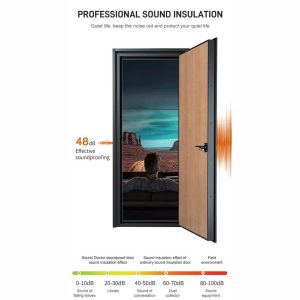
If you live in a region prone to hurricanes or severe storms with building codes requiring impact resistance, they are not an option—they are a requirement. Even outside these zones, impact doors offer superior security against forced entry and can reduce noise. The investment is justified by the potential cost of storm damage and the enhanced peace of mind.
How do I choose between aluminum, steel, and wood for double doors?
Choose thermal-break aluminum if you want the slimmest profiles, largest glass panels, and a low-maintenance, contemporary look. Choose steel if your priority is maximum security and you prefer a clean, industrial aesthetic. Choose wood if you value a warm, natural, and classic appearance and are willing to perform regular maintenance. Your local climate and architectural style should be the deciding factors.
How do I ensure my double doors meet local building codes?
Work with a manufacturer that has experience in your target market. They should be able to provide documentation on the door’s performance ratings, including air, water, and structural (wind load) test results. You must also ensure the door’s clear opening width meets local egress requirements. A professional installer can help verify compliance during the permitting process.
How We Meet These Standards
Navigating the specifications above can feel like a full-time job. As a manufacturer of thermal-break aluminum doors and windows, we have built our process around simplifying this complex decision for buyers like you.
When you work directly with our factory, you are not dealing with a middleman who resells a standard product. We handle the two most critical parts of your project: engineering for your specific climate and custom fabrication to your exact dimensions.
Our approach is straightforward. We adjust the profile structure and fittings of our doors to match the local building codes of your target market, whether that means configuring a unit for high wind load requirements or selecting the appropriate thermal break for extreme cold. We also offer full customization on size, color, glass type, and hardware accessories, so the final product is designed for your opening, not forced into it.
Before any shipment leaves our factory, each unit undergoes strict pre-shipment inspections for air-tightness, water-tightness, and wind resistance. This ensures the product you receive meets the performance standards we promised, not just the aesthetic ones. We also manage the logistics, providing full customs documentation and shipping via FCL or LCL, so you can focus on the installation, not the import process.
If you are ready to discuss your project and need a detailed specification and quote, our team can help you navigate the options.