The Short Answer: Metal-Clad Doors vs. Exterior Metal Sliding Doors
If you need a secure, weather-resistant entry point, a door with a metal plate (metal-clad door) is the right choice. If you need a large opening for a patio, terrace, or commercial entrance with good natural light, an exterior metal sliding door system is the better fit. The two products serve different architectural functions, and the decision hinges on whether your priority is a solid, secure barrier or a wide, glazed opening. This guide breaks down the technical differences, material options, and cost factors so you can specify the right product for your project.
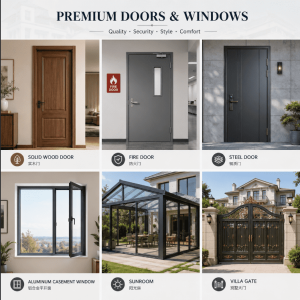
Types of Metal Doors: From Metal-Plated Entry Doors to Sliding Systems
Understanding the product categories is the first step. A door with a metal plate is not the same as a metal sliding door, and each category has sub-types with distinct performance profiles.
Metal-Clad Doors
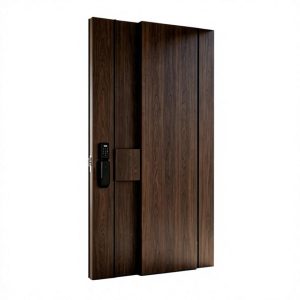
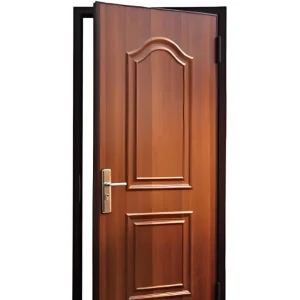
A metal-clad door consists of a core material—typically wood, engineered wood, or a foam-insulated core—covered on one or both faces with a sheet of metal. The metal layer is usually steel or aluminum, and it serves three purposes: physical security, weather resistance, and reduced maintenance.
The core determines the door’s insulation and structural rigidity, while the metal skin determines its durability and appearance. For example, a steel-clad door with a polyurethane foam core offers high thermal efficiency and impact resistance. An aluminum-clad door is lighter and naturally corrosion-resistant, making it suitable for coastal environments where salt spray is a concern.
Metal-clad doors are typically hinged. They are used as main entrances, commercial back-of-house doors, and utility entries where security and durability outweigh the need for natural light.
Exterior Metal Sliding Doors
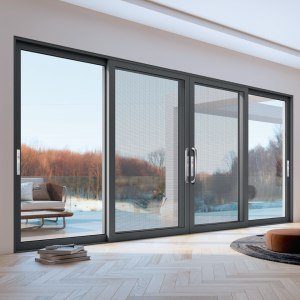
Exterior metal sliding doors are a different product family. These are large-format systems where the frame is made of metal—usually thermal-break aluminum—and the infill is glass. The door panels slide horizontally on tracks rather than swinging on hinges.
The key engineering feature is the thermal break: a polyamide strip inserted between the interior and exterior aluminum profiles. This breaks the thermal bridge and prevents heat from conducting through the metal frame. Without a thermal break, an aluminum sliding door would condense moisture and lose heat in cold climates.
These doors are specified for patios, terraces, balconies, and commercial storefronts. They offer wide openings, slim sightlines, and abundant daylight. However, they are not security barriers in the same way as a metal-clad door. The glass infill is a vulnerability, and the sliding mechanism introduces moving parts that require maintenance.
Comparison Table: Metal-Clad Doors vs. Exterior Metal Sliding Doors
| Criterion | Metal-Clad Door | Exterior Metal Sliding Door |
|---|---|---|
| Primary function | Secure, weather-resistant entry | Wide opening with natural light and ventilation |
| Material | Steel or aluminum skin over wood/foam core | Thermal-break aluminum frame with glass infill |
| Security | High; metal skin resists forced entry | Moderate; glass can be breached, locking hardware is critical |
| Insulation | Depends on core; foam cores perform well | Depends on glass spec and thermal-break quality |
| Durability | High; metal skin resists impact and weathering | High for frame; glass and rollers are wear items |
| Maintenance | Low; occasional cleaning and hardware checks | Higher; tracks, rollers, and seals need regular attention |
| Cost | Lower to mid-range, depending on core and skin | Higher due to glass, hardware, and complex profiles |
| Customization | Size, color, hardware, glass options (if vision panel) | Size, color, glass type, opening configuration, hardware |
| Best use case | Main entrances, utility doors, commercial back doors | Patios, terraces, commercial entrances, sunrooms |
Buying Guide: How to Select the Right Metal Door for Your Project
The selection process should follow a logical sequence: define the application, establish performance requirements, then evaluate suppliers.
Step 1: Define the Application
Ask what the door must do. A metal-clad door for a warehouse loading office has different requirements than an exterior metal sliding door for a beachfront villa. The application determines the material, the hardware, and the performance testing required.
For a metal-clad door, consider the exposure. A north-facing entrance in a cold climate needs a foam core with a low U-value. A coastal installation needs an aluminum skin or a steel skin with a high-quality finish to resist corrosion.
For a sliding door, consider the opening size and the wind load. A large sliding door on a high-rise balcony is subject to significant wind pressure. The frame must be reinforced, and the glass must be specified to handle the load. This is where the supplier’s engineering capability matters.
Step 2: Establish Performance Requirements
Three tests matter for exterior doors: air-tightness, water-tightness, and wind resistance. These are measured under standards like EN 12207, EN 12208, and EN 12210 (or local equivalents like ASTM in the US).
Air-tightness measures how much air leaks through the closed door. Water-tightness measures resistance to water penetration under wind-driven rain. Wind resistance measures the door’s ability to withstand wind pressure without deformation or failure.
The required performance class depends on the building location and height. A ground-floor entrance in a sheltered location needs a lower class than a penthouse terrace door in an exposed coastal area. When evaluating suppliers, ask for the test reports for the specific product you are considering. A reputable manufacturer will have them available.
Step 3: Evaluate Material Options
For a door with a metal plate, the choice is typically steel versus aluminum.
Steel is stronger and more resistant to forced entry. It is also heavier, which means the hinges and frame must be robust. Steel is prone to corrosion if the finish is damaged, so the paint system or galvanization matters.
Aluminum is lighter and naturally corrosion-resistant. It is easier to fabricate and offers more design flexibility. However, it is softer than steel and can dent more easily. For a metal-clad door, aluminum is a good choice for coastal environments or where weight is a concern.
For sliding doors, aluminum is the standard material. The question is whether the profiles are thermal-break or not. In any climate with significant heating or cooling loads, thermal-break aluminum is necessary. The quality of the thermal break—the width of the polyamide strip and the design of the profile—determines the door’s thermal performance.
Step 4: Consider Installation and Customization
Both product types offer customization in size, color, and hardware. The depth of customization varies by manufacturer.
For metal-clad doors, you can specify the core material, the metal skin, the finish color, the hardware (locks, handles, hinges), and optional vision panels. For sliding doors, you can specify the frame color, the glass type (double or triple glazing, low-E coatings, tinted or laminated), the opening configuration (how many panels slide, in which direction), and the hardware (handles, locks, rollers).
Installation is a separate consideration. A metal-clad door is installed as a single unit into a rough opening. A sliding door system is more complex, with multiple panels and tracks that must be aligned precisely. The supplier should provide clear installation instructions and, ideally, technical support.
Step 5: Understand Cost Drivers
The cost of a metal-clad door is driven by the core material, the metal skin, the finish, and the hardware. A basic steel-clad door with a hollow core is the most affordable. A premium aluminum-clad door with a foam core, custom color, and high-security hardware costs significantly more.
The cost of a sliding door is driven by the frame profile, the glass specification, and the hardware. Double glazing with low-E coatings adds cost but improves insulation. Larger panels require thicker glass and reinforced frames, which also adds cost. The number of panels and the configuration (e.g., one sliding panel versus two) also affect the price.
As a rule, sliding door systems are more expensive than metal-clad doors for the same opening size, due to the glass and the complexity of the framing.
Frequently Asked Questions
What is a door with a metal plate and what are its benefits?
A door with a metal plate is a door whose exterior surface is covered with a metal layer—steel, aluminum, or an alloy—for enhanced security, durability, and weather resistance. The benefits are threefold: it resists forced entry, it withstands weather exposure without rotting or warping, and it requires minimal maintenance compared to a bare wood door.
Which metal is best for exterior doors: steel or aluminum?
Steel is stronger and more resistant to forced entry, making it the default choice for security-focused entrances. Aluminum is lighter and naturally corrosion-resistant, making it a better choice for coastal environments or where weight is a concern. The “best” metal depends on your priorities: security favors steel, corrosion resistance favors aluminum.
How do I choose between a hinged metal door and a sliding metal door?
Choose a hinged metal-clad door when the primary requirement is a secure, weather-tight barrier for a standard-size opening. Choose an exterior metal sliding door when you need a wide opening, natural light, and easy access to an outdoor space. The sliding door is not a direct substitute for a security door; it serves a different architectural purpose.
What customization options are available for metal doors?
For metal-clad doors, you can customize the core material, the metal skin (steel or aluminum), the finish color, the hardware, and optional vision panels. For sliding doors, you can customize the frame color, the glass type (double or triple glazing, low-E coatings, tinted or laminated), the opening configuration, and the hardware. The depth of customization varies by manufacturer.
What quality tests should I look for in a metal door supplier?
Look for test reports on air-tightness, water-tightness, and wind resistance. These are measured under standards like EN 12207, EN 12208, and EN 12210, or local equivalents. The required performance class depends on your building location and height. Ask the supplier for the test reports for the specific product you are considering.
How much do metal doors typically cost?
Costs vary widely based on material, size, glass specification, and hardware. A basic steel-clad door is the most affordable option. A premium sliding door system with double glazing and thermal-break aluminum is significantly more expensive. For accurate pricing, provide the supplier with the opening size, the performance requirements, and the desired finish.
Can I see a picture of a metal door for reference?
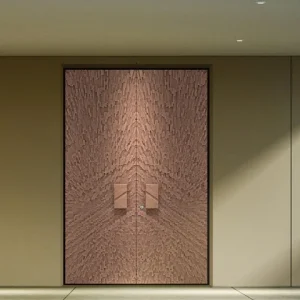
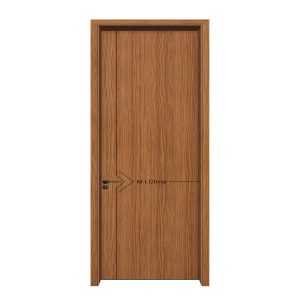
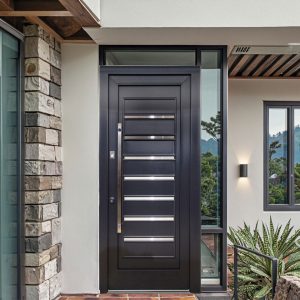
Visual examples are essential for evaluating finish quality and design. A reputable supplier should be able to provide project photos or product images of both metal-clad doors and sliding door systems. Look for close-up shots of the frame joints, the hardware, and the finish to assess the manufacturing quality. Ask for images of similar projects to your application.
Additional Considerations: Metal Options, Nearby Choices, and Visual References
Beyond the two main product categories, several factors influence the final specification.
Metal for Door: Finish and Coating Systems
The metal layer’s performance depends heavily on its finish. Common options include powder coating, anodizing, and PVDF (polyvinylidene fluoride) coatings.
Powder coating is the most common for both steel and aluminum. It provides a durable, uniform finish in a wide range of colors. Anodizing is an electrochemical process that creates a protective oxide layer on aluminum; it is highly durable but limited to metallic tones. PVDF coatings offer superior weather resistance and color retention, making them suitable for high-exposure locations.
For steel doors, the galvanization or primer system matters. A galvanized steel skin resists corrosion, but the cut edges and drilled holes are vulnerable. A high-quality paint system over a properly prepared surface is essential for longevity.
Closest Doors: Matching Your Existing Openings
When replacing an existing door or matching a new door to an existing opening, the “closest doors” are those that fit the rough opening with minimal modification. Standard sizes exist, but many projects require custom dimensions.
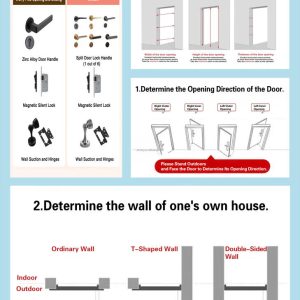
Measure the rough opening carefully: the width, height, and depth of the wall. Consider the jamb depth and the reveal. A custom-sized door is often necessary, and this is where a manufacturer with flexible production capabilities is valuable. Provide the supplier with precise measurements, and they can fabricate the door to fit.
A Pic of a Door: Using Visual References in Specification
Visual references are not just for aesthetics; they communicate technical details. When requesting images from a supplier, ask for specific views: the exterior elevation, the interior elevation, the frame cross-section, the hardware close-up, and the threshold detail.
These images help you evaluate the profile geometry, the quality of the thermal break, the hardware integration, and the finish consistency. They also help you compare products from different suppliers on an apples-to-apples basis. A supplier who can provide detailed technical drawings and photos demonstrates a higher level of engineering capability.
How a Factory-Direct Manufacturer Meets These Standards
As a door and window manufacturer, we see the specification process from the production side. The standards discussed above—air-tightness, water-tightness, wind resistance, material selection, and customization—are not abstract concepts. They are the parameters we engineer into every product.
Our approach is to address the buyer’s requirements directly. We manufacture metal-clad doors and thermal-break aluminum sliding door systems in our own factory, which means we control the profile geometry, the thermal break quality, and the finish application. When you work with us, you are not relying on a distributor’s interpretation of your project requirements; you are specifying directly with the production team.
Customization is a core part of our process. We can adjust the profile structure and fittings to match local building codes in your target market. This includes adapting to different testing standards and installation practices. For projects with specific performance requirements, we conduct pre-shipment testing for air-tightness, water-tightness, and wind resistance, so you receive a product that has been verified against the specifications.
Our export experience covers the full logistics chain. We provide packing lists, proforma invoices, and complete customs documentation. We ship both FCL and LCL, depending on your order size. This means you can source directly from the factory without navigating the complexities of international trade logistics on your own.
If you are evaluating suppliers for a project, the key questions are: Can they provide test reports for the specific product? Can they customize the product to your dimensions and performance requirements? Can they handle the export documentation? These are the criteria that separate a manufacturing partner from a middleman.
Contact our team to discuss your project specifications and get a detailed quotation.