Core Conclusion: What Defines a Modern Main Entrance Door?
A modern main entrance door is defined less by a single style and more by a set of performance and aesthetic criteria. In 2026, the category has matured beyond simple “minimalist frames.” The modern entrance door balances four non-negotiable elements: clean architectural lines, thermal performance that meets tightening building codes, security hardware that integrates without visual clutter, and materials chosen for their lifecycle cost, not just their upfront price.
For B2B buyers—contractors, architects, property developers, and procurement specialists—the decision is no longer just about how the door looks in a brochure. It is about how the specified door performs across U-factor requirements, wind-load calculations, and long-term maintenance obligations. The sections below break down the design styles, material trade-offs, and specification criteria you need before issuing a purchase order.
Modern Main Door Design Styles: From Minimalist to Industrial
The prevailing modern main entrance door styles in current architecture fall into several recognizable categories. Understanding these helps you match a product to a building’s architectural language.
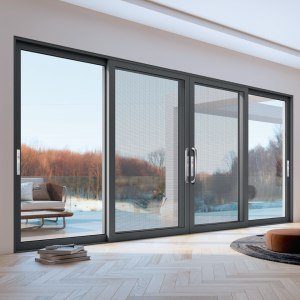
Minimalist flush designs dominate high-end residential and commercial projects. These doors present a single, uninterrupted plane—no raised panels, no visible hinges, no protruding handles. The effect relies on precise manufacturing tolerances. A flush door that appears simple actually requires the most rigorous quality control; any warp, uneven gap, or misaligned edge becomes immediately visible. These designs typically use aluminum or steel frames with large glass expanses.
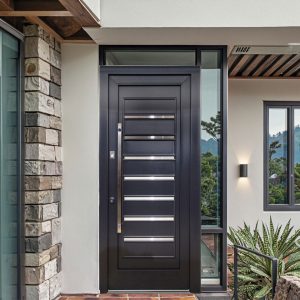
Industrial and loft styles embrace visible hardware and raw materials. Black steel frames with exposed hinges, or aluminum doors with visible structural mullions, define this aesthetic. These doors often incorporate translucent or textured glass to balance the hard material palette. The appeal is honesty of construction—the door looks engineered because it is.
Mid-century modern reinterpretations are seeing a strong resurgence. These feature horizontal lines, warm wood tones, and slim vertical windows alongside the main door leaf. The style works well for renovations of postwar buildings and for new constructions that reference that era. Expect to see walnut, oak, and teak finishes paired with black or bronze aluminum frames.
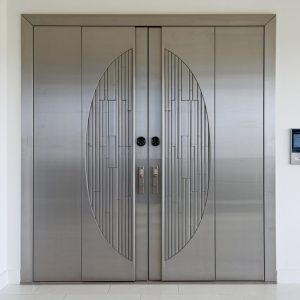
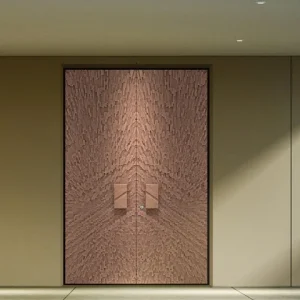
Sculptural and geometric designs push the boundary of what a door leaf can be. Angled aluminum extrusions, asymmetric glass placement, and pivot hinge systems create doors that function as architectural statements. These are custom projects, usually fabricated to an architect’s specific drawing. They carry a cost premium and longer lead times but deliver a unique identity for flagship commercial spaces or high-end villas.
Wooden Main Door Designs: Classic Warmth, Modern Lines
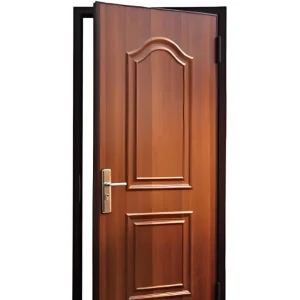
Wood remains a significant choice for modern main entrance doors, but its application has shifted. The demand in 2026 is for wooden main door designs that read as contemporary, not traditional.
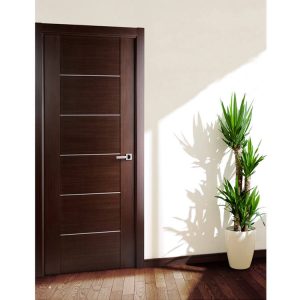
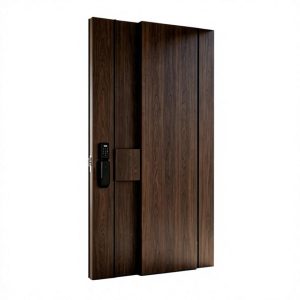
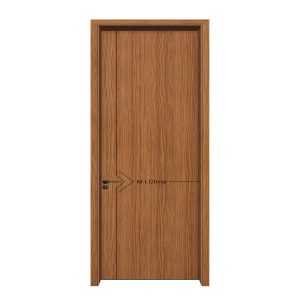
Modern wooden door designs favor flat-cut veneers, vertical grain patterns, and minimalist panel layouts. Instead of ornate carvings, the wood itself provides the texture. European oak, American walnut, and thermally modified ash are common choices because of their dimensional stability and distinct grain. The finish—usually a matte lacquer or a hard-wax oil—protects the surface while allowing the material to feel natural.
The main advantages of wooden main doors are aesthetic warmth and design flexibility. Wood can be machined into profiles that aluminum cannot easily replicate, and it accepts a wide range of stains and paints. It also offers natural insulation properties.
The disadvantages are maintenance and dimensional movement. Exterior wood doors are exposed to UV radiation and moisture. Without proper sealing and periodic refinishing, they will fade, check, and potentially warp. For B2B projects, this translates to a maintenance schedule that must be budgeted. Engineered wood constructions—where a stable core is veneered with solid lumber—mitigate warping risks better than solid timber slabs. Always specify engineered construction for exterior applications unless the design absolutely demands solid wood.
Material Comparison: Wood vs. Aluminum vs. Steel vs. Fiberglass
Selecting the material is the single most consequential decision in the specification process. The table below offers a practical comparison based on how these materials perform in real installations.
| Material | Relative Cost (Installed) | Durability | Thermal Insulation | Maintenance Requirement | Typical Best Use |
|---|---|---|---|---|---|
| Wood (Engineered) | High | Moderate; susceptible to moisture and UV if unfinished | Good natural insulator; R-value depends on core | High; periodic refinishing required every 2-3 years | Architectural statement doors, heritage projects, high-end villas |
| Aluminum (Thermally Broken) | Medium-High | High; resistant to corrosion, but can dent | Excellent when using polyamide thermal break strips; meets passive house standards | Low; anodized or powder-coated finishes last decades | Large format doors, sliding systems, commercial facades, coastal climates |
| Steel | Medium | Very High for security; prone to rust if coating is damaged | Poor unless insulated core is added; high thermal conductivity | Medium; repainting needed if scratched | Security-critical entrances, industrial style, commercial back-of-house |
| Fiberglass | Medium | Very High; does not dent, rust, or rot | Excellent; foam-filled cores provide high R-values | Very Low; color is molded through, so it rarely fades | Budget-conscious projects, high-traffic rental units, extreme climates |
Aluminum is the dominant choice for modern system doors because of its structural strength-to-weight ratio. It allows for slim sightlines—the visible frame width—which is a critical aesthetic factor. A thermally broken aluminum frame uses a polyamide or polyurethane strip to separate the interior and exterior metal, preventing thermal bridging. This is essential for meeting modern energy codes. Its primary weakness is thermal conductivity without that break, so never specify non-thermal aluminum for exterior entrances in cold climates.
Steel offers superior dent resistance and perceived security. However, its thermal performance is poor unless the door is constructed as a steel skin over an insulated core. Steel also requires careful attention to edge sealing to prevent rust, especially in humid or coastal environments. It is an excellent choice for a specific industrial aesthetic but is rarely the best all-around performer.
Fiberglass is the pragmatic workhorse. A fiberglass skin over a polyurethane foam core provides excellent insulation, does not dent, and does not corrode. Modern manufacturing has improved its ability to mimic wood grain convincingly. Its downside is a more limited high-end aesthetic range and less design flexibility for custom shapes compared to aluminum.
Key Features to Look For: Security, Insulation, Hardware
Beyond material, the performance of a modern main entrance door depends on its component systems.
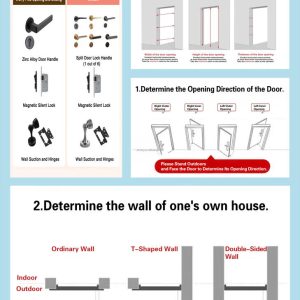
Security hardware is the first line of defense. Look for multi-point locking systems, where the lock engages the frame at multiple points (typically three to five) rather than a single latch. This distributes force and makes forced entry significantly harder. Specify hardware with ANSI/BHMA Grade 1 or Grade 2 certification for commercial or high-end residential use. Cylinder locks should be bump-resistant, and consider integrating electronic access control—keypads, fingerprint readers, or smart locks—as a standard option rather than an afterthought.
Hinges are often overlooked. For heavy doors, specify ball-bearing or geared hinges that can support the door weight without sagging over time. For pivot doors, ensure the pivot system is rated for the specific door weight and frequency of use.
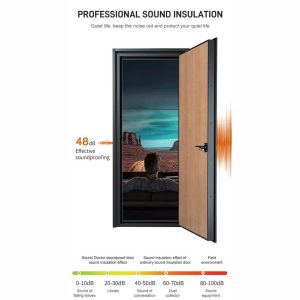
Thermal and acoustic insulation depend on the door’s core and its seals. The U-factor (rate of heat transfer) and R-value (resistance to heat flow) are the metrics to compare. Look for doors with a U-factor below 0.30 W/m²K for cold climates. Equally important is the weatherstripping system. A door with a great core but poor perimeter seals will leak air and water. Specify doors with multiple compression seals, and check that the threshold has a proper thermal break and drainage system.
Glass is a significant component of modern door design. For safety, all glass within 600mm of the door edge or in a door leaf must be tempered or laminated in most jurisdictions. For energy efficiency, double or triple glazing with low-emissivity (Low-E) coatings is standard. For privacy, options include frosted, fritted, or translucent glass. The glass specification should be verified against local building codes, as requirements vary.
How to Choose the Right Modern Main Entrance Door for Your Project
The selection process should be systematic, not aesthetic-led.
Step 1: Define the performance budget. What are the local building code requirements for U-factor, air infiltration, and water penetration? This sets the minimum bar. A project targeting LEED or Passive House certification will have a much higher bar than a standard commercial build.
Step 2: Assess the climate. In hot, sunny climates, prioritize solar heat gain coefficient (SHGC) to reduce cooling loads. In cold climates, prioritize low U-factor. In coastal environments, material corrosion resistance is paramount—aluminum with a high-grade anodized finish or a specialized coastal-grade powder coat is often the safest choice. In humid climates, avoid materials that absorb moisture.
Step 3: Match the door to the architecture. The door is the transition point between exterior and interior. A minimalist aluminum door suits a glass-and-steel building. A wooden door suits a building with natural materials. Forcing a mismatch creates visual dissonance that undermines the entire facade.
Step 4: Calculate lifecycle cost. The cheapest door is rarely the most economical. Factor in maintenance frequency, expected lifespan, and energy costs over a 20-year horizon. A premium thermally broken aluminum system with a 30-year finish warranty often beats a cheaper steel door that needs repainting in 5 years.
Supplier Evaluation: What to Ask Before You Buy
The quality of the final installed door depends as much on the manufacturer’s process as on the design. For B2B buyers sourcing from overseas, this evaluation is critical.
Here is how we meet these standards as a manufacturer. At Jusen Door and Windows, we approach every inquiry with the understanding that a door is a performance specification, not just a product. When you evaluate us—or any supplier—ask these questions directly.
First, ask about test data and standards. We conduct pre-shipment inspections that include air-tightness, water-tightness, and wind resistance tests, aligned with international standards. Ask your supplier for their test reports and what standards they test against. If they cannot provide verifiable data, treat that as a red flag.
Second, confirm the customization scope. We offer full customization on size, color, glass, and hardware accessories. This is not just about aesthetics; it is about engineering. Our profile structures and fittings are adjustable to match local building codes in your target market. Ask whether the supplier can adapt profiles for your specific wind-load requirements or seismic zone, not just whether they can paint a frame a different color.
Third, evaluate the logistics and documentation. A factory-direct supplier should be fluent in export procedures. We provide packing lists, proforma invoices, and full customs documentation for both FCL and LCL shipments. Ask about their experience with your country’s import regulations. A supplier who has shipped similar projects to your region will anticipate documentation issues before they become delays.
Fourth, and for us most important, understand the cost structure. Because we are a direct factory, there is no middleman markup. But factory-direct only benefits you if the factory has the engineering depth to support your project. Ask about their experience with construction project bulk supply and OEM/ODM work. A supplier who has handled large-scale projects understands the tolerances and quality consistency required.
When you compare suppliers, you are not just comparing prices. You are comparing engineering capability, quality assurance, and the ability to deliver a product that performs as specified. That is why we recommend requesting a quote and discussing your project’s specific performance requirements before making a decision.
Get a Free Quote to discuss your project specifications with our engineering team.
FAQ: Your Top Questions Answered
What are the most popular modern main entrance door design styles?
Minimalist flush designs, industrial black-steel frames, mid-century modern reinterpretations, and sculptural geometric pivot doors are the leading styles in 2026. The choice should align with the building’s overall architectural language.
What are the advantages and disadvantages of wooden main door designs?
Wood offers superior aesthetic warmth and design flexibility, and it is a natural insulator. Its disadvantages are ongoing maintenance requirements (refinishing every few years) and susceptibility to moisture and UV damage if not properly engineered. For exterior use, specify engineered wood construction to minimize warping.
How do wood, aluminum, steel, and fiberglass compare for modern entrance doors?
Aluminum offers the best structural strength-to-weight ratio and design flexibility, especially with thermal breaks. Steel provides high security but poor insulation unless specially constructed. Fiberglass offers low maintenance and good insulation but a more limited high-end aesthetic. Wood provides the best warmth but the highest maintenance burden.
What security features should a modern main entrance door have?
A multi-point locking system is essential. Look for ANSI/BHMA Grade 1 or Grade 2 hardware, bump-resistant cylinders, and consider integrating electronic access control. Ensure hinges are rated for the door’s weight to prevent sagging, which compromises the lock alignment.
How can I customize a modern main entrance door to fit my project?
Customization covers size (non-standard dimensions), color (custom powder-coat or anodized finishes), glass (type, tint, privacy level, safety rating), and hardware (style, finish, electronic integration). For B2B projects, the most critical customization is structural—adjusting the profile and reinforcement to meet your local wind-load and building code requirements.
What should I look for when evaluating a door manufacturer or supplier?
Evaluate their test data (air-tightness, water-tightness, wind resistance), their ability to customize beyond aesthetics, their export logistics experience, and their track record with bulk supply projects. Request verifiable documentation and ask for references on similar past projects.
How much does a modern main entrance door cost?
Costs vary widely based on material, size, glass specification, hardware grade, and regional labor rates. Aluminum and fiberglass systems generally sit in a mid-to-high range, steel is often lower upfront but has higher lifecycle costs, and premium wood or custom sculptural doors are the most expensive. Always obtain itemized quotes from multiple suppliers for an accurate comparison.