What Buyers Need to Know About Mahogany Inside Doors
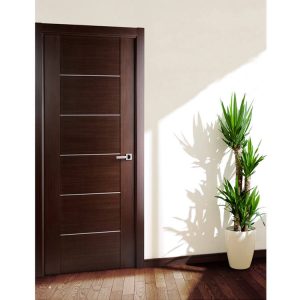
Mahogany inside doors are interior doors crafted from genuine mahogany lumber or constructed with a mahogany veneer over an engineered core. For commercial projects—hotels, executive offices, conference centers, and high-end multifamily residences—they are specified primarily for three reasons: dimensional stability, acoustic performance, and the visual gravitas that painted doors cannot replicate.
The buying decision, however, is not simply “mahogany versus not mahogany.” The real questions involve construction type, veneer grade, fire-rating requirements, and whether the aesthetic goal justifies the cost premium over oak or walnut. This guide breaks down those variables so you can specify the right door for your building’s performance requirements and budget.
Types of Mahogany Inside Doors: Construction Matters More Than Species
When a specification calls for “mahogany,” it can mean several fundamentally different products. Understanding the distinction is critical because performance, cost, and appearance vary dramatically.
Solid Mahogany Doors
A true solid mahogany door is constructed from stiles and rails of solid lumber, typically with floating panels. These are the heaviest option and offer the best acoustic insulation and a substantial feel when opened and closed.
The trade-offs are cost and stability. Solid wood moves with humidity changes, so proper acclimation and quality joinery are essential. In climates with significant seasonal humidity swings, even well-built solid doors can develop minor panel movement. For commercial applications, solid mahogany is most appropriate for executive suites, boardrooms, and heritage-style renovations where the door is a focal point.
Mahogany Veneer over Engineered Core
This construction uses a stable core—typically medium-density fiberboard (MDF), particleboard, or a hollow or semi-solid stave core—with a mahogany veneer bonded to both faces. The veneer is sliced from the same mahogany species, so the visible grain is authentic.
Engineered-core doors dominate commercial specifications for two reasons: predictable flatness and fire-rating compatibility. A veneered door will not warp or cup the way solid lumber can, and the core can be manufactured to meet various fire-resistance standards. The acoustic performance depends on core density; a solid engineered core performs nearly as well as solid wood, while hollow cores are significantly inferior.
Fire-Rated Mahogany Doors
Fire-rated interior doors are a distinct category. They feature a specially formulated core—often mineral-based or treated wood composite—that has been tested and certified to resist fire for a specific duration, typically 20, 45, 60, or 90 minutes. The mahogany veneer is applied over this core for aesthetics.
Critically, you cannot simply take a standard mahogany door and call it fire-rated. The entire assembly—door, frame, hinges, and hardware—must be tested as a unit to the relevant standard (such as UL 10C in North America or EN 1634 in Europe). If your project requires fire-rated doors, specify this from the outset. Retrofitting a non-rated door into a rated opening is a code violation.
Acoustically Rated Mahogany Doors
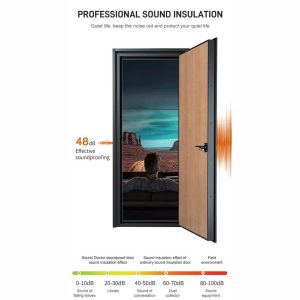
For conference rooms, hotels, and medical facilities, sound transmission class (STC) ratings matter. A solid-core mahogany door with perimeter gasketing can achieve meaningful sound reduction. The door leaf itself is only part of the system—the frame, seals, and threshold all contribute. If acoustics are a priority, specify the target STC rating and require the door assembly to be tested accordingly.
Mahogany vs. Oak vs. Walnut: How to Compare Wood Species
Each species brings a different combination of appearance, hardness, stability, and cost. The right choice depends on the design language of the interior, not on which wood is “better.”
| Property | Mahogany | Oak (White/Red) | Walnut | Maple |
|---|---|---|---|---|
| Grain pattern | Straight to interlocked, fine texture | Pronounced, open grain | Straight, sometimes curly | Subtle, tight grain |
| Color | Rich reddish-brown, darkens with age | Light to medium tan | Deep chocolate brown | Pale cream to light brown |
| Hardness (Janka scale) | Medium (comparable to walnut) | Harder than mahogany | Medium | Harder than mahogany |
| Stability | Excellent—low movement | Good | Good | Good |
| Acoustic performance | Excellent (dense, heavy) | Good | Good | Moderate |
| Cost range | Premium | Moderate | Premium (often higher than mahogany) | Moderate |
| Best fit | Traditional and transitional interiors, luxury hospitality | Contemporary, high-traffic areas | Modern executive spaces | Modern minimalist interiors |
The Janka hardness test measures resistance to denting and wear. Mahogany sits in the middle range—softer than oak but perfectly adequate for interior doors, which are not subjected to the same abuse as flooring. What mahogany offers over oak is a smoother, more refined grain that takes a clear finish exceptionally well. Oak’s open grain can look busy in large paneled doors; mahogany reads as more elegant.
Walnut is the closest competitor in terms of prestige, but its color is much darker and cooler. Mahogany’s warm reddish tone complements traditional millwork, brass hardware, and warm neutral palettes. Walnut suits contemporary and minimalist interiors with black or chrome hardware.
One practical note: “mahogany” is a family of species, not a single tree. Genuine mahogany (Swietenia macrophylla) from sustainably managed forests is the classic choice. However, many commercial doors use African mahogany (Khaya spp.) or other related species, which are more available and less expensive. They share similar working properties and appearance, though grain and color vary slightly. Always confirm the exact botanical species with your supplier, especially if the project specifies a particular origin for sustainability certification.
Selecting Mahogany Inside Doors: Key Decision Factors
Beyond species and construction, several specification points determine whether the door performs well in your specific application.
Door Construction and Core Type
For commercial projects, specify a solid engineered core for standard doors and a fire-rated core where required. Avoid hollow-core doors in any commercial setting—they feel insubstantial, transmit sound, and can dent or flex under repeated use. The stile and rail construction should be specified as well; five-part construction (two stiles, top rail, bottom rail, and lock rail) is standard for commercial-grade doors.
Veneer Grade and Matching
If you are specifying veneered doors, the veneer grade determines the appearance. Grade A veneer is virtually flawless, with consistent color and grain. Lower grades allow small imperfections or color variation. For large installations, specify “book-matched” or “slip-matched” veneers and request a sample panel to confirm the color and grain direction. Also specify the finish system: lacquer, polyurethane, or conversion varnish. Each has different durability, repairability, and appearance characteristics.
Hardware Preparation
Commercial doors require specific hardware preparations: hinge locations, lock bore, latch bore, and possibly through-bolts for panic hardware. Specify the hardware schedule before ordering so the factory can pre-machine the doors. Field-cutting hardware into a finished mahogany door risks chipping the veneer and voids the warranty on some products.
Glazing Options
If the design calls for sidelights or transoms, specify whether the door itself includes glazing or whether the glass is separate. Doors with integrated glazing require factory installation of the glass and glazing beads to maintain the fire rating and acoustic performance. Field-glazed doors are a common source of performance failures.
Finish and Stain
Mahogany’s color deepens naturally with light exposure. If you need color consistency across a large project, specify a stain and topcoat system that includes UV inhibitors. For the most natural look, a clear finish will allow the wood to amber over time, which can create variation between doors installed at different times.
Cost Considerations and Budget Planning
Mahogany inside doors sit at the premium end of the interior door market. The cost drivers, in rough order of impact, are:
- Construction type: Solid wood costs more than veneered engineered core.
- Fire rating: Rated doors carry a significant premium due to the testing and certified core materials.
- Veneer grade and matching: Higher grades cost more.
- Custom sizing: Standard sizes are far less expensive than custom dimensions.
- Hardware prep and glazing: Factory machining adds cost but ensures quality.
- Finish: Prefinished doors cost more upfront but save labor costs on site.
For budgeting purposes, expect to pay meaningfully more for mahogany than for oak or maple veneer doors of equivalent construction. The premium buys the aesthetic and the perceived value of the space. In hospitality and executive environments, that premium is often justified by the design statement the doors make.
A practical budget strategy is to use mahogany doors for public and representative spaces—lobbies, corridors, executive offices—and specify a more economical species for back-of-house areas, storage rooms, and utility spaces. This approach concentrates the budget where it is visible.
Door Replacement: Retrofitting Mahogany Doors into Existing Openings
Replacing doors in an existing building introduces constraints that new construction does not. The existing frame dimensions, floor conditions, and wall construction all affect what you can install.
Frame Compatibility
Mahogany doors are typically thicker and heavier than standard hollow-core doors. A standard residential frame may not accommodate a commercial-grade mahogany door leaf. Check the frame’s width and depth before ordering. If the frame is not suitable, you have two options: replace the frame (the correct solution) or order a custom-thickness door to fit the existing frame (a compromise that may affect hardware and fire-rating).
Opening Tolerances
Existing openings are rarely perfectly square or plumb. Measure the opening at multiple points—top, middle, bottom, and both diagonals. A custom-sized door can accommodate minor irregularities, but significant out-of-square conditions should be corrected at the frame level.
Hardware and Hinge Requirements
Heavier mahogany doors require heavier hinges. A solid-core door can weigh substantially more than a hollow-core door, so verify that existing hinges and frames can support the new weight. For commercial applications, specify ball-bearing hinges with enough leaves to distribute the load.
Fire-Rating Compliance
If the existing doors are in a fire-rated wall, the replacement must maintain the rating. This is not discretionary—it is a code requirement. Confirm the rating of the existing assembly and specify replacement doors with equivalent or better ratings.
Fancy Inside Doors: Achieving a High-End Look with Mahogany
The term “fancy inside doors” describes doors that go beyond a flat slab or simple panel configuration. Mahogany is particularly well suited to these treatments because its fine grain and rich color show off detail work exceptionally well.
Panel Configurations
The number and arrangement of panels significantly affect the door’s visual weight. A two-panel door with raised panels reads as traditional. A six-panel configuration is more formal. For a contemporary take on a fancy door, consider a flush veneer door with book-matched grain—the wood itself becomes the decoration.
Decorative Veneer Work
For truly distinctive doors, specify decorative veneer treatments. Book-matched veneers create a mirrored grain effect across the door face. Quarter-matched veneers create a more complex, geometric appearance. These treatments add cost but transform an ordinary door into a design feature.
Integrated Details
Hardware is the jewelry of a fancy door. Specify high-quality lever handles, hinges, and accessories in finishes that complement the wood. Backplates and escutcheons in brushed brass or satin nickel pair well with mahogany’s warm tones. For a cohesive look, coordinate door hardware with the building’s other millwork hardware.
The Practical Limit
Fancy doors are appropriate where they will be seen and appreciated. A highly decorative door in a back corridor is wasted budget. Reserve these treatments for lobbies, executive suites, and other representative spaces.
Sourcing Mahogany Inside Doors: Manufacturer vs. Distributor
For commercial projects, the sourcing decision is as important as the product decision. You can purchase through a distributor or directly from a manufacturer. The right choice depends on the project’s scale and complexity.
Working with Distributors
Distributors offer convenience—they stock standard products, handle logistics, and can supply multiple product categories from one order. For small projects or urgent needs, a distributor is often the practical choice. The trade-off is cost (distributor markup) and limited customization. A distributor typically offers what the factory produces as standard, not what your project specifically requires.
Working Directly with Manufacturers
For projects with custom sizes, specific veneer grades, fire-rating requirements, or large quantities, direct manufacturer sourcing offers clear advantages. You work with the factory to specify the exact product, avoid intermediary markup, and maintain direct control over the production schedule.
The trade-off is that you take on more project management responsibility. You need clear specifications, a reliable logistics plan, and an understanding of international shipping if sourcing from overseas. For buyers experienced in construction procurement, this is manageable. For those new to direct sourcing, the learning curve is real but the savings can be substantial.
How We Meet These Standards: A Manufacturer’s Perspective
As a door and window manufacturer, we see the full arc of commercial door procurement—from initial specification through production and delivery. Our approach is built around the realities of commercial projects.
Customization is the baseline, not a premium service. Commercial projects rarely use standard sizes. Ceiling heights vary, wall thicknesses vary, and design intent varies. We manufacture mahogany inside doors to your exact dimensions, with the veneer grade, panel configuration, and hardware preparation your drawings specify. If your project requires fire-rated doors, we produce them to the relevant standards with the necessary documentation.
Factory-direct pricing matters for large orders. When you source through a distributor, you pay for the intermediary’s overhead. Buying directly from the factory eliminates that layer. For a large hotel or office project, the difference is substantial and can be redirected to higher-grade veneers or better hardware.
Pre-shipment inspection protects your schedule. Every order undergoes testing for air-tightness, water-tightness, and wind resistance before it leaves our facility. For interior doors, the relevant checks are dimensional accuracy, finish quality, and hardware fit. We provide the packing list, proforma invoice, and customs documentation you need for international shipping, and we can arrange both FCL and LCL shipments to suit your project’s logistics.
Building code compliance is addressed at the design stage. Local building codes vary significantly between markets. Our profile structures and fittings are adjustable to match the requirements of your target market, whether that involves fire ratings, acoustic performance, or accessibility standards. Share your local code requirements with us during the specification phase, and we will confirm the door assembly meets them.
If you are comparing suppliers for a commercial mahogany door order, the practical questions are: Can they deliver the exact specification you need, at what cost, and with what assurance of quality? Those are the questions we are prepared to answer with a detailed quotation and production schedule.
Frequently Asked Questions About Mahogany Inside Doors
How long do mahogany inside doors last?
With proper finishing and maintenance, a solid or engineered-core mahogany door can last the life of the building—several decades or more. The finish will need periodic maintenance, but the door structure itself is highly durable.
Are mahogany doors suitable for bathrooms or humid areas?
Mahogany is one of the more moisture-resistant hardwoods, but interior doors in high-humidity areas still require proper sealing on all edges, including the top and bottom. Specify a moisture-resistant finish system for these applications.
What is the typical lead time for custom mahogany doors?
Lead times vary significantly depending on the manufacturer’s production schedule, the complexity of the order, and shipping distance. For a custom commercial order, factor in production time plus transit time. Ask your supplier for a firm production schedule before placing the order.
How do I maintain mahogany doors in a commercial setting?
Regular dusting and cleaning with a mild wood cleaner are sufficient. Avoid harsh chemicals and abrasive pads. The finish should be inspected annually and recoated as needed in high-traffic areas.
Can mahogany doors be painted?
Yes, but painting mahogany is generally counterproductive—you are covering a premium wood grain with an opaque coating. If the design requires painted doors, a less expensive species would achieve the same result at lower cost.