Core Conclusion: What You Need to Know About Interior Hollow Core Doors
Interior hollow core doors are the most common and economical choice for residential and commercial interior spaces. They consist of a lightweight honeycomb or cardboard core sandwiched between two thin veneer faces, typically made of medium-density fiberboard (MDF) or plywood. This construction makes them significantly lighter and cheaper than solid alternatives.
The primary decision factors come down to budget, sound control, and durability. Choose a hollow core door when cost is a priority and the space does not demand high acoustic performance or heavy-duty use. Choose a solid core or solid wood door when you need better sound reduction, greater physical durability, or a premium feel.
For most bedrooms, closets, and utility rooms, hollow core doors offer a perfectly acceptable balance of price and function. For home theaters, bathrooms, or high-traffic commercial areas, the trade-offs become more significant and you should carefully weigh the alternatives.
Hollow Core vs. Solid Core vs. Solid Wood: A Detailed Breakdown
Understanding the internal construction is the first step in making a smart buying decision. Here is how the three main types of interior doors differ.
Hollow Core Construction
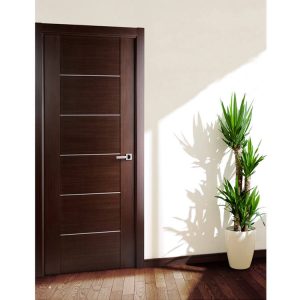
The internal structure of a hollow core door is exactly what it sounds like. A lattice of cardboard or corrugated honeycomb material sits between two thin outer skins. The outer faces are usually 3mm to 4mm MDF or hardwood veneer. The frame around the perimeter is solid wood, typically pine or poplar. This frame gives the door rigidity and provides a surface for hinges and locks.
This design is efficient and uses significantly less material than a solid door. The weight of a typical hollow core interior door is roughly half that of a solid core door of the same dimensions. The result is a product that is easier to handle, easier to install, and much less expensive to manufacture and ship.
Solid Core Construction
Solid core doors look identical to hollow core doors from the outside. They use the same veneer faces and perimeter framing. The key difference is the interior. Instead of a cardboard honeycomb, the core is filled with a solid engineered wood product, usually particleboard or a wood fiber composite.
This added material increases the weight substantially. A solid core door feels heavy and substantial when you close it. The density also makes it a far better sound barrier. It is also more resistant to dents and impacts. A solid core door will not transmit sound as readily, and it does not have that hollow “knock” sound when tapped.
Solid Wood Doors
Solid wood doors are constructed entirely from a single species of wood or from joined stiles and rails. They are the most expensive and heaviest option. They offer the most premium appearance, with visible natural grain and the ability to be refinished multiple times over their lifespan.
However, solid wood is susceptible to expansion and contraction with changes in humidity. This can lead to warping or cracking, particularly in climates with large seasonal swings. They are also the most expensive option, both in material cost and in the labor required to hang them due to their weight.
Prehung vs. Slab Hollow Core Doors: Which One Fits Your Project?
Buyers face a second major decision beyond the core type: whether to order a prehung unit or a door slab.
A door slab is just the door itself, with no frame or hinges attached. You purchase the door, and your contractor must build or source a separate jamb frame. Slab doors are commonly used in renovations where the existing frame is still in good condition and you only want to replace the door leaf.
A prehung door comes mounted in its own frame. The jamb, hinges, and often the door stops are already assembled. The unit is designed to be installed into a rough opening in the wall. Prehung doors are the standard choice for new construction and major remodels. They simplify the installation process significantly because the frame and door are guaranteed to fit together correctly.
The choice depends on your project scope. For new construction or when replacing the frame, prehung units save time and reduce the risk of misalignment. For a simple door replacement in a rental property or a quick renovation, a slab door might be the more economical and practical route.
Comparison Table: Hollow Core Door Options at a Glance
The following table summarizes the key differences between the main door types to help you evaluate them side-by-side.
| Feature | Hollow Core | Solid Core | Solid Wood |
|---|---|---|---|
| Cost | Lowest | Moderate | Highest |
| Weight | Lightest | Heavy | Heaviest |
| Sound Reduction | Poor to Fair | Good | Good to Excellent |
| Durability | Low to Moderate | High | Moderate to High |
| Moisture Resistance | Poor | Moderate | Moderate (depends on finish) |
| Installation | Easiest | More Difficult | Most Difficult |
| Appearance | Good (veneer) | Good (veneer) | Premium (solid grain) |
How to Choose the Right Hollow Core Door for Your Space
Selecting the right door is about matching the product to the function of the room. Here are the key factors to evaluate.
Acoustics and Sound Control
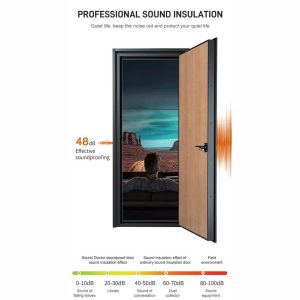
This is the most common reason buyers upgrade from hollow core. The empty interior does little to block sound. If your project involves bedrooms, home offices, or media rooms, consider the level of privacy needed.
For a home office where you take video calls, a hollow core door will allow sound to pass through. For a media room, the sound transmission will be even more noticeable. In these cases, a solid core door is a better investment. If you are set on a hollow core door for budget reasons, you can improve its acoustic performance by adding mass-loaded vinyl to the interior side or by ensuring the door is properly sealed around the edges.
Moisture Resistance and Bathroom Use
Standard hollow core doors are not suitable for bathrooms or other high-humidity areas. The cardboard core and MDF faces can absorb moisture, leading to swelling, warping, and delamination over time. The cardboard core is particularly vulnerable.
If you need a door for a bathroom, you have a few options. You can choose a hollow core door with a moisture-resistant core, often made from a treated material. More reliably, you can choose a solid core door with a sealed finish. The most durable option is a PVC or fiberglass door, which is entirely impervious to moisture. Always check the manufacturer’s specification for moisture resistance before installing a door in a wet area.
Fire Rating Considerations
It is critical to understand that standard hollow core doors are not fire-rated. The hollow cardboard interior will not provide a meaningful barrier to fire. Building codes often require fire-rated doors in specific locations, such as between a house and an attached garage or in certain commercial occupancies.
If your project requires a fire-rated door, you must look for a door with a specific fire-rating certification, such as a 20-minute or 45-minute rating. These doors have a specially engineered core that is designed to resist fire for a set period. Do not assume a standard hollow core door meets any fire code requirement. Always verify the door’s labeling and consult local building codes.
Cost and Budget
The cost difference is substantial. A hollow core door can be significantly less expensive than a solid core door of the same style. This price difference extends to the hardware, as lighter hollow core doors do not require heavy-duty hinges. For a project with many doors, such as a multi-unit residential building, choosing hollow core can result in significant overall savings.
The total cost includes not just the door but the frame, hardware, and installation labor. Prehung units are typically more expensive than slabs, but they save on labor costs. When budgeting, get quotes for the complete installed cost of each option.
Frequently Asked Questions About Hollow Core Interior Doors
What are interior hollow core doors made of?
They are made of a lightweight honeycomb or cardboard core, sandwiched between two thin outer skins of MDF or plywood. The entire structure is held together by a solid wood perimeter frame.
How do hollow core doors compare to solid core doors in terms of soundproofing and durability?
Solid core doors are significantly better in both categories. The dense interior blocks more sound and resists dents and impacts much better than the hollow cardboard core. Hollow core doors are adequate for low-traffic areas but are not a good choice for spaces that require privacy or that will see heavy use.
What is the difference between a prehung hollow core door and a slab door?
A slab door is just the door leaf. A prehung door comes with the door already attached to its frame, with hinges installed. Prehung units are for new construction and major renovations, while slabs are for replacing an existing door in a sound frame.
Are hollow core interior doors suitable for bathrooms or high-moisture areas?
Standard hollow core doors are not suitable for high-moisture areas. The cardboard core and MDF faces can absorb moisture, causing swelling and warping. You should choose a door with a moisture-resistant core or a solid core door with a proper sealed finish for bathrooms.
What are the standard sizes and thicknesses for hollow core interior doors?
Standard interior door heights are typically 80 inches (2032 mm). Common widths are 24, 28, 30, 32, and 36 inches (610, 711, 762, 813, and 914 mm). The standard thickness for interior doors is typically 1-3/8 inches (35 mm), though some commercial applications use 1-3/4 inches (44 mm). Always verify the exact dimensions of your rough opening before ordering.
Can hollow core doors be customized in terms of size, color, and hardware?
Yes. Most manufacturers offer hollow core doors in a range of standard sizes, but custom sizes are also available for non-standard openings. The doors come primed and ready to paint, so you can achieve any color. You can also specify different veneers for a wood grain finish. Hardware options, such as hinges and locks, are typically selected separately and can be customized to match the project.
What should I look for when sourcing hollow core doors in bulk for a construction project?
When sourcing in bulk, you should evaluate the manufacturer’s production capacity, consistency in quality, and ability to meet your delivery schedule. Ask for samples to inspect the quality of the veneer and the density of the core. Confirm their pre-shipment inspection process. You also need to verify that they can provide the necessary documentation for customs and that their products can be adjusted to meet your local building codes.
Additional Considerations for Bulk Buyers and Contractors
When you are sourcing hollow core interior doors for a large project, the decision process changes. It is no longer about a single door for a single room. You need to think about supply chain reliability, consistency, and total cost of ownership.
For contractors and developers, the choice between prehung and slab units is often dictated by the construction schedule. Prehung units are faster to install, which can save on labor costs. However, they are bulkier to transport and store on site.
For bulk orders, you must also consider the logistics. The doors are lightweight, which makes them more economical to ship. You will need to decide between a full container load (FCL) and a less-than-container load (LCL). For a large project, an FCL shipment is often more cost-effective per unit.
The quality of the door’s construction is critical, even for budget projects. Inspect the quality of the veneer. Check for voids in the core material. Ensure the perimeter frame is solid and will hold screws for hinges and locks. A cheaply made hollow core door can have a thin frame that splits when you install hardware.
How We Meet These Standards as a Manufacturer
As a factory that produces doors for international projects, we understand the importance of meeting these specifications. Our approach is to provide a product that meets the standards discussed above, not to sell on vague claims.
We offer direct supply from our factory, which means we can provide competitive pricing for bulk orders of interior hollow core doors without the markup of a middleman. We support full customization on size, color, glass, and hardware accessories to match your project’s specific drawings and specifications.
Quality control is a core part of our process. We conduct strict pre-shipment inspections, including tests for air-tightness, water-tightness, and wind resistance, to ensure the doors meet performance expectations. Our experience in foreign trade means we can provide all necessary documentation, including packing lists, proforma invoices, and full customs paperwork for smooth international shipping.
We also understand that building codes vary by country. Our profile structures and fittings can be adjusted to comply with local building regulations in your target market. Whether you need a standard size or a custom specification, we can accommodate your project’s requirements.
If you are evaluating manufacturers for your next project and would like to discuss your specific needs, please reach out. We can provide detailed specifications and a quote based on your project plans.