21 min read
Selecting aluminum windows is rarely a straightforward decision. For contractors, architects, and developers, the wrong choice can ripple through a project timeline, compromise building performance, and damage a brand’s reputation. Aluminum windows represent a long-term investment—they must perform for decades in demanding environments while meeting increasingly strict energy codes and aesthetic expectations.
The challenge is that aluminum windows are not a one-size-fits-all product. Performance depends on the alloy composition, thermal break technology, glazing configuration, hardware quality, and—critically—the manufacturing capability behind the product. A window is only as reliable as the factory that produces it.
At Jusen Doors & Windows Manufacturing Co., Ltd., we have spent over two decades manufacturing aluminum alloy windows alongside our solid wood door production. Our team understands what separates a window that performs for 30 years from one that fails within five. This guide walks through every critical factor—from project requirements and materials to supplier evaluation and quality verification—from the perspective of a manufacturer who lives these decisions daily.
—
Understanding Your Project Requirements Before Choosing Aluminum Windows
Before evaluating any aluminum window product, you must define what your project actually demands. A residential villa in a temperate climate has entirely different requirements than a coastal commercial tower exposed to salt spray and high wind loads. We see procurement mistakes happen when buyers skip this foundational step and jump directly to comparing product specifications.
Start by categorizing your project type. Residential projects typically prioritize thermal comfort, acoustic insulation, and visual appeal. Commercial buildings demand higher structural performance, fire safety compliance, and durability under heavy daily use. Villa and estate developments—a segment we serve extensively—require a balance of premium aesthetics, large custom spans, and energy efficiency that matches the property’s value.
Climate conditions should drive your technical specifications. In hot climates, solar heat gain coefficient (SHGC) and low-E coatings become critical. In cold regions, U-values and thermal break performance take priority. Coastal environments demand superior corrosion resistance—we typically recommend powder-coated or anodized finishes with higher film thickness for these projects. Humidity-prone areas require attention to condensation resistance and drainage system design.
Your target market’s building codes and energy efficiency standards must be researched before you contact any manufacturer. Whether your project requires compliance with European CE marking, Australian AS/NZS standards, or North American energy codes, these requirements determine minimum performance thresholds. We frequently assist clients in translating these regulatory requirements into concrete technical specifications—our in-house design team works directly with contractors and developers to ensure every window specification aligns with both project demands and local compliance obligations.
If you are unsure how to translate your project requirements into technical specifications, Contact Our Team to discuss your project scope.
Defining Performance Needs (Thermal, Acoustic, Structural)
Every aluminum window specification should begin with three performance pillars:
Thermal performance: U-values measure heat transfer through the window assembly. For energy-efficient buildings, thermal break profiles with polyamide strips and double or triple glazing are essential. We recommend targeting U-values below 1.5 W/m²K for most residential and commercial applications in temperate climates.
Acoustic insulation: Urban projects near roads, railways, or airports require windows with sound reduction ratings (STC or Rw values) of 35 dB or higher. This typically demands laminated glass with acoustic interlayers and carefully sealed frame assemblies.
Structural integrity: Wind load resistance is non-negotiable for high-rise applications. Profile wall thickness, reinforcement, and glazing thickness must be calculated based on building height, location, and exposure. Our engineering team performs these calculations for every custom project we undertake.
Aesthetic and Architectural Compatibility
Aluminum windows must complement the architectural language of your building. Profile design—whether minimal sightlines for modern facades or more substantial frames for traditional aesthetics—affects both appearance and structural performance. Color and finish options range from standard powder coatings to wood-effect finishes that coordinate with timber door systems.
Custom shapes such as arches, triangles, or oversized spans require manufacturers with genuine fabrication capability, not just assembly operations. We provide fully customized doors and windows tailored to project requirements, with our in-house team producing shop drawings that resolve both aesthetic and structural considerations before production begins.
—
Evaluating Aluminum Window Frame Materials and Profiles
The frame material determines the window’s structural performance, durability, and thermal efficiency. Understanding the differences between raw aluminum, alloy grades, and profile configurations is essential for making an informed procurement decision.
Raw aluminum is rarely used in window manufacturing due to its softness. Instead, aluminum alloy grades—typically 6063-T5 or 6063-T6—provide the strength, corrosion resistance, and machinability required for window profiles. The T5 and T6 designations refer to heat treatment processes that increase tensile strength. For high-rise applications or large spans, T6 alloy may be specified for its superior structural properties.
Profile wall thickness is another critical consideration. Industry standards typically require a minimum wall thickness of 1.4 mm for standard windows and 1.8 mm or more for high-rise or large-span applications. However, thicker is not always better if the alloy composition is incorrect. A properly designed 1.4 mm profile in 6063-T6 alloy can outperform a 2.0 mm profile in inferior alloy. The design of the profile’s internal chambers and reinforcement ribs matters as much as raw thickness.
Surface treatment determines long-term appearance and corrosion resistance. Anodizing creates a protective oxide layer that is highly durable and ideal for coastal environments, though color options are limited to metallic tones. Powder coating offers a wider color range with good durability and is our most commonly specified finish for residential and commercial projects. PVDF (fluorocarbon) coating provides the highest level of UV resistance and color retention, making it suitable for premium facades and extreme climate conditions.
At our factory, we operate our own aluminum processing workshops. This means we control profile quality from raw material to finished product—we select the alloy, manage the extrusion process, and verify wall thickness and surface finish at every stage. This vertical integration is not common in the industry, but it is essential for delivering consistent quality across bulk orders.
Thermal Break Technology Explained
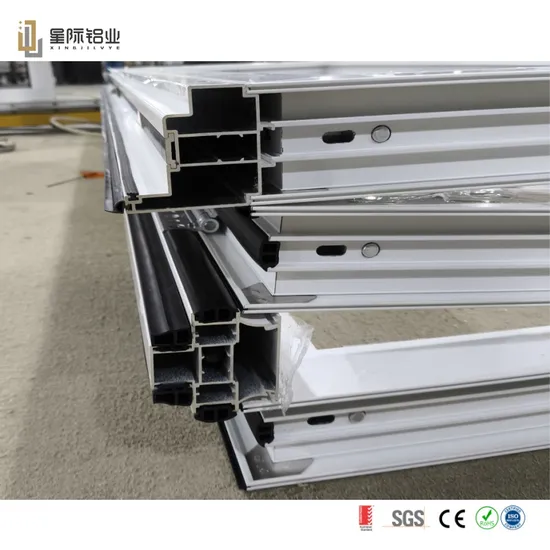
A thermal break is a barrier of low-conductivity material inserted between the interior and exterior aluminum profiles. Without it, aluminum’s high thermal conductivity creates a direct path for heat transfer, leading to energy loss and condensation on interior surfaces.
The two primary thermal break materials are polyamide and PVC. Polyamide strips reinforced with glass fiber offer superior structural strength and are our preferred specification for load-bearing applications. PVC strips are more economical but provide lower structural performance. The width of the thermal break also matters—wider breaks (typically 24 mm or more) deliver better insulation values.
For energy-efficient buildings, thermal break technology is non-negotiable. Building codes across Europe, Australia, and increasingly North America mandate minimum thermal performance levels that cannot be achieved with non-thermal break profiles. We recommend thermal break windows for virtually all residential and commercial applications, regardless of climate.
Surface Finishing and Coating Durability
The surface finish protects the aluminum profile from corrosion, UV degradation, and mechanical damage. Powder coating applies a dry powder that is cured under heat to form a durable, uniform layer. Standard powder coating thickness ranges from 60 to 120 microns, with higher thickness providing better protection.
Anodizing creates a thicker oxide layer through an electrochemical process. This finish is exceptionally hard and corrosion-resistant, making it ideal for coastal environments. However, anodized finishes offer limited color options—primarily silver, bronze, and black.
Our spray finishing workshop applies consistent, high-quality surface treatments across all production batches. We maintain strict environmental controls during the coating process to ensure uniform film thickness and color consistency, even across large orders with thousands of identical units.
—
Choosing the Right Glass and Glazing System
Glass represents 70–80 percent of a window’s visible surface area, making glazing the single most important factor in overall window performance. The right glazing configuration can dramatically improve thermal insulation, acoustic comfort, and security.
Single glazing is now rarely specified for new construction due to its poor thermal performance. Double glazing—two panes separated by a sealed air gap—is the minimum standard for most residential and commercial applications. Triple glazing adds a third pane and two air gaps, providing superior insulation for extreme cold climates or buildings targeting passive house standards.
Low-E (low-emissivity) coatings are microscopic metallic layers applied to glass that reflect long-wave infrared radiation while allowing visible light to pass through. This reduces heat transfer in both directions—keeping heat inside during winter and blocking solar heat gain during summer. The position of the low-E coating within the glazing unit affects its seasonal performance, and our engineering team specifies the optimal configuration for each project’s climate.
Gas fills between panes further improve insulation. Argon is the most common fill gas due to its balance of cost and performance, offering approximately 30 percent better insulation than air. Krypton provides even better performance but at significantly higher cost, making it suitable for specialized applications where maximum insulation is required.
Safety and security glazing options include laminated glass, which sandwiches a tough interlayer between two panes, and tempered glass, which is heat-treated for impact resistance. Laminated glass offers forced-entry resistance and superior acoustic insulation, while tempered glass breaks into small, less dangerous fragments upon impact.
We assist clients in selecting the right glazing configuration for their project’s climate and building type. Our in-house design and engineering team provides complete window system specifications—not just frames, but the entire glazing assembly optimized for performance and budget.
Double vs. Triple Glazing for Different Climates
Double glazing with low-E coating and argon fill delivers U-values of approximately 1.0–1.5 W/m²K, which satisfies most building codes and provides comfortable indoor temperatures in moderate climates. Triple glazing achieves U-values below 0.8 W/m²K, making it essential for Scandinavian climates, high-altitude locations, or buildings pursuing passive house certification.
The cost difference between double and triple glazing is significant—typically 20–40 percent higher for triple—so the decision should be driven by climate, energy costs, and regulatory requirements rather than a one-size-fits-all recommendation.
Safety and Security Glass Options
For ground-floor windows, patio doors, or any glazing accessible to potential intruders, laminated glass is our recommended specification. The interlayer holds the glass together even when shattered, making forced entry considerably more difficult. Tempered glass is specified where impact resistance is the primary concern—such as doors, sidelights, or areas prone to accidental impact.
Both options can be combined with low-E coatings and gas fills, meaning safety and energy efficiency are not mutually exclusive. Our team can help you balance these priorities based on your project’s specific risk profile.
—
Hardware and Accessories — The Critical Detail in Aluminum Windows
Hardware is the most overlooked element in aluminum window specification, yet it determines the window’s functionality, security, and service life. Inferior hardware fails within years, causing operational issues, air and water leaks, and security vulnerabilities.
Quality hinges, locks, and multi-point locking systems are essential for proper window operation and security. Multi-point locking systems engage at multiple points along the window perimeter, distributing force evenly and making forced entry significantly more difficult. These systems are standard for high-security applications and increasingly required by insurance policies and building codes.
Opening mechanisms should be selected based on the application. Casement windows hinge on the side and offer excellent ventilation and energy efficiency. Awning windows hinge at the top and are ideal for rain protection while allowing airflow. Sliding windows save space and offer easy operation, making them suitable for commercial applications. Tilt-and-turn windows provide dual functionality—tilting inward for ventilation or swinging fully open for cleaning—and are popular in European-style projects.
Hardware finish should match the frame color for a cohesive appearance. We supply supporting hardware accessories alongside our aluminum windows, ensuring a complete, matched system. This eliminates the procurement headache of coordinating hardware from multiple suppliers and guarantees compatibility.
For high-traffic commercial buildings, hardware durability is paramount. We specify hardware rated for 20,000+ operating cycles for commercial projects, ensuring reliable performance over decades of daily use.
Window Opening Styles and Their Applications
Casement: Best-in-class ventilation and energy efficiency due to tight sealing when closed. Suitable for residential and low-rise commercial applications.
Sliding: Space-saving design with easy operation. Ideal for commercial buildings, balconies, and applications where outward opening is not permitted.
Tilt-and-turn: Dual-function operation for European-style projects. Provides secure night ventilation in tilt mode and full cleaning access in turn mode.
Multi-Point Locking Systems for Security
Multi-point locks engage at 2–5 points along the window perimeter, distributing force and preventing the sash from being pried open. Security grading systems such as RC2 or RC3 classify resistance levels, and we can specify hardware to meet your project’s security requirements.
—
Assessing Manufacturer Capability — What to Look for in an Aluminum Window Supplier
The manufacturer behind your aluminum windows is as important as the product itself. A beautiful window from an incapable factory will fail in the field, causing rework, delays, and damage to your reputation. When evaluating suppliers, we recommend a rigorous assessment of manufacturing capability, quality control systems, and commercial flexibility.
In-house manufacturing versus assembly-only operations is the first distinction to make. Assembly-only operations import pre-fabricated profiles and components, limiting customization and quality control. Full-process manufacturers—like us—operate their own processing workshops, controlling every step from raw material to finished product. This vertical integration ensures consistent quality and enables true customization.
Production equipment matters. CNC machining centers, automated cutting lines, and precision assembly stations produce tighter tolerances and more consistent output than manual processes. Our factory operates dedicated aluminum processing workshops with modern equipment, backed by our wood drying and spray finishing operations that serve our complete door and window product line.
Quality control checkpoints should be verified, not assumed. We maintain multiple QC checkpoints throughout production: raw material inspection upon receipt, in-process dimensional checks, surface finish verification, and final functional testing before packaging. Every window is inspected before it leaves our factory.
Experience and track record are reliable indicators of capability. With over 20 years in solid wood processing and aluminum window manufacturing, we have weathered industry shifts, refined our processes, and built long-term relationships with clients across global markets.
OEM/ODM capability is essential for contractors and dealers who need custom sizes, designs, or private labeling. We offer complete OEM and ODM services, producing windows to your drawings or creating designs from your specifications. Our private label program allows dealers and distributors to sell under their own brand name.
Communication and engineering support separate capable manufacturers from exceptional partners. We provide customized shop drawings and formal quotations within 24 hours of receiving an inquiry, and our in-house engineering team provides technical consultation throughout the project lifecycle.
In-House Production vs. Outsourced Assembly
The quality control gap between full-process manufacturing and simple assembly is substantial. When a factory controls its own extrusion, cutting, machining, and finishing, every step is subject to the same quality standards. Outsourced assembly introduces variables—different suppliers, inconsistent processes, and limited quality oversight.
We operate our own workshops for precisely this reason. Our quality control team monitors every production stage, from raw aluminum inspection to finished product testing. This commitment to full-process control is why we confidently offer shipping damage protection and comprehensive after-sales support.
OEM and ODM Flexibility
Our OEM/ODM service supports global contractors, interior designers, retail dealers, and villa real estate developers. We produce custom sizes, shapes, colors, and hardware configurations—whatever your project demands. Our in-house design team creates shop drawings from your specifications or develops original designs that meet your performance and aesthetic requirements.
Flexible MOQs are a cornerstone of our commercial approach. We work with small dealers ordering limited quantities for boutique projects and large developers requiring thousands of units for multi-building developments. This flexibility means you can partner with us regardless of project scale.
Evaluating Factory Lead Times and Logistics
Production scheduling directly impacts construction deadlines. A supplier that cannot deliver on time disrupts your entire project, regardless of product quality. We maintain fast production lead times by managing our production capacity carefully and communicating transparently about delivery schedules.
For construction projects with tight timelines, we prioritize production planning to ensure on-time delivery. Our shipping damage protection provides additional peace of mind—if products arrive damaged, we resolve the issue promptly.
—
The Critical Role of Quality Certifications and Standards
B2B buyers must verify that their aluminum window manufacturer’s products meet international standards. This protects your reputation, ensures regulatory compliance, and reduces liability. Understanding which certifications are relevant to your market is essential.
Common international certifications include CE marking for European markets, AS/NZS standards for Australia and New Zealand, and ASTM standards for North America. Each certification regime includes performance testing for water tightness, air permeability, and wind load resistance—tests that verify a window’s ability to perform under real-world conditions.
Performance testing measures specific characteristics:
- Water tightness: Resistance to water penetration under wind-driven rain conditions
- Air permeability: Air leakage through the closed window assembly
- Wind load resistance: Structural integrity under increasing wind pressure
Material certifications are equally important. Aluminum alloy grade certificates verify the composition and heat treatment of the profiles, while glass compliance certificates confirm that glazing meets safety and performance standards.
We maintain strict quality control from raw materials to final production, ensuring our products are ready for certification testing in your target market. When evaluating manufacturers, ask direct questions: “Can you provide test reports?” “Which standards do your products comply with?” “Can you produce documentation for specific certification bodies?” A capable manufacturer will provide clear answers without hesitation.
Key International Standards to Verify
CE Marking: Mandatory for construction products sold in the European Economic Area. Requires performance testing and factory production control.
AS/NZS Standards: Australian and New Zealand standards for window performance, including structural testing and weather resistance.
North American Standards: AAMA/WDMA/CSA certification for window performance, including air infiltration, water penetration, and structural testing.
Performance Testing — What It Measures and Why It Matters
Performance testing simulates real-world conditions to verify that windows will perform as specified. Water tightness testing subjects windows to simulated wind-driven rain, ensuring no water penetrates the interior. Air infiltration testing measures the volume of air leaking through the closed assembly, directly impacting energy efficiency. Structural testing applies increasing wind pressure to verify the window can withstand design loads without failure.
Test results directly influence product selection. A window that fails water tightness testing will cause interior damage during storms. A window that cannot withstand design wind loads poses a safety risk in high-rise applications. Always verify that test reports correspond to the specific product configuration you intend to purchase.
—
Balancing Cost, Quality, and Lead Time in Aluminum Window Sourcing
The commercial reality of aluminum window sourcing is a delicate balance between cost, quality, and lead time. Understanding the cost structure helps you evaluate whether a low price represents genuine value or hidden compromises.
Raw material costs—aluminum, glass, hardware, and finishes—form the foundation of any window price. Manufacturing labor, quality control, and overhead add to the cost. Logistics and shipping complete the picture. When a supplier quotes significantly below market rates, we recommend investigating where corners are being cut. Is the aluminum alloy inferior? Is the thermal break omitted? Is the hardware low-grade? These compromises may not be visible in photographs but will manifest in performance failures.
The hidden costs of poor quality far exceed any initial savings. Rework, installation delays, callbacks, and brand damage can cost multiples of the original purchase price. A window that fails within five years requires replacement—including labor, disruption, and potential liability.
Flexible MOQs and bulk supply pricing impact total project cost. We work with projects of all scales, offering pricing structures that reward volume while accommodating smaller orders. Our flexible MOQs mean you are not forced to over-order or pay premiums for small quantities.
Lead time reliability is as important as price. Construction schedules do not wait—a delayed window delivery stalls the entire project, causing labor idle time, financing costs, and contractual penalties. We maintain fast production lead times and communicate transparently about delivery schedules.
Our approach combines stable quality, flexible MOQs, fast production lead times, and comprehensive after-sales support, including shipping damage protection. This integrated commercial package reduces your total procurement risk.
Understanding the Total Cost of Ownership
Initial purchase price represents only a fraction of a window’s lifetime cost. Energy performance, maintenance requirements, and replacement frequency determine the true cost of ownership. A high-quality thermal break window with durable finishes may cost 20–30 percent more initially but delivers superior energy efficiency and a 30-year service life. A cheaper window may require replacement within 10 years, with total costs exceeding the premium product.
For developers, energy performance directly impacts building operating costs and tenant satisfaction. For dealers, product reliability affects warranty claims and brand reputation. Investing in quality reduces lifecycle expenses across every stakeholder.
Negotiating MOQs and Bulk Pricing
MOQ flexibility helps small dealers and large developers alike. A small dealer may need only 50 windows for a boutique project, while a large developer may require 5,000 units for a multi-tower development. We accommodate both through flexible MOQs and tiered pricing structures.
For bulk supply, we provide project-specific pricing that reflects volume, specification complexity, and delivery logistics. Our team works with you to optimize specifications without sacrificing performance, ensuring your project budget is respected.
—
Why Global Professionals Choose Jusen for Aluminum Windows
Throughout this guide, we have emphasized the importance of choosing the right manufacturing partner. Our position in the industry is built on a foundation of experience, capability, and commitment to client success.
With over 20 years of experience in solid wood processing and aluminum window and door manufacturing, we have refined our processes through thousands of projects across diverse markets. We operate our own wood drying, spray finishing, and aluminum processing workshops, ensuring strict quality control from raw materials to final production. This vertical integration is rare in the industry and directly translates to consistent product quality.
Our client base spans global contractors, interior designers, retail dealers, and villa real estate developers. Each client segment has unique requirements, and our team is experienced in serving them effectively. Contractors need reliable delivery and technical support. Designers need customization capability and aesthetic precision. Dealers need private labeling and MOQ flexibility. Developers need bulk supply and consistent quality across large projects.
Our in-house design and engineering team provides customized shop drawings and formal quotations within 24 hours of inquiry. This rapid response accelerates your project timeline and ensures you have the technical documentation needed to proceed with confidence.
We warmly welcome global distributors, builders, architects, and project partners. Whether you are planning a single villa or a multi-building development, our full one-stop OEM and ODM customization service simplifies your procurement process.
Our One-Stop Customization Service
From initial concept to final delivery, we manage every aspect of your aluminum window project. Our services include:
- OEM production: Manufacturing windows to your exact specifications and drawings
- ODM design: Creating original designs based on your performance and aesthetic requirements
- Custom sizing: Producing windows in any dimension, including oversized and non-standard shapes
- Private labeling: Branding products with your own logo and packaging for distribution
This comprehensive service scope means you work with a single partner from design through delivery, eliminating coordination headaches and quality inconsistencies.
24-Hour Quotation and Drawing Support
Time is money in construction. Our commitment to providing customized shop drawings and formal quotations within 24 hours means your project never waits on documentation. This rapid response capability is backed by our experienced in-house engineering team, who can translate your requirements into manufacturable specifications quickly and accurately.
—
Choosing the Right Aluminum Window: A Decision Framework
Throughout this guide, we have covered every critical factor in aluminum window selection. Here is a practical decision framework to apply when evaluating options:
Choose a manufacturer with full in-house production if you require consistent quality, true customization, and reliable delivery. Assembly-only operations cannot match the quality control of vertical integration.
Choose thermal break profiles if your project targets energy efficiency, condensation control, or compliance with modern building codes. Non-thermal break windows are only appropriate for unheated spaces or tropical climates where insulation is not a priority.
Choose double glazing for most residential and commercial applications in temperate climates. Choose triple glazing for extreme cold climates, high-altitude locations, or passive house certification targets.
Choose laminated glass where security or acoustic insulation is a priority. Choose tempered glass where impact resistance and safety are primary concerns.
Choose multi-point locking hardware for all exterior windows and any application where security is important. Choose casement or tilt-and-turn mechanisms for residential applications. Choose sliding mechanisms for commercial applications where space efficiency matters.
Choose a manufacturer with flexible MOQs if you are a small dealer or boutique developer. Choose a manufacturer with bulk supply capability if you are managing a large-scale construction project.
Choose a manufacturer with 24-hour quotation support if your project timeline is tight. Choose a manufacturer with comprehensive after-sales support if you want protection against shipping damage and responsive issue resolution.
Choose Jusen Doors & Windows Manufacturing Co., Ltd. if you value 20+ years of experience, full in-house production, OEM/ODM flexibility, and a team that treats your project as their own.
—
What is the difference between thermal break and non-thermal break aluminum windows?
Thermal break windows incorporate a polyamide barrier between the interior and exterior aluminum frames, reducing heat transfer and preventing condensation. Non-thermal break windows are cheaper but significantly less energy-efficient. We recommend thermal break for most residential and commercial applications, as the energy savings typically justify the additional cost within a few years of operation.
Can you manufacture aluminum windows in custom sizes and designs?
Yes. We offer full ODM and OEM services, including custom sizes, shapes, colors, and hardware configurations. Our in-house design team works with your shop drawings or creates them from your specifications. Whether you need arched windows for a villa facade or oversized spans for a commercial atrium, we have the engineering and manufacturing capability to deliver.
What is your minimum order quantity (MOQ)?
Our MOQs are flexible and designed to accommodate both small dealers and large construction projects. We understand that boutique projects may require only a few dozen windows, while developments may need thousands. Contact us to discuss your specific volume requirements, and we will provide pricing that matches your scale.
How do you ensure quality control during mass production?
We operate our own aluminum processing and spray finishing workshops, giving us direct control over every production stage. Every batch undergoes multiple QC checkpoints—from raw material inspection upon receipt to in-process dimensional checks, surface finish verification, and final functional testing before packaging. This comprehensive quality control system ensures consistent quality across every order, regardless of size.
What after-sales support do you provide?
We offer comprehensive after-sales support, including shipping damage protection. If products arrive damaged, we resolve the issue promptly and efficiently. Our team remains available after delivery to address any questions or concerns that arise during installation and operation.
How long does it take to receive a quotation and shop drawings?
We provide customized shop drawings and formal quotations within 24 hours of receiving your inquiry. Our experienced in-house engineering team can translate your requirements into manufacturable specifications quickly, ensuring your project timeline is never delayed by documentation.
Do you support private labeling?
Yes, we support private label branding for dealers and distributors who want to sell under their own brand name. Our private label program includes custom packaging, branding, and documentation, allowing you to build your brand on the foundation of our manufacturing quality.
—
References
[1] Jusen Doors & Windows Manufacturing Co., Ltd. — About Us. https://doorwoodendoors.com
[2] American Architectural Manufacturers Association (AAMA) — Window Performance Standards. https://www.aamanet.org
[3] European Committee for Standardization — CE Marking for Construction Products. https://www.cen.eu
[4] Australian Window Association — AS/NZS Performance Standards. https://www.awa.org.au
[5] Efficient Windows Collaborative — Thermal Performance and U-Values. https://www.efficientwindows.org
—
Whether you are planning a villa development, a commercial project, or a dealer distribution program, our team is ready to provide the technical and commercial support you need. https://doorwoodendoors.com/contact-us“>Reach Out today — we respond within 24 hours.
https://doorwoodendoors.com/contact-us” style=”display:inline-block;padding:12px 24px;background:#2563eb;color:#fff;text-decoration:none;border-radius:6px;font-weight:600″>Get a Free Custom Quote