Hollow Core Door at a Glance
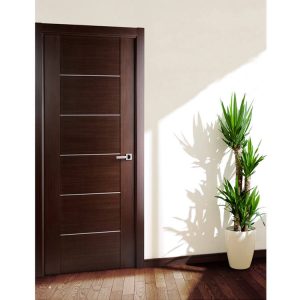
A hollow core door is an interior door with a lightweight honeycomb or corrugated cardboard core sandwiched between two thin skins, typically MDF or hardboard. The perimeter is reinforced with solid wood stiles and rails, and a solid lock block is embedded where hardware mounts. This construction makes the door light, inexpensive, and easy to install — but it also means less soundproofing, less durability, and no fire rating unless specifically engineered for it.
For interior applications where budget matters and acoustic performance is secondary — closets, pantries, laundry rooms, home offices, guest bedrooms — a hollow core door is a practical choice. If you need real sound isolation or impact resistance, you should be looking at solid core or solid wood instead.
Types and Panel Styles: 2-Panel vs 5-Panel
Panel configuration is purely aesthetic — it has no effect on the structural performance of the door. But it matters for visual continuity across a project, so it is worth understanding the options.
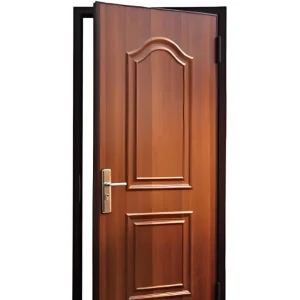
2-panel hollow core doors feature two rectangular recessed panels stacked vertically. This is the most traditional interior door style, commonly found in colonial, craftsman, and transitional homes. It reads as classic and understated. The larger uninterrupted panels also mean fewer edges where the skin can delaminate over time, though in practice the difference is minor.
5-panel hollow core doors break the face into five distinct sections — typically a large bottom panel, two narrower mid panels, and two small top panels. This style is often associated with modern farmhouse or contemporary designs. The additional panel divisions create more visual interest and can help a door blend with more ornate trim or casing.
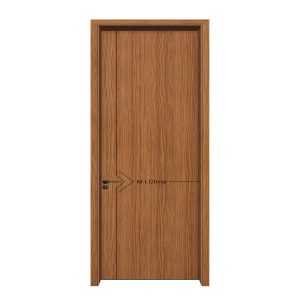
There are also flush hollow core doors (no panels at all — a smooth, flat face), which suit minimalist or commercial interiors, and 6-panel or other multi-panel configurations for specific architectural periods.
When choosing between panel styles, match the door to the existing interior doors in the building, or to the architectural period of the space. Mixing a 5-panel door into a hallway of 2-panel doors will stand out — and not in a good way.
Hollow Core Door Sizes: 36-Inch and 30×80 Explained
Interior door sizes in North America follow a standard convention: nominal width by nominal height in inches. The two most common interior sizes are:
- 30 x 80 hollow core door — the standard for bedrooms and bathrooms in older and newer construction alike.
- 36 inch hollow core door — typically used for larger openings, including doorways that need to accommodate wheelchair access or moving large furniture.
The actual slab dimensions are slightly smaller than the nominal size to allow for the door frame and clearance. A 30 x 80 slab, for example, measures approximately 29 1/2 inches wide by 79 1/4 inches tall. A 36 inch hollow core door slab measures about 35 1/2 inches by 79 1/4 inches. This 1/2-inch width and 3/4-inch height allowance is why you cannot simply order a “30-inch” door and expect it to fit a rough opening of the same size.
Other common interior sizes include 24-inch (for closets and utility rooms), 28-inch, and 32-inch widths, all at 80-inch heights. Double doors use two slabs of the same width, typically 30-inch or 32-inch each.
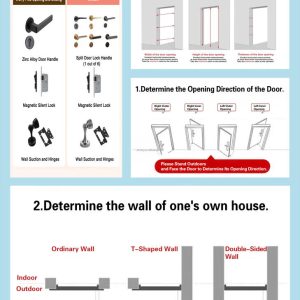
How to measure correctly: measure the width and height of the existing slab (not the frame) if you are replacing a door. If you are installing into a new frame, measure the rough opening and subtract approximately 1 inch in width and 3/4 inch in height to determine the slab size. Always verify the actual dimensions of the slab you are ordering — some manufacturers use metric conversions that round differently.
Hollow Core vs. Solid Core vs. Solid Wood: Comparison Table
| Attribute | Hollow Core | Solid Core | Solid Wood |
|---|---|---|---|
| Core material | Honeycomb cardboard or corrugated paper | Particleboard, MDF, or wood composite | Solid lumber (oak, maple, pine, etc.) |
| Weight (typical 30×80 slab) | 15–25 lbs | 50–80 lbs | 40–90+ lbs depending on species |
| Sound insulation | Minimal — roughly 20–25 dB reduction | Moderate — roughly 28–35 dB reduction | Moderate to good — roughly 25–35 dB depending on thickness and construction |
| Durability / impact resistance | Low — skins dent and can puncture | High — dense core resists impact | High — but susceptible to scratching and denting |
| Moisture resistance | Poor — cardboard core absorbs moisture if skin is breached | Moderate — MDF/particleboard swells when wet | Varies by species and finish |
| Fire rating | None unless specifically rated | Can achieve fire ratings with engineered cores | None unless thick and rated |
| Cost (material only) | Lowest | Moderate | Highest |
| Typical applications | Closets, pantries, guest rooms, offices | Bathrooms, bedrooms, corridors, commercial | High-end residential, architectural projects |
The weight difference is the most telling metric. A hollow core door feels light when you knock on it — it sounds hollow, because it is. Solid core doors feel substantial and deaden sound much more effectively. Solid wood doors add natural grain and character but cost significantly more and require more maintenance.
Key Buying Factors for Interior Hollow Core Doors
Weight and handling
A typical hollow core slab weighs between 15 and 25 pounds. This makes it easy for one person to carry and install, which is a major labor cost advantage. But the lightness also means the door has less thermal and acoustic mass. If you need a door that blocks sound between a home theater and a bedroom, a hollow core door will not do the job.
Soundproofing
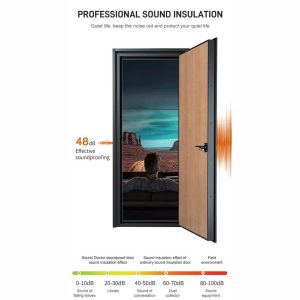
Hollow core doors offer minimal sound insulation. The cardboard core does little to absorb or block sound waves. In a typical residential setting, a hollow core door reduces sound transmission by roughly 20–25 dB. That is enough to muffle normal conversation but not enough to stop loud music, TV, or voices from carrying through.
If sound control matters, you have two options: choose a solid core door, or accept the hollow core door and add mass-loaded vinyl or acoustic caulk around the frame. Neither is a perfect solution — the door itself is the weakest link in the wall assembly.
Fire rating
Standard hollow core doors are not fire-rated. The cardboard core will burn through quickly. If your project requires fire-rated doors — for example, between a garage and living space, or in commercial buildings — you need doors with a specific fire-rating label, which typically use mineral cores or treated wood. Do not assume any hollow core door provides fire protection.
Moisture resistance
Hollow core doors are not suitable for wet areas. The cardboard core absorbs moisture if the skin is breached, causing the door to swell, warp, or delaminate. In bathrooms, use a solid core door with a factory-applied moisture-resistant primer, or specify a door with a composite skin designed for humid environments. Check the manufacturer’s warranty — many explicitly exclude moisture damage.
Installation and hardware
Hollow core doors have a solid wood block embedded at the lock location, typically 3 to 4 inches from the edge. This block is sized for standard bore holes and latch hardware. The top and bottom rails are also solid wood, so hinges can be attached securely. However, the thin skins and cardboard core mean you cannot hang heavy items on the door — a mirror, hook rack, or heavy coat hook requires a through-bolt with a backing plate, not just screws into the face.
Prehung vs. slab
Hollow core doors are available as slabs (door only) or prehung (door mounted in a frame with hinges pre-installed). Prehung units are significantly easier to install and are the standard for new construction. Slabs are used for replacements where the existing frame is in good condition. For bulk orders, prehung units reduce on-site labor but increase shipping volume and cost.
Price and Cost: Why Hollow Core Doors Are Affordable
Hollow core doors are the most economical interior door option available. Retail prices for a standard 30 x 80 hollow core slab typically range from $30 to $80, depending on finish, panel style, and brand. Prehung units add $30 to $60 for the frame and hinges. By comparison, solid core doors start around $80 to $150, and solid wood doors often run $150 to $400 or more.
When buyers search for hollow core doors cheap, they are usually comparing against these alternatives — and the price gap is real. But the material cost is only part of the equation. Consider the full installed cost:
- Labor: Lighter doors install faster. A contractor can hang a hollow core door in 30–45 minutes; a solid wood door with heavier hardware takes longer and may require two people.
- Hardware: Hollow core doors use standard hinges and locksets. No special heavy-duty hardware is required.
- Finishing: Factory-primed hollow core doors are ready to paint. Solid wood doors often require staining or multiple coats of finish to look good.
- Shipping: Lighter doors cost less to ship, especially for bulk orders.
What drives the price of a hollow core door up? Larger sizes (36-inch), prehung configurations, factory-primed or finished surfaces, specialty panel styles, and fire-rated cores all add cost. But even at the top end, a hollow core door remains the budget option.
Pros and Cons of Hollow Core Doors
Advantages:
- Lowest material cost of any door type
- Lightweight — easy to handle, install, and ship
- Wide availability in standard sizes and styles
- Paintable — factory-primed surfaces accept most finishes
- Suitable for most interior applications where sound is not critical
Disadvantages:
- Minimal sound insulation
- Low impact resistance — skins dent, scratch, and can puncture
- Poor moisture resistance — not for bathrooms or wet areas
- No fire rating unless specifically engineered
- Cannot support heavy mounted items without reinforcement
- Feels hollow and less premium when opened and closed
The decision framework is straightforward: choose a hollow core door when the application is a closet, pantry, laundry room, guest bedroom, or any interior space where budget matters and acoustic performance is secondary. Choose solid core or solid wood when sound control, durability, or a premium feel is required — typically for master bedrooms, bathrooms, offices, or high-traffic commercial corridors.
Additional Considerations for Interior Projects
Sourcing and bulk purchasing
For contractors, builders, or property managers purchasing hollow core doors interior in volume, the buying process differs from a single-door retail purchase. Key considerations include:
- MOQ (minimum order quantity): Many manufacturers require a minimum order for bulk pricing — often 50 to 100 units. Below that, you are paying retail or near-retail prices.
- Consistency: When ordering multiple doors, ensure they come from the same production batch. Slight variations in color or finish between batches are common, especially with painted doors.
- Lead time: Standard sizes are typically stocked, but custom sizes or panel configurations add 2–4 weeks to production. Factor this into your project schedule.
- Packaging: For bulk orders, verify how doors are packaged for shipping. Doors should be bundled flat with edge protectors and moisture barriers to prevent damage in transit.
Customization options
While hollow core doors are a commodity product, manufacturers offer customization that matters for larger projects:
- Size: Beyond standard 30 x 80 and 36-inch widths, custom widths and heights are available for non-standard openings. This is common in older buildings or custom homes.
- Panel configuration: Choose 2-panel, 5-panel, flush, or other styles to match the project’s architectural language.
- Skin material: Standard is MDF or hardboard, but some manufacturers offer composite skins with better moisture resistance or impact performance.
- Prehung vs. slab: For new construction, prehung units with adjustable frames can accommodate out-of-square rough openings, which is common in renovations.
Supplier evaluation for bulk orders
When evaluating a manufacturer for bulk hollow core door supply, look for the following:
- Production capability: Can the factory handle your order volume within your timeline?
- Quality control: Ask about pre-shipment inspection procedures. Are doors checked for flatness, skin adhesion, and dimensional accuracy?
- Documentation: For international orders, confirm the supplier can provide packing lists, proforma invoices, and customs documentation.
- Compliance: Verify that the doors meet relevant standards for your market — dimensional tolerances, fire codes where applicable, and formaldehyde emission limits for MDF skins.
As a manufacturer of interior and exterior doors, our approach to hollow core door supply follows these same standards. We produce hollow core doors with honeycomb cores and MDF or hardboard skins, available in 2-panel, 5-panel, flush, and custom configurations. Standard sizes include 30 x 80 and 36-inch widths, with custom sizing available for non-standard openings. We offer prehung units and slab-only options, and we can adjust profile structures and fittings to match local building codes in your target market.
For bulk orders, we provide pre-shipment inspection reports covering dimensional accuracy and surface quality, and we handle FCL and LCL shipping directly from our factory. If you are specifying hollow core doors for an interior project and need consistent quality at a competitive price, send us your project details and we will work through the specifications with you.