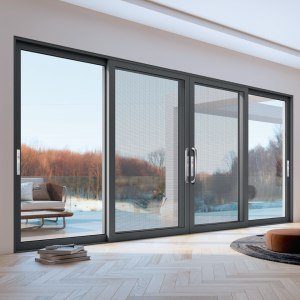
Replacing a patio door is an opportunity to change the operating style as well as the material or appearance. A hinged patio-door replacement can be a direct replacement, or it can be part of a larger change from sliding, multi-sliding or bifold systems.
When should a patio door be replaced?
Replacement may make sense when the frame is damaged, the door no longer operates correctly, water management is failing, glazing is damaged or the existing system does not meet the project's performance requirements.
If only a panel is damaged and the frame remains suitable, a replacement panel may be more economical.
Hinged replacement versus sliding
A hinged system requires swing clearance. A sliding system uses a track and generally preserves interior floor space.
When comparing replacement options, consider furniture, traffic flow, adjacent walls and the required clear opening.
Vinyl replacement doors
Vinyl patio-door replacement can provide a low-maintenance frame option. Confirm whether the new system is designed for the existing opening or requires a new frame and installation method.
Do not assume that a new vinyl panel can be installed into an unrelated frame.
Multi-slide and bifold replacement
Changing a conventional patio door to a multi-slide or bifold system can substantially change the opening and structural requirements. The project may require new framing, track support and drainage details.
This should be treated as a door-system redesign rather than a simple panel replacement.
Measure the existing opening
Document:
- Overall opening width
- Opening height
- Existing frame dimensions
- Wall thickness
- Sill condition
- Number of panels
- Panel movement
- Swing direction if hinged
- Glass specification
Photographs of the interior, exterior and sill are useful when requesting a quotation.
Replacement panel vs complete unit
A panel-only replacement is appropriate only when the existing frame, track and hardware are compatible. A complete replacement is usually more suitable when the frame or drainage system is damaged.
Final takeaway
Choose the replacement path after inspecting the existing system. The cheapest panel is not the best solution if the frame, track or opening is the real source of the problem.
A practical replacement decision tree
Start by identifying the failed component.
If the glass is damaged but the panel and frame are sound, investigate glass replacement. If the panel is damaged but the frame and track remain suitable, investigate panel replacement. If the frame, sill or drainage is damaged, consider a complete unit replacement.
This approach avoids replacing components that are still serviceable.
Changing from sliding to hinged
A conversion to hinged patio doors requires enough swing clearance and may require a different frame opening. The threshold and sill also need to be redesigned for the new system.
For large openings, structural modifications should be reviewed before the replacement product is selected.
Changing to bifold or multi-slide
Bifold and multi-slide systems can create larger openings, but their track, panel weight and structural requirements differ from a conventional slider.
Treat the project as a new door-system design when the operating concept changes.
Replacement panels
Panel replacement is attractive when the frame is in good condition. Confirm roller type, panel dimensions, glass thickness and frame compatibility.
A replacement panel from a different system should not be assumed to fit simply because its overall dimensions appear similar.
Final takeaway
The most economical patio-door replacement is the one that solves the actual failure. Inspect the glass, panel, hardware, frame and sill before choosing the replacement scope.
Budgeting the replacement
A replacement budget should separate product cost from demolition, structural work, installation, trim and disposal. A change in operating style can create additional construction costs.
For B2B projects, compare quotations on the same scope so a lower headline price does not hide missing components.
Approval process
For custom or large patio doors, approve drawings before production. Confirm dimensions, opening direction, panel movement, glass, finish and hardware.
Final buyer advice
Use a component-by-component inspection to decide the replacement scope. This keeps the project focused and reduces unnecessary replacement.