Content Menu
● 1. Why a Direct Factory Matters When Sourcing Good Doors for Homes
● 2. What Types of Doors Count as “Good” for Residential Projects?
● 3. OEM, ODM, and Customization: Tailoring Good Doors for Homes to Your Market
● 4. How We Keep Pricing Competitive Without Compromising Quality on Good Doors for Homes
● 5. Logistics and Delivery: Getting Good Doors for Homes from Our Factory to Your Site
● 6. Quality Assurance and After-Sales Support for B2B Door Buyers
● 7. Case Scenarios: How We’ve Supplied Good Doors for Homes to Global Projects
9 min read
Every month, a contractor somewhere opens a container only to find that the door frames have warped in transit, or the finish doesn’t match the sample they approved six weeks prior. That is the risk of sourcing “good doors for homes” from a trading company that has never touched a production line.
We are Jusen Door and Windows Manufacturing Co., Ltd. We have run our factory floor for over a decade, shipping solid wood doors, thermal-break aluminum systems, and custom villa fenestration to buyers across the Middle East, Europe, and Southeast Asia. This guide is not a list of product features. It is a practical breakdown of what B2B buyers should demand from a door supplier—and how we deliver on those demands daily.
—
Why a Direct Factory Matters When Sourcing Good Doors for Homes
When you buy from a middleman, you pay for their margin, their warehouse, and their communication overhead. You also inherit a critical blind spot: the trading company does not control the production schedule, the material quality, or the inspection process. If something goes wrong on the line, they are just as helpless as you are.
Our model eliminates that gap. We are the manufacturer. When you place an order for good doors for homes with us, you are speaking directly to the people who operate the CNC routers, the aluminum extrusion lines, and the assembly benches. This direct line does two things for you.
First, it strips out the markup. Our pricing reflects the cost of raw aluminum, wood veneers, hardware, and labor—not the cost of three intermediaries taking a cut. Second, it makes problem-solving faster. If a buyer in a humid climate needs a different sealant on a casement door, that change is communicated directly to the production supervisor, not filtered through a sales rep who has never seen the factory.
We also treat pre-shipment inspection as a non-negotiable step, not a checkbox. Every batch of residential doors we ship undergoes air-tightness, water-tightness, and wind resistance testing before it leaves our facility. This is not a random sample. It is a batch protocol. If a door fails the water-tightness test, it does not get loaded onto the truck.
> If you are evaluating suppliers, Contact Our Team to discuss your project scope.
—
What Types of Doors Count as “Good” for Residential Projects?
“Good” is subjective until you define the performance criteria. For a residential project, we break that down into three categories: entry performance, interior flow, and energy efficiency. Each requires a different material strategy.
1. Entrance and Entry Doors – First Impressions with Structural Integrity
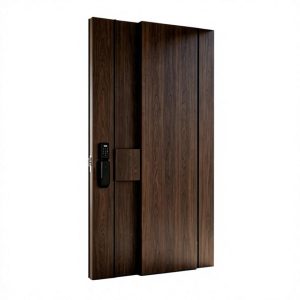
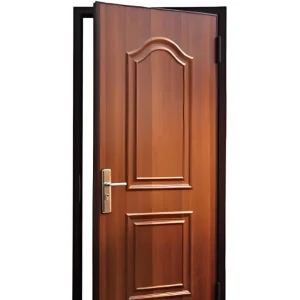
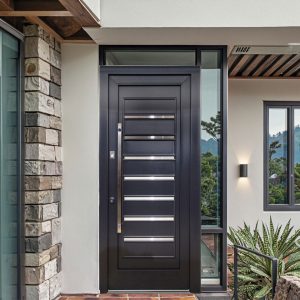
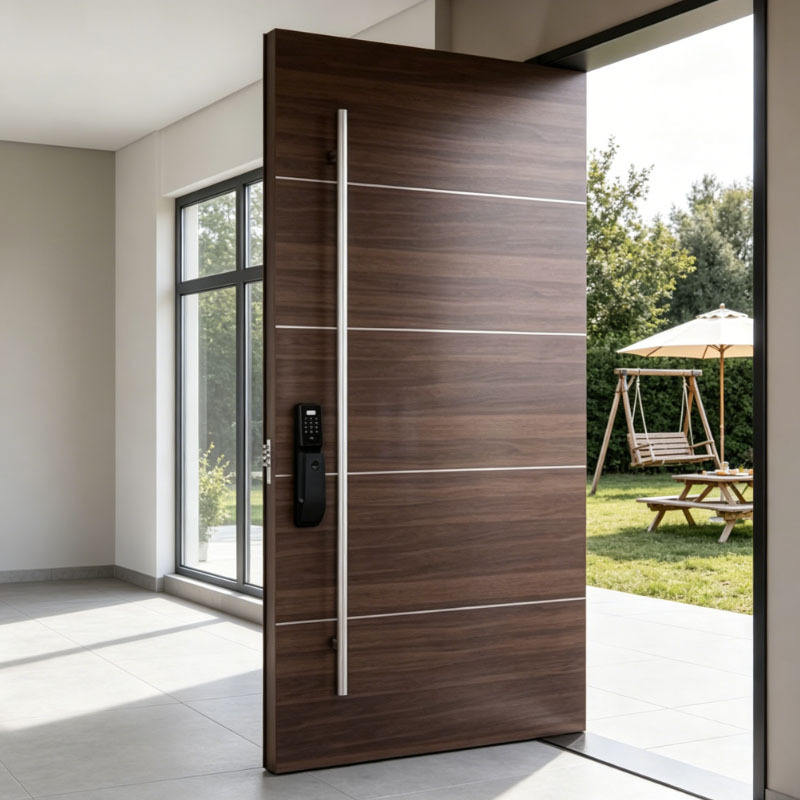
The entrance door is the first thing a homeowner touches. It needs to feel solid, look premium, and resist forced entry. For this, we manufacture both solid wood doors and aluminum alloy entrance doors.
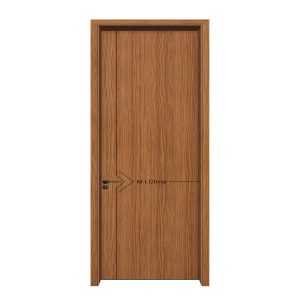
Solid wood doors offer a classic aesthetic and natural insulation properties. Aluminum alloy entrance doors, on the other hand, provide superior structural rigidity and are virtually maintenance-free. We customize both options on size, color, glass type, and hardware accessories—from multi-point locking systems to concealed hinges.
2. Interior Doors, Sliding Doors, and Casement Options
Modern home layouts prioritize natural light and flexible space. This is where casement doors and sliding doors shine. A casement door opens fully, allowing for maximum ventilation. A sliding door saves floor space and creates a seamless transition between indoor and outdoor living areas.
For these, we use thermal-break aluminum profiles. The thermal break—a polyamide strip between the interior and exterior aluminum—prevents heat transfer. This is not just a comfort feature; it is a regulatory requirement in many European markets. Our profiles are engineered to meet those standards.
3. Custom Villa Doors, Windows, and Sunrooms
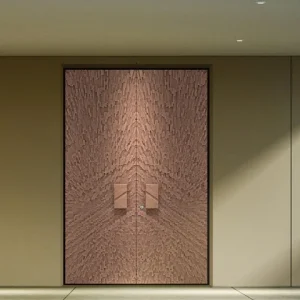
For high-end residential projects, standard catalogs are not enough. Architects and developers come to us with custom designs for villa doors and windows, sunrooms, and specialty system windows. We handle the engineering, the extrusion, and the fabrication.
Our factory supports full customization on size, color, glass, and hardware. If the architect specifies a bronze-anodized finish with triple glazing and invisible hinges, we can produce it. This capability is what separates a factory from an assembly shop.
—
OEM, ODM, and Customization: Tailoring Good Doors for Homes to Your Market
A B2B buyer is not buying a door. They are buying a product that must sell in their local market, comply with local regulations, and fit the local installation practices. This is why our partnership models are flexible.
OEM and Private Label for Brand Owners
If you have an established brand, we become your manufacturing arm. You provide the specifications, and we produce the doors to your exact standards. This includes your branding on the product, the packaging, and the accompanying documentation. We have extensive experience in foreign trade, so we know how to handle the paperwork that your brand requires.
ODM for New Product Development
If you see a gap in your market—say, a demand for a slim-frame sliding door that does not yet exist—our engineering team can help you develop it. We work with you on the profile design, the hardware selection, and the performance testing. This is a true partnership, not a transaction.
Adjusting to Local Building Codes and Standards
One of the most common mistakes we see is buyers importing doors that do not meet their local building codes. The profile structure, the glazing thickness, and the fittings all need to align with regional requirements.
Our profile structure is adjustable. We can modify the frame depth, the gasket type, and the hardware to match the specific building codes of your target market. This is not an afterthought; it is a standard part of our engineering process. We ask about your local codes before we quote, not after we ship.
—
How We Keep Pricing Competitive Without Compromising Quality on Good Doors for Homes
The lowest price is rarely the lowest cost. A cheap door that fails inspection, arrives damaged, or requires rework costs you more than a quality door with a fair price. That is the trade-off we always discuss with clients.
Our factory-direct model means you are not paying for a middleman’s margin. But that is only half the story. The other half is scale. We handle construction project bulk supply, which means we purchase raw materials in large volumes. This lowers our input costs, and we pass that savings on to you.
We also provide transparent quotations. When we send you a proforma invoice, it includes a clear breakdown of the product cost, the packaging, and the freight. There are no hidden fees. This transparency is part of our foreign trade experience—we know that surprises on an invoice kill trust.
Quality is a cost-saver, not a cost-add. Fewer defects mean fewer returns, fewer delays, and fewer headaches on your construction site. A door that passes our air-tightness and water-tightness tests is a door that will not generate callbacks from your end client.
—
Logistics and Delivery: Getting Good Doors for Homes from Our Factory to Your Site
A beautiful door that arrives a month late is a problem, not a product. Logistics is where many good factories fail. We have structured our shipping processes to avoid that failure.
FCL and LCL Shipping Explained for Importers
We support both Full Container Load (FCL) and Less than Container Load (LCL) shipments. FCL is ideal for large orders—typically a villa development or a multi-unit residential complex. LCL is for smaller orders, allowing you to test the market or fulfill a smaller project without paying for a full container.
Documentation and Customs Support
Importing doors from China involves more than just paying for goods. You need a packing list, a proforma invoice, and full customs documents. We provide all of this. Our export team has handled shipments to dozens of countries, so we know the specific documentation requirements for different customs authorities.
Aligning Production with Your Project Timeline
We understand that construction schedules are not flexible. When you give us a project deadline, we work backward from that date to plan our production schedule. We communicate lead times clearly at the quotation stage, and we update you if there are any changes. Direct delivery from our China factory means no third-party warehousing delays—your goods ship straight from our production line.
—
Quality Assurance and After-Sales Support for B2B Door Buyers
The sale does not end at the dock. Our engineering team remains available after delivery to support installation guidance, troubleshoot issues, and adjust fittings if needed. This is particularly important for complex products like system windows and sunrooms, where installation precision affects performance.
Our pre-shipment inspection is rigorous, but it also informs our after-sales support. If we see a recurring issue in testing—say, a specific gasket that fails under pressure—we fix it in the design, not just in the test report. This continuous improvement loop is what makes our doors genuinely good for homes, not just good on paper.
We also recognize that a wooden door is not always the right choice. For high-humidity coastal areas, a thermal-break aluminum door will outperform a solid wood door in terms of dimensional stability. We will tell you this even if it means a smaller order for our wood door line. An honest recommendation builds a longer partnership than a silent upsell.
—
Case Scenarios: How We’ve Supplied Good Doors for Homes to Global Projects
We do not publish client names without permission, but the types of projects we serve are consistent across markets.
Villa and High-End Residential Projects
A villa developer in the Middle East needed custom bronze-finished aluminum entrance doors and matching system windows. We handled the OEM production, the custom color matching, and the FCL shipment. The developer received a product that matched the architectural renderings exactly.
Large-Scale Construction and Bulk Supply
A construction contractor in Southeast Asia ordered thermal-break aluminum casement doors for a 200-unit residential complex. We adjusted the profile structure to meet their local wind-load requirements and delivered in phased shipments aligned with their construction schedule.
Importers and Distributors
An importer in Europe started with an LCL shipment of solid wood doors to test the market. We provided full customs documentation and flexible packaging options. After the successful initial order, they scaled up to FCL shipments on a regular basis.
—
Frequently Asked Questions About Good Doors for Homes
What is the MOQ for bulk door orders?
We accommodate both FCL and LCL orders. The MOQ depends on the product type and the complexity of the customization. For standard solid wood doors, an LCL order can be as small as a few dozen units. For custom villa windows, the MOQ is typically higher due to the tooling involved. Contact us with your project details, and we will give you a specific number.
Can you customize door sizes and hardware?
Yes. Full customization on size, color, glass, and hardware accessories is standard for us. We do not have a “limited catalog” approach. If you need a door that is 1.2 meters wide instead of the standard 1.0 meters, we adjust the profile and the hinge placement accordingly.
How do you ensure quality before shipping?
Every batch undergoes air-tightness, water-tightness, and wind resistance testing before leaving our factory. We do this in-house, not at a third-party lab. This allows us to identify issues immediately and correct them before they become your problem.
Do you support OEM or private labeling?
Yes, we offer OEM, ODM, and private label services. We can produce doors under your brand name, including the packaging and documentation. We also offer ODM services if you want to develop a new product line.
How do you handle shipping and customs documentation?
We provide packing lists, proforma invoices, and full customs documents. We support both FCL and LCL shipments direct from our China factory. Our export team has the experience to ensure your documentation is accurate and complete.
—
Ready to source good doors for homes for your next project? Our team is ready to discuss your requirements, provide pricing, and share our capabilities.
—
References
- Jusen Door and Windows – Product Capabilities. https://doorwoodendoors.com/
- Jusen Door and Windows – Contact and Inquiry Portal. https://doorwoodendoors.com/contact-us/
- American Architectural Manufacturers Association (AAMA) – Performance Testing Standards for Windows and Doors. https://www.aamanet.org/
- European Committee for Standardization (CEN) – Thermal Performance of Windows and Doors (EN ISO 10077). https://www.cencenelec.eu/