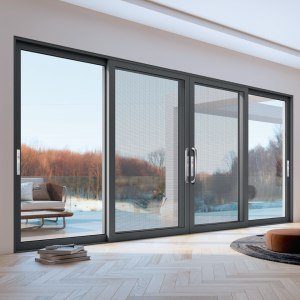
Glass room doors are useful when a space needs separation without completely cutting off daylight or visual connection. They are common in offices, meeting rooms, home studies, hospitality interiors and modern residential layouts.
The main design decision: visibility versus privacy
Clear glass keeps a room visually open. Frosted, etched or patterned glass reduces direct visibility while retaining some daylight. A partial-glass door can provide more privacy and a stronger visual boundary than a full-glass design.
Think about the room's function first. A conference room may need privacy during meetings, while a home office may benefit from daylight and partial visibility.
Door configurations
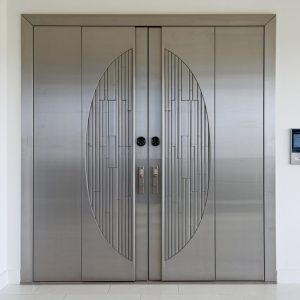
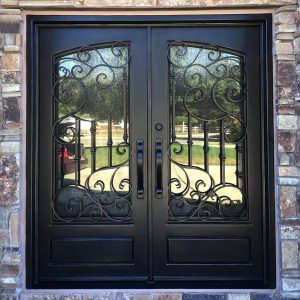
Glass room doors can be hinged, sliding, single, double, framed or frameless. Hinged systems are straightforward for conventional openings. Sliding doors can be useful where swing clearance is limited. Double doors can create a wider passage and stronger visual symmetry.
Frame choices
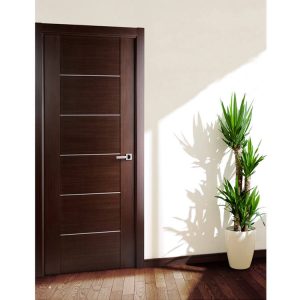
Aluminum frames are common in contemporary commercial interiors because they can provide slim profiles and a range of finishes. Wood frames create a warmer appearance. Frameless systems reduce visible framing but require compatible hinges, seals and glass hardware.
Glass choices
Clear glass is the most open option. Frosted or textured glass can provide privacy. Laminated or other specialty glazing may be selected where specific performance is required. If safety glazing is required for the location, specify the compliant product rather than choosing solely by appearance.
Planning the opening
Measure the finished opening, wall thickness and desired clear passage. For a sliding system, check the available wall length for the panel and hardware. For double doors, verify the full opening width and swing area.
What to include in a project specification
List the door size, operation, frame material, finish, glass type, privacy level, hardware, threshold if applicable and installation condition. For commercial interiors, coordinate the door with access control, partitions and adjacent glazing.
FAQ
Are glass room doors good for offices? Yes. They can improve daylight and visual connection, with privacy glazing available where needed.
Can a glass room door be private? Yes. Frosted, etched and textured options can reduce visibility.
Can room glass doors be customized? Many systems support custom dimensions, finishes and glass configurations.
Sourcing note
For B2B projects, provide the partition and opening details together with the door specification. Jusen can review custom aluminum-frame configurations for suitable commercial interiors.