Key Takeaways: Choosing the Right Garage Door Window Glass
The best glass for a garage door depends on your priorities. If security is the main concern, choose laminated glass. For energy efficiency, insulated glass units (IGUs) with low-E coatings perform best. Tempered glass is the baseline safety standard for most building codes. Acrylic is the budget option but scratches easily.
Before selecting, check your local building code. Most jurisdictions require glazing within 18 inches of the floor to be safety glass—either tempered or laminated. This is not optional; it is a legal requirement in most areas.
Types of Garage Door Window Glass Explained
Tempered Glass
Tempered glass is heat-treated to be four to five times stronger than standard annealed glass. When it breaks, it crumbles into small, rounded pieces rather than sharp shards, reducing injury risk. This is why building codes mandate it for most garage door applications.
Strengths: Safety compliance, moderate cost, good clarity.
Weaknesses: Low insulation value (single-pane), no sound reduction, breaks under sustained point pressure.
Tempered glass is the default choice for standard garage door windows. It meets safety requirements without adding significant cost to the door package.
Laminated Glass
Laminated glass consists of two glass layers bonded together with a polyvinyl butyral (PVB) interlayer. If the glass breaks, the interlayer holds the fragments in place, creating a web-like crack pattern rather than a hole.
Strengths: Superior security (difficult to penetrate), sound dampening, UV protection (blocks about 99% of UV rays), meets safety codes.
Weaknesses: Higher cost, heavier weight, can delaminate at edges if improperly sealed.
For garage doors facing a street or alley, laminated glass is the pragmatic security choice. A determined intruder can break tempered glass with a hammer; laminated glass requires sustained effort and noise.
Insulated Glass Units (IGUs)
IGUs combine two or more glass panes separated by a spacer and sealed to create an air gap. The gap is often filled with argon or krypton gas for better thermal performance. Low-E (low-emissivity) coatings can be applied to reflect heat.
Strengths: Significant energy efficiency improvement, reduced condensation, better sound insulation.
Weaknesses: Premium cost, heavier frames required, potential for seal failure and fogging over time.
An IGU with low-E glass can reduce heat transfer through the door by up to 50% compared to single-pane glass. However, remember that the glass area is typically only 10-15% of the total door surface. The door panels themselves do most of the insulation work.
Acrylic and Polycarbonate
Acrylic (plexiglass) and polycarbonate are transparent plastics used in some garage door windows, especially in full-view aluminum doors.
Strengths: Lightweight, impact-resistant (polycarbonate is virtually unbreakable), lower cost than glass.
Weaknesses: Scratches easily, yellows with UV exposure over time, lower clarity, not considered safety glazing by most codes.
Acrylic is common in commercial and industrial doors where weight reduction matters. For residential applications, glass remains the preferred material due to clarity and longevity.
Decorative and Obscured Glass
Decorative options include frosted, etched, seeded, or patterned glass. These provide privacy while allowing light transmission. Frosted glass is created by acid etching or sandblasting one surface.
Strengths: Privacy, aesthetic appeal, light diffusion.
Weaknesses: Reduced visibility, higher cost than clear glass, patterns can collect dust.
For garages facing the street, frosted or obscured glass prevents passersby from seeing stored items while still letting in natural light.
Sliding Glass Garage Doors: A Modern Alternative
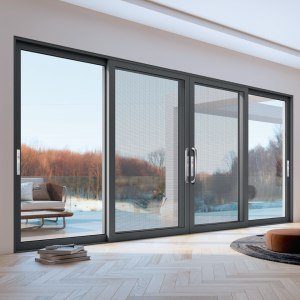
Sliding glass garage doors differ from traditional overhead doors. Instead of segmented panels that roll up on tracks, these doors use large glass panels that slide horizontally along a track system. They are often used for patios, restaurants, or homes where the garage doubles as a living space.
Benefits:
- Unobstructed views and natural light
- Seamless indoor-outdoor transition
- No overhead track hardware visible
- Operates like a large sliding glass door
Considerations:
- Higher cost per square foot than standard garage doors
- Requires more side clearance for panels to stack
- Not suitable for every opening configuration
- Glass panels are typically IGUs for thermal performance
Sliding glass garage doors use the same glass types discussed above, with laminated or tempered glass required depending on the panel size and local codes. For full-view doors, expect to specify either 5/16″ or ¼” tempered glass as standard, with laminated available for security.
Replacement Windows for Garage Doors: What to Know
Replacing garage door window glass is a common maintenance task. The process depends on the door’s design:
Insert-style windows: These fit into pre-cut openings in the door panels. They are held in place by a frame, gasket, or glazing beads. Replacement involves removing the old glass and frame, cleaning the opening, and installing the new unit.
Full-view doors: These have large glass panels that make up most of the door surface. Replacement requires removing the entire panel from the door frame, which is more labor-intensive.
Key measurement considerations:
- Measure the opening at multiple points (top, middle, bottom) as frames can be out of square
- Account for the gasket or seal thickness
- Order glass slightly smaller than the opening to allow for thermal expansion
Common pitfalls:
- Ordering glass too large (it will crack during installation)
- Using the wrong gasket material (neoprene is standard; rubber degrades faster)
- Not cleaning the frame properly before installation, causing seal failure
If your garage door is still under warranty, check with the manufacturer before replacing glass yourself. Some warranties are voided by non-approved modifications.
Comparison Table: Glass Options at a Glance
| Property | Tempered | Laminated | Insulated (IGU) | Acrylic |
|---|---|---|---|---|
| Safety rating | Yes (meets code) | Yes (meets code) | Depends on outer panes | No (not safety glazing) |
| Security | Moderate | High | Moderate | Low (polycarbonate: high) |
| Insulation (R-value approx.) | R-1 (single pane) | R-1 (single pane) | R-3 to R-4 | R-1 |
| Sound reduction | Low | Moderate | Good | Low |
| UV protection | Minimal | ~99% | Depends on coating | Minimal |
| Relative cost | $ | $$ | $$$ | $ |
| Weight | Moderate | Heavy | Heaviest | Light |
| Clarity | Excellent | Excellent | Excellent | Good (can yellow) |
| Condensation risk | High | High | Low (if sealed properly) | High |
| Best use case | Standard code compliance | Security-focused | Climate control | Budget commercial |
How to Choose the Right Glass for Your Garage Door
Climate and Energy Efficiency
In cold climates, the thermal performance of the glass matters more. An IGU with low-E glass and argon fill will reduce heat loss through the window area. However, the frame and door panels are the dominant thermal factors. If your door is uninsulated, upgrading the glass alone will yield minimal energy savings.
In hot climates, look for glass with a low solar heat gain coefficient (SHGC). Low-E coatings can be spectrally selective, blocking solar heat while allowing visible light through.
U-factor and R-value: These measure heat transfer through the glass. Lower U-factor means better insulation. R-value is the inverse (higher is better). A typical single-pane glass has a U-factor around 1.0; a well-sealed IGU with low-E and argon achieves around 0.25-0.30.
Security Requirements
Assess the risk level of your location. A garage attached to a home in a low-crime area may not justify the added cost of laminated glass. A detached garage facing a public street is a more attractive target.
Laminated glass adds a meaningful security layer. It takes multiple blows to penetrate and creates significant noise when attacked. For high-value contents or workshops with expensive tools, the cost premium is justified.
Building Codes and Safety Standards
Building codes govern safety glazing requirements. The International Residential Code (IRC) and International Building Code (IBC) require safety glazing in hazardous locations, which includes garage doors and adjacent windows.
Key standards:
- ANSI Z97.1 and CPSC 16 CFR 1201: These define impact safety standards for glazing. Tempered and laminated glass typically meet these standards.
- Local amendments: Some jurisdictions have stricter requirements. Always verify with your local building department.
The garage door manufacturer must comply with these standards at the factory. If you are replacing glass yourself, you are responsible for meeting the same requirements.
Aesthetics and Privacy
Consider what the garage is used for. A home gym or workshop benefits from natural light. A storage space may warrant frosted or obscured glass for privacy.
Full-view aluminum doors with glass panels are increasingly popular for modern home designs. These doors use the same glazing options but on a larger scale, with IGUs recommended for thermal performance.
Warranty Considerations
Glass type can affect your garage door warranty. Some manufacturers void the warranty if non-approved glass is installed. Check your warranty documentation before making changes.
Additional Considerations for Garage Doors and Windows
Condensation and Fogging
Condensation forms when warm, humid air contacts cold glass. Single-pane glass fogs up easily in cooler weather. IGUs reduce condensation on the interior surface but can develop internal fogging if the seal fails.
Prevention tips:
- Choose IGUs with quality spacer systems (warm-edge spacers reduce condensation at the edges)
- Ensure proper ventilation in the garage to reduce humidity
- Look for IGUs with desiccant-filled spacers that absorb residual moisture
Repair reality: Once an IGU is fogged, the seal has failed. The unit cannot be repaired; it must be replaced. This typically occurs after 10-15 years, depending on seal quality and climate exposure.
Installation Considerations
Garage door windows are installed during door manufacturing or as aftermarket retrofits. Factory installation is generally superior because the door is built around the window. Retrofit kits are available but may not match the door’s structural integrity.
Weight matters: Adding glass increases door weight. The springs counterbalance the door weight; adding heavy glass without adjusting springs will cause premature wear or failure. If you are adding windows to an existing door, the spring tension must be adjusted.
Cost Factors
The cost of garage door window glass varies with several factors:
- Glass type: Tempered is the baseline; laminated adds 30-50%; IGUs add 50-100% over single-pane tempered
- Size: Larger panes cost more per square foot due to handling and shipping
- Custom shapes: Arched, trapezoidal, or custom-cut glass requires template work and increases cost
- Quantity: Bulk orders reduce per-unit cost, which matters for contractors and multi-unit projects
- Frame material: Aluminum frames are standard; thermal-break frames add cost but improve insulation
For B2B buyers, the glass cost is typically 10-20% of the total door cost for standard configurations. Full-view doors can push this to 40-50%.
Energy Efficiency Beyond the Glass
The entire door assembly determines energy performance. An IGU in an uninsulated door still performs poorly. For maximum efficiency:
- Choose insulated door panels (polyurethane foam core is standard for good performance)
- Ensure proper weatherstripping at all joints
- Consider the door’s overall U-factor, not just the glass
Maintenance Requirements
Glass type affects maintenance frequency:
- Tempered and laminated: Clean with standard glass cleaner; inspect seals annually
- IGUs: Check for seal failure (fogging); clean both surfaces periodically
- Acrylic: Requires special cleaners (ammonia-free); scratches cannot be polished out easily
- Frosted/obscured: Patterned surfaces collect dust; clean with soft cloth and mild soap
Supplier Evaluation Criteria for B2B Buyers
When sourcing garage doors with windows for a construction project or renovation, evaluate suppliers on these criteria:
Compliance documentation: The supplier should provide test reports showing compliance with ANSI Z97.1, CPSC standards, and any relevant local codes. Ask for these before placing an order.
Glass specification flexibility: A good supplier offers options—tempered, laminated, IGU—and can explain the trade-offs for your specific application.
Quality control: Pre-shipment inspection should include air-tightness, water-tightness, and wind resistance testing. Ask how these are conducted and whether you can receive test reports.
Customization capability: Projects often require non-standard sizes, colors, or glass configurations. Verify the supplier can handle custom orders without excessive lead times.
Logistics experience: International buyers need suppliers who understand export documentation, packing for ocean freight, and delivery terms. Ask about their experience with your destination market.
Warranty and after-sales support: Clarify what is covered and for how long. A manufacturer that stands behind its products will offer a reasonable warranty on both the door and the glass.
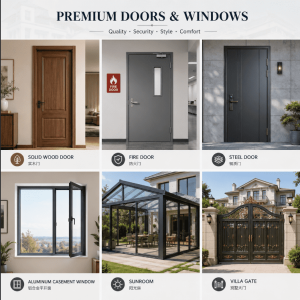
As a manufacturer, this is how we approach these requirements. Jusen Door and Windows Manufacturing Co., Ltd. produces thermal-break aluminum doors and windows, system windows, and custom villa doors and windows from our factory in China. We supply directly to buyers without middleman markup, which matters when glass specifications vary by project.
Our pre-shipment inspection includes air-tightness, water-tightness, and wind resistance testing. Every order comes with packing lists, proforma invoices, and full customs documentation. We handle both FCL and LCL shipments. For projects where local building codes differ from standard specifications, our profile structure and fittings can be adjusted to match your market’s requirements.
We offer OEM and ODM services, including custom sizes, colors, glass types, and hardware accessories. If your project requires specific glazing—whether tempered, laminated, or insulated—we can build to your specification. Private label options are available for distributors and contractors.
If you are evaluating suppliers for a project that needs garage door window glass, send us your specifications. We can provide a quote based on your exact requirements rather than a generic catalog price.
Frequently Asked Questions
What is the most energy-efficient glass for garage doors?
Insulated glass units (IGUs) with low-E coatings and argon gas fill offer the best thermal performance. A high-quality IGU achieves a U-factor of approximately 0.25-0.30, compared to 1.0 for single-pane glass. For maximum efficiency, combine IGUs with insulated door panels and proper weatherstripping.
How much does it cost to replace garage door window glass?
Cost varies with glass type, size, and quantity. Tempered glass is the most economical, with laminated adding roughly 30-50% and IGUs adding 50-100% or more. Custom shapes and larger panes increase cost. For accurate pricing, request quotes from suppliers with your specific dimensions.
Can I install glass in an existing garage door?
Yes, retrofit window kits are available for most garage door styles. However, adding glass increases door weight, requiring spring adjustment to maintain proper balance. Check your door’s warranty before modifying it, as some manufacturers void coverage for non-approved changes.
How do I clean garage door window glass?
Use standard glass cleaner and a soft cloth for tempered, laminated, and IGU glass. Avoid abrasive pads that scratch the surface. For acrylic, use ammonia-free cleaners specifically designed for plastics. Clean frosted or patterned glass with a soft brush to remove dust from textured surfaces.
What is the difference between tempered and laminated glass?
Tempered glass is heat-treated for strength and breaks into small, rounded pieces. Laminated glass bonds two layers with a plastic interlayer, holding fragments in place when broken. Laminated glass provides better security and sound insulation but costs more. Both meet safety glazing requirements.
How does glass choice affect garage door security?
Laminated glass is the most secure option—it resists impact and requires sustained effort to penetrate. Tempered glass is breakable with a hammer but is safer than standard glass. Acrylic and polycarbonate offer impact resistance but are not considered safety glazing by most building codes.
What causes condensation between garage door window panes?
Condensation or fogging between panes indicates a failed seal in an insulated glass unit. Moisture has entered the air gap, and the unit cannot be repaired. The glass must be replaced. Quality IGUs with proper spacer systems last 10-15 years or more before seal failure occurs.