Key Takeaways: Frosted Interior Doors at a Glance
A frosted interior door uses translucent glass to balance two competing needs: privacy and natural light. Unlike clear glass, frosted glass diffuses light, blurring shapes and outlines so you cannot clearly see through the door. However, it does not block light entirely—a well-placed frosted door can brighten a hallway or interior room without sacrificing seclusion.
The decision process comes down to four variables:
- Glass treatment — acid-etched, sandblasted, or film.
- Frame material — wood, aluminum, or composite.
- Door configuration — prehung, sliding, or pivot.
- Privacy level required — bathroom doors need more obscuring than a home office.
This guide breaks down each variable, compares the trade-offs, and gives you a practical framework for evaluating suppliers. If you already know your project scope, skip to the comparison table or the manufacturer selection criteria near the end.
Types of Frosted Interior Doors: A Detailed Breakdown
Frosted interior doors are not a single product category. They are defined by how the door is hung and how the glass is treated.
Prehung Frosted Doors
A prehung door arrives with the slab, frame, hinges, and often the lockset already assembled. The unit is designed to be slipped into a rough opening and shimmed into place. For a buyer sourcing multiple units for a renovation or new construction project, prehung units reduce on-site labor and installation errors.
The frosted glass is typically factory-installed, which means the seal between glass and frame is consistent. Field-installed glass—where a contractor fits the pane on site—is more prone to air leaks and condensation over time.
Best fit for: New construction, full renovations, or projects where standard rough openings (typically 32″ or 36″ wide, 80″ or 96″ tall) are acceptable.
Sliding and Barn-Style Frosted Doors
Sliding doors mount on a track above the doorway rather than swinging on hinges. They save floor space because no arc is required for the door to open. Frosted glass sliding doors are common between living areas and home offices, or for closets where a swinging door would interfere with furniture placement.
The trade-off is acoustic and thermal sealing. A sliding door cannot compress against a jamb the way a hinged door does, so it offers less sound insulation and more air leakage. For privacy, frosted sliding doors work well visually but do not provide the same level of sound isolation.
Best fit for: Space-constrained layouts, contemporary interiors, and applications where the door will be open most of the time.
Bathroom-Specific Frosted Doors
Bathroom doors require the highest level of visual privacy. Not all frosted glass is equal in this regard. Light sandblasting or a light frost film may obscure a face but still reveal the silhouette of a person standing close to the glass. For bathroom applications, specify a heavier etch or a laminated privacy glass with a frosted interlayer.
Moisture resistance is another factor. In a steamy bathroom, the glass itself is fine, but the frame material matters. Solid wood frames can warp over time with repeated humidity exposure. Aluminum or moisture-resistant engineered wood frames are more stable in these conditions.
Ventilation is often overlooked. A solid frosted door with no louver or undercut can trap humidity. Many building codes require a minimum gap under the door for air circulation, or a vent in the door itself. Check your local code before specifying.
Best fit for: Bathrooms, powder rooms, and any high-humidity space.
Pivot and French-Style Frosted Doors
Pivot doors rotate on a central hinge mechanism rather than standard side hinges. They allow for wider door slabs and a more dramatic aesthetic. Frosted glass pivot doors are a design statement in modern offices and high-end residences.
French doors with frosted glass are essentially double doors with multiple glass panes. They are used where a wide opening is needed, such as between a dining room and a study. The multiple muntins (the vertical dividers between panes) break up the glass area, which can reduce the amount of light transmitted compared to a single large pane.
Best fit for: Wide openings, double-door configurations, and projects where the door is a visual centerpiece.
Frosted Interior Doors vs. Alternatives: A Comparison Table
The table below compares frosted glass doors against clear glass doors, solid doors, and doors with applied frosted film. This is a decision-making tool—use it to filter options before you start requesting quotes.
| Feature | Frosted Glass Door | Clear Glass Door | Solid Door (Wood/MDF) | Frosted Film on Clear Glass |
|---|---|---|---|---|
| Visual privacy | High—shapes are blurred | None | Complete | Medium to high, depending on film quality |
| Light transmission | High (diffused) | Very high | None | High (diffused) |
| Acoustic insulation | Moderate—depends on glass thickness and air gap | Moderate—similar to frosted at same thickness | High—solid core blocks sound | Low—film adds negligible sound damping |
| Durability | High—glass is permanent | High | High—but susceptible to moisture damage | Low to medium—film can peel, bubble, or discolor over time |
| Maintenance | Low—wipe with glass cleaner | Low | Medium—requires painting or sealing | High—film edges collect dirt; replacement needed every few years |
| Relative cost | Medium to high | Medium | Low to medium | Low upfront, but recurring replacement cost |
| Installation complexity | Medium—needs careful handling | Medium | Low | Low—can be DIY |
| Best use case | Bathrooms, offices, rooms needing light + privacy | Partitions, display areas | Bedrooms, utility rooms | Budget retrofits of existing clear glass |
Light Transmission and Privacy: What the Numbers Mean
Light transmission is measured as a percentage of visible light that passes through the glass. Clear glass typically transmits 85–90%. Frosted glass varies widely:
- Light frost (film or light sandblast): 70–80% light transmission, low obscurity. You can see large shapes and movement.
- Medium frost (standard acid etch): 55–70% light transmission, good obscurity. Faces are blurred, but you can tell if someone is standing close.
- Heavy frost (deep etch or laminated frosted interlayer): 40–55% light transmission, high obscurity. Only the brightest light sources are visible through the glass.
These figures are industry-typical ranges, not guarantees. Actual values depend on the glass thickness, the frosting method, and the manufacturer. When you request a quote, ask for the specific light transmission percentage for the glass they are proposing.
For privacy, do not rely on percentages alone. A practical test: stand 3 feet (1 meter) from the glass and have a person stand on the other side. If you can discern their posture or clothing color, the frost level is too light for a bathroom. At 6 feet (2 meters), you should only see a vague shadow.
Acoustic Privacy: The Overlooked Dimension
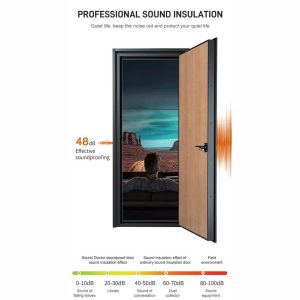
Frosted glass solves visual privacy but does almost nothing for sound. A standard 5/16″ (8 mm) single-pane glass door reduces sound by roughly 20–25 dB. A solid wood door in the same frame reduces sound by 30–35 dB. The difference is noticeable—a conversation in a bathroom behind a frosted glass door is audible as muffled speech, not unintelligible noise.
If acoustic privacy matters (for a toilet room or a private office), consider:
- Laminated glass with a frosted interlayer. The interlayer adds mass and dampens sound better than a single pane.
- Double-glazed units with a frosted pane on one side and an air gap. This is uncommon for interior doors but available on custom orders.
- A solid door with a small frosted sidelight instead of a full frosted glass door.
How to Choose the Right Frosted Interior Door: A Buyer’s Guide
Step 1: Define the Privacy Requirement
Rank your door locations by privacy need:
- High privacy: Bathrooms, toilet rooms, master bedrooms. Specify heavy frost or laminated frosted glass.
- Medium privacy: Home offices, study rooms, guest bedrooms. Standard acid-etched frost is sufficient.
- Low privacy: Kitchens, laundry rooms, pantries. Light frost or even clear glass with a frosted band at eye level works.
Step 2: Match the Frame Material to the Environment
| Frame Material | Pros | Cons | Best Environment |
|---|---|---|---|
| Solid wood | Classic look, can be painted or stained, good sound insulation | Expensive, can warp in humidity, requires refinishing | Dry interiors, traditional decor |
| Aluminum (thermal break) | Dimensional stability, moisture resistant, slim profiles allow larger glass areas | Can feel cold or industrial if not powder-coated well, conducts heat/cold without thermal break | Bathrooms, modern interiors, high-humidity areas |
| MDF or engineered wood | Affordable, stable, paintable | Less durable than solid wood, can swell if edges are not sealed | Budget projects, dry interiors |
| Aluminum-clad wood | Wood interior aesthetic with aluminum exterior protection | Higher cost | High-end projects where interior finish matters |
For bathroom doors in particular, aluminum frames with a frosted glass panel are the most maintenance-free option. They will not swell, crack, or need repainting.
Step 3: Confirm Standard Sizes and Custom Dimensions
Interior door rough openings in North America are typically 32″ x 80″ or 36″ x 80″. Metric markets use 700 mm, 800 mm, and 900 mm widths with 2000 mm or 2100 mm heights. Prehung frosted doors are available in these standard sizes from most manufacturers.
If your openings are non-standard, you have two options:
- Order custom-sized prehung units. This is the cleaner solution. The frame is built to your exact rough opening, and the door slab is cut to match. Expect a longer lead time and a small cost premium.
- Buy a standard slab and have it cut down on site. This works for hinged doors but is not possible for prehung units. Cutting a door slab down by more than 1″ (25 mm) may compromise the structure, and cutting a door with factory-installed glass is risky.
Measure the rough opening height and width at three points (top, middle, bottom for width; left, center, right for height). Use the smallest measurement as your reference.
Step 4: Evaluate Hardware and Swing Direction
Frosted glass doors are heavier than hollow-core doors, especially when the glass is thick or laminated. Standard hinges rated for interior doors (typically 3.5″ x 3.5″ ball-bearing hinges) are usually adequate, but for doors wider than 36″ or heavier than 80 lbs (36 kg), specify heavy-duty hinges or a third hinge.
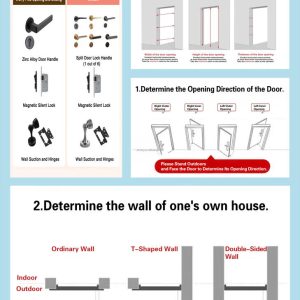
Swing direction matters more than most buyers realize. A door that swings into a bathroom can conflict with a vanity or toilet. A door that swings into a hallway can block traffic. Before ordering, confirm:
- Door swing (left-hand or right-hand) as viewed from the outside.
- Clearance for the door arc on both sides.
- Whether a pocket door or sliding door would be more practical for the space.
Step 5: Understand the Cost Drivers
The price of a frosted interior door varies with three main factors:
- Glass size and type. A door with a small frosted glass lite costs less than a door that is nearly all glass. Laminated frosted glass costs more than single-pane etched glass.
- Frame material. Aluminum frames cost more than MDF but less than solid wood. Thermal-break aluminum profiles add cost but are essential for exterior-facing or high-humidity installations.
- Customization. Non-standard sizes, custom hardware finishes, and special glass tints all add to the unit price and lead time.
Budget for installation if you are not doing it yourself. Prehung units are easier to install than slabs, but they are heavy and require two people. For a typical interior prehung door, professional installation runs 1–2 hours per door.
Frequently Asked Questions About Frosted Interior Doors
Does frosted glass provide full privacy?
No. Frosted glass obscures shapes and faces but does not block all visual information. At close range (under 1 foot / 30 cm), you can see the general outline of a person and detect movement. Heavy frost or laminated frosted glass provides the highest privacy level, but for complete visual blockage, you need an opaque material.
Can I frost an existing clear glass door?
Yes. Frosted glass film is a DIY-friendly option for retrofitting. It comes in rolls, is applied with water and a squeegee, and can be trimmed to fit. The film reduces light transmission by 10–30% depending on the opacity level. However, film is not permanent—it can peel at the edges in high-humidity environments and may discolor over time. For a permanent solution, replace the glass with a factory-frosted pane.
What is the difference between frosted and etched glass?
Frosted glass is created by sandblasting or acid-etching the surface, which makes it translucent. The terms are often used interchangeably. Technically, “frosted” can also refer to a film applied to the surface. “Etched” specifically means the glass surface has been altered chemically or abrasively. Both produce a similar visual effect. Etched glass is permanent; film is not. Etched glass is also easier to clean because the surface is smooth, whereas some films have a slight texture that can trap dirt.
Are frosted doors good for bathrooms?
Yes, provided you choose the right frost level and frame material. Use heavy frost or laminated frosted glass for toilet rooms. Choose an aluminum or moisture-resistant frame. Ensure there is adequate ventilation—either an undercut, a vent, or an exhaust fan—to prevent humidity buildup.
What are the standard sizes for interior frosted doors?
In North America, standard interior door widths are 28″, 30″, 32″, and 36″, with heights of 80″ (6’8″) and 96″ (8’0″). Metric markets use 600 mm, 700 mm, 800 mm, and 900 mm widths with 2000 mm or 2100 mm heights. Prehung units are built to fit standard rough openings, which are typically 2″ (50 mm) larger than the door slab. Custom sizes are available from most manufacturers.
How do I clean frosted glass without leaving streaks?
Use a pH-neutral glass cleaner or a mixture of water and mild dish soap. Spray the cleaner on a microfiber cloth rather than directly on the glass to avoid drips. Wipe in a zigzag pattern, then buff dry with a clean, dry microfiber cloth. Avoid abrasive pads and ammonia-based cleaners, which can damage the frosted surface over time.
What is the best type of glass for a frosted interior door?
For most interior applications, 5/16″ (8 mm) tempered glass with an acid-etched finish is the best balance of durability, privacy, and cost. Tempered glass is required by building codes when the glass is within a certain distance of a door or floor level (see below). For high-privacy areas, specify laminated frosted glass, which also improves acoustic performance.
Additional Considerations: Bathroom, Prehung, and Contemporary Styles
Building Code Requirements for Safety Glass
Most building codes (including the International Building Code and International Residential Code) require tempered glass in doors and in glass panels located within 24 inches (600 mm) of a door opening, or within 18 inches (450 mm) of the floor. Tempered glass breaks into small, rounded granules rather than sharp shards, reducing injury risk.
Frosting does not exempt glass from these requirements. A frosted glass door must still use tempered or laminated safety glass. When you request a quote, confirm that the glass specified meets your local code. A reputable manufacturer will provide documentation of glass certification.
Prehung vs. Slab: What Buyers Should Know
If you are sourcing for a construction project, prehung units are almost always the right choice. They arrive as a complete assembly—frame, door, hinges, and pre-drilled latch bore. The installer does not need to mortise hinges or cut a latch pocket, which reduces labor time by roughly 30–40 minutes per door.
Slab doors (just the door, no frame) are appropriate when you are reusing an existing frame that is in good condition. However, matching a new slab to an old frame can be tricky. Frame dimensions and hinge locations vary between manufacturers, and a slab that is 1/8″ (3 mm) too wide will not fit without planing.
Contemporary Frosted Glass Doors vs. Traditional Options
Contemporary frosted doors tend to use larger glass panels, slimmer frame profiles, and minimal hardware. Aluminum frames with a single large frosted pane are a signature modern look. These doors transmit more light because there is less frame blocking the glass.
Traditional frosted doors, by contrast, often use multiple smaller panes divided by muntins. This reduces light transmission but adds visual detail that suits craftsman, Victorian, or colonial interiors.
The choice is aesthetic, not functional. If you are matching existing interior trim, measure the frame profile and compare it to the door’s jamb thickness. A mismatch is visible and difficult to correct.
Frosted Glass Film vs. True Frosted Glass: A Cost-Per-Year Analysis
Frosted film is tempting because it is cheap—a roll large enough for a standard door costs a fraction of the price of a new frosted glass door. But film is not a permanent solution.
| Factor | Frosted Film | Factory Frosted Glass |
|---|---|---|
| Upfront cost (per standard door) | Low | Medium to high |
| Lifespan | 3–7 years, depending on UV exposure and humidity | Lifetime of the door |
| Replacement cost | Recurring—every few years | None |
| Warranty | Typically 1–3 years | Typically 5–10 years on glass seal |
| Visual quality | Can show bubbles or edge peel | Uniform, permanent finish |
Over a 10-year period, the film option may cost as much as a factory-frosted door when you account for two or three reapplications. For a single door retrofit, film is a reasonable short-term fix. For a project with multiple doors, factory-frosted glass is the better investment.
Where to Source Quality Frosted Interior Doors: A Manufacturer’s Perspective
The discussion so far has covered what to buy. The final question is who to buy from. As a manufacturer of doors and windows, we see the sourcing mistakes buyers make repeatedly—and we can tell you what to look for in a supplier.
What to Verify Before You Place an Order
Glass certification. Ask for the glass supplier’s certification and confirm it meets the safety standard for your market (e.g., ANSI Z97.1 in North America, EN 12150 in Europe). If a supplier cannot document their glass, move on.
Profile and hardware compatibility. Doors are not universal. A frame profile that works for a dry interior hallway may not meet the structural requirements for a wider or heavier door. Confirm that the supplier’s standard profiles match your door dimensions and weight, and that the hardware is compatible with your local building codes.
Pre-shipment inspection. For international orders, request a pre-shipment inspection report covering air-tightness, water-tightness, and wind resistance—even for interior doors. These tests are more relevant for exterior units, but they indicate a manufacturer’s quality control standards. If they test exterior doors rigorously, their interior door production is likely to be consistent as well.
Customization capability. Your project may require non-standard sizes, specific glass tints, or particular hardware finishes. A manufacturer that offers full customization—not just a choice between two standard models—is better positioned to meet your exact specifications.
Documentation and logistics. For importers, the supplier must provide a packing list, proforma invoice, and full customs documentation. Confirm that they can handle both FCL (full container load) and LCL (less than container load) shipments, depending on your order volume.
How We Approach Frosted Interior Door Production
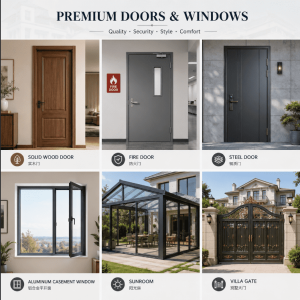
As Jusen Door and Windows Manufacturing Co., Ltd., we manufacture frosted interior doors as part of our broader line of solid wood doors, thermal-break aluminum doors and windows, and custom villa units. Our approach to frosted interior doors is straightforward:
- We treat the glass as the core component. We source tempered and laminated glass from certified suppliers and offer acid-etched, sandblasted, and film-free frosted finishes. For bathroom doors, we recommend a heavy frost or laminated interlayer for maximum privacy.
- We customize to your opening, not the other way around. Our factory produces custom sizes, colors, glass types, and hardware configurations. If you are working with non-standard rough openings, we build the prehung unit to fit.
- We adjust profiles to meet local code. Building codes differ by market. Our adjustable profile structure and fittings are designed to meet the standards of your target region, from hinge spacing to glass thickness requirements.
- We inspect before shipment. Every order undergoes pre-shipment testing for air-tightness, water-tightness, and wind resistance. We provide the test reports and full export documentation—packing list, proforma invoice, and customs paperwork—so your import process is smooth.
- We ship directly from our factory. No middleman markup. You deal with the production facility directly, which means competitive pricing and clear communication on lead times and production status.
If you are evaluating frosted interior door suppliers, we would welcome the opportunity to quote your project. Send us your door schedule, rough opening dimensions, and privacy requirements.
For more detailed guidance on measuring openings and understanding price factors, see our door size guide and pricing overview.