What Defines a French Country Front Entry Door?
A French country front entry door is an exterior door that blends rustic provincial charm with the structural demands of a modern building envelope. You can identify one by its characteristic design language: paneled or arched profiles, divided glass lites, and hardware finished in wrought iron, bronze, or antique brass. These doors are meant to evoke the farmhouses and manors of the French countryside—a look that prioritizes warmth and character over the stark minimalism of contemporary designs.
For a custom home or renovation project, the practical question is not just what looks good, but which configuration and material will perform best at your specific site. The “French country” aesthetic is a style overlay; the underlying door system determines its insulation value, weather resistance, security, and lifespan.
This guide breaks down the options by style, material, and operational type so you can compare them against your project’s architectural style, climate, and budget.
French Country Door Styles: A Visual Comparison
When you search for french country front doors, you will see a few recurring design families. Each has a different visual weight and suits different home exteriors.
Arched Tops
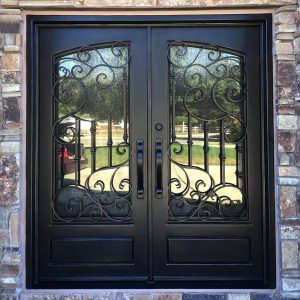
Arched or radius-top doors are the most literal translation of French provincial architecture. A true arch (semicircular) is a structural feature that requires a frame capable of supporting the load above it. In contrast, a “gothic” or “eyebrow” arch is a gentler curve. Arched doors pair well with stone or stucco facades and homes with arched window details. They are the most expensive style to manufacture because the frame and glass require custom fabrication.
Recessed Panel Designs
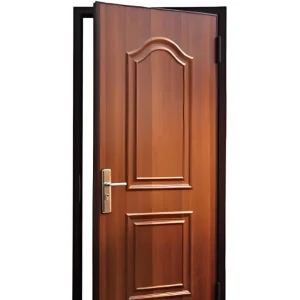
This is the classic flat-panel or recessed-panel door. The door surface is divided into rectangular sections, either flush or raised, which adds depth and shadow lines. This style is more versatile than an arch and works on brick, siding, or stone homes. The number of panels (two, four, or six) changes the formality. A six-panel door reads more traditional, while a two-panel design with large glass lites feels more casual and light-filled.
Divided Glass Lites
The hallmark of the French country look is the glass. “Divided lites” (true divided or simulated) break the glass into multiple panes. True divided lites (TDL) use individual pieces of glass separated by muntin bars, offering the most authentic look but lower energy efficiency. Simulated divided lites (SDL) have the grille applied to the exterior and interior, with a single piece of glass in between—this is the better choice for energy performance. You must also decide between clear glass, which maximizes light, and textured or frosted glass, which offers privacy while still allowing light transmission.
Pairs and Single Doors
A single door is standard for most homes, but a double door (or “French pair”) makes a significant architectural statement. Double doors are common on larger custom homes or as an upgrade for a wide foyer. When considering a pair, remember that the meeting stile (where the two doors meet) must have an astragal—a vertical strip that seals the gap—to maintain weather resistance and security. Operable pairs are more complex to seal than a single door.
Materials Compared: Wood, Aluminum, Fiberglass, and Steel
The material is the primary driver of cost, maintenance, and performance. Here is how the four main options compare for french country exterior doors.
| Material | Aesthetic Authenticity | Maintenance | Insulation (Relative) | Weather Resistance | Typical Cost Range |
|---|---|---|---|---|---|
| Solid Wood | Highest | High (repainting/staining every 1-3 years) | Good, but depends on core | Poor to Moderate (prone to warping/swelling) | Highest |
| Aluminum-Clad Wood | High (interior wood, exterior metal) | Low (exterior finish is baked-on) | Excellent (with thermal break) | Excellent | High |
| Fiberglass | High (can mimic wood grain) | Very Low | Excellent (can be insulated with polyurethane foam) | Excellent (does not warp or rot) | Moderate |
| Steel | Low (flat surface, hard to mimic wood) | Low (must touch up scratches to prevent rust) | Good, but conducts cold/heat | Good (dents easily) | Lowest |
Solid Wood
Wood is the traditional material. Species like Mahogany, Oak, and Alder are common. Alder is a softer wood that takes stain well and is popular for rustic looks; Mahogany is dense and more stable. The primary issue is stability. Wood expands and contracts with humidity, which can cause sticking or gaps at the seals. In direct sun and rain, the finish will fail over time, requiring periodic refinishing. Wood is the right choice only if you accept the maintenance cycle.
Aluminum-Clad Wood
This is a high-performance compromise. The interior face is real wood, providing the warmth you want in a foyer. The exterior is a thin aluminum shell, which is factory-painted and highly resistant to fading, chipping, and moisture. The aluminum layer protects the wood core from the elements, solving the biggest problem with solid wood. This is the premium choice for a custom home where you want the wood look indoors but cannot accept the maintenance of a fully wood exterior door.
Fiberglass
Fiberglass is a practical, high-performance material. It does not warp, rot, or swell. Modern fiberglass doors are molded to mimic the grain of real wood very convincingly, and they can be painted or stained. The door skin is hollow, but the cavity is typically filled with polyurethane foam, giving excellent insulation values (low U-factor). Because it is dimensionally stable, the weatherstripping maintains a better seal over time. For most renovation projects, fiberglass is the best balance of durability, performance, and aesthetics.
Steel
Steel doors are the most economical. They are strong and secure, but they are poor insulators unless specifically built with a foam core and thermal break. Steel dents easily from impacts (like a bicycle handle or a kicked-in screen door), and any scratch in the paint will rust. Visually, it is difficult to give a steel door the deep, textured look of wood. Steel is a good choice for a budget-conscious project or a side entrance, but it is rarely the best choice for a front entry door where aesthetics are a priority.
Key Features to Consider: Glass, Hardware, and Customization
Beyond the door slab itself, the details determine the final look and the entry’s security.
Glass and Glazing
The glass is a major source of heat loss. Look for double or triple glazing with a Low-E (low-emissivity) coating. Low-E glass reflects heat back into the home in winter and blocks solar heat gain in summer. The U-factor and Solar Heat Gain Coefficient (SHGC) ratings are the numbers to compare. A lower U-factor is better for cold climates; a lower SHGC is better for hot climates. Always check that the glass meets ENERGY STAR requirements for your climate zone.
Hardware
Hardware is the jewelry of the door. For French country style, finishes like oil-rubbed bronze, antique pewter, and wrought iron are appropriate. The primary lock should be a grade 1 or grade 2 deadbolt. For the handleset, consider a handle and deadbolt combination versus a mortise lock. Mortise locks offer a more traditional look and a heavier feel but are more expensive and require a skilled installer. For double doors, the astragal must have a multipoint locking system that throws bolts into the header and threshold.
Color and Finish
Wood doors can be stained in a range of tones, from light natural oaks to rich dark walnuts. Painted doors offer more color flexibility. Off-whites, warm grays, and deep greens are popular for French country exteriors. For fiberglass, you can choose a factory finish or a paintable surface. A factory finish is more durable than a site-applied paint job.
Customization
Customization affects size, glass pattern, and panel configuration. Most manufacturers offer standard sizes (36″ x 80″), but a renovation often requires a custom size or a non-standard rough opening. Customization also includes the specifics of the divided lite pattern—the number of lites, the width of the muntins, and the profile of the frame.
French Country Entry Doors: Fixed vs. Operable
A common point of confusion is the difference between a fixed French door and an operable entry French door.
An entry French door is the primary front door. It is a single door or a pair of doors that you use to enter the home. It is a fully operational unit with hinges, weatherstripping, and a locking mechanism. It must meet building codes for egress and security.
A fixed French door is a non-operating door unit that is installed as a sidelight or as a stationary panel beside an operable door. Sometimes, a double-door setup is actually a single operable door paired with a fixed panel. This offers the grand look of a double door without the complexity and cost of making both sides fully functional. Fixed panels are also used as large stationary windows flanking the entry.
When you see the term “entry French door” in a product listing, it often refers to a pair of doors that are both operable. For a front entry, it is common to have one active door and one fixed door, or a single active door with fixed sidelights. This is a key decision: operable pairs require a center seal, which can be a point of air and water infiltration if the astragal is not well-designed.
Cost and Budget Considerations
The cost of a French country front entry door varies widely based on material, size, and customization. You are not looking at a single number; you are looking at a range defined by your choices.
For a single, standard-size door:
- Steel is the entry-level option, with the lowest upfront cost.
- Fiberglass sits in the mid-range. A basic fiberglass door with a few lites is affordable, but the price rises quickly with added lites, custom colors, and premium hardware.
- Solid wood is significantly more expensive than fiberglass, and the cost increases with the rarity of the wood species.
- Aluminum-clad wood is usually the most expensive option, rivaling or exceeding the cost of high-end solid wood.
For a custom size, a double door, or a unit with many divided lites, expect the cost to multiply. The rough opening size is the primary driver. When budgeting, include the cost of the frame, the hardware, and the installation. Installation is not trivial; a heavy wood or metal door requires a skilled carpenter to ensure it is square, plumb, and properly flashed against water intrusion.
It is also wise to factor in the long-term cost of maintenance. A cheaper steel door that rusts or a wood door that requires refinishing every two years may cost more over a 20-year lifespan than a fiberglass door that needs minimal attention.
How to Choose a Reliable Manufacturer for Your Project
For a B2B buyer—a contractor, architect, or developer—the door is only as good as the supplier. You are not just buying a product; you are buying a promise of quality control, delivery logistics, and post-sale support. When evaluating manufacturers for french country front entry doors, use these criteria.
1. Verify the Performance Specifications
A manufacturer should be able to provide clear performance data for their door systems. Ask for the U-factor, SHGC, and air-infiltration ratings. For projects in hurricane zones or high-wind areas, ask for the design pressure (DP) rating. A reputable manufacturer will have their products tested to AAMA/WDMA/CSA standards and can provide the certification documents. If they cannot, that is a red flag.
2. Assess Customization Capability
Your project will likely require custom sizes or specific glass patterns. Does the manufacturer have in-house fabrication or do they rely on a limited set of stock sizes? The ability to adjust profile structures and fittings to match local building codes is a significant advantage. A manufacturer that can handle a custom radius top or a specific divided-lite pattern without a massive price premium is more valuable to your project.
3. Evaluate Quality Control Processes
Pre-shipment inspection is critical. Ask about their testing procedures. Do they conduct air-tightness, water-tightness, and wind-resistance tests on finished units? A manufacturer with a formal quality control process is less likely to ship units with defects that you will have to deal with on site.
4. Review Logistics and Documentation
For international orders, the paperwork is as important as the product. You need a supplier experienced in foreign trade who can provide a packing list, proforma invoice, and full customs documentation. Confirm their ability to handle both Full Container Load (FCL) and Less than Container Load (LCL) shipments. A factory that can manage the logistics directly simplifies your procurement process.
Here is how these criteria apply in practice. As a manufacturer of solid wood, thermal-break aluminum, and system windows and doors, our approach at Jusen Door and Windows is built around direct factory supply and full customization. We operate without middleman markup, which directly affects your project’s bottom line. We handle OEM and ODM projects, allowing you to specify your own sizes, colors, glass packages, and hardware accessories. Our production process includes strict pre-shipment inspection for air-tightness, water-tightness, and wind resistance, so you are not receiving units that fail on site. We also understand that building codes differ; we can adjust our profile structures and fittings to comply with the specific regulations of your target market. For logistics, we manage both FCL and LCL shipments directly from our factory in China, providing all necessary export documentation.
When you compare manufacturers, ask them how they handle a non-standard rough opening or a specific wind-load requirement. The right supplier will answer with technical specifications, not just promises.
Frequently Asked Questions About French Country Front Doors
What is the most popular design for a French country front door?
The most common is a single door with recessed panels and a grid of divided glass lites, often with a small arch at the top. This design balances the rustic look with versatility for different home styles.
Are wood or fiberglass doors better for a French country exterior?
For a front door, fiberglass is often the better choice because it offers the look of wood without the maintenance and stability issues. Wood is preferred when you want a specific stain color that cannot be replicated, and you are prepared for ongoing refinishing.
How much does a French country front door cost?
Costs vary widely. A basic fiberglass unit is the most affordable, while a custom solid wood or aluminum-clad wood unit with extensive divided lites and premium hardware will be at the higher end of the market. Installation costs are additional.
Can I customize the glass and hardware?
Yes. Most manufacturers offer options for clear, frosted, or textured glass, different divided-lite patterns, and a choice of hardware finishes like bronze, brass, or wrought iron. Custom sizing is also available for non-standard rough openings.
How do I ensure the door is weather-resistant and secure?
Look for a door with a low U-factor, double or triple glazing with Low-E coating, and a high design pressure rating. For security, choose a deadbolt with a grade 1 or 2 rating, and for double doors, ensure the astragal has a multipoint locking system.
Making the Final Decision
To summarize your choice:
- Choose solid wood if an authentic wood texture and the ability to stain it are your top priorities, and you accept the need for periodic refinishing.
- Choose aluminum-clad wood if you want the interior wood look but need a durable, low-maintenance exterior finish.
- Choose fiberglass if you want the best balance of durability, energy efficiency, and aesthetic flexibility with minimal maintenance.
- Choose steel for a budget-friendly option where security is a priority, and you are not concerned about a perfectly authentic wood look.
If your project requires a high level of customization, strict performance standards, and direct factory pricing, it is worth getting a quote to compare against your local suppliers.