Key Takeaways: What to Know Before Buying Exterior Double Doors
An exterior double door is a two-panel entry system that creates a wider opening than a single door, typically used for main entrances, patios, and commercial storefronts. Before you compare products, understand that the four decisions that drive everything else are material, configuration, size, and swing direction. Get these right first, and the rest—hardware, glass, color—becomes detail work.
For residential projects, double doors are chosen for curb appeal and the ability to move large furniture. For commercial applications, they are often a code requirement for occupancy and accessibility. The engineering challenge is the same: a wider opening means more structural load to manage, more surface area for thermal transfer, and a larger security perimeter.
Exterior Double Door Materials: Steel, Metal, and Contemporary Options
The terms “steel” and “metal” are often used interchangeably, but they describe different products. Understanding this distinction is the foundation of any exterior double door comparison.
Steel Exterior Double Doors
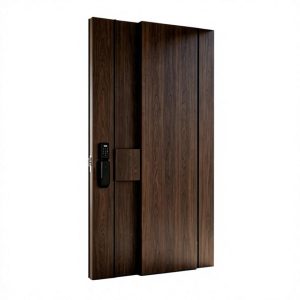
A steel exterior double door typically refers to a door with a steel skin over an insulated foam core, mounted in a steel or wood frame. The steel skin is usually 24- to 22-gauge, which is thick enough to resist denting but light enough for the door to operate smoothly.
The primary advantage of steel is impact resistance and security. A steel skin will not crack, warp, or split like wood. It also provides a solid substrate for multi-point locking systems. The downside is thermal performance: steel is a conductor. Quality steel doors mitigate this with a polyurethane or polystyrene core and a thermal break in the frame, but in extreme climates, the door surface can still feel cold and may sweat in humid conditions.
Steel doors take paint well. A factory-applied, baked-on finish lasts significantly longer than a field paint job. If your project requires a specific color, order it pre-finished from the factory rather than planning to paint on site.
Exterior Metal Double Doors
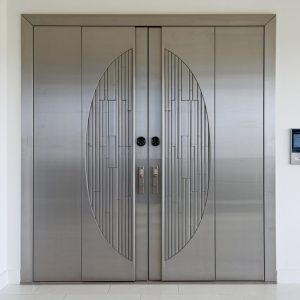
“Exterior metal double doors” is a broader category that includes steel but also encompasses aluminum and other alloys. In the commercial sector, “metal” usually means hollow metal frames with either steel or aluminum door slabs. In residential and light commercial work, the most common alternative is aluminum with a thermal break.
Aluminum double doors are lighter than steel, which simplifies installation and reduces wear on hinges. More importantly, aluminum extrusions allow for a factory-applied finish called anodizing or powder coating. This is why you see contemporary double doors in matte black, bronze, or custom RAL colors—most of those are aluminum. Steel can be powder coated too, but aluminum holds the finish more uniformly because the material does not rust at the coating line.
The trade-off is strength. Aluminum is softer than steel. For high-traffic commercial entries or areas prone to impact, steel is the more durable choice. For residential applications where aesthetics and finish options matter more than brute force, aluminum is often the better fit.
Contemporary Double Doors
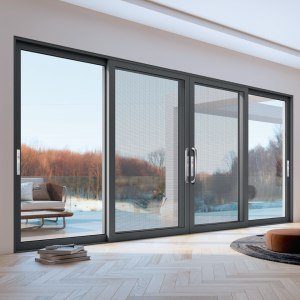
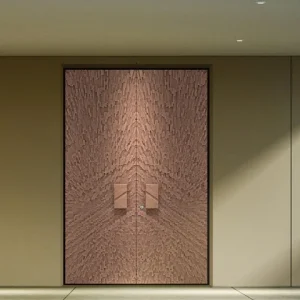
Contemporary exterior double doors are defined less by material and more by design language. Expect clean lines, minimal ornamentation, large glass panels, and a focus on hardware as a design element. The most common materials are aluminum and steel.
The key difference between contemporary and traditional double doors is the frame profile. Traditional doors have thick, ornate frames. Contemporary doors use slim profiles—sometimes as narrow as two inches—to maximize glass area. This requires precision manufacturing because a slim frame must still meet wind load and security requirements.
Contemporary doors often use a system called “European tilt-and-turn” or multi-point locking with concealed hinges. The hardware is integrated into the frame, which creates a clean look but also means the door is more complex to install and adjust. Budget for a qualified installer if you choose this style.
Sidelights: Adding Light and Style to Your Double Doors
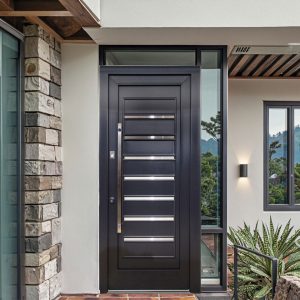
Double doors with sidelights are one of the most requested configurations. Sidelights are narrow, fixed glass panels installed on one or both sides of the door unit.
The primary function of sidelights is to bring natural light into the entryway without expanding the door opening itself. This is important for two reasons. First, wider doors are more expensive and heavier. Second, building codes limit door width for egress—an active door leaf must provide a minimum clear opening, but the inactive leaf can be narrower. Sidelights let you achieve a grand entry look while keeping the active door within code.
From an aesthetic standpoint, sidelights frame the door and make the entrance feel larger. They also allow you to add privacy glass—frosted, patterned, or obscured—at a lower cost than a full glass door panel.
The trade-off is security. Sidelights create additional glass area that a determined intruder could break. For exterior double doors with sidelights, specify laminated glass. It holds together when shattered, providing a significant delay against forced entry. Also, ensure the sidelight frame is anchored to the structural header and threshold, not just to the door frame.
Sizing and Configuration: From 60×80 to 8-Foot Openings
Standard sizing for exterior double doors follows a simple logic: each leaf is roughly the width of a standard single door. That means a typical double door unit is about 60 inches wide (two 30-inch leaves) or 64 inches (two 32-inch leaves). The standard height is 80 inches, which is 6 feet 8 inches.
The most common residential spec is the 60 x 80 exterior double door. This fits a rough opening of about 62 inches wide by 82 inches high, allowing for shimming space and the jamb kit.
For larger openings, 8 ft exterior double doors are available. These are typically 96 inches wide and 96 inches tall, used for grand entrances, patios, and commercial storefronts. Note that an 8-foot door is not simply a scaled-up version of a 60-inch door. The increased panel weight requires heavier hinges, a reinforced header, and often a center meeting stile designed to handle wind load.
When measuring, the critical dimension is the rough opening—the framed hole in the wall—not the door itself. The door unit, including the frame, must fit inside the rough opening with a small gap for shimming and leveling. A common mistake is measuring the existing door and ordering the same size, not realizing the new unit has a different frame depth or nailing fin configuration.
Comparison Table: Steel vs. Metal vs. Contemporary Double Doors
| Criterion | Steel Exterior Double Door | Exterior Metal (Aluminum) Double Door | Contemporary Double Door |
|---|---|---|---|
| Typical Applications | Residential main entry, high-security commercial | Light commercial, modern residential, high-humidity areas | Upscale residential, architectural projects |
| Impact Resistance | High (steel skin) | Medium (aluminum is softer) | Varies by material (steel or aluminum) |
| Thermal Performance | Good with insulated core, but frame conducts heat | Excellent with thermal break profiles | Excellent with thermal break and low-E glass |
| Finish Options | Factory paint, limited color range | Powder coating, anodizing, wide color range | Full custom RAL colors, matte black, bronze |
| Maintenance | Low; repaint when scratched | Very low; finish is durable | Low; hardware may need periodic adjustment |
| Relative Cost | Mid-range | Higher | Highest |
| Best For | Security, durability, budget | Aesthetics, coastal climates, custom colors | Architectural design, maximum glass area |
Installation Essentials: Jamb Kits and Outswing Considerations
What Is an Exterior Double Door Jamb Kit?
An exterior double door jamb kit is the pre-assembled frame that the door panels fit into. It includes the two side jambs, the head jamb across the top, and sometimes the threshold at the bottom. The kit is factory-milled to the exact dimensions of your door and includes the stops, weatherstripping, and hinge reinforcements.
Why does this matter? Because the jamb is the structural interface between the door and the wall. A high-quality door hung on a flimsy or poorly fitted jamb will sag, leak air, and fail to lock properly. Kits are sold in standard sizes (matching the 60 x 80 door, for example) or as custom units.
When you order a jamb kit, verify the jamb depth. This is the thickness of the wall framing plus the interior and exterior sheathing. A standard 2×4 wall with 1/2-inch drywall inside and 1/2-inch sheathing outside needs a jamb depth of about 4-9/16 inches. A 2×6 wall requires about 6-9/16 inches. Ordering the wrong depth means you will need to build out the jamb with extension strips, which is an extra step and a potential weak point.
Outswing vs. Inswing Double Doors
Swing direction is a decision that affects security, weather resistance, and interior space.
Inswing doors (opening into the building) are the default for residential exteriors. The hinges are inside, which is more secure because hinge pins are not accessible from outside. The door also presses against the weatherstripping when closed, creating a better seal. The downside is that an inswing door consumes interior floor space and can conflict with furniture, rugs, or lighting fixtures.
Steel exterior double doors outswing are common in commercial applications. Outswing doors do not consume interior space, which is valuable in tight entries. They are also more resistant to wind-driven rain because the pressure pushes the door tighter against the frame. However, outswing doors have exposed hinges on the exterior, which must be of the security type (non-removable pins). The threshold must also be designed to shed water, and the door needs a rain hood or overhang to protect the top edge.
A critical code note: outswing doors in commercial buildings must not block the path of egress. If two outswing doors are adjacent, they must not swing into each other. Check local building codes for the required clear opening width and swing direction before ordering.
How to Choose the Right Exterior Double Door for Your Project
The selection process should follow a logical sequence, not start with aesthetics.
Step 1: Define the opening. Measure the rough opening width and height. Determine if the wall is load-bearing—a wider opening in a load-bearing wall requires a structural header, which is an additional cost and engineering consideration.
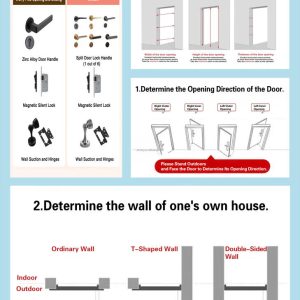
Step 2: Determine swing direction. Decide between inswing and outswing based on interior space, weather exposure, and code requirements.
Step 3: Choose the material. Select steel if security and impact resistance are the top priorities. Choose aluminum (metal) if you need a specific color, are in a coastal environment, or want a slim profile. Select the material based on the performance you need, not the look you want.
Step 4: Evaluate the glass. For double doors with sidelights, specify the glass type. Low-E coated, argon-filled insulated glass is the minimum for energy efficiency. Laminated glass is recommended for security. Tempered glass is required by code in many locations for door panels and sidelights within a certain distance of the floor.
Step 5: Check the hardware. Multi-point locking systems are strongly recommended for double doors. A single-point lock on a tall, wide door is easy to pry open. Multi-point locks engage at the top, bottom, and center, distributing the force across the frame. Look for locks rated under ANSI/BHMA Grade 1 or Grade 2.
Step 6: Consider the threshold. An adjustable threshold is important for outswing doors and for ensuring a tight seal on uneven floors. A low-profile threshold is needed for accessibility compliance (ADA in the U.S.).
Step 7: Plan the budget. The door unit is only part of the cost. Include the jamb kit, threshold, hardware, installation labor, and any structural modifications to the header or floor. Retrofit installations in existing homes often cost more than new construction because the surrounding framing must be cut and supported.
Energy Efficiency and Security: What the Specs Actually Mean
When comparing energy performance, look for the U-factor, not the R-value. U-factor measures how well the entire door unit (including glass and frame) prevents heat transfer. A lower U-factor is better. For a double door in a cold climate, a U-factor of 0.30 or below is considered good, but this depends heavily on the glass specification.
The Solar Heat Gain Coefficient (SHGC) measures how much solar radiation passes through the glass. A lower SHGC means less heat gain in summer. For hot climates, choose a low SHGC. For cold climates, a higher SHGC can help passively warm the interior.
Security is about more than the lock. The hinge side of the door is a common vulnerability. For inswing doors, ensure the hinges have non-removable pins or set screws. For outswing doors, use security hinges. Also, check the frame-to-wall anchoring. The jamb must be screwed through the wall sheathing into the structural framing, not just into the drywall.
Black Exterior Double Doors: Why This Finish Is Popular
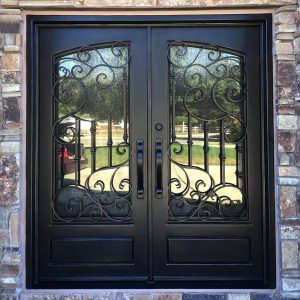
Black exterior double doors are a dominant trend in contemporary and modern design. The finish works because it creates a strong visual anchor against light-colored facades, and it hides dirt and fingerprints better than white or gray.
When choosing black, the finish quality matters more than the color itself. A poor-quality paint job on steel will show scratches and rust. Powder-coated aluminum is the most durable option for black doors. It is applied as a dry powder and baked onto the surface, creating a tough, uniform finish that resists chipping and fading. If you choose steel, specify a factory-applied polyurethane or polyester finish rather than field painting.
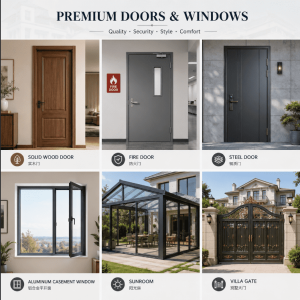
Here is how we meet these standards. As a factory-based manufacturer of thermal-break aluminum doors and windows and solid wood doors, we handle exterior double door projects through a direct-supply model. This means you are working with the producer, not a distributor, which affects both cost and customization flexibility.
We offer full customization on size, color, glass, and hardware. If your project requires a specific RAL color for black exterior double doors, a particular glass configuration for sidelights, or a non-standard size between 60 x 80 and 8 feet, we can adjust the profile structure and fittings to match your local building codes. For commercial projects, we provide the packing list, proforma invoice, and full customs documentation needed for international shipment.
Our pre-shipment inspection includes air-tightness, water-tightness, and wind resistance testing. These are the three performance criteria that matter most for exterior doors, and they are verified before the units leave our factory. We ship FCL and LCL, so whether you need a single custom set or bulk supply for a construction project, the logistics are handled directly.
If you are comparing suppliers for an exterior double door project, a direct factory relationship eliminates the middleman markup and gives you direct control over the specification.