Content Menu
● 1. What Are Exterior Doors Deals in a B2B Context?
● 2. Understanding the Real Cost Structure of Exterior Doors
● 3. How to Structure a Professional RFQ for Exterior Doors
● 4. The RFQ-to-Quote Workflow: What Happens After You Send an Inquiry
● 5. How to Evaluate Exterior Doors Suppliers
● 6. Relevant Industry Standards and Certifications
● 7. Production Process: From Raw Material to Finished Doors
● 8. How to Secure the Best Exterior Doors Deal for Your Project
● 9. Manufacturing Capabilities That Match the Framework
● 10. Customization and OEM/ODM Options
● 11. Ordering Process: MOQ, Lead Time, and Shipping
● 12. Frequently Asked Questions
16 min read
A procurement manager once shared a telling experience. After weeks of negotiating an excellent per-unit price on aluminum entrance doors, the final invoice arrived nearly 30% higher than expected. Freight surcharges, packaging fees, and a “custom color upcharge” had quietly eroded the savings. The deal was never a deal — it was a low sticker price attached to hidden costs.
This scenario plays out constantly in the exterior doors market. Retail discounts rarely translate to genuine savings for B2B buyers. The difference between a real deal and an expensive lesson comes down to understanding cost structures, asking the right questions, and structuring a request for quote (RFQ) that forces suppliers to be transparent.
This guide walks through the exact procurement framework professional buyers use to secure competitive pricing — from understanding material cost drivers to evaluating supplier credentials to negotiating volume pricing.
What Are Exterior Doors Deals in a B2B Context?
Exterior doors deals for B2B buyers are volume-based pricing arrangements between manufacturers and commercial purchasers — contractors, developers, architects, or distributors. Unlike consumer promotions, these deals are negotiated through formal RFQ processes and typically involve bulk quantities, custom specifications, and contractual terms around delivery and payment.
The key distinction is structural. A consumer “deal” is a discount off retail price. A B2B deal is a pricing tier built on production efficiency, material sourcing, and order volume. When a factory produces 200 identical door units in a single run, the per-unit cost drops measurably — lower setup time, bulk material purchasing, streamlined quality control. Savvy buyers tap into this cost structure rather than asking for a simple percentage discount.
Understanding the Real Cost Structure of Exterior Doors
Prices vary dramatically across exterior door types. A buyer comparing quotes without understanding what drives those price differences is essentially guessing. Here is what separates a €400 door from a €900 door.
Material Cost Drivers: Aluminum vs. Solid Wood vs. uPVC
Thermal-break aluminum dominates the commercial sector. The profile thickness — typically 1.4mm to 2.0mm — directly affects structural integrity and price. A 1.4mm profile meets minimum standards for most residential applications, while 1.8mm or 2.0mm profiles are specified for commercial buildings with larger spans and higher wind load requirements. The thermal strip width matters equally: 14mm to 34mm polyamide strips create the thermal break that prevents heat transfer. Wider strips cost more but deliver better insulation.
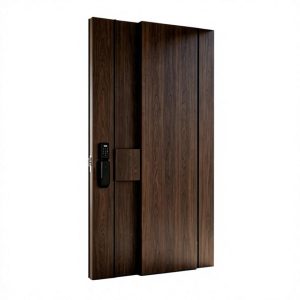
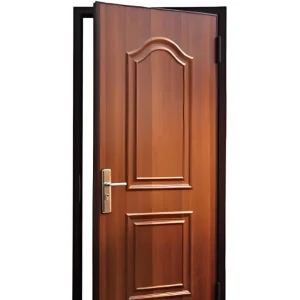
Solid wood doors command premium pricing based on timber grade. Oak, mahogany, and teak are standard species for exterior applications. Moisture content — ideally 8% to 12% — determines dimensional stability. A door not properly kiln-dried will warp within months. The finishing system also adds cost: quality exterior wood doors require multiple layers of primer, paint or stain, and UV protection.
uPVC doors offer the lowest upfront cost, but commercial buyers should calculate total cost of ownership. uPVC has a shorter lifespan in high-traffic commercial settings, and replacement costs can exceed initial savings within 5 to 7 years.
Hardware, Glass, and Accessories: The Hidden Cost Variables
The door slab or panel is often less than half the total cost. Hardware and glass routinely account for 40% to 60% of the final price.
- Hinges: Stainless steel hinges cost 2–3x more than zinc alloy alternatives but handle heavy daily use without sagging.
- Multi-point locking systems: A standard single-point lock costs €20–€40. A multi-point system with three to five locking points runs €80–€150. For commercial security, the upgrade is non-negotiable.
- Glass: Double glazing adds approximately 30–50% to the glazed area cost. Tempered glass is required by code in most commercial applications. Laminated glass for security or acoustic performance adds another layer. Low-E coatings improve energy performance but increase cost by 10–20%.
The “deal” trap here is obvious: a low per-door price often excludes branded hardware or energy-efficient glass. Always request an itemized breakdown showing the cost of each component.
Why Geographic Origin Affects the Deal
Manufacturing location creates price spreads of 15–30% for comparable products. Chinese factories benefit from lower labor costs and an established aluminum extrusion supply chain. European manufacturers offer proximity and faster shipping but at higher labor rates. Turkish and Vietnamese factories occupy a middle ground.
Import duties and logistics must be factored into any comparison. A lower FOB price can become more expensive than a higher-priced quote once freight, insurance, and customs clearance are added. Buyers should always compare landed costs — the total cost delivered to their port or warehouse — rather than unit prices alone.
Buyer Takeaway: A real deal is not a low unit price. It is the lowest total cost of ownership when material grade, hardware quality, testing compliance, and logistics are combined.
How to Structure a Professional RFQ for Exterior Doors
The quality of quotes you receive is directly proportional to the quality of your RFQ. Vague inquiries generate vague pricing. Here is the framework that gets suppliers to respond with accurate, comparable numbers.
The RFQ Document: 8 Items You Must Include
- Project type and location — Commercial, residential, or mixed-use; target country and region. This signals which building codes apply and whether the supplier needs specific certifications.
- Door type and opening style — Single, double, casement, sliding, or pivot. Each configuration affects hardware requirements and manufacturing complexity.
- Exact dimensions — Width, height, and wall thickness. Note whether sizes are modular or custom. Custom sizes require additional engineering and cost more.
- Material specification — Aluminum alloy grade (6063-T5 is standard), thermal-break requirement, or solid wood species. Specify profile thickness if you have a preference.
- Glass specification — Thickness, glazing type (double, tempered, laminated), safety rating, and energy performance requirements (U-value, SHGC).
- Hardware requirements — Lock types, handle finish, hinge grade, multi-point locking. Name specific brands if you have preferences.
- Quantity and delivery schedule — Total units, phased delivery needs, and project deadline. Suppliers price differently for 50 units versus 500 units.
- Certification needs — CE marking, ASTM standards, or local building code compliance. This determines whether the supplier can serve your market.
How to Evaluate the Quotes You Receive
Unit price is the starting point, not the decision point. Calculate the landed cost — unit price plus freight, insurance, and potential customs fees. Ask every supplier to quote on the same Incoterm (FOB, CIF, or EXW) so comparisons are apples-to-apples.
Response quality is a telling signal. A supplier who asks clarifying questions is more engaged than one who fires back a generic quote immediately. The best suppliers will request a sample specification sheet and provide technical drawings with their quote.
Common RFQ Mistakes That Kill the Deal
Vague dimensions. “Standard size” means different things to different manufacturers. Provide exact millimeter measurements.
Ignoring local building codes. A door that passes inspection in Dubai may fail in Germany. Include your target market’s code requirements in the RFQ.
No quantity range. Suppliers price very differently for 20 units versus 200 units. Provide a realistic quantity range so they can structure their best pricing.
Buyer Takeaway: A complete RFQ gets you accurate, comparable pricing. A vague one gets you either inflated quotes or low-quality offers that fall apart during inspection.
The RFQ-to-Quote Workflow: What Happens After You Send an Inquiry
Understanding the supplier’s internal process helps you hold them accountable and set realistic expectations.
Step 1: Initial Review and Clarification (24–48 Hours)
The supplier checks feasibility: material availability, production capacity, customization complexity. Good suppliers will come back with clarifying questions. This is a positive sign — it means they are actually reviewing your specifications.
Step 2: Quotation and Technical Proposal (2–5 Business Days)
A professional quote includes unit price, MOQ, lead time, payment terms, and Incoterms. Custom designs should come with technical drawings or specification sheets. If a supplier quotes without asking a single clarifying question, their pricing is likely based on generic assumptions — not your actual requirements.
Step 3: Sample Approval and Pre-Production (5–10 Business Days)
Samples matter because color, finish, and hardware feel cannot be judged from photos. Test the opening and closing smoothness, inspect the sealing, and operate the lock mechanism. Many factories deduct sample costs from the bulk order — always ask about this policy upfront.
Step 4: Production, Inspection, and Shipping
Typical production lead time for bulk exterior doors is 15–30 days, depending on quantity and customization. Pre-shipment inspection should include air-tightness, water-tightness, and wind resistance tests. Ask for the test reports. Shipping documentation — packing list, proforma invoice, customs documents — should be provided by the supplier.
Buyer Takeaway: A transparent workflow is the backbone of any good deal. If a supplier cannot explain their process, the “deal” is likely to come with hidden costs.
How to Evaluate Exterior Doors Suppliers
Supplier selection is the highest-stakes decision in the procurement process. A low price from an unreliable supplier costs more in delays and defects than a fair price from a dependable one.
Factory vs. Trading Company: How to Tell the Difference
Trading companies play a legitimate role in the supply chain, but they add 10–30% on top of factory prices. If you want factory-direct pricing, verify that you are actually dealing with a manufacturer.
- Ask for factory photos, production line videos, or a live video call.
- Request their business license and export documentation.
- Check whether they can provide technical test reports — air-tightness, water-tightness, wind resistance — that only a manufacturer would have.
- Ask about their production capacity and current order load. A trading company cannot answer these questions convincingly.
Red Flags: Avoid Suppliers Who…
- Quote immediately without asking a single clarifying question. They are quoting from a generic price list, not your specifications.
- Cannot provide technical drawings or specification sheets.
- Are vague about lead times or production capacity.
- Offer significantly lower prices than all other quotes — usually a sign of lower-grade materials or non-compliant manufacturing.
- Cannot name the specific building codes or certifications their products meet.
Questions to Ask Before Ordering
- What is your MOQ for this door type?
- What is the production lead time from sample approval?
- Can you provide the test reports from your last batch production?
- What is your policy on defective units after shipment?
- Can you adjust the profile structure to meet our local building codes?
- What is your payment term structure?
- Do you offer samples, and is the sample cost deductible from the bulk order?
Choose A if… Choose B if…
Choose a factory-direct manufacturer if your order volume is 50+ units, you need custom specifications, and you want the lowest possible unit price.
Choose a regional distributor or trading company if your order is small (under 20 units), you need immediate delivery from local stock, or you prefer to avoid the complexity of international shipping and customs clearance.
Relevant Industry Standards and Certifications
Certifications are not paperwork — they are verifiable proof that a product meets performance requirements. Buyers should know which standards apply to their market and ask suppliers to provide the relevant documentation.
| Standard | Region | What It Covers |
|---|---|---|
| EN 14351-1 | Europe | Performance characteristics for windows and pedestrian doorsets |
| CE Marking | Europe | Conformity with EU health, safety, and environmental standards |
| ASTM E283 / E330 | USA | Air leakage and structural performance for exterior doors |
| GB/T 5237 | China | Aluminum alloy extruded profiles for building construction |
| ISO 9001:2015 | International | Quality management system certification |
| NFRC 100 | USA | U-factor and energy performance rating |
For thermal-break aluminum doors, the critical certifications are EN 14351-1 (for European markets) and the applicable ASTM standards (for North America). Ask suppliers to provide the actual test certificates — not just claims of compliance.
The imperfect insight here: certifications do not guarantee performance in your specific application. A door that passes wind resistance testing in a lab may still fail if installed incorrectly or specified for the wrong exposure level. Buyers should always verify that the test conditions match their project’s actual requirements.
Production Process: From Raw Material to Finished Doors
Understanding how exterior doors are manufactured helps buyers evaluate supplier capability and spot quality issues before they become problems.
Aluminum Door Production
- Extrusion: Aluminum billets (typically 6063-T5 alloy) are heated to approximately 500°C and forced through steel dies to create the profile shapes. Profile thickness and precision depend on die quality and extrusion press calibration.
- Thermal break insertion: Polyamide strips are inserted into the extruded profiles and crimped in place. This creates the thermal barrier that prevents heat transfer between interior and exterior surfaces.
- CNC machining: Profiles are cut to length, and holes for hardware, drainage, and ventilation are precisely machined using CNC equipment. Accuracy here determines how well the door assembles and operates.
- Surface treatment: Anodizing or powder coating provides corrosion resistance and color finish. Powder coating involves electrostatic application of dry powder followed by curing in an oven at approximately 200°C.
- Assembly: Profiles, gaskets, glass, and hardware are assembled into finished door units. Multi-point locking systems are installed and tested.
- Quality control: Finished doors undergo air-tightness, water-tightness, and wind resistance testing. Dimensional checks verify that all units meet specification.
Solid Wood Door Production
- Timber selection and conditioning: Logs are sawn into boards and kiln-dried to 8–12% moisture content. This process takes weeks and is critical for dimensional stability.
- Component manufacturing: Boards are finger-jointed and laminated into solid panels or engineered cores. The lamination process uses structural adhesives and hydraulic pressure.
- CNC profiling: Door panels are shaped, routed, and machined to final dimensions. Mortises for hinges and lock bodies are cut with precision.
- Surface preparation: Sanding to the required smoothness, followed by application of primer and multiple finish coats.
- Hardware installation: Hinges, locks, and other hardware are fitted and adjusted.
- Final inspection: Doors are checked for dimensional accuracy, finish quality, and hardware operation.
How to Secure the Best Exterior Doors Deal for Your Project
The procurement framework is clear. Now here is how to apply it to get the best pricing.
The Factory-Direct Advantage: Why It Changes the Math
Importers and distributors typically add 20–40% on top of factory prices. Eliminating the middleman changes the cost structure significantly. For a 200-unit project with a factory price of €500 per door, that is a savings of €20,000 to €40,000.
Direct communication with the factory also means faster responses, fewer misinterpretations, and direct access to engineers for customization questions.
Volume Pricing and MOQ: How to Negotiate
Ask for tiered pricing. A professional supplier will provide price breaks at 50, 100, 200, and 500 units. The per-unit price difference between 50 and 200 units often ranges from 5% to 15%.
Long-term partnerships earn better terms. Suppliers are more willing to negotiate on price for repeat orders or annual contracts because the customer acquisition cost is already paid.
Standard payment terms are 30% deposit and 70% before shipment. Be wary of anything significantly different — it may indicate a supplier with cash flow problems or a trading company that needs to pay its own supplier.
Customization and Compliance: Getting Exactly What You Need
The best deals come from suppliers who can match your technical specifications and comply with local building codes. Key capabilities to confirm:
- Full customization on size, color, glass, and hardware accessories.
- Adjustable profile structures and fittings to match local building codes.
- Documentation: packing lists, proforma invoices, full customs documents.
Buyer Takeaway: The best deal comes from a supplier who can meet your technical specifications, comply with local codes, and ship reliably — not just the lowest number on a spreadsheet.
Manufacturing Capabilities That Match the Framework
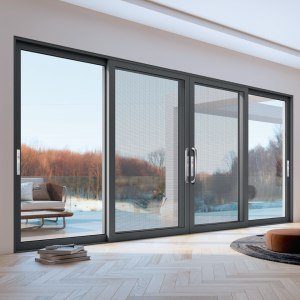
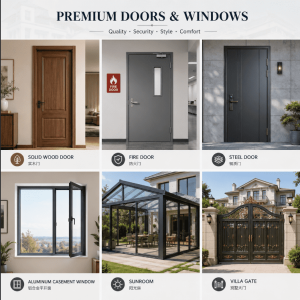
As a factory-direct manufacturer, we structure our pricing around the procurement framework described above. Our manufacturing facility in China produces solid wood doors, thermal-break aluminum doors and windows, system windows, casement doors, sliding doors, custom villa doors and windows, sunrooms, and aluminum alloy entrance doors.
What this means for your project:
- Direct factory pricing: No middleman markup. Our quotes reflect actual production costs, not distribution channel expectations.
- Full customization: Size, color, glass, and hardware accessories are all customizable to your project’s specifications. Send us your drawings and we will engineer the product to match.
- Quality control: Every order undergoes strict pre-shipment inspection, including air-tightness, water-tightness, and wind resistance tests. We provide the test reports with your shipment.
- Compliance: Our adjustable profile structures and fittings are engineered to match local building codes across different markets. We regularly produce doors certified to CE and ASTM standards.
- Logistics: We handle FCL and LCL shipments with direct delivery from our China factory. Packing lists, proforma invoices, and full customs documentation are provided with every order.
Our foreign trade team has decades of combined experience managing international shipments. We understand the documentation requirements for smooth customs clearance in different countries.
Response commitment: We respond to all RFQs within 24 hours. If you have a project deadline, that speed matters.
Customization and OEM/ODM Options
Custom projects are our standard work. We offer:
- OEM: We manufacture to your exact specifications, producing doors that carry your brand or meet your project’s technical requirements.
- ODM: We design and manufacture doors based on your functional requirements, handling the engineering and production.
- Custom size and design: Non-standard dimensions, unique opening configurations, and specialty glass options are all available.
- Private label: We produce doors under your brand name, including packaging and documentation.
Our engineering team works directly with clients to ensure that profiles, hardware, and glass specifications match the building code requirements of the target market.
Ordering Process: MOQ, Lead Time, and Shipping
Understanding the ordering process sets realistic expectations and avoids last-minute surprises.
MOQ
Standard MOQ is 20–50 units for custom aluminum doors. For solid wood doors, MOQ is typically lower — 10–20 units — because the production process is more flexible. Smaller trial orders are often accommodated, but expect a higher per-unit price.
Lead Time
Production lead time is 15–30 days from sample approval, depending on quantity and customization level. Confirm the schedule in writing before placing the order. Custom colors, specialty glass, and complex hardware configurations add time.
Shipping
We handle both FCL (full container load) and LCL (less than container load) shipments. For LCL shipments, we consolidate your order with other cargo to fill a container, which reduces shipping costs for smaller orders. Lead time from factory to your port depends on the destination and shipping method.
Payment Terms
Standard terms are 30% deposit and 70% balance before shipment. For long-term partnerships or large-volume orders, we can discuss alternative arrangements.
Frequently Asked Questions
What is the typical MOQ for bulk exterior door orders?
Standard MOQ is 20–50 units for custom aluminum doors. Smaller trial orders are often accommodated, though the per-unit price will be higher. Ask for a tiered price structure based on your quantity.
How long does production take for a bulk order?
Typical lead time is 15–30 days from sample approval, depending on quantity and customization level. Confirm the schedule in writing before placing the order.
Can I get a sample before placing a bulk order?
Yes. We offer samples, and the sample cost is deductible from the bulk order. Always request a sample to verify color, finish, and hardware quality before committing to a large order.
What is the difference between FOB, CIF, and EXW pricing?
FOB (Free On Board) means the supplier covers costs until the goods are loaded on the ship. CIF (Cost, Insurance, Freight) means the supplier covers shipping and insurance to the destination port. EXW (Ex Works) means the buyer arranges all transport from the factory. Always compare quotes using the same Incoterm.
How do I know if a supplier is a real factory or a trading company?
Ask for factory photos, production line videos, or a live video call. Check whether they can provide technical test reports — air-tightness, water-tightness, wind resistance — and request their business license and export documents.
Can you customize doors to meet local building codes in my country?
Yes. Our adjustable profile structure and fittings are designed to match local building codes across different markets. Send us your local code requirements with your RFQ, and we will confirm compliance.
What payment terms do you offer?
Standard terms are 30% deposit and 70% balance before shipment. We can discuss alternatives for long-term partnerships or large-volume orders.
Key Quality Indicators for Exterior Doors Buyers
Beyond the certifications and test reports, these indicators separate quality manufacturers from the rest:
- Profile thickness consistency: Measure the profile at multiple points. Variations beyond ±0.1mm indicate poor extrusion quality.
- Surface finish uniformity: Powder coating should be consistent in color and thickness across all visible surfaces. Orange peel texture or thin spots indicate application problems.
- Hardware operation smoothness: Locks, hinges, and handles should operate smoothly without excessive force. Multi-point locks should engage evenly across all points.
- Gasket quality: EPDM gaskets should fit snugly without gaps. Poor gasket installation leads to air and water leakage.
- Glass edge sealing: The sealant around glass panels should be continuous and free of bubbles or gaps.
References
- European Committee for Standardization. “EN 14351-1:2006+A2:2016 — Windows and doors — Product standard, performance characteristics.” https://www.cen.eu/
- ASTM International. “ASTM E283 — Standard Test Method for Determining Rate of Air Leakage Through Exterior Windows, Skylights, Curtain Walls, and Doors Under Specified Pressure Differences Across the Specimen.” https://www.astm.org/e0283-19.html
- International Organization for Standardization. “ISO 9001:2015 — Quality management systems — Requirements.” https://www.iso.org/standard/62085.html
- Chinese National Standard. “GB/T 5237 — Wrought aluminium alloy extruded profiles for architecture.” https://www.chinesestandard.net/
- National Fenestration Rating Council. “NFRC 100 — Procedure for Determining Fenestration Product U-factors.” https://www.nfrc.org/
Ready to apply this RFQ framework to your project? Contact Our Team with your specifications and receive a detailed quote within 24 hours.
If you have a project that requires exterior doors — whether it is 20 units or 2,000 — apply the framework from this guide and send us your specifications. We will respond within 24 hours with a detailed, itemized quote.