Choosing the Right Entry Door with Screen Door: A Buyer’s Guide
For commercial projects, an entry door with screen door is not a single product but a system decision. The combination must deliver ventilation, insect control, security, and energy performance while standing up to continuous use. Here is the core conclusion: the best option depends on traffic volume, climate, and security requirements. For high-traffic commercial entrances, a heavy-duty aluminum door paired with a retractable or hinged screen system offers the best balance of durability and airflow. For projects where aesthetics matter, thermal-break aluminum or solid wood entry doors with integrated screen options provide design flexibility without compromising structural performance. The decision should be driven by usage patterns and local building codes, not by brand preference.
Types of Entry Door with Screen Door Combinations
The market offers three primary configurations, each suited to different operational needs. Understanding the mechanics of each helps narrow the field before comparing materials.
Hinged screen doors operate like a conventional door, attached to the same frame as the main entry door. They are the most straightforward option. A full-view hinged screen door swings open independently, allowing the main door to remain closed. This design works well for entrances with adequate clearance for the swing radius. Heavy-duty versions with reinforced corners and commercial-grade hinges handle moderate traffic without sagging. The trade-off is space: you need room for two doors to swing, which can be problematic in tight vestibules or wind-prone areas.
Sliding screen doors run on a track parallel to the entry door. These are the preferred choice for high-traffic commercial settings because they eliminate swing clearance issues. A sliding screen door combo typically uses a bottom track that must be kept clear of debris, making them less ideal for dusty or sandy environments. However, they excel in spaces where doors open frequently — think restaurant entrances, retail storefronts, or facility side entries. The sliding mechanism also allows for partial opening, giving you control over ventilation rates.
Retractable screen doors disappear into a cassette housing when not in use. This is the most discreet option, preserving the architectural clean lines of the entry facade. A heavy-duty retractable screen door uses spring-loaded rollers and tensioned side tracks to keep the mesh taut. These systems are well-suited for commercial projects where the screen should not be visible when retracted. The downsides are higher upfront cost and more complex repair — the roller mechanism and tension system require professional maintenance. They also generally have width limitations, making them less suitable for oversized commercial openings.
Material and Construction: What to Look For
The screen door is only as good as its frame, and the frame is only as good as its material. For commercial applications, four material categories dominate.
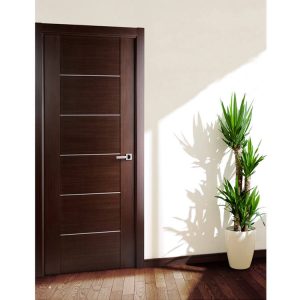
Wood remains a design choice for entry doors with screens in hospitality, historical renovations, and high-end office lobbies. Heavy-duty wood screen doors offer a traditional aesthetic that aluminum cannot replicate. The material naturally insulates and can be painted or stained to match the primary door. However, wood requires ongoing maintenance — repainting or resealing every few years — and is susceptible to warping in humid coastal climates. For commercial use, choose kiln-dried hardwoods like mahogany or oak, and specify a factory-applied primer and finish. Wood screens are best suited to low-to-moderate traffic applications where aesthetics justify the maintenance cost.
Aluminum is the workhorse of commercial screen doors. Extruded aluminum frames provide high strength-to-weight ratios, resist corrosion, and require minimal upkeep. For entry screen door combos, look for thermal-break aluminum profiles — these incorporate a polyamide strip between the interior and exterior frame sections, reducing heat transfer. This matters for energy efficiency, particularly in climate zones with extreme temperature swings. Aluminum frames can be powder-coated in virtually any RAL color, offering design flexibility that rivals wood. For high-traffic commercial projects, aluminum is the default recommendation.
Fiberglass and composite materials occupy a middle ground. Fiberglass entry doors with screen door compatibility are common in residential and light-commercial settings. The material does not dent, rust, or corrode, and it handles temperature expansion better than steel. Composite frames, often a blend of wood fibers and resin, offer wood-like aesthetics with improved moisture resistance. For commercial buyers, fiberglass is worth considering for entry doors in coastal environments where salt air accelerates corrosion in aluminum and steel. The trade-off is that fiberglass and composite screen frames are generally less rigid than aluminum, limiting maximum door sizes.
Steel is rarely used for screen door frames due to weight and corrosion concerns, though steel entry doors frequently pair with aluminum or wood screen systems. If security is the primary concern, focus on the main door’s lock cylinder and hinge reinforcement rather than the screen door itself — the screen is a ventilation device, not a barrier.
Heavy-Duty and Retractable Screen Door Options
Commercial projects demand more from a screen door than residential ones. The distinction between standard and heavy-duty construction comes down to several specific specifications.
Frame thickness is the first indicator. Standard residential screen doors use frames around 1 to 1.5 inches thick. Heavy-duty commercial units typically start at 2 inches and go up. Thicker extrusions resist racking — the diagonal distortion that occurs when a door is pushed or pulled at its corners. For commercial entry doors, specify reinforced corner joints. Look for mechanically fastened or welded corners rather than snap-together assemblies. These joints carry the structural load and determine how long the door stays square.
Screen mesh material matters more than most buyers realize. Standard fiberglass mesh (18×16 weave) is fine for residential use but degrades quickly under commercial traffic. For heavy-duty applications, consider stainless steel mesh or polyester mesh coated for UV resistance. Stainless steel mesh provides superior tear resistance and security — it cannot be easily cut with a utility knife. The trade-off is visibility: stainless mesh has a darker appearance and slightly reduces light transmission compared to fiberglass.
A heavy-duty retractable screen door differs from a standard retractable in its tension system. Commercial units use heavier springs, thicker guide rails, and self-lubricating rollers. The screen fabric itself should be a commercial-grade mesh with a warrantied lifespan. Before specifying a retractable system, verify the maximum opening width — most units top out around 8 to 10 feet. For wider commercial openings, a sliding or hinged screen is the practical choice.
Comparison Table: Entry Door with Screen Door Systems
| Feature | Hinged Screen | Sliding Screen | Retractable Screen |
|---|---|---|---|
| Best for | Moderate traffic, ample swing clearance | High traffic, frequent use | Aesthetic-sensitive facades, low visibility |
| Frame material options | Wood, aluminum, fiberglass | Aluminum primarily | Aluminum primarily |
| Heavy-duty availability | Yes, with reinforced corners | Yes, with commercial tracks | Yes, with reinforced roller mechanism |
| Ventilation control | Full or partial opening | Variable, partial opening easy | Full or partial opening |
| Security level | Moderate; adds minor barrier | Moderate; track can be lifted | Moderate; cassette adds rigidity |
| Maintenance needs | Hinge tightening, screen replacement | Track cleaning, roller adjustment | Spring tension, fabric alignment |
| Relative cost | Moderate | Moderate | Highest |
| Space requirement | Requires swing clearance | Requires track clearance | Minimal; stores in cassette |
Buying Considerations for Commercial Projects
When evaluating entry door with screen door systems for commercial use, several factors should guide the specification process.
Traffic patterns determine the mechanism. Count door openings per hour. A door that cycles 200 times a day needs a sliding or heavy-duty hinged system with commercial-grade hardware. A door used primarily for seasonal ventilation can afford a lighter mechanism. Also consider how the door is used — are people carrying materials through it? Are carts or hand trucks passing through? The screen door must not create a trip hazard at its threshold.
Climate and environmental exposure dictate material selection. Coastal installations require corrosion-resistant hardware — stainless steel hinges, nylon rollers, and powder-coated frames. High-wind zones demand reinforced framing and impact-rated screen mesh. In hurricane-prone regions, building codes may require the screen door to be removable or rated as an impact barrier. Check local wind load requirements before specifying. For projects in desert or dusty climates, avoid sliding screens with exposed bottom tracks — they will clog with sand and grit.
Security requirements need honest assessment. A screen door is not a security door. It provides insect exclusion and ventilation, not break-in resistance. If security is a concern, the primary entry door must carry the security load — look for ANSI Grade 1 locks, reinforced strike plates, and hinge-side protection. The screen door should have a functional lock to prevent casual entry, but do not rely on it for perimeter security. Verify that the screen door does not interfere with the main door’s operation, particularly its locking mechanism.
Cost Considerations and Budget Planning
Pricing for entry door with screen door systems varies widely based on configuration, material, and customization. For budgeting purposes, understand what drives cost rather than relying on fixed numbers that may not reflect your market.
The primary door is the largest cost component. Solid wood entry doors command a premium over aluminum or fiberglass. Thermal-break aluminum systems sit between the two. The screen component adds 15 to 30 percent to the total system cost, depending on mechanism complexity. A hinged full-view screen is the most economical; a retractable system is the most expensive.
Custom sizing increases cost proportionally. Non-standard openings require custom extrusions and fabrication, which reduces economies of scale. If your project has non-standard openings, budget for engineering time and potential minimum order quantities. Standard sizes benefit from off-the-shelf manufacturing efficiency.
Installation costs are often underestimated. A screen door system must be installed to maintain the primary door’s weather seal and structural performance. Improper installation can void warranties and lead to air and water infiltration. For commercial projects, budget for professional installation and factor in any structural modifications needed to accommodate the screen system’s frame or track.
Long-term maintenance should be part of the total cost calculation. Wood screens require periodic refinishing. Aluminum frames need occasional cleaning and hardware lubrication. Retractable screens require professional service for spring tension and fabric replacement. Estimate a 10-year total cost of ownership, not just the initial purchase price, when comparing options.
Additional Considerations: Door and Screen Door Combos
Beyond the basic mechanism types, several configuration details affect how well an entry screen door combo performs in practice.
Integration with the primary door is critical. A door and screen door combo can be either a single integrated unit or two separate doors sharing a frame. Integrated units, where the screen is built into the same frame as the main door, offer better weather sealing and a cleaner installation. Separate units are easier to replace individually but may have gaps at the interface that compromise energy efficiency.
Egress and building code compliance cannot be overlooked. Screen doors must not obstruct emergency egress. In most jurisdictions, the screen door must open in the direction of travel required by the main door, and the combined opening must meet minimum clear width requirements. Retractable screens are generally acceptable since they do not impede the main door’s swing. However, hinged screens installed on the interior side can create a bottleneck during evacuation. Verify your project’s egress requirements with the local authority having jurisdiction before finalizing the configuration.
Energy efficiency depends on how the screen interacts with the primary door’s thermal envelope. A screen door does not add significant insulation value — it creates a buffer zone that reduces direct solar gain and allows ventilation without opening the main door fully. For energy code compliance, the primary door must meet the required U-factor and air leakage ratings. The screen door should not degrade those ratings. Look for systems with compression weather stripping at the meeting stiles and adjustable thresholds that maintain a seal.
Front entry doors with screen door applications in commercial settings often require specific aesthetic coordination. The screen frame color should match or complement the primary door frame. Hardware finishes — hinges, handles, locks — should be consistent across both doors. For branded environments, consider custom powder-coating to match corporate colors.
Heavy-duty wood screen doors deserve special mention for projects where the primary door is wood. Matching a wood screen door to a wood entry door creates a cohesive appearance that aluminum cannot achieve. Specify the same wood species and finish for both. Ensure the screen door’s construction accounts for the wood’s natural movement — use floating tenon joints rather than fixed ones to accommodate seasonal expansion and contraction.
Supplier Evaluation for Commercial Buyers
When evaluating manufacturers for entry door with screen door systems, focus on capabilities that directly affect project success.
Customization capability matters more than catalog breadth. Your project may require non-standard sizes, specific color matches, or special glass specifications. A manufacturer that can adjust profile structures and fittings to match local building codes is more valuable than one offering only fixed configurations. Ask about their engineering support for custom projects and their process for verifying code compliance in your target market.
Quality control procedures separate reliable suppliers from inconsistent ones. For door and screen systems, the critical tests are air-tightness, water-tightness, and wind resistance. Inquire whether the manufacturer conducts these tests before shipment. A supplier that can document pre-shipment inspection results demonstrates a commitment to quality that reduces your installation risk.
Export and logistics experience is essential for international procurement. The manufacturer should provide complete documentation — packing lists, proforma invoices, and customs paperwork. They should handle both full container loads (FCL) and less-than-container loads (LCL) shipments. Direct factory supply eliminates middleman markup and ensures you are working with the entity that controls production quality.
Communication and responsiveness during the specification phase predicts the working relationship. A manufacturer that responds promptly with technical details, clarifies requirements, and provides honest feedback on feasibility is more likely to deliver a successful project. Request samples of similar work and references from comparable commercial projects.
As a manufacturer of entry doors and screen systems, our approach to these requirements is straightforward. We supply directly from our factory, which allows us to offer competitive pricing without intermediary markup. Our production capabilities cover solid wood doors, thermal-break aluminum doors and windows, and fully integrated screen systems. We support full customization on size, color, glass, and hardware accessories, and we adjust profile structures and fittings to match the building codes of your target market. Every unit undergoes pre-shipment inspection for air-tightness, water-tightness, and wind resistance. We handle both FCL and LCL shipments with complete export documentation. If your project requires OEM or ODM production, we accommodate private labeling and custom design specifications.
FAQ: Entry Door with Screen Door Questions Answered
What are the main types of entry door with screen door combos?
The three primary types are hinged, sliding, and retractable. Hinged screens swing open like a standard door. Sliding screens operate on a horizontal track. Retractable screens roll into a housing when not in use. Each type suits different traffic patterns and space constraints.
How do heavy-duty wood screen doors compare to retractable screen doors?
Heavy-duty wood screens offer traditional aesthetics and can match wood entry doors precisely, but they require ongoing maintenance and swing clearance. Retractable screens provide a clean appearance when stored and do not interfere with the primary door’s operation, but they carry a higher upfront cost and require professional service for repairs.
What materials are best for an entry screen door combo in commercial settings?
Aluminum with thermal-break construction is the most versatile for commercial use, offering durability, corrosion resistance, and design flexibility. Wood suits aesthetic-driven projects with moderate traffic. Fiberglass performs well in coastal environments. Steel is not recommended for screen frames due to weight and corrosion issues.
Can I customize an entry door with screen door to fit non-standard openings?
Yes, most manufacturers accommodate custom sizes. Expect additional engineering time and potentially higher minimum order quantities. Provide accurate measurements and account for rough opening dimensions, not just the finished opening size. Custom color matching and hardware selection are also typically available.
What is the typical cost range for front entry doors with screen door systems?
Costs vary significantly based on material, mechanism type, size, and customization level. The primary door represents the largest cost component, with the screen system adding a percentage on top. Retractable systems cost more than hinged or sliding. Budget for installation and long-term maintenance in your total cost assessment.
How do I ensure the door and screen door combo meets building codes?
Verify egress requirements with your local authority, confirm the primary door meets energy code U-factor and air leakage standards, and check wind load requirements for your region. The screen door should not degrade the primary door’s performance. Request documentation from the manufacturer confirming code compliance for your target market.
What maintenance is required for heavy-duty retractable screen doors?
Retractable screens require periodic cleaning of the tracks and fabric, spring tension adjustment, and eventual fabric replacement. The mechanism should be inspected annually. In dusty environments, clean the tracks more frequently. Professional service is recommended for tension adjustments to avoid damaging the roller mechanism.