11 min read
Energy Efficient Window Systems: A Manufacturer’s Guide to Thermal Performance, Materials & Custom Solutions
In modern construction, energy efficient window systems are no longer an optional upgrade—they are a fundamental requirement for meeting building codes, reducing operational costs, and achieving sustainability targets. Whether you are specifying windows for a luxury villa development in North America or a commercial high-rise in Europe, the performance of each window assembly directly impacts the entire building envelope.
At Jusen Doors & Windows Manufacturing Co., Ltd., we have spent 20 years engineering aluminum window systems and solid wood doors that deliver real thermal performance. As a professional manufacturer serving global contractors, interior designers, retail dealers, and villa real estate developers, we understand that true energy efficiency is not just about the glass—it is about system design, frame materials, seal integrity, and precision fabrication. Our independent design team works alongside you to select the right glass packages, thermal break configurations, and frame profiles for your specific climate zone and project requirements.
This guide is written from our factory floor perspective. We will walk through what defines an energy efficient window system, how our engineering approach delivers measurable results, and how our full OEM/ODM customization service can become your competitive advantage.
What Defines an Energy Efficient Window System in Modern Construction?
U-Value, Solar Heat Gain Coefficient & Thermal Performance Metrics
When evaluating energy efficient window systems, three metrics matter most: U-value (thermal transmittance), Solar Heat Gain Coefficient (SHGC), and Visible Transmittance (VT). U-value measures how well the window prevents heat from escaping, typically ranging from 0.25 to 1.20 Btu/h·ft²·°F for modern assemblies. SHGC indicates how much solar radiation passes through—critical for managing cooling loads in warm climates.
Every aluminum window system we manufacture at JuSen is engineered to meet or exceed project-specific U-value requirements. Our engineering team calculates performance based on frame geometry, thermal break configuration, glass package (including low-E coatings, argon filling, and warm-edge spacers), and overall system air leakage rates [1]. We provide calculated performance data with every custom quotation, so there are no surprises during specification or inspection.
Q: What U-value can your energy efficient window systems achieve?
Our engineering team designs for specific U-value targets based on your project requirements. We commonly achieve U-values suitable for passive house and net-zero projects using optimized glass packages, deeper frame profiles, and enhanced thermal breaks. With every custom quotation, we provide calculated performance data specific to your system configuration.
The Role of Frame Material in System Efficiency
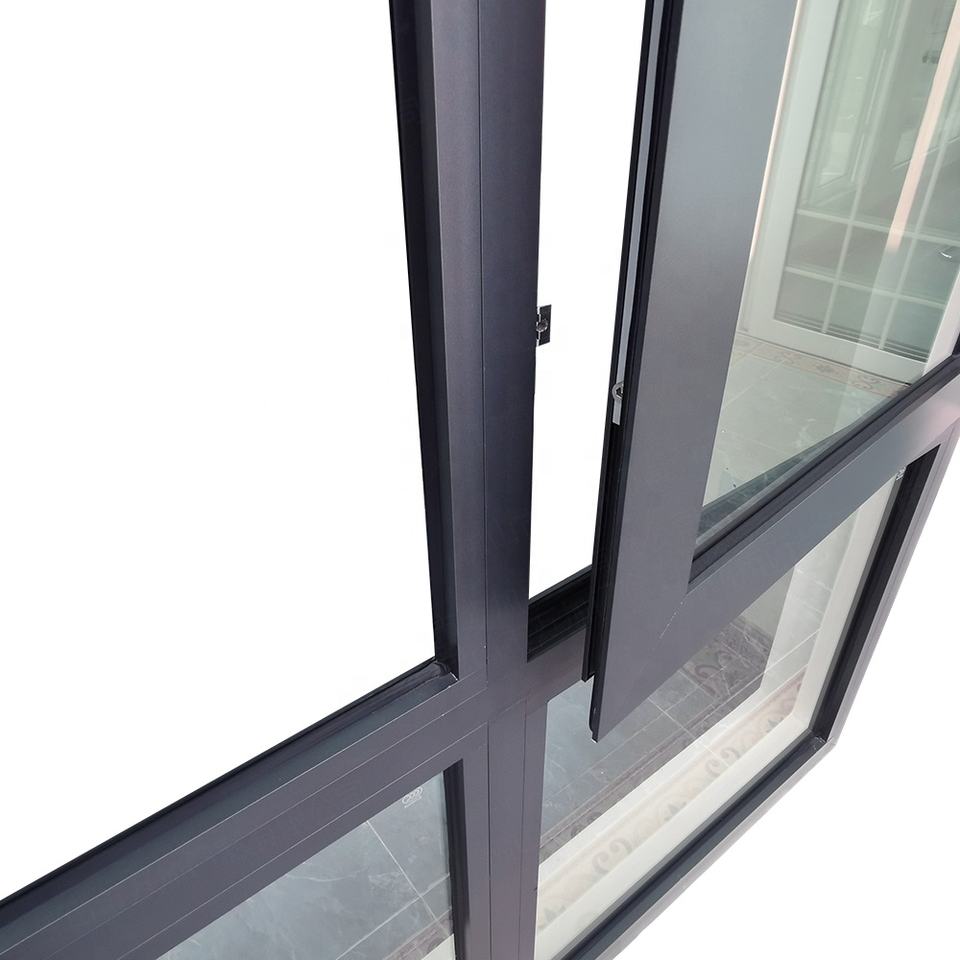
Frame material directly affects thermal bridging and overall system performance. At JuSen, we manufacture both aluminum alloy windows and solid wood entry/interior doors, giving us unique insight into how different materials interact with the building envelope. Aluminum frames offer strength, slim sightlines, and design flexibility—but without proper thermal barriers, they can conduct heat rapidly. That is why our aluminum windows feature multi-chamber profiles and thermal break strips as standard.
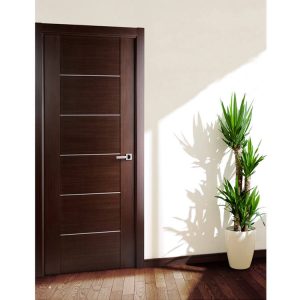
Wood frames provide natural insulation due to their cellular structure, and our solid wood door production benefits from our self-built wood drying and spraying workshops, ensuring dimensional stability and finish durability. For projects requiring the best of both worlds, we can design hybrid aluminum-clad wood systems.
System Integrity Beyond the Glass
Even the best glass package fails if the frame leaks air or water. That is where system integrity comes in. Our aluminum window systems incorporate multi-point locking hardware, continuous gasket compression, and tight installation tolerances. Because we operate our own aluminum processing workshops, we control every extrusion, corner joint, and seal—something generic suppliers cannot guarantee. This precision directly translates into long-term air and water tightness performance.
Thermal Break Technology & Multi-Chamber Frame Design – Our Engineering Approach
How Thermal Breaks Prevent Heat Transfer
Thermal breaks are non-conductive barriers inserted between the interior and exterior aluminum profiles. They interrupt the direct metal-to-metal path that would otherwise conduct heat between inside and outside. Our factory uses high-grade PA66 nylon 6.6 thermal break strips, reinforced with 25% glass fiber for mechanical strength and thermal stability.
The two main methods for applying thermal breaks are polyamide strip (crimped or roll-formed into the profile) and poured-and-debridged (where liquid polyurethane is poured into a channel and then the bridge is cut). Based on our 20 years of aluminum window production experience, we select the method that best matches your profile geometry and performance requirements. Our engineering team can optimize strip placement for different frame shapes, ensuring consistent thermal separation across every linear meter.
Q: How do you ensure thermal break performance in production?
Our quality control process includes routine checks of thermal break integrity during extrusion and assembly. We inspect for gaps, delamination, and consistent strip width because even minor defects can reduce thermal performance by 20% or more [2].
Multi-Chamber Extrusion Design for Maximum Insulation
Still air is an excellent insulator. Our frame profiles incorporate three to five chambers that trap air to reduce conduction and convection. More chambers also provide structural rigidity and additional space for integrating reinforcement or hardware. Because we control extrusion sourcing and secondary machining in our own aluminum workshops, we can produce custom multi-chamber profiles without relying on third-party stock profiles.
Matching Thermal Break Solutions to Project Requirements
Different climate zones demand different thermal break strategies. For cold climates, we specify wider thermal breaks and additional chambers to minimize heat loss. For hot-humid zones, we prioritize condensation resistance and solar control. Our OEM/ODM service is ideal for developers and dealers who need region-specific performance without over-engineering—or under-performing.
Air Tightness, Water Tightness & Seal Integrity in Aluminum Window Systems
The Three Critical Tests – Air, Water, Wind Load
Every building component must pass air leakage, water penetration, and wind load resistance tests. Air tightness (typically rated from A1 to A4) measures how much air passes through the assembly under pressure. Water tightness (rated up to Class E1950 or higher) tests the window’s ability to resist water ingress under simulated rain and wind.
At JuSen, our independent quality control team conducts routine sampling for air and water tightness on every production batch. Because we run our own workshops, we can inspect extrusion tolerances, seal compression, and corner joint quality before assembly—catching potential issues before they reach your job site.
Gasket Selection & Continuous Sealing Strategies
The choice of gasket material directly affects long-term seal performance. EPDM gaskets offer excellent weather resistance, silicone provides extreme temperature stability, and TPE (thermoplastic elastomer) offers flexibility and recyclability. Our JuSen brand windows use automotive-grade sealing with continuous corner molding. This means the gasket is formed in one piece at the corners, eliminating leak paths that occur with cut-and-joined seals.
Our supporting hardware and accessories line includes matched gaskets and seals, ensuring full system consistency. You do not have to source seals from a different supplier—we provide complete, validated assemblies.
Why Precision Fabrication Matters for Long-Term Performance
Tight tolerances are not just about aesthetics; they directly affect real-world durability. A misaligned sash will compress gaskets unevenly, creating air gaps and accelerating wear. Our 20-year track record in solid wood and aluminum processing translates into dimensional accuracy at every stage—extrusion, cutting, machining, assembly, and finishing.
We also ship globally with confidence. Our North America overseas warehouses ensure quality arrives intact, and our full shipping damage after-sales guarantee means you are protected if transit causes damage.
Aluminum vs. Wood Frame Windows – Selecting the Right Energy Efficient System for Your Project
Aluminum Window Systems – Strength, Slim Profiles & Design Flexibility
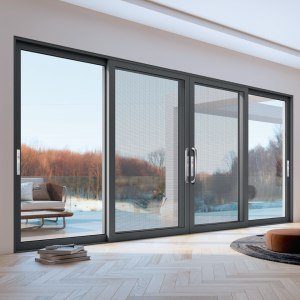
Thermal break aluminum is the industry standard for large openings, curtain walls, and contemporary architectural styles. Aluminum’s strength-to-weight ratio allows slim profiles with large glazing areas, maximizing natural light while maintaining structural integrity. At JuSen, our aluminum window production line handles custom extrusions, powder coating and anodizing finishes, and integrated hardware systems.
We supply global contractors and real estate developers with aluminum systems that meet local building energy codes—from LEED-certified commercial towers to Net-Zero Energy residential communities.
Q: Can you manufacture energy efficient window systems for large-scale construction projects?
Yes. We specialize in construction project bulk supply with flexible MOQ policies. Our production capacity handles large volumes with mixed SKU containers, and our independent design team provides project-specific drawings. We have extensive experience supplying real estate developers worldwide.
Solid Wood & Aluminum-Clad Options – Natural Insulation with Structural Performance
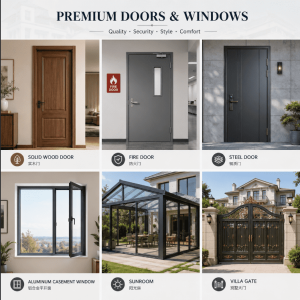
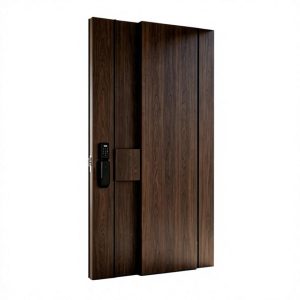
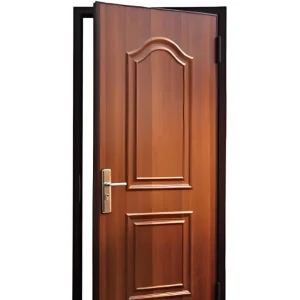
Wood is nature’s insulator. Its cellular structure provides inherent thermal and acoustic benefits that synthetic materials struggle to match. Our solid wood entry doors and interior wooden doors use multi-layer finger-jointed cores, produced in our self-built wood drying and spraying workshops. This gives us end-to-end control over moisture content, glue bond strength, and finish durability.
JuSen is a rare single-source partner for both wood and aluminum—ideal for villa projects that need matching door and window aesthetics, or for architects who want the thermal performance of wood combined with the durability of aluminum on the exterior.
Hybrid Systems – Combining Materials for Maximum Performance
Aluminum-clad wood systems (wood interior, aluminum exterior) offer the best of both worlds: the warm feel and natural insulation of wood inside, plus the weather resistance and low maintenance of aluminum outside. Our independent design team can develop custom hybrid profiles based on your drawings or performance specifications.
Custom Energy Efficient Window Systems – OEM/ODM Solutions for Global B2B Clients
Size, Shape & Configuration Customization
We offer full customization of frame depth, opening type (casement, tilt-turn, sliding, fixed), mullion/muntin profiles, integrated blinds, and color matching. All our doors and windows support full personalized customization—from single-family villa projects to large-scale construction bulk supply.
Private Label & Branding Support
Dealers and retailers can order JuSen-manufactured systems under their own brand. We offer flexible MOQ policies and can produce mixed SKUs in a single container. Our 24-hour response includes customized construction drawings and formal quotation.
From Design Drawings to Delivered Systems – Our One-Stop Process
Our process typically flows: client inquiry → technical review → engineering drawings → prototype approval → production → quality control → packing → logistics. Our self-built wood drying, spraying, and aluminum processing workshops provide end-to-end control over quality and lead time. Our North America overseas warehouses enable faster regional delivery for distributors in that market.
Q: What is the typical lead time for a custom energy efficient window order?
Lead time depends on complexity and quantity, but our self-built workshops and streamlined production allow shorter lead times compared to many suppliers. We provide accurate timelines during the quotation process, and our North America overseas warehouses can further reduce regional delivery times.
Quality Assurance & Testing – How We Validate Energy Efficient Window System Performance
In-House Quality Control Throughout Production
We control quality within our own workshops rather than outsourcing to third-party assemblers. Inspection points include:
- Incoming raw material (aluminum billets, glass, hardware)
- In-process dimensional checks during machining
- Finished product air and water tightness tests
This integrated approach allows rapid corrective action if any parameter drifts outside specification.
Industry Standards & Project-Specific Certifications
We design systems to meet relevant local standards, including ASTM, AAMA, and NFRC specifications as required by your project. Our 20 years of manufacturing experience includes supplying systems that have passed formal certification processes for global construction sites. We maintain documentation for material traceability and performance validation.
Shipping Damage Guarantee – Our Commitment to Arrival Quality
Our full shipping damage after-sales guarantee reduces risk for B2B buyers. This is not a generic promise—we have developed specialized packing protocols over decades of export experience, including corner protectors, edge cushioning, pallet strapping, and protective film for finished surfaces. If damage occurs during transit, we replace the affected units promptly.
Q: How do you ensure the energy efficiency performance is maintained after shipping?
We combine rigorous production quality control with protective packing protocols developed over 20 years of export experience. Our full shipping damage after-sales guarantee ensures that if units arrive damaged, we make it right.
Why Global Contractors & Developers Choose Jusen as Their Energy Efficient Window Partner
- 20 years of combined wood and aluminum expertise – We understand how both materials behave in different climates and configurations.
- Self-built production workshops – Wood drying, spraying, and aluminum processing under one roof gives us total control.
- Independent design team – We engineer custom thermal break solutions, not just assemble stock profiles.
- Flexible MOQ – Suitable for both small dealers and large project developers.
- Overseas warehouses in North America – Faster regional delivery and reduced transit risk.
- 24-hour quotation and drawing response – We move at the speed of construction schedules.
- Full shipping damage after-sales guarantee – Your project’s performance is our reputation.
Choose Your Path
Choose aluminum energy efficient windows if: You need slim sightlines, large glazing areas, or modern aesthetics, and your project requires high structural performance and minimal maintenance.
Choose solid wood or aluminum-clad systems if: You prioritize natural insulation, acoustic comfort, and timeless aesthetics for luxury residences or heritage-style projects.
Choose OEM/ODM customization if: You need proprietary designs, private label branding, or performance specifications that off-the-shelf systems cannot meet.
Jusen Doors & Windows Manufacturing Co., Ltd.
Brand: JuSen door and windows
Describe your project requirements, and our engineering team will provide custom construction drawings and a formal quotation within 24 hours. Global distributors and project partners are warmly welcomed.
References
[1] Efficient Windows Collaborative. (2024). Understanding Energy Performance Ratings. National Fenestration Rating Council. https://www.efficientwindows.org/energy-performance-ratings/
[2] American Architectural Manufacturers Association. (2023). AAMA/WDMA/CSA 101/I.S.2/A440-17: North American Fenestration Standard/Specification for Windows, Doors, and Skylights. AAMA. https://aamanet.org/