Content Menu
● 1. 1. What Is the Average Dutch Door Cost in 2026?
● 2. 2. What Factors Drive Dutch Door Pricing?
● 3. 3. Why Is Factory-Direct Pricing Lower Than Retail?
● 4. 4. What Additional Costs Should You Budget For?
● 5. 5. How Do You Calculate Total Cost of Ownership?
● 6. 6. How Do You Get Accurate Dutch Door Pricing?
● 7. 7. How to Evaluate Dutch Door Suppliers
● 8. 8. How We Meet These Standards
10 min read
A contractor in Ohio recently requested quotes for 30 exterior Dutch doors across three townhouse units. The lowest bid came in at $410 per door. The highest was $1,850. Same dimensions. Same glass specification. The difference was not material quality alone—it was supply chain structure, finish options, and hardware grading. This guide explains exactly how those price gaps form, so you can budget accurately and negotiate with confidence.
1. What Is the Average Dutch Door Cost in 2026?
Factory-direct Dutch door pricing ranges from $350 to $2,000 per unit, depending on material, size, hardware, glazing, and customization. Retail pricing is typically 50–100% higher because of intermediary markups. For a mid-range 36″ x 80″ solid wood Dutch door with double-pane glazing and standard hardware, budget $800–$1,200 per unit at wholesale.
The split design is what drives cost upward. A Dutch door requires roughly 30–50% more manufacturing labor than a standard single-piece door because the frame must be engineered as two independent operating sections. This creates double hinge sets, separate latching mechanisms, and a center locking point. These are not cosmetic additions—they are structural requirements.
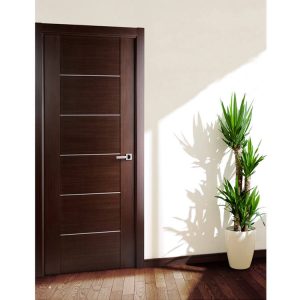
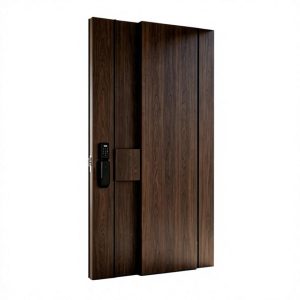
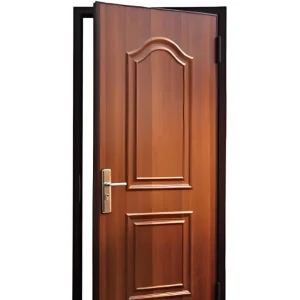
1.1 Solid Wood Dutch Doors
- Cost range: $350–$1,800 (factory-direct) | $500–$2,500 (retail)
- Wood species impact: Pine and hemlock are entry-level; oak and mahogany occupy the mid-range; teak and walnut command premium pricing
- Why wood costs vary: Lumber grade, kiln-drying process, joinery complexity, and finishing labor all contribute
Hardwood lumber prices fluctuate 8–15% annually, which directly affects door pricing from quarter to quarter [1]. Buyers who lock in pricing with a manufacturer for a 12-month contract can avoid these swings.
1.2 Fiberglass Dutch Doors
- Cost range: $500–$1,400 (factory-direct) | $700–$2,000 (retail)
- Key advantages: Rot resistance, low maintenance, insulation values of R-5 to R-7
- Cost drivers: Mold tooling amortization, resin quality, and the realism of wood-grain embossing
Fiberglass is often the best value proposition for coastal regions and high-humidity environments where wood doors fail prematurely. The upfront cost is higher than entry-level wood, but the replacement cycle is 2–3 times longer.
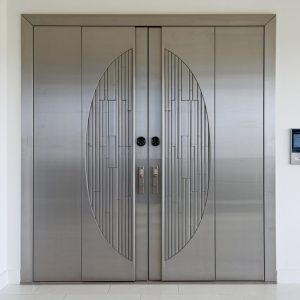
1.3 Aluminum Dutch Doors (Thermal-Break)
- Cost range: $550–$2,000 (factory-direct) | $800–$3,000+ (retail)
- Why aluminum is growing in demand: Slim sightlines, high strength-to-weight ratio, full recyclability, and superior weather resistance
- Thermal-break technology: Polyamide strips separate interior and exterior aluminum frames, reducing heat transfer by up to 40% compared to non-thermal-break profiles
Aluminum Dutch doors are increasingly specified for modern architecture and commercial storefronts. The material allows for wider spans and heavier glazing without the dimensional instability of wood.
1.4 Steel Dutch Doors
- Cost range: $450–$1,300 (factory-direct) | $600–$1,800 (retail)
- Cost factors: Gauge thickness (24-gauge vs 22-gauge), insulation core (polystyrene vs polyurethane), and pre-primed vs galvanized finishes
- Security advantage: Steel offers the highest forced-entry resistance among standard door materials
Factory-Direct Price Comparison by Material
| Material | Entry-Level | Mid-Range | Premium |
|---|---|---|---|
| Solid Wood | $350 | $800 | $1,800 |
| Fiberglass | $500 | $900 | $1,400 |
| Aluminum (Thermal-Break) | $550 | $1,200 | $2,000 |
| Steel | $450 | $850 | $1,300 |
2. What Factors Drive Dutch Door Pricing?
Dutch door cost and pricing is determined by five primary variables. Understanding these allows buyers to make informed trade-offs between cost and performance.
2.1 Size and Configuration
Standard 36″ x 80″ Dutch doors are the most economical because they use standard tooling. Custom heights up to 120″ add 15–30% to base cost. The split ratio matters too—a 50/50 split is standard, but 60/40 or 70/30 splits require custom engineering and add 5–10% to the unit price.
Double Dutch doors (French style) effectively double material costs but reduce per-unit hardware costs slightly because some components are shared.
2.2 Hardware and Accessories
- Standard hardware package: Hinges, latches, handles, and locks ($80–$200 per set)
- Premium hardware: Multi-point locking systems ($300–$600), magnetic weatherstripping ($50–$120), concealed hinges ($100–$250)
- Smart locks: Electronic access control adds $200–$800 per unit for commercial applications
Hardware durability is graded under ANSI/BHMA A156.13, which establishes performance tiers for cycle testing and strength [2]. Grade 1 hardware costs more but is required for many commercial applications.
2.3 Glass and Glazing Options
- Double-pane insulated glass: Adds $100–$300 per door
- Low-E coatings: Add 10–20% to glazing cost but reduce energy loss by 30–50%
- Tempered or laminated safety glass: Required for commercial applications per IBC code; adds 15–25% to glass cost
- Decorative glass: Frosted, beveled, or leaded options add $150–$600 depending on complexity
2.4 Customization and Finishing
Stain-grade wood doors cost 20–40% more than paint-grade because premium lumber selection is required. Factory-applied finishes add $50–$150 per door. Custom millwork details—panels, louvers, or built-in pet doors—add $100–$400 per feature.
2.5 Order Volume and MOQ
Manufacturers typically reduce pricing 10–20% for orders of 10+ units and 20–35% for 50+ units. A 20-ft container fits approximately 60–80 Dutch doors; a 40-ft container fits 130–170 units. Factory-direct suppliers typically require 5–10 units minimum for custom manufacturing.
3. Why Is Factory-Direct Pricing Lower Than Retail?
The price gap between retail and factory-direct Dutch doors is substantial. Understanding where the markup goes helps buyers evaluate whether direct sourcing is worth the added logistics complexity.
3.1 The Distribution Chain
The typical chain runs: Manufacturer → Importer/Distributor → Wholesaler → Retailer → Contractor → End User. Each intermediary adds 15–30% margin. The net effect is that end-user pricing can be 50–100% higher than factory-direct pricing.
3.2 Hidden Costs in Retail Purchasing
Retailers often bundle shipping and installation into product pricing. Delivery fees run $150–$500 per door, and installation services add $200–$600 per door. Warranty administration is also priced into the product.
3.3 What Factory-Direct Buying Includes
- Wholesale pricing without intermediary margins
- Direct communication with engineers and production teams
- Customization options not available through retail channels
- Flexible payment terms (T/T, L/C) for B2B buyers
- Full export documentation for international shipments
4. What Additional Costs Should You Budget For?
The door unit itself is only part of the total project cost. Shipping, duties, and installation can add significant amounts to your budget.
4.1 Shipping and Logistics
- Domestic freight (US): $150–$400 per door depending on distance and quantity
- International shipping (FCL): $2,500–$6,000 per 40-ft container depending on route
- LCL (Less than Container Load): $150–$400 per cubic meter
- Export packaging: Professional crating adds $30–$80 per door but prevents transit damage
4.2 Import Duties and Taxes
- US import duty on wood doors: 3.2% (HTS 4418.20) [3]
- US import duty on aluminum doors: 5.7% (HTS 7610.10) [4]
- VAT/GST: Varies by destination country (typically 5–22%)
- Customs brokerage fees: $100–$300 per shipment
4.3 Installation Costs
Standard installation runs $200–$400 per door for labor. Complex installations with non-standard framing can reach $500–$1,000 per door. Commercial installation with general contractor coordination is often 15–20% higher than residential rates.
4.4 Long-Term Cost Considerations
A well-insulated Dutch door with a U-factor of 0.30 or lower saves $50–$150 annually in HVAC costs. Wood doors require refinishing every 2–3 years at $100–$200 per cycle. Aluminum and fiberglass require minimal maintenance. Premium doors last 25–50 years versus 10–15 years for economy options.
5. How Do You Calculate Total Cost of Ownership?
A proper cost analysis goes beyond the unit price. Use the framework below for a 10-unit order.
| Cost Component | Wood | Fiberglass | Aluminum | Steel |
|---|---|---|---|---|
| Door Unit (Factory-Direct) | $800 | $900 | $1,200 | $850 |
| Hardware (Mid-Range) | $150 | $150 | $150 | $150 |
| Glazing (Double-Pane Low-E) | $200 | $200 | $200 | $200 |
| Shipping (Domestic) | $250 | $250 | $250 | $250 |
| Installation | $300 | $300 | $300 | $300 |
| Total Per Door | $1,700 | $1,800 | $2,100 | $1,750 |
For commercial projects, add building code compliance costs. Fire ratings, ADA accessibility, and egress requirements add $200–$800 per unit. Commercial projects often require 5–10 year warranties, so verify the manufacturer provides written warranty documentation. Bulk procurement savings for 50+ unit orders typically reach 20–35% plus reduced per-unit shipping.
6. How Do You Get Accurate Dutch Door Pricing?
The RFQ process determines the quality of quotes you receive. Vague specifications produce vague pricing.
6.1 Preparing Your RFQ
Provide exact specifications: door size, material, split ratio, glazing, hardware, and finish. Include quantity and delivery timeline so suppliers can optimize production and shipping costs. Specify your target market—building codes vary by country and region. Request itemized pricing for the door unit, hardware, glazing, packaging, and freight separately.
6.2 Evaluating Manufacturer Quotes
Compare apples-to-apples by ensuring all quotes include the same specifications, hardware grades, and glazing options. Request confirmation on whether pricing includes packaging, loading, and export documentation. Look for ISO 9001, CE marking, or other relevant certifications. For large orders, a pre-production sample ($100–$300, often credited to the order) is a worthwhile investment.
6.3 Red Flags in Dutch Door Pricing
- Suspiciously low quotes: Pricing 30%+ below market average indicates compromised quality, material thickness, or hardware
- Vague specifications: Suppliers who cannot specify exact profile dimensions, glass types, or hardware brands may be offering inferior components
- No quality control documentation: Reputable manufacturers provide test reports for air-tightness, water-tightness, and wind resistance
6.4 Negotiating the Best Price
Commit to a larger order or annual volume to secure better pricing. Simplify specifications—standard sizes and colors lower production costs. Accepting consolidated shipping schedules can reduce freight costs. Offering advance payment (T/T deposit) can secure 2–5% discounts.
7. How to Evaluate Dutch Door Suppliers
Not all manufacturers are equal. Use these criteria to separate capable suppliers from middlemen.
Production capability: Does the factory actually manufacture doors, or do they source from multiple subcontractors? In-house production means better quality control and shorter lead times.
Testing and inspection: Ask for test reports covering air-tightness, water-tightness, and wind resistance. These should be conducted per ASTM E330 (wind resistance) and ASTM E283 (air leakage) standards [5].
Customization flexibility: Can they adjust profile structures and fittings to match local building codes? This matters when importing to markets with specific wind-load or thermal performance requirements.
Export experience: Look for suppliers who regularly handle FCL and LCL shipments and can provide complete customs documentation.
Choose a full-service manufacturer if you need customization, consistent quality at scale, and direct communication with engineers.
Choose a trading company if you need small quantities, have simple specifications, and prioritize convenience over cost.
8. How We Meet These Standards
As a factory-direct manufacturer of Dutch doors and windows, our approach to pricing follows the framework outlined above. We produce solid wood, thermal-break aluminum, and aluminum-clad Dutch doors in our own facility, which means our quotes reflect production costs rather than retail markups—typically 20–40% savings compared to distribution channels.
Full customization: We adjust profile structures and fittings to match local building codes in your target market. This includes specific wind-load ratings, thermal performance requirements, and fire safety standards. Our OEM and ODM capabilities allow you to brand the product as your own.
Rigorous quality control: Every Dutch door undergoes pre-shipment inspection, including air-tightness, water-tightness, and wind-resistance testing. We provide test documentation upon request, so you know exactly what performance standards your order meets.
Export support: We handle FCL and LCL shipments, providing packing lists, proforma invoices, and full customs documentation. Our production lead time is 15–30 days for standard configurations and 30–45 days for fully customized orders.
Transparent pricing: We provide detailed, itemized quotes so you can see exactly where your budget is allocated. If you need to adjust specifications to meet a budget target, we recommend cost-effective alternatives without compromising essential performance.
9. Common Dutch Door Questions
Why are Dutch doors more expensive than standard doors?
Dutch doors require 30–50% more manufacturing labor because the split design demands additional framing, specialized hardware, and precise alignment between the upper and lower halves. They also use more hardware components: two sets of hinges, separate latches, and a center locking mechanism.
What is the most cost-effective material for Dutch doors?
Fiberglass offers the best long-term value in most climates due to durability, low maintenance, and good insulation. Solid wood has the lowest upfront cost for entry-level options but requires ongoing maintenance. Aluminum has the highest upfront cost but offers superior longevity and energy efficiency in extreme climates.
Can I get a discount for bulk Dutch door orders?
Yes. Most manufacturers offer tiered pricing: 10+ units typically receive 10–20% discounts, and 50+ units can receive 20–35% off base pricing. For container-load orders (130–170 units in a 40-ft container), additional freight savings apply.
How much does shipping add to Dutch door costs?
Domestic shipping in the US typically adds $150–$400 per door. International shipping ranges from $2,500–$6,000 per 40-ft container (FCL) or $150–$400 per cubic meter (LCL). Export packaging adds $30–$80 per door.
What is the minimum order quantity for factory-direct Dutch doors?
Most manufacturers require a minimum order of 5–10 units for custom Dutch door manufacturing. Some suppliers offer sample units (1–2 pieces) at a premium price, often credited toward your first bulk order.
How long does delivery take for factory-direct Dutch doors?
Production takes 15–30 days for standard configurations and 30–45 days for custom orders. Shipping time is 2–4 weeks for trans-Pacific routes and 4–6 weeks for trans-Atlantic routes. Total timeline from order confirmation to delivery is typically 5–10 weeks.
Are custom-sized Dutch doors significantly more expensive?
Custom sizes add 15–30% to the base cost. The exact premium depends on how far the dimensions deviate from standard tooling. Staying within 6 inches of standard sizes minimizes additional costs.
References
[1] National Wood Flooring Association. Hardwood Lumber Price Trends. https://nwfa.com
[2] ANSI/BHMA A156.13 – American National Standard for Mortise Locks & Latches. https://www.bhma.org
[3] US International Trade Commission. HTS 4418.20. https://hts.usitc.gov
[4] US International Trade Commission. HTS 7610.10. https://hts.usitc.gov
[5] ASTM E330/E330M – Standard Test Method for Structural Performance of Exterior Windows, Doors, Skylights and Curtain Walls by Uniform Static Air Pressure Difference. https://www.astm.org