Types of Door Glass Blinds: Built-In, Exterior, Insert, and Full-Glass
The term “door glass blinds” covers four distinct product categories. Each solves the same problem—light control and privacy in a glazed door—but the engineering, installation, and lifecycle costs differ significantly.
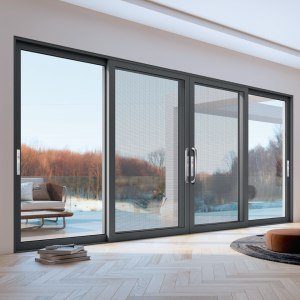
1. Built-In Blinds (Integral or Between-Glass)
These blinds are permanently sealed inside a double-glazed or triple-glazed unit. The blind is operated via a magnetic slider, a small crank, or a motorized system embedded in the frame.
How they work: The blind mechanism is housed within the insulated glass unit (IGU). There is no physical access to the slats, so dust and damage are largely eliminated.
Best use case: Entry doors, patio doors, and any high-traffic area where you want a factory-finished, tamper-proof solution. They are also the preferred choice for commercial buildings where maintenance access is costly.
Key advantages:
- Zero maintenance: No dusting, no broken cords, no slat damage.
- Condensation protection: The blind is protected from humidity, preventing rust and warping.
- Energy efficiency: The blind acts as an additional thermal layer within the glazing, improving the U-value of the door when closed.
Key limitations:
- Cost: This is the most expensive option because it requires a custom-manufactured door unit.
- Non-repairable: If the mechanism fails (e.g., a broken magnetic drive), the entire sealed unit must be replaced.
- Lead time: Built-in blinds require longer manufacturing and delivery times, as they are assembled at the factory.
2. Exterior-Mounted Blinds
These are blinds mounted on the exterior face of the door frame, typically using mounting brackets screwed into the door or wall. They are commonly used on exterior glass doors where internal space is limited or where solar heat gain needs to be blocked before it enters the glass.
How they work: The blind is mounted on the outside, with a control rod or motorized mechanism passing through the frame or operating via a remote. This is distinct from exterior shutters; these are slatted blinds designed for continuous operation.
Best use case: Patio doors, French doors, and storefront entrances in climates with intense sun exposure. They are also used on exterior glass doors with blinds where interior space is at a premium.
Key advantages:
- Solar control: By blocking sunlight before it hits the glass, they reduce heat gain more effectively than interior options.
- Durability: Aluminum and PVC blinds are highly resistant to UV degradation and moisture.
- Space-saving: They do not encroach on interior floor space or interfere with door swings.
Key limitations:
- Weather exposure: While durable, the operating mechanisms (cords, gears) are exposed to wind and rain and will wear faster than interior or built-in options.
- Aesthetics: Exterior hardware is visible and may not suit all architectural styles.
- Retrofit complexity: Requires drilling into the exterior frame, which can void door warranties if not done carefully.
3. Insertable Blinds (Magnetic, Tension, and Adhesive)
This category covers a wide range of retrofit products designed to fit inside the existing glass door frame or against the glass. The most common types are:
- Magnetic blinds: Two panels with magnetic strips that sandwich the glass. The blind is held in place by magnetic force, requiring no drilling.
- Tension blinds: Spring-loaded rods that press against the door frame’s top and bottom, holding the blind in place.
- Adhesive/velcro blinds: Lightweight blinds attached with high-bond tape to the door frame.
Best use case: Rental properties, temporary installations, or projects where the door frame cannot be permanently modified. They are also a popular choice for glass door blinds inserts in older homes.
Key advantages:
- Low cost: The cheapest option by a significant margin.
- Easy removal: No permanent alteration to the door.
- Quick installation: Can be installed in minutes without tools.
Key limitations:
- Durability: Magnetic and adhesive mounts can fail over time, especially in doors that are slammed or exposed to temperature swings.
- Operation: The blind may rattle or shift when the door is opened and closed.
- Gap issues: Tension and adhesive mounts may leave light gaps at the edges, reducing privacy.
4. Full-Glass Door Blinds
This refers to blinds designed for doors that are entirely glass, with minimal or no frame. Examples include frameless shower doors, all-glass office partitions, and some modern entry doors.
How they work: Because there is no frame to mount to, these require either a ceiling-mounted track system (for sliding panels) or a specialized clamp-on bracket system that grips the glass edge.
Best use case: Commercial interiors, minimalist residential designs, and shower enclosures where privacy is needed but framing is not desired.
Key advantages:
- Aesthetic: Maintains the clean, frameless look.
- Versatility: Can be used on curved or angled glass panels.
Key limitations:
- Specialized hardware: The mounting systems are more expensive and harder to source.
- Installation: Typically requires professional installation to ensure the clamps do not stress the glass.
- Limited options: Fewer fabric and color choices compared to standard blinds.
Comparison Table: Door Glass Blind Options at a Glance
This table summarizes the key performance criteria for each type. Use it as a quick reference during your supplier discussions.
| Feature | Built-In (Between Glass) | Exterior-Mounted | Insertable (Magnetic/Tension) | Full-Glass (Track/Clamp) |
|---|---|---|---|---|
| Light Control | Excellent (adjustable, sealed) | Excellent (blocks before glass) | Good (may have edge gaps) | Good (depends on track fit) |
| Privacy | Excellent (full coverage) | Excellent (full coverage) | Moderate to Good (gap-dependent) | Good (full panel coverage) |
| Durability | Very High (protected from elements) | High (weather-resistant materials) | Low to Moderate (mount failure risk) | Moderate (hardware exposure) |
| Maintenance | None (sealed) | Low (periodic cleaning of tracks) | Moderate (frequent re-adjustment) | Moderate (track cleaning) |
| Cost | Highest (custom door unit) | Medium to High (materials + install) | Lowest (retail product) | High (specialized hardware) |
| Best Use Case | Entry doors, premium patio doors | Sun-exposed exterior doors | Rentals, quick retrofits | Frameless glass partitions |
How to Choose the Best Blinds for Your Glass Door: A Buyer’s Guide
When evaluating options for a project, follow this decision framework rather than defaulting to the cheapest or most popular product.
Step 1: Assess the Door Type and Swing
- Hinged doors (entry, French): Built-in blinds are ideal because they do not interfere with the swing. Exterior mounts work but add wind load. Insertable blinds may rattle with the vibration of the door closing.
- Sliding glass doors (patio): Exterior or insertable blinds are common. Built-in blinds are possible but require a custom sliding unit, which is heavy and expensive. For sliding panels, a vertical blind system is often more practical than horizontal slats.
- Full-glass doors: Only track or clamp systems work. Confirm the glass thickness (typically 10mm–12mm) before ordering clamps.
Step 2: Evaluate the Environment
- Sun exposure: For west-facing doors, exterior blinds are significantly more effective at reducing cooling loads. Interior and built-in blinds allow heat to enter the room before blocking it.
- Humidity and condensation: In bathrooms or coastal areas, built-in blinds prevent moisture damage to the slats. Exterior aluminum blinds are also suitable, but PVC slats may warp in high heat.
- Wind exposure: Exterior blinds on patio doors must be rated for wind load. Check the manufacturer’s specification for maximum wind speed; do not assume all exterior blinds are equal.
Step 3: Determine the Operation Method
- Cordless: The safest and most reliable option. Spring-loaded or motorized mechanisms eliminate cord tangling and child safety hazards.
- Motorized: Best for high windows or doors that are difficult to reach. For built-in blinds, motorization is often the only repair-friendly option, as it reduces mechanical strain.
- Manual (corded): Only recommend for interior, low-use applications. Cords on door blinds are a safety risk and a wear point.
Step 4: Consider the Safety Standards
If the door is accessible to children or pets, prioritize cordless or motorized systems. The Window Covering Safety Council recommends cordless operation for all window coverings in homes with young children. For commercial projects, verify that the blind’s operating mechanism meets the accessibility requirements of the local building code.
Frequently Asked Questions About Door Glass Blinds
Q: What is the cost difference between built-in and insertable blinds?
A: The difference is substantial. Built-in blinds require a custom-manufactured insulated glass unit, which can add a significant percentage to the door’s total cost. Insertable magnetic or tension blinds are a fraction of that cost, often priced per unit rather than as part of a custom fabrication. However, the lifecycle cost of insertables is higher if they need frequent replacement.
Q: Can I customize door glass blinds to fit non-standard door sizes?
A: Yes, but the level of customization depends on the type. Built-in blinds are fully customizable at the factory—size, slat color, and operation method are all specified during manufacturing. Exterior blinds can be cut to size on-site or ordered to exact dimensions. Insertable blinds are limited to standard sizes, though some manufacturers offer custom-width magnetic blinds. Always provide exact measurements, including the glass thickness for insertable types.
Q: Are exterior glass door blinds durable enough for outdoor use?
A: Yes, if the materials are specified correctly. Look for powder-coated aluminum frames and stainless steel hardware. Avoid plastic gears and uncoated steel springs, which will corrode. Confirm the blind’s wind load rating and UV stability rating with the manufacturer. A well-specified exterior blind should last 10+ years, but the operating mechanism will likely need lubrication or replacement before the slats wear out.
Q: How do I maintain and clean door glass blinds?
A: For built-in blinds, there is no maintenance—the sealed unit protects the slats. For exterior blinds, periodically rinse with a hose and wipe the tracks with a dry cloth to remove grit. For insertable blinds, remove them and dust them regularly. The most common failure point is the lift cord or spring mechanism; inspect these annually for fraying or tension loss.
Q: Which is better for privacy: window film or blinds?
A: Blinds offer adjustable privacy—you can see out while blocking the view in, or vice versa. Film provides fixed privacy, typically one-way (you can see out during the day, but at night the effect reverses and people can see in). For a front door, blinds are superior because they allow you to control the view at night. For a sidelight where you never need to see through, film is a lower-cost, zero-maintenance solution.
Additional Considerations: Exterior Glass Doors, Inserts, and Full-Glass Solutions
Beyond the core types, several specific scenarios require additional decision-making.
Blinds for Exterior Glass Doors
When the door itself is exterior-rated, the blind must match that durability. Standard interior blinds will degrade quickly due to UV exposure and condensation. For exterior glass doors with blinds, choose:
- Material: Aluminum or coated PVC for slats. Avoid wood or MDF, which will absorb moisture.
- Mounting: Use heavy-duty brackets with corrosion-resistant screws. Do not rely on adhesive mounts for exterior applications—temperature swings will break the adhesive bond.
- Condensation management: If the door is single-glazed, condensation will form on the inside of the glass and drip onto the blind headrail. Ensure the headrail has drainage holes or is sloped to prevent water pooling.
Glass Door Blinds Inserts for Divided-Lite Doors
Doors with multiple small glass panels (divided lite) present a challenge. A single large blind cannot cover the entire door. Options include:
- Individual inserts: Install a small tension or magnetic blind in each panel. This is labor-intensive but maintains the door’s aesthetic.
- One exterior blind: Mount a single large exterior blind over the entire door, covering the mullions. This is simpler but obscures the door’s design.
- Built-in per lite: The factory installs a mini-blind in each sealed unit. This is the premium solution but significantly increases cost.
Full Glass Door Blinds for Commercial Spaces
For office partitions or conference rooms with full-glass doors, the track-mounted vertical blind is the standard. These offer:
- Zone control: Each panel can be individually adjusted to block light on one side while leaving the other open.
- Acoustic benefits: Certain fabric-backed vertical blinds add a small amount of sound absorption, which is valuable in open-plan offices.
- Fire resistance: Specify fabrics with a Class A fire rating for commercial installations.
Why Work with a Factory Supplier for Custom Door Glass Blinds
When your project requires non-standard sizes, specific color matching, or a large volume of units, the retail market falls short. This is where working directly with a manufacturer changes the procurement process.
As a door and window manufacturer, we handle door glass blinds as an integrated part of the door unit, not as an aftermarket add-on. Our approach is to match the blind system to the door’s structural and thermal performance requirements.
How we meet these standards:
- Integrated customization: We produce built-in blinds within our own insulated glass units. This means you can specify the slat color, operation type (magnetic slide or motorized), and glass specification (low-E, tempered, laminated) as a single order. There is no risk of a third-party blind not fitting the frame.
- Adjustable profile structure: For exterior blind systems, we adjust the profile and mounting hardware to comply with the wind load and building codes of your target market. This is critical for export projects where local regulations differ from the manufacturer’s domestic standards.
- Pre-shipment verification: Every door unit with integrated blinds undergoes an air-tightness and water-tightness test before shipment. This ensures that the blind mechanism does not compromise the door’s seal, which is a common failure point in cheaply integrated units.
- Export logistics: We handle FCL and LCL shipments with full customs documentation. For large construction projects, we provide packing lists and proforma invoices that align with your import clearance requirements.
If you are sourcing for a project that requires custom door glass blinds—whether built-in for a villa entrance or exterior blinds for a commercial patio—contact our team to discuss the specifications and lead time. We can provide a detailed quotation based on your door dimensions and performance requirements.