Key Takeaways: What You Need to Know About Discounted Doors
The direct answer to the primary question—how to find discounted doors with frame kits without compromising quality—is to focus on the supply chain. Discounts on doors typically come from three sources: factory-direct sales, bulk order volume, and standardized production runs. The key is not to chase the lowest price, but to understand why the price is lower and verify that the cost reduction does not come from substandard materials or skipped quality control steps.
For B2B buyers, a discounted door with frame kit is a bundled unit—usually a slab, pre-hung frame, and hinges—priced below standard retail. The savings are legitimate when they stem from eliminating the middleman, committing to volume, or selecting from a manufacturer’s high-volume standard sizes. The risk arises when the discount masks thinner materials, poor weather sealing, or non-compliant fire ratings.
Door and Frame Kits Explained: Types and Benefits
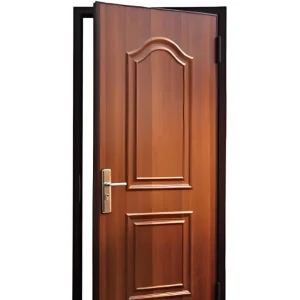
A “door with frame kit” (often called a pre-hung unit) is distinct from a door slab. The slab is just the door panel. The kit includes the frame jambs, and often the hinges pre-installed, and sometimes the threshold. This distinction matters for cost and labor.
Pre-hung Units: These are the most common for exterior and interior passage doors. The frame is assembled, the door is hung on hinges, and the unit is ready to be set into a rough opening. The benefit is speed of installation and a guaranteed fit between the door and frame. For a contractor, this reduces on-site labor time significantly, which is often a hidden cost that offsets the higher initial price of a pre-hung unit compared to a slab.
Slab Doors: These are just the door panel. They are cheaper upfront because you are not paying for the frame or the labor to assemble it. However, you must purchase or build the frame separately, and the installation requires skilled carpentry to ensure the door operates correctly. For projects with non-standard wall thicknesses or custom openings, slabs offer flexibility that pre-hung units cannot.
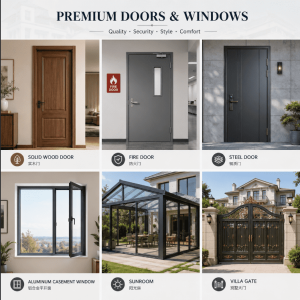
Custom Kits: For commercial projects or high-end villas, manufacturers offer kits where the frame profile, material (e.g., aluminum, solid wood, or steel), and door core are specified to meet project drawings and local energy codes. These are rarely “discounted” in the retail sense, but they become cheaper per unit when ordered in bulk quantities for a single development.
Discounted Doors vs. Standard Purchases: A Cost-Benefit Analysis
The decision to buy discounted doors is a calculation of unit price against total installed cost and lifecycle performance.
When you buy doors separately (slab + frame + hardware), you pay a premium for the convenience of sourcing from a single retail point, but you often pay hidden costs: multiple shipping fees, mismatched components, and the labor cost of assembling the frame on-site. A door with frame kit consolidates these components, reducing procurement time and installation labor.
However, the “discount” must be evaluated against the specification. A cheaper door might use a honeycomb paper core instead of solid timber or mineral wool. For interior applications, this might be acceptable. For exterior entrances or fire-rated stairwells, it is a critical failure. The cost-benefit analysis must include the cost of replacement if the door fails within the warranty period—a risk that increases with poorly manufactured discounted products.
How to Choose a Reliable Supplier for Discounted Doors
Evaluating a supplier for discounted doors requires looking past the price list. The primary distinction is between a factory-direct manufacturer and a middleman or distributor.
Factory-Direct: Buying directly from the factory eliminates the distributor markup. This is where the deepest discounts are found. The trade-off is that you are often dealing with a manufacturer in a different time zone, and you must manage the logistics and customs documentation yourself. The advantage, beyond price, is direct access to the production line for customization and quality control.
Distributors: They hold inventory, offer local support, and handle returns more easily. Their prices are higher because they carry the cost of warehousing and logistics. For small orders (1-5 doors), a distributor might be the only practical option. For bulk orders (50+ doors), the factory-direct route becomes economically compelling.
When evaluating any supplier, ask for a pre-shipment inspection report. This is a critical differentiator. A reputable factory will have the capability to test for air-tightness, water-tightness, and wind resistance—especially for exterior doors. If the supplier cannot provide test data or an inspection plan, the discount is likely coming from skipped quality assurance.
Comparison Table: Door and Frame Kit Options
This table compares common door and frame kit configurations to help you match the product to your project type.
| Kit Type | Material | Customization Level | Typical Price Range | Lead Time | MOQ |
|---|---|---|---|---|---|
| Interior Pre-hung (Hollow Core) | Wood composite / MDF | Low – standard sizes only | Low | Short (in stock) | Low (1-5 units) |
| Interior Pre-hung (Solid Core) | Solid timber / engineered wood | Medium – size and paint finish | Medium | Medium (2-4 weeks) | Medium (10+ units) |
| Exterior Pre-hung (Thermal Break Aluminum) | Aluminum with polyamide thermal break | High – custom color, glass, hardware | High | Longer (4-8 weeks) | Medium (20+ units) |
| Exterior Pre-hung (Solid Wood) | Hardwood (oak, mahogany) | High – custom profiles and stains | High | Longer (4-8 weeks) | Medium (10+ units) |
| Custom Project Kit | Steel / Aluminum / Wood | Full – engineered to drawings | Variable (project-based) | Longest (8-12 weeks) | High (50+ units) |
Note: Price ranges vary significantly with glass type, hardware grade, and surface finish. Lead times depend on current factory capacity and seasonality.
Buying Guide: Steps to a Smart Purchase
To execute a smart purchase of discounted doors, follow this procurement framework.
Step 1: Verify the Building Code Compliance. Before comparing prices, confirm the door’s fire rating and thermal performance (U-value) meet your local code. A discount is worthless if the door fails inspection. Ask for the test certificates, not just a verbal claim.
Step 2: Measure the Rough Opening Correctly. A pre-hung unit is built to fit a specific rough opening size. If you order the wrong size, the discount is lost in the cost of rework. Standard widths are typically 30, 32, and 36 inches, but verify against your actual framing. For custom projects, provide the manufacturer with precise opening dimensions and wall thickness.
Step 3: Assess the Hardware Grade. The door might be discounted, but the hinges and lock set must be commercial-grade for high-traffic applications. Check the hinge gauge (heavier is better) and the lock’s security rating. Replacing cheap hardware later costs more than the initial savings.
Step 4: Calculate the Total Landed Cost. The unit price is only part of the equation. For bulk orders, include freight, customs duties, and potential warehousing. A factory-direct quote that is 15% cheaper per door can be negated by a 20% increase in freight costs for a partial container. Compare the total landed cost per unit, not the ex-factory price.
Step 5: Review the Warranty and Return Policy. Discounted items, especially clearance or overstock, are often sold “as-is” with no return rights. Confirm what is covered: warping, finish defects, and hardware failure. A standard warranty covers manufacturing defects but not installation errors or environmental damage.
Common Pitfalls and How to Avoid Them
The most common pitfall is assuming the discount comes from efficiency rather than reduced quality. Always ask the supplier to specify the door core material and frame thickness. For exterior doors, verify the thermal break and glass specifications.
Another frequent issue is hidden costs. The quote might exclude hinges, locks, or the threshold. Ensure you are comparing like-for-like quotes that include all necessary components for a functional door unit. Finally, be wary of MOQ (Minimum Order Quantity) traps. You might get a great per-unit price, but only if you buy 100 units. If you only need 40, ensure you are not paying for inventory you cannot use.
Additional Considerations: Door and Frame Kit Accessories
When sourcing discounted doors, the frame kit is the core, but the accessories determine performance. Pay attention to the weatherstripping quality on exterior kits—this is the primary defense against air and water infiltration. For aluminum kits, check if the frame includes a thermal break; without it, condensation and heat loss become issues.
Consider the threshold type. A low-profile threshold is accessible but may not perform well in heavy rain. A raised threshold offers better weather resistance but is a trip hazard. Match the threshold to the door’s exposure to the elements. For glass options within the kit, specify tempered or laminated glass for safety and energy efficiency. The glass type significantly impacts the unit price, so clarify this in the quote.
Frequently Asked Questions About Discounted Doors
What are the benefits of buying a door with frame kit?
The primary benefit is installation efficiency. The frame and door are pre-assembled to fit together perfectly, reducing on-site labor time and the risk of misalignment. It also simplifies procurement—you order one SKU instead of multiple components.
How can I get discounted doors without sacrificing quality?
Buy factory-direct in bulk. This removes the middleman markup, which is where the discount comes from. Ensure the factory provides pre-shipment inspection reports for air-tightness, water-tightness, and wind resistance to verify quality is maintained.
What is the difference between a door slab and a pre-hung door with frame?
A slab is just the door panel. A pre-hung unit includes the frame jambs and hinges, ready to install. Slabs are cheaper but require skilled labor to frame and hang. Pre-hung units are easier to install and ensure a proper fit.
Are discounted doors customizable in size and design?
Yes, but customization often reduces the discount. Factory-direct manufacturers can adjust size, color, glass type, and hardware. However, discounts are typically deeper on standard sizes and finishes that are produced in high volume. Custom work involves additional setup time and material costs.
What should I look for in a door and frame kit supplier?
Look for direct factory access, the ability to adjust profiles to local building codes, and a robust pre-shipment inspection process. Verify their experience with export logistics, including customs documentation. Ask for references or samples of their inspection reports.
How do I ensure the discounted doors meet building codes?
Request the test certificates for the specific door model. For fire-rated doors, check the certification body and the rating (e.g., 20, 45, 60, or 90 minutes). For exterior doors, review the air and water infiltration test results against your local energy code.
What are the typical lead times for bulk orders of discounted doors?
Lead times vary with order volume and current factory capacity. Standard sizes in stock can ship quickly. Bulk orders of custom sizes typically require 4-8 weeks for production, plus shipping time. Always confirm the production schedule in writing before placing the order.
Here is how we meet these standards.
As a factory-direct manufacturer, our approach to providing discounted doors aligns with the procurement framework above. We eliminate the middleman markup by supplying directly from our factory in China, which is the primary source of the discount. To ensure quality is not compromised, we offer full customization on size, color, glass, and hardware, and we conduct strict pre-shipment inspections on air-tightness, water-tightness, and wind resistance for every order.
We understand that B2B buyers need more than just a low price; they need compliance and reliability. Our profile structures and fittings are adjustable to match the local building codes of your target market. We also handle the full export process, providing packing lists, proforma invoices, and complete customs documents for FCL and LCL shipments. This is how we ensure that the discount you receive is a result of supply chain efficiency, not a reduction in the standards that your project requires.
For a bulk order quote that meets your specifications, contact our team directly.