Content Menu
● 1. Understanding the Anatomy of a Wood Door with Glass
● 2. Our Factory Capabilities: Manufacturing Wood and Glass in Sync
● 3. The Jusen Advantage: Quality Control and Pre-Shipment Testing
● 4. Customization Options for Your Project
● 5. Why B2B Buyers Choose Jusen as Their Manufacturing Partner
10 min read
When an overseas buyer places their first container order for wood doors with glass, the question they rarely ask first is about price. It is about whether the factory can replicate the sample quality at scale. We have heard that concern in nearly every initial meeting at our factory floor in China. The gap between a polished showroom sample and a container that arrives after a 30-day sea voyage is where most supplier relationships break down.
At Jusen Door and Windows Manufacturing Co., Ltd., we close that gap by controlling both the joinery and the glazing under one roof. This article walks through what we have learned building these products for international clients — what actually matters in construction, how we test before shipment, and where you can flex specifications without compromising performance.
Understanding the Anatomy of a Wood Door with Glass
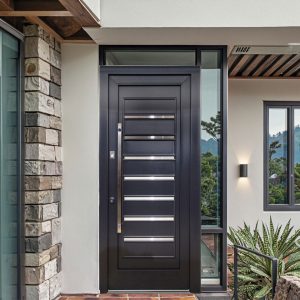
A wood door with glass is not simply a solid slab with a hole cut into it. The interaction between the timber frame, the glass unit, and the hardware determines whether the door performs for five years or twenty. Here is what we examine before we cut a single piece of lumber.
Frame Construction: Solid Wood vs. Engineered Wood
Solid wood offers undeniable aesthetics. The grain depth and natural variation cannot be replicated. But solid wood also moves. Temperature swings and humidity changes cause expansion and contraction, which can warp a door slab or crack the seal around the glass.
Engineered wood — typically laminated veneer lumber or a stave-core construction — resists this movement far better. We recommend engineered cores for wide doors with large glass panels, especially in climates with distinct seasons. For interior doors where humidity is controlled, solid wood remains a strong option.
Our factory offers full customization on core material. We can build with either, and we will be direct with you about which suits your market. Clients in the Middle East often prefer engineered cores due to extreme heat. Buyers in temperate Europe frequently select solid oak for residential projects. There is no universal right answer — only the right answer for your project’s conditions.
The Glazing Unit: Insulated Glass and Safety Standards
The glass in a wood door is where thermal performance and safety converge. We use double-glazed insulated glass units (IGUs) as standard for exterior doors. The sealed air gap reduces heat transfer and muffles outside noise. For colder markets, we can upgrade to Low-E coatings that reflect heat back into the building.
Safety glazing is non-negotiable for doors. Tempered glass shatters into small granules rather than jagged shards. Laminated glass holds together even when broken, which is critical for entry doors where forced entry is a concern. Building codes in most regions require one or both for door glazing, and we configure accordingly.
Our strict pre-shipment inspection includes air-tightness and water-tightness tests. These are not just regulatory checkboxes. They verify that the seal between the wood frame and the glass unit will not fail under wind-driven rain. We have seen too many imported doors fail these tests because the manufacturer skipped the sealing quality check.
Hardware Integration: Hinges and Locks
A door with a large glass panel is heavy. Standard hinges will sag within months. We use heavy-duty ball-bearing hinges rated for the specific weight of each door. For wide panels, we recommend three hinges rather than two.
Multi-point locking systems are another consideration. A single deadbolt leaves the door vulnerable at the corners. Multi-point locks engage at three or more points along the edge, which also pulls the door tighter against the weatherstripping. We offer full customization on hardware accessories, so you can specify the security level your project requires — whether that is a basic privacy lock for an interior door or a high-security system for a commercial entrance.
Our Factory Capabilities: Manufacturing Wood and Glass in Sync
We are not an assembly shop. We operate in-house production lines for both wood fabrication and aluminum frame construction. That distinction matters for buyers who have been burned by suppliers who source components from multiple subcontractors and bolt them together.
In-House Production Lines for Wood and Aluminum
Our wood line handles everything from raw lumber to finished, sanded, and sealed door slabs. Our aluminum line produces thermal-break frames for casement doors and sliding doors that pair with wood interiors. This dual capability means we control the tolerances between the wood door leaf and the aluminum frame.
For projects that require a hybrid approach — wood on the interior face, thermal-break aluminum on the exterior — we manufacture both components. We do not rely on third-party suppliers for critical parts. That gives us control over fit and finish.
We offer OEM and ODM services extensively. If you are an importer with your own brand, we produce doors to your specifications without placing our name on the product. If you are an architect with a specific design intent, our engineers adapt our standard profiles to match your drawings.
Custom Sizes and Architectural Specifications
Standard sizes cover a fraction of what the market needs. Architects design for the building, not the catalog. We handle non-standard dimensions routinely — tall entry doors, oversized sliders, narrow stile configurations with maximum glazing.
Our full customization extends to size, color, and glass type. If your project requires a specific glass pattern or a custom RAL color for the aluminum frame, we accommodate that. We have produced doors with obscure glass for bathroom privacy, bronze-tinted glazing for solar control, and decorative mullion patterns for heritage-style buildings.
The practical limit is not our machinery — it is the structural integrity of the design. We will tell you if a proposed configuration compromises the door’s performance. That honesty has saved several clients from expensive field failures.
Meeting Global Building Codes
Building codes vary significantly between markets. Wind load requirements in Florida differ from those in Frankfurt. Energy efficiency standards in Canada are stricter than in many Asian markets. A door that passes inspection in one country may fail in another.
Our adjustable profile structure and fittings are engineered to adapt to local building codes. We have supplied projects across North America, Europe, the Middle East, and Southeast Asia. Before production, we review the relevant standards for your target market and adjust the frame thickness, glass specification, and hardware ratings accordingly.
This is not a simple one-size-fits-all adjustment. A high-wind zone requires a reinforced aluminum frame and thicker glass. A cold climate requires a wider thermal break and a low U-value glazing package. We factor these requirements into the quote and the production process.
The Jusen Advantage: Quality Control and Pre-Shipment Testing
Ordering from an overseas factory carries inherent risk. You cannot walk the production floor daily. Our quality control process is designed to reduce that risk before the container leaves our facility.
The Three-Step Inspection Protocol
Every batch of wood doors with glass undergoes our pre-shipment inspection protocol. The three tests are air-tightness, water-tightness, and wind resistance. These tests simulate real-world conditions — heavy rain, strong winds, and pressure differentials.
Air-tightness testing checks for leaks around the frame and the glass seal. Water-tightness testing sprays the door assembly with water while applying pressure to detect any penetration. Wind resistance testing ensures the door structure can withstand the specified load without deformation.
We run these tests on sample units from each production batch. That is not a marketing claim — it is a documented procedure in our factory. Clients who visit our facility can observe the testing equipment and review the results before shipment.
Packaging for Export Durability
Wood and glass are a fragile combination for ocean freight. Temperature changes inside a shipping container can cause condensation. Improper bracing leads to shifting and breakage.
Our packaging protocol addresses both risks. Wood components are wrapped in moisture-barrier film. Glass surfaces receive protective foam and corner guards. Doors are crated with internal bracing that prevents movement during transit.
We have rich experience in foreign trade, which translates to practical knowledge about container loading. We know how to distribute weight evenly, how to brace the load, and how to document the shipment for customs clearance. We support both FCL and LCL shipment, and we provide packing lists, proforma invoices, and full customs documentation.
Customization Options for Your Project
The customization options for wood doors with glass go far beyond choosing a stain color. Here are the decisions that actually affect performance and cost.
Glass Types: Clear, Frosted, Low-E, and Decorative
Clear glass maximizes natural light but offers no privacy and limited solar control. Frosted glass provides privacy while still transmitting light. Low-E glass reduces heat transfer and protects interiors from UV fading.
For decorative applications, we offer patterned glass, beveled glass, and custom-etched designs. These are common in hospitality projects and high-end residences.
The choice of glass affects more than aesthetics. It affects the door’s weight, which affects the hardware requirements. A heavier glass package requires stronger hinges and potentially a reinforced frame. We factor this into the engineering.
Wood Species and Finish Selection
We work with oak, walnut, mahogany, ash, and other species. Each has distinct grain patterns and hardness characteristics. Oak is durable and affordable. Walnut offers a rich, dark tone. Mahogany provides excellent stability and rot resistance.
Finish options include paint, stain, and clear sealers. Painted finishes offer the most color flexibility but hide the wood grain. Stains highlight the grain while adding color. Clear sealers protect the wood while preserving its natural appearance.
We do not push one option over another. The right choice depends on your market’s preferences and the door’s location — interior or exterior, sheltered or exposed.
Integration with Aluminum Systems
The hybrid approach — wood interior with thermal-break aluminum exterior — is gaining traction for exterior doors. The wood provides warmth and aesthetic appeal. The aluminum provides structural rigidity and weather resistance.
Our expertise in thermal-break aluminum doors and windows and system windows positions us as a one-stop shop for the entire building envelope. You can source the entry door, the casement windows, and the sliding patio door from a single factory. This simplifies your supply chain and ensures consistent quality across products.
Why B2B Buyers Choose Jusen as Their Manufacturing Partner
The decision to source from a specific factory comes down to trust and economics. Here is the case for working with us.
Cost Efficiency Without Middlemen
We sell directly from our factory. There is no trading company markup, no agent commission, no inflated middle layer. The price we quote is the price that covers our production costs and a reasonable margin. That translates to competitive pricing for you.
Streamlined Logistics and Documentation
International trade involves paperwork. We handle it. Packing lists, proforma invoices, certificates of origin, and customs declarations are prepared accurately and on time. We know what documentation your country’s customs authority requires, and we provide it proactively.
We also manage the logistics coordination. Whether you prefer FCL or LCL, we work with freight forwarders to ensure your cargo is booked, loaded, and shipped on schedule.
Frequently Asked Questions
What is the MOQ for custom wood doors with glass?
We are flexible. While we handle large construction project bulk supply, we also support smaller pilot projects. If you are testing the market with a small order before committing to volume, we can accommodate that. Contact our team with your specifications to discuss minimums.
Can you match specific local fire rating or wind load requirements?
Yes. Our engineering team adjusts the profile structure and fittings to match local building codes. For wind load requirements, we reinforce the frame and specify appropriate glass thickness. For fire ratings, we use approved materials and construction methods. We do not claim compliance without reviewing the specific standard.
How do you prevent condensation between the glass panes?
Condensation between panes indicates a failed seal. We use high-quality desiccants within the spacer bar and a multi-step sealing process. Our pre-shipment inspection includes water-tightness testing to verify the IGU seal is intact. That said, no seal lasts forever. The lifespan of an IGU depends on temperature extremes and sun exposure. We use materials rated for the expected service life.
Do you offer OEM branding on the hardware and frames?
Absolutely. We offer private label and OEM services. You can have your brand on the door hardware, the frame extrusions, and the packaging. This helps you build your brand identity in your market without investing in your own factory.
How do you ensure the wood does not warp during shipping?
We use kiln-dried wood with moisture content controlled to the target level. The wood is then sealed and wrapped in moisture-barrier film before crating. During container loading, we position the crates to minimize exposure to condensation. No method is foolproof — extreme temperature swings during transit can affect any wood product. But our packaging protocol significantly reduces the risk.
Wood doors with glass are not always the cheapest option. If you are working with a tight budget for a project where appearance is secondary, a simpler door design or a different material might serve better. We will tell you that honestly. But if you need the combination of natural wood aesthetics and modern glazing performance, our factory is equipped to deliver both.
Choose a wood door with glass if your project demands architectural warmth and natural light, and you have budget flexibility for premium materials. Choose an aluminum door with glass if your priority is maximum durability with minimal maintenance, or if the door is in a high-humidity environment where wood requires too much upkeep.
References
- Efficient Windows Collaborative. “Insulating Glass Units.” https://efficientwindows.org/ig-unit/
- American Architectural Manufacturers Association. “AAMA/WDMA/CSA 101/I.S.2/A440-17.” https://www.aamanet.org/
- Window & Door Manufacturers Association. “Wood Door Care & Maintenance.” https://www.wdma.com/
- International Code Council. “International Building Code — Glazing Requirements.” https://www.iccsafe.org/
Ready to source wood doors with glass for your next project? Send us your specifications and we will respond with a detailed quote and production timeline.
https://doorwoodendoors.com/contact-us/” style=”display:inline-block;padding:12px 24px;background:#2563eb;color:#fff;text-decoration:none;border-radius:6px;font-weight:600″>Get a Free Quote