Content Menu
● 1. Understanding Craftsman Style Front Doors: Types and Applications
● 2. Craftsman Style Front Doors Quality and Performance Factors
● 3. How to Evaluate Craftsman Style Front Doors Suppliers
● 4. Key Quality Indicators for Craftsman Style Front Doors Buyers
● 5. Relevant Industry Standards and Certifications
● 6. Our Doors Manufacturing Capabilities
● 7. Production Process: From Raw Material to Finished Doors
● 8. Quality Control: Our Multi-Stage Inspection Process
● 9. Customization and OEM/ODM Options
● 10. Ordering Process: MOQ, Lead Time, and Shipping
● 11. Certifications and Industry Standards
14 min read
The first container of craftsman style front doors arrives at a distribution yard in Texas. The buyer checks the first unit and finds the glass panel is 3mm narrower than the approved sample. Not catastrophic — but enough to delay the housing project by a week while replacements are fabricated.
This scenario plays out more often than procurement managers admit. The gap between a beautiful sample and a production run that meets specifications is where projects succeed or fail.
This guide covers what B2B buyers need before committing to a supplier of craftsman style front doors: material science, performance metrics, customization realities, and procurement frameworks that separate reliable partners from costly mistakes.
Understanding Craftsman Style Front Doors: Types and Applications
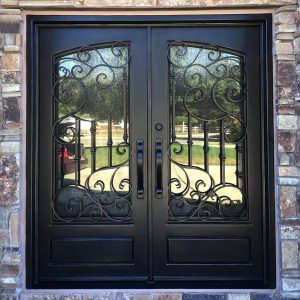
A craftsman style front door is defined by flat, linear panels, robust frame construction, and geometric glass inserts — typically square or rectangular patterns. The style emerged from the Arts and Crafts movement of the early 20th century as a rejection of Victorian excess.
Direct answer: Craftsman style front doors feature flat panel construction, substantial frames, and geometric glass designs. They suit residential projects from bungalow renovations to modern farmhouse builds, and can be manufactured in solid wood, aluminum, steel, or fiberglass depending on performance requirements.
Architectural DNA and Design Rules
The Arts and Crafts movement emphasized honesty in materials and construction. For doors, this translates to:
- Flat panels rather than raised panels — the panel surface sits flush with the frame
- Thick, substantial stiles and rails — typically 100mm to 150mm wide
- Geometric glass patterns — squares, rectangles, or grids, never arches or curves
- Exposed joinery details — through-tenons or visible peg details on wood doors
- Earthy, natural color palettes — deep greens, warm browns, ochres
These rules matter for procurement because they affect manufacturing complexity. A true craftsman door requires precise joinery and careful glass setting. Cheap imitations use thin veneers over hollow cores and pressed “fake” panel lines.
Material Matrix: Solid Wood vs. Aluminum vs. Steel
Material selection drives cost, lead time, maintenance, and performance. Here is how the options compare for B2B buyers:
| Material | Pros | Cons | Typical Price Range (per unit, factory-direct) |
|---|---|---|---|
| Solid wood (oak, mahogany, walnut) | Premium aesthetic, natural insulation, high perceived value | Requires refinishing every 2–3 years, susceptible to warping in humidity, heavier | $800–$2,500 |
| Thermal-break aluminum | Excellent insulation, zero maintenance, slim sightlines, 50+ year lifespan | Higher upfront cost than steel, limited wood-grain realism | $600–$1,800 |
| Steel | Most affordable, strong, good security | Poor insulation without thermal break, limited design customization | $400–$900 |
| Fiberglass | Mimics wood grain, low maintenance, good insulation | Mid-range aesthetic quality, limited high-end feel | $500–$1,200 |
For high-end residential projects, solid wood remains the standard. For modern builds prioritizing energy efficiency and slim profiles, thermal-break aluminum is increasingly the default. The keyword here is thermal break — a polyamide strip inserted between the interior and exterior aluminum profiles that prevents heat transfer.
The “Timeless Elegance” Factor
Craftsman doors occupy a unique position in architectural styles. They work equally well on a 1920s bungalow, a 2020s modern farmhouse, or a contemporary minimalist home. This versatility makes them a safe recommendation for architects who cannot afford a stylistic gamble on a client’s primary entrance.
The geometric glass patterns — often called “Prairie style” after Frank Lloyd Wright’s influence — provide visual interest without being trendy. A well-made craftsman door will look appropriate in 20 years, which is more than can be said for many contemporary designs.
Craftsman Style Front Doors Quality and Performance Factors
Direct answer: Door quality is determined by frame construction, thermal performance, weather resistance ratings, hardware quality, and glazing specifications. Buyers should verify specific test reports rather than relying on marketing claims.
Thermal Performance Metrics
For most North American and European markets, thermal performance is the single most important technical specification. The relevant metrics:
- U-value (U-factor): Measures heat transfer through the door. Lower is better. A good thermal-break aluminum door achieves 1.0–2.0 W/m²K. Solid wood typically ranges 2.0–3.0 W/m²K without special glazing.
- Solar Heat Gain Coefficient (SHGC): Measures how much solar radiation passes through. Ranges from 0 to 1. For cold climates, higher SHGC (0.4–0.6) helps passive heating. For hot climates, lower (0.2–0.3) reduces cooling loads.
- Condensation resistance: Related to the temperature of interior surfaces. Poor thermal breaks cause condensation on aluminum frames during winter, leading to mold and frame degradation.
The frame depth must accommodate the glazing unit. A standard 24mm double-glazed unit requires a frame depth of at least 60mm. Triple glazing (36–44mm) requires 80mm or deeper frames.
Air, Water, and Wind Resistance Ratings
These three tests determine whether a door performs in real weather conditions:
- Air permeability (EN 12207 or ASTM E283): Measures air leakage through the closed door. Classes range from 1 (least airtight) to 4 (most airtight). For residential projects, Class 3 or 4 is recommended.
- Water tightness (EN 12208 or ASTM E547): Measures resistance to water penetration under wind-driven rain. Classes range from 1A to 9A. Coastal or high-rainfall regions need Class 7A or higher.
- Wind load resistance (EN 12210 or ASTM E330): Measures structural performance under wind pressure. Classes range from A1 to C5. Hurricane-prone regions require the highest classifications.
A reputable manufacturer will provide test reports from accredited laboratories. Ask for these reports before ordering, not after problems appear.
Hardware and Glazing Integration
Multi-point locking systems are non-negotiable for security and weather performance. A single-point lock leaves the door vulnerable to forced entry and allows the frame to flex, compromising the weather seals.
Specifications to verify:
- Locking points: minimum 3-point locking for entrance doors; 5-point or more for high-security applications
- Lock cylinder: certified to EN 1303 or ANSI/BHMA Grade 1
- Hinges: stainless steel with ball bearings, rated for the door weight (a solid oak door can weigh 80–120kg)
- Glazing: tempered or laminated glass, minimum 6mm thickness; double or triple glazing with low-E coating for thermal performance
Sound Insulation
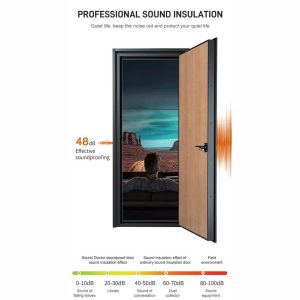
For homes near roads or in urban areas, acoustic performance matters. A door’s Sound Transmission Class (STC) rating depends on:
- Glass thickness and air gap in double glazing (wider gaps improve sound insulation)
- Frame material and sealing quality
- Whether the door has a solid core or hollow sections
A well-sealed craftsman door with 24mm double glazing achieves STC 30–35. Adding laminated glass and improving seals can push this to STC 38–40.
How to Evaluate Craftsman Style Front Doors Suppliers
Direct answer: Evaluate suppliers on test report availability, customization capability, production capacity, quality control processes, and logistics competence. Request specific data on each criterion before shortlisting.
The Middleman Markup Problem
Local distributors typically add 30–50% markup over factory prices. For a project requiring 50 doors, this difference is substantial. Direct factory sourcing eliminates the markup but introduces new risks: communication barriers, quality control uncertainty, and logistics complexity.
The solution is not to avoid distributors entirely — it is to evaluate factories on their ability to handle international orders professionally.
Supplier Evaluation Framework
Use this checklist when assessing potential manufacturers:
Documentation and transparency:
- Can they provide test reports from accredited laboratories (not self-certified)?
- Do they share detailed packing lists and proforma invoices?
- Can they provide references from buyers in similar markets?
Manufacturing capability:
- What is their monthly production capacity?
- Can they handle custom sizes without minimum order penalties?
- What is their CNC machining capability for precise joinery?
Quality control:
- Do they perform pre-shipment inspections? At what stage?
- What is their defect rate (ask for data)?
- Do they have ISO 9001:2015 certification?
Logistics:
- Can they handle both FCL and LCL shipments?
- Do they have experience with your country’s customs requirements?
- What is their typical lead time from order confirmation to shipment?
Red Flags to Avoid
- Vague test reports: If they cannot specify which standard (EN, ASTM) their test results refer to, the results are meaningless.
- Refusal to customize: A factory that pushes you toward standard sizes may not have the manufacturing flexibility you need.
- No pre-shipment inspection: This is a warning sign. Reputable factories welcome third-party inspections.
- Unrealistic lead times: If a factory promises 15-day delivery for custom solid wood doors, they are either cutting corners or lying.
- No export documentation experience: Customs delays cost more than any price advantage.
Questions to Ask Before Ordering
- “Can you provide the specific test report for air permeability, water tightness, and wind resistance for this door model?”
- “What is your tolerance for dimensional accuracy on custom sizes?”
- “How do you handle defects found during pre-shipment inspection?”
- “Can you adjust the profile structure to meet our local building codes?”
- “What is your lead time for a container order of 40 units with custom glass patterns?”
- “Can we see a sample before full production?”
Key Quality Indicators for Craftsman Style Front Doors Buyers
Direct answer: The five key quality indicators are frame material integrity, glass seal quality, hardware durability, surface finish consistency, and dimensional accuracy. Each can be verified through specific tests or inspections.
Frame Material Integrity
For aluminum doors, verify the alloy grade (typically 6063-T5 or 6063-T6) and the wall thickness of the profiles. Standard thickness ranges from 1.4mm to 2.0mm. Thinner profiles flex under wind load and compromise the weather seals.
For solid wood doors, check the moisture content (should be 8–12% for most climates) and the joinery method. Mortise-and-tenon joints are superior to dowel or screw joints for long-term stability.
Glass Seal Quality
The seal between glass and frame is the most common failure point. Look for:
- Dual or triple sealing systems (EPDM gaskets plus silicone sealant)
- Proper drainage holes in the frame bottom to prevent water accumulation
- Desiccant-filled spacer bars in insulated glass units to prevent fogging
Surface Finish Consistency
For powder-coated aluminum, check the coating thickness (60–80 microns is standard) and the adhesion quality. For stained wood, verify the number of coating layers and the UV resistance of the finish.
Dimensional Accuracy
Tolerances matter for installation. Standard tolerances:
- Door height and width: ±2mm
- Squareness (diagonal difference): ≤3mm
- Frame flatness: ≤2mm over 2m length
Relevant Industry Standards and Certifications
Direct answer: The key standards are ISO 9001:2015 for quality management, EN 14351-1 for door performance, and ASTM E283/E330/E547 for air, wind, and water testing. Verify that test reports come from accredited laboratories.
ISO 9001:2015
This quality management standard ensures consistent production processes and traceability. It is a baseline requirement — most serious manufacturers hold this certification.
EN 14351-1
The European standard for windows and doors sets performance requirements and test methods. It covers air permeability, water tightness, wind resistance, thermal transmittance, and opening force.
ASTM Standards (North America)
- ASTM E283: Standard Test Method for Determining Rate of Air Leakage
- ASTM E330: Standard Test Method for Structural Performance of Exterior Windows and Doors
- ASTM E547: Standard Test Method for Water Penetration of Exterior Windows and Doors
CE Marking
Required for doors sold in the European Economic Area. The CE mark indicates compliance with relevant EU directives, including the Construction Products Regulation.
Our Doors Manufacturing Capabilities
As a factory-direct manufacturer, our approach to craftsman style front doors starts with a simple premise: the test report is the product. If a door meets its stated performance metrics, everything else — aesthetics, finish, hardware — is secondary.
Engineering for Your Local Climate
We adjust our profile structures and fittings to match the specific building codes of your target market. A craftsman door destined for Florida requires different wind load reinforcement than one going to Minnesota with its thermal requirements.
Our factory runs strict pre-shipment inspections covering air tightness, water tightness, and wind resistance. These are not optional checks — they are part of the production workflow for every order.
Customization Without the Premium
We offer full customization on size, color, glass, and hardware accessories. This means you can specify the exact geometric patterns that define the craftsman aesthetic without forcing your project into standard dimensions.
Our CNC machining capability handles complex joinery and precise glass setting. Powder coating is available in any RAL or NCS color, and wood-grain finishes via sublimation offer the visual warmth of timber with the durability of aluminum.
Supporting Your Logistics and Documentation
With years of foreign trade experience, we handle the export complexities. We provide packing lists, proforma invoices, and full customs documentation. Both FCL and LCL shipments are available, with direct delivery from our factory in China.
Production Process: From Raw Material to Finished Doors
Direct answer: The production process involves aluminum profile cutting and machining, thermal break assembly, powder coating or wood-grain finishing, glass unit fabrication, frame assembly, hardware installation, and final quality inspection.
Step 1: Profile Cutting and Machining
Aluminum profiles arrive in 6-meter lengths and are cut to size using CNC saws. Precision matters here — a cut error of 0.5mm compounds across the frame assembly.
CNC machining centers then create the drainage holes, screw ports, and hardware cutouts. This is where the geometry of the craftsman design takes shape, with precise miter cuts for the frame corners.
Step 2: Thermal Break Assembly
For thermal-break profiles, polyamide strips are inserted into the grooves and crimped to create a mechanical bond between the interior and exterior aluminum sections. This step determines the door’s thermal performance.
Step 3: Surface Treatment
Powder coating involves electrostatic application of dry paint followed by curing in an oven at approximately 200°C. The coating thickness is measured to ensure 60–80 microns.
Wood-grain finishes use sublimation: a transfer film is applied to the powder-coated surface, then heated to transfer the wood pattern into the coating. This produces a durable finish that does not peel or fade.
Step 4: Glass Unit Fabrication
Insulated glass units are assembled with spacer bars, desiccant, and sealant. The glass is cut to size, washed, and assembled in a controlled environment to prevent fogging.
Step 5: Frame Assembly and Hardware Installation
The frame sections are assembled with corner keys and sealant. Multi-point locking systems, hinges, and other hardware are installed. The glass unit is set with EPDM gaskets and pressure plates.
Step 6: Final Inspection
Each door undergoes a visual inspection and functional test. Dimensional accuracy is verified, hardware operation is checked, and surface finish is examined under standardized lighting.
Quality Control: Our Multi-Stage Inspection Process
Direct answer: Our quality control includes incoming material inspection, in-process checks during machining and assembly, and a final pre-shipment inspection with air, water, and wind testing on sample units.
Incoming Material Inspection
Aluminum profiles are checked for alloy grade, surface quality, and dimensional accuracy. Glass is inspected for chips, scratches, and proper tempering. Hardware is verified against the approved specifications.
In-Process Checks
During machining, dimension checks occur at each stage. Welds (for steel frames) are inspected for penetration and appearance. Powder coating thickness is measured with a coating thickness gauge.
Pre-Shipment Inspection
Before packing, sample units from each production batch undergo air tightness, water tightness, and wind resistance testing. The specific test method depends on the target market’s requirements.
Every door is also checked for:
- Dimensional accuracy (±2mm tolerance)
- Hardware function (locks, hinges, handles)
- Glass seal integrity
- Surface finish consistency
- Packaging quality for transit
Customization and OEM/ODM Options
Direct answer: We support OEM (manufacturing to your drawings and specifications), ODM (adapting our designs to your project requirements), and private label (branding doors as your own). All options include full customization on size, color, glass, and hardware.
OEM Collaboration
If you have detailed drawings and specifications, we manufacture to your exact requirements. This is the right choice when you have established designs and need a production partner.
ODM Collaboration
If you know the performance requirements but need design assistance, we adapt our existing craftsman door systems to your specifications. This is faster and often more cost-effective than starting from scratch.
Private Labeling
For distributors who want to sell under their own brand, we apply your logo and branding to the doors and packaging. This requires a minimum order volume to justify the setup costs.
Construction Project Bulk Supply
Our manufacturing capacity supports large-scale projects requiring consistent quality across hundreds of units. For villa complexes and housing developments, we maintain dedicated production lines to ensure uniformity.
Ordering Process: MOQ, Lead Time, and Shipping
Direct answer: Minimum order quantities vary by material and finish complexity. Solid wood doors typically require higher MOQs than aluminum. Lead times range from 20–45 days depending on customization level.
Minimum Order Quantities
- Thermal-break aluminum doors: 10–20 units for custom sizes and colors
- Solid wood doors: 15–30 units
- Standard-size aluminum doors: lower MOQs, sometimes as low as 5 units
Lead Times
- Standard aluminum doors with minimal customization: 20–25 days
- Custom aluminum doors with unique colors and glass: 25–35 days
- Solid wood doors: 35–45 days (wood requires longer drying and finishing time)
Shipping Options
- FCL (Full Container Load): Most cost-effective for large orders. A 40-foot container holds approximately 40–60 aluminum doors or 50–80 wood doors depending on size.
- LCL (Less than Container Load): Suitable for smaller orders or samples. Costs more per unit but allows smaller quantities.
Payment Terms
Standard terms for international orders are 30% deposit to begin production, 70% balance before shipment. Letters of credit are accepted for larger orders from established buyers.
Certifications and Industry Standards
Direct answer: Our manufacturing facility operates under ISO 9001:2015 quality management. Door performance testing follows EN 14351-1 and ASTM standards, with test reports provided per order.
ISO 9001:2015 Certification
Our quality management system covers production, inspection, and documentation processes. This certification is verified through external audits.
Performance Testing
Test reports for air permeability, water tightness, and wind resistance are available for our standard door systems. Custom designs are tested as required by the project specifications.
Building Code Compliance
We adjust profile structures and fittings to match the building codes of target markets. This includes hurricane-rated systems for coastal regions and high-thermal-performance systems for cold climates.
—
Choose A If… Choose B If…
Choose a solid wood craftsman door if: Your project is a high-end residential renovation where the client values authentic materials and is willing to accept maintenance requirements. The premium aesthetic justifies the cost, and the local climate is moderate.
Choose a thermal-break aluminum craftsman door if: Your project is a new build or modern renovation where energy efficiency, slim sightlines, and zero maintenance are priorities. The wood-grain finish provides the craftsman aesthetic without the upkeep.
Choose a factory-direct supplier if: Your order volume justifies container shipping, you have the capability to manage international logistics, and you want to eliminate the distributor markup.
Choose a local distributor if: You need one or two doors for a single project, you require immediate delivery, or you do not have experience with international procurement.
—
References
- ISO 9001:2015 Quality Management Systems — https://www.iso.org/standard/62085.html
- EN 14351-1:2006+A2:2010 Windows and Doors — https://www.en-standard.eu/bs-en-14351-1-2006-a2-2010-windows-and-doors-product-standard-performance-characteristics/
- ASTM E283 — Standard Test Method for Air Leakage — https://www.astm.org/e0283-04.html
- ASTM E330 — Structural Performance of Exterior Windows and Doors — https://www.astm.org/e0330-21.html
- ASTM E547 — Water Penetration of Exterior Windows and Doors — https://www.astm.org/e0547-00r16.html
- Arts and Crafts Movement Overview — https://www.metmuseum.org/toah/hd/acam/hd_acam.htm
- Thermal Break Technology — https://www.alumil.com/technical-guide/thermal-break
—
For architects and contractors, sourcing the right craftsman front doors is about balancing aesthetics with rigorous engineering standards. By working directly with a manufacturer, you eliminate the middleman markup and gain full control over customization and compliance.
At Jusen Door and Windows Manufacturing Co., Ltd., we provide direct factory supply, full customization, and strict pre-shipment quality control to ensure your project meets its performance goals. Our adjustable profile structures and fittings accommodate local building codes across North America, Europe, and beyond.
Ready to discuss your project specifications? https://doorwoodendoors.com/contact-us/“>Contact Our Team for lead times, MOQs, and pricing tailored to your order volume.
https://doorwoodendoors.com/contact-us/” style=”display:inline-block;padding:12px 24px;background:#2563eb;color:#fff;text-decoration:none;border-radius:6px;font-weight:600″>Get a Free Quote