Key Takeaways: Choosing Contemporary Interior Wood Doors
Contemporary interior wood doors are defined by clean lines, minimal ornamentation, and a focus on material quality. The most popular styles today include flat-panel doors, 2-panel designs, doors with glass inserts, and rustic or dark wood finishes. Your primary decisions will revolve around door construction (prehung vs. slab), core type (solid vs. hollow), and wood species or finish.
Before you review specifications or request quotes, establish your project’s baseline requirements: fire ratings for attached garages or utility rooms, acoustic needs for bedrooms and home offices, and local building codes regarding door width and egress. These factors will narrow your choices faster than aesthetic preference alone.
Contemporary Interior Wood Door Styles Explained
The term “contemporary” in interior doors does not refer to a single look. It spans a spectrum from minimalist Scandinavian simplicity to bold, dark-stained statement pieces. Understanding the main style categories helps you match doors to the architectural character of a space.
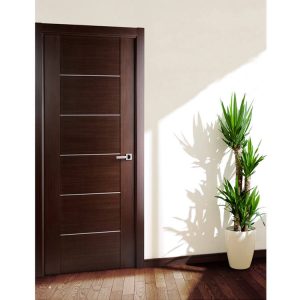
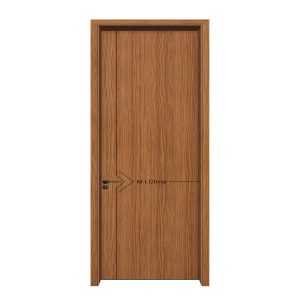
Flat Panel (Slab) Doors are the purest expression of modern design. A single, flush surface without raised panels creates a seamless, unbroken plane. These doors work exceptionally well in minimalist interiors, allowing hardware to serve as the primary visual accent. They are also the easiest style to integrate with flush or concealed hinges for a truly streamlined appearance.
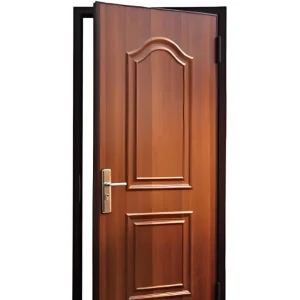
2-Panel Doors offer a subtle nod to traditional design while maintaining contemporary relevance. A clean, rectangular recessed panel—typically positioned in the upper and lower halves—adds visual depth and shadow lines without introducing the ornate detailing of multi-panel craftsman or colonial styles. This configuration is versatile enough for both modern and transitional interiors.
Glass-Insert Doors address the need for light transmission and visual connection between rooms. A full-length glass panel creates a sophisticated partition, ideal for home offices or study rooms where visibility is desired but sound isolation is still required. Partial glass inserts—positioned in the upper half—offer a compromise, providing light while maintaining visual privacy at eye level. The muntin bars (the framing between glass segments) can be specified in different profiles to alter the door’s character significantly.
Rustic Contemporary Doors represent a deliberate departure from sleek minimalism. These doors feature natural wood characteristics—visible grain, occasional knots, and textural variation—often finished with matte or wire-brushed surfaces. The style works best in modern farmhouse, biophilic, or warm industrial interiors where natural materials provide a counterpoint to hard surfaces like concrete and steel.
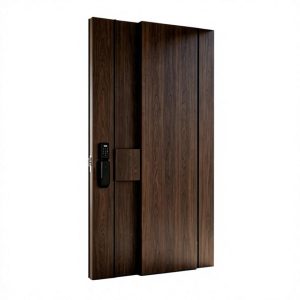
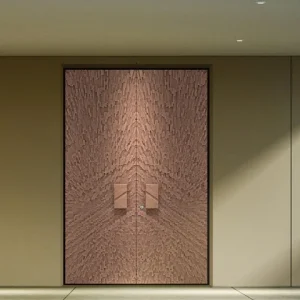
Dark Wood Doors have become a signature element in high-contrast contemporary interiors. Deep espresso, walnut, and ebony finishes create a dramatic anchor against light walls and flooring. The key to executing this trend successfully is consistency—dark doors throughout a hallway or open floor plan create a cohesive rhythm, while a single dark door can feel like an afterthought.
Prehung vs. Slab: What’s the Difference?
This is the most consequential purchasing decision you will make, as it affects installation complexity, cost, and long-term performance.
A slab door is simply the door leaf itself—no frame, no hinges, no hardware. It requires an existing, properly sized frame in good condition. Slab doors are ideal for renovation projects where the current jamb is square, level, and structurally sound. They are also significantly less expensive to ship, making them attractive for large orders. However, they demand precise fitting and routing for hinges and lockset, which requires either skilled carpentry or specialized tools.
A prehung door comes assembled with the door leaf already attached to the jamb, with hinge locations pre-drilled and the strike plate installed. The unit is designed to be set into a rough opening and shimmed into place. This is the recommended choice for new construction, wall repositioning, or any project where the existing frame is damaged or out of square. Prehung units ensure proper alignment between the door and frame, which is critical for acoustic sealing and smooth operation.
Many international buyers specifically search for interior wood doors prehung or interior wood doors with frame because local contractors expect to receive complete units ready for installation. If you are sourcing from overseas, prehung units reduce the risk of field assembly errors but increase shipping volume and cost. Evaluate whether your local labor market has the skill to hang slab doors correctly before choosing this route.
When a project involves wood modern interior doors, the prehung configuration is often preferred because modern hardware—particularly concealed hinges and magnetic locksets—requires precise alignment that is difficult to achieve when retrofitting a slab into an existing frame.
Wood and Finish Options: From Dark Wood to Rustic
The wood species and finish determine not only the door’s appearance but also its dimensional stability, durability, and cost.
Solid wood doors are constructed entirely from a single species, such as oak, walnut, maple, or cherry. They offer the most authentic appearance and can be refinished multiple times over their lifespan. However, solid wood expands and contracts significantly with humidity changes, which can lead to warping or cracking in climates with dramatic seasonal swings. For this reason, solid wood doors are best specified for climate-controlled interiors.
Engineered wood doors feature a veneer of real wood bonded over a stabilized core, typically made of medium-density fiberboard (MDF) or a honeycomb structure. The veneer provides the authentic wood appearance, while the engineered core offers superior dimensional stability. This construction allows for taller doors without the risk of sagging and performs better in environments with variable humidity, such as coastal regions or homes with radiant heating.
Veneer quality is the critical specification to review. A “book-matched” veneer—where consecutive slices from the same log are opened like a book—creates a mirrored grain pattern across the door surface. Rotary-cut veneer, while less expensive, produces a broader, less defined grain. For contemporary designs where the door surface is a prominent visual element, insist on book-matched or at least vertical-grain veneer.
Finish options range from clear natural coats that highlight the wood’s inherent color to heavily pigmented stains that transform the appearance entirely. For dark wood interior doors, buyers typically choose between a penetrating stain followed by a clear topcoat, or a colored lacquer that builds a film on the surface. The latter offers more consistent color across different wood species but hides the grain’s natural depth.
Rustic interior wood doors often utilize a wire-brushed or hand-scraped finish that physically textures the wood surface before staining. This opens the grain and creates a tactile experience, but also makes the surface more susceptible to collecting dust and requiring careful cleaning.
Sustainability considerations are increasingly important in specification decisions. FSC-certified wood ensures the timber originates from responsibly managed forests. Reclaimed wood options—salvaged from old barns or industrial buildings—offer unique character but require careful drying and stabilization before use in door construction. Low-VOC finishes are available from most major manufacturers and should be specified for projects pursuing green building certifications.
Glass and Panel Configurations: Adding Light and Character
The interaction between solid wood and glass defines the contemporary door’s architectural personality.
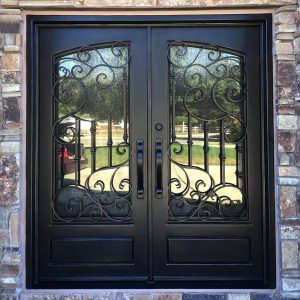
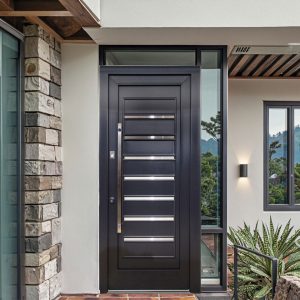
Glass options for interior wood door with glass applications include clear, frosted, reeded, and patterned varieties. Clear glass maximizes light transmission but offers no privacy. Frosted or acid-etched glass diffuses light while obscuring vision—appropriate for bathrooms or offices where confidentiality matters. Reeded glass, characterized by vertical ridges, has become particularly fashionable in contemporary design, offering privacy while creating an elegant play of light and shadow.
Tempered glass is the industry standard for interior doors due to safety requirements. It is approximately four to five times stronger than annealed glass of the same thickness and, when broken, shatters into small, relatively harmless pieces. Laminated glass, which contains a plastic interlayer, provides additional sound insulation and remains intact even when shattered—a consideration for doors in high-traffic areas.
Panel configurations determine the door’s structural character. The 2-panel interior wood doors configuration—with panels stacked vertically—is the most common contemporary arrangement. The ratio between the upper and lower panels can be adjusted for visual effect; equal panels create a balanced, formal appearance, while a larger lower panel with a shorter upper panel lends a more casual, grounded feel.
For interior wood and glass door combinations, the glass panel’s proportion relative to the wood frame is the defining design decision. A door that is 80% glass with a minimal wood perimeter reads as a glass partition. Conversely, a door that is 30% glass with substantial wood stiles and rails reads as a wood door with a window. The latter is often more appropriate for bedrooms and bathrooms where acoustic privacy is still required.
Comparison Table: Popular Contemporary Wood Door Types
| Door Type | Construction | Best For | Typical Cost Range | Acoustic Performance | Maintenance |
|---|---|---|---|---|---|
| Flat Panel Solid Wood | Solid timber slab | Minimalist interiors, formal spaces | High | Good (depends on thickness) | Moderate—requires periodic refinishing |
| Flat Panel Engineered | Wood veneer over MDF core | Modern homes, stable performance | Moderate | Good | Low—stable core resists warping |
| 2-Panel Solid Wood | Solid timber with recessed panels | Versatile contemporary/traditional | High | Good | Moderate |
| 2-Panel Engineered | Veneer over composite core | Mid-range projects, high humidity areas | Moderate | Moderate | Low |
| Glass Insert (Full) | Wood frame with large glass panel | Offices, studies, light transmission | Moderate to High | Poor (glass transmits sound) | Low for frame; glass requires cleaning |
| Glass Insert (Partial) | Wood lower panel, glass upper | Bedrooms, bathrooms with privacy | Moderate to High | Moderate | Low |
| Rustic Contemporary | Solid or engineered with textured finish | Farmhouse, biophilic, industrial | Moderate to High | Depends on core | Higher—textured surface collects dust |
| Dark Wood Finish | Any core with dark stain/lacquer | High-contrast contemporary interiors | Varies by core | Varies by core | Moderate—dark surfaces show dust |
Cost ranges vary significantly based on wood species, door dimensions, hardware specifications, and order volume. A solid walnut door will command a substantial premium over a white oak or ash door of identical construction. Oversized doors—exceeding 36 inches in width or 80 inches in height—incur additional material and engineering costs.
How to Choose the Right Door for Your Project
Room-by-Room Considerations
Bedrooms require acoustic privacy above all. A solid-core door—whether solid wood or engineered with a dense particleboard core—significantly reduces sound transmission compared to hollow-core alternatives. For bedrooms adjacent to living areas or home theaters, specify doors with perimeter gasketing or automatic door bottoms to seal the gap beneath the door.
Bathrooms demand both privacy and moisture resistance. Engineered wood doors with water-resistant finishes are preferable to solid wood, which can absorb moisture and warp over time. A partial glass insert can introduce natural light into an interior bathroom, but specify frosted or patterned glass for privacy.
Home offices benefit from glass-insert doors that allow visibility into the space while providing acoustic separation. If the office is used for confidential calls, prioritize solid-core construction and consider laminated glass for the insert.
Closets and utility rooms are opportunities to reduce costs. Hollow-core doors are acceptable where acoustic performance and security are not primary concerns. However, if the closet is a walk-in dressing room where you want a furniture-quality appearance, the same door style used throughout the home maintains design cohesion.
Matching Door Style to Architecture
The door style should respond to the architectural period and interior design language of the space. A flat-panel door with concealed hinges suits a strict modernist interior. A 2-panel door with visible hinges bridges traditional and contemporary aesthetics. Rustic interior wood doors require an interior palette that accommodates natural materials—they will look out of place in a sleek, glossy environment.
For spaces with low ceilings, consider doors with vertical glass panels that draw the eye upward. For rooms with abundant natural light, dark wood doors create a grounding contrast. For darker interior hallways, glass-insert doors allow borrowed light from adjacent rooms to penetrate.
Hardware and Finish Coordination
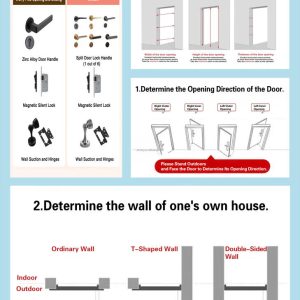
Contemporary door hardware trends favor minimalist designs in matte black, brushed brass, and satin nickel. The hardware finish should coordinate with other metal elements in the space—light fixtures, cabinet pulls, and plumbing fixtures. Lever handles are standard for accessibility and ease of use, while knob handles offer a more traditional profile.
Concealed hinges, which are mortised into both the door and frame, create a seamless appearance that complements flat-panel doors. Standard butt hinges are acceptable for more traditional configurations. Magnetic locksets, which use a magnet rather than a mechanical latch, provide whisper-quiet operation and are increasingly specified for contemporary residential projects.
Installation Considerations
The decision between interior wood doors prehung and slab doors should account for your installation team’s capabilities. Prehung units require the rough opening to be correctly sized—typically the door width plus 2 inches, and the door height plus 2.5 inches to accommodate the frame and leveling shims. Slab doors require an existing frame that is square and plumb; any deviation will result in visible gaps or binding.
Common installation pitfalls include:
- Failing to check the rough opening for plumb and level before ordering
- Ordering doors before flooring is installed, resulting in incorrect undercut clearances
- Ignoring wall thickness variations when ordering prehung units
- Selecting a door width that violates local egress code requirements
If your project involves multiple doors, order all units from a single production run to ensure consistent color and finish matching. Wood is a natural material, and slight variations between batches are inevitable.
Budgeting and Cost Factors
The total cost of interior doors includes the door itself, frame (if prehung), hardware, and installation labor. When budgeting, allocate approximately 60-70% for the door unit and 30-40% for hardware and installation. Custom sizes, specialty glass, and premium wood species escalate costs most significantly.
For large projects, request pricing at multiple specification levels—a “good” grade for utility areas, a “better” grade for main living spaces, and a “best” grade for entry and statement locations. This tiered approach controls costs while maintaining quality where it matters most.
Sustainability and Certification
Specify FSC-certified wood to ensure responsible sourcing. Ask your supplier for documentation of the certification chain. Low-VOC finishes and adhesives contribute to healthier indoor air quality and are required for LEED or WELL certification. Reclaimed wood doors offer a unique aesthetic and environmental story, but verify that the wood has been properly kiln-dried to prevent movement after installation.
Frequently Asked Questions
What is the difference between solid core and hollow core doors?
Solid-core doors contain a dense interior—either solid wood or engineered composite—that provides acoustic insulation, thermal performance, and a substantial feel. Hollow-core doors use a honeycomb cardboard structure inside a thin veneer shell, making them lighter and less expensive but offering minimal sound insulation. For contemporary interior applications, solid-core doors are recommended for bedrooms, bathrooms, and any space where privacy matters.
Are glass inserts a good option for contemporary doors?
Glass inserts are excellent for spaces that need borrowed light or visual connection, such as home offices, study rooms, or interior hallways. They should be avoided in bathrooms requiring full privacy and bedrooms where complete darkness is preferred. Specify tempered glass for safety and consider frosted or reeded patterns where privacy is a secondary concern.
How do I match door style to my home’s architecture?
Evaluate the architectural period of your home and the dominant interior design language. Flat-panel doors suit modernist and minimalist interiors. Two-panel doors adapt well to transitional spaces. Rustic wood doors complement farmhouse, cottage, or biophilic designs. Dark wood finishes create drama in high-contrast interiors but require consistent application throughout a space.
What are the latest trends in interior wood doors?
Current trends include taller doors (8 feet and above) for a more grand proportion, concealed hinges for a seamless appearance, matte black and brushed brass hardware, reeded glass inserts, and a growing preference for natural wood finishes over painted surfaces. Dark wood tones remain popular, particularly walnut and smoked oak finishes.
How much do contemporary wood interior doors cost?
Costs vary dramatically based on wood species, core type, dimensions, glass configuration, and hardware. Engineered wood doors with veneer finishes are generally the most economical option for contemporary styles. Solid wood doors in premium species like walnut or cherry command significantly higher prices. For accurate budgeting, request quotes from multiple manufacturers with your exact specifications.
What hardware finishes work best with modern wood doors?
Matte black hardware provides a strong contrast against light wood and a complementary pairing with dark wood. Brushed brass and champagne bronze offer warmth that coordinates with natural wood tones. Satin nickel provides a neutral, understated option. Choose a finish that coordinates with other metal elements in the space.
How do I maintain and clean wood interior doors?
Dust doors regularly with a soft, dry cloth. Clean fingerprints and smudges with a slightly damp cloth and a mild wood cleaner—avoid harsh chemicals or abrasive pads. Avoid excessive moisture, which can damage the finish. Depending on wear, refinish doors every few years to maintain their appearance and protect the wood.
Evaluating Manufacturers for Your Door Supply
When sourcing contemporary interior wood doors for a construction project or ongoing supply arrangement, the manufacturer’s capability directly determines your project’s success. Here is how we meet the standards that matter when evaluating a factory partner.
As a door and window manufacturer, our approach to meeting these requirements is straightforward. We operate as a direct factory supplier, which means our pricing reflects manufacturing costs rather than distributor markups. For projects requiring interior wood doors prehung or doors with frames, we manufacture the complete unit to your specified dimensions, ensuring proper fit and alignment.
Customization is a core requirement for contemporary door projects. We offer full customization on size, color, glass type, and hardware accessories. Whether your design calls for interior doors dark wood with a specific stain match, rustic interior wood doors with a particular texture, or interior wood and glass door combinations with custom muntin patterns, we can adjust profile structures and fittings to meet your specifications.
Quality assurance is verified, not assumed. Every order undergoes strict pre-shipment inspection, including air-tightness, water-tightness, and wind resistance tests where applicable. This is particularly important for doors that interface with exterior walls or conditioned spaces.
Export logistics are handled in-house. Our foreign trade experience means we provide complete packing lists, proforma invoices, and all customs documentation. We ship via FCL or LCL directly from our factory, and we can adjust profile structures and fittings to match local building codes in your target market—a critical consideration for doors that must meet specific fire ratings or egress requirements.
For OEM and ODM projects, we work from your drawings or collaborate on design development. Private label manufacturing is available for distributors and dealers who need consistent branding across their product lines.
When comparing manufacturers, request samples of their work—particularly for finish matching and veneer quality. Ask for references from projects similar in scope to yours. Verify their testing capabilities and documentation. And confirm their ability to meet your delivery timeline before committing to an order.
If you are evaluating suppliers for a current project, we welcome the opportunity to provide specifications and pricing for your review.