Black Window Frame Materials Compared
The frame material determines nearly everything about your black windows: upfront cost, lifespan, thermal performance, and how much maintenance they demand. Here is how the three most common options stack up.
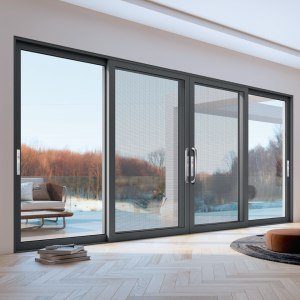
Aluminum is the most popular choice for black windows in modern and commercial-style residential architecture. It offers slim sightlines, high structural strength, and excellent corrosion resistance. The frames are typically powder-coated, which gives a uniform matte or satin black finish that resists chipping and fading. Thermally broken aluminum—where a polyamide strip separates the interior and exterior frame sections—dramatically improves insulation values. Without this thermal break, aluminum conducts heat readily, making it a poor insulator on its own.
Steel delivers the thinnest profile of any frame material, which is why it remains the gold standard for the “industrial loft” aesthetic. Black steel windows have a distinctive character: the narrow sightlines make the glass feel larger and more expansive. The trade-offs are weight, cost, and maintenance. Steel requires a high-quality primer and paint system to prevent rust, especially in coastal or high-humidity environments. It is also significantly more expensive than aluminum due to fabrication complexity and material cost.
Vinyl is the budget-friendly option that has improved considerably in recent years. Modern black vinyl frames use either a co-extruded dark color through the full thickness or a laminated dark cap over a white core. The latter is worth checking: if the black is only a surface laminate, it can be more susceptible to scratching and UV fading over time. Vinyl offers good thermal performance because the material itself is a poor conductor, and it requires virtually no maintenance. The downside is bulkier profiles—vinyl frames are physically thicker than aluminum or steel—and a more limited range of black finishes.
Wood-clad frames pair a structural wood interior with an exterior aluminum or vinyl shell painted black. This gives you the warmth of wood inside with the durability and low maintenance of a black exterior. It is the premium option, typically the most expensive of the four, and is most common in high-end custom homes where interior aesthetics matter as much as curb appeal.
Glass and Configuration Options: From Solid Glass to Transoms
The frame gets the attention, but the glass and configuration do the work. Your choices here affect light, ventilation, privacy, and energy performance.
Solid glass windows—fixed panes that do not open—are the most energy-efficient and airtight option available. With no moving parts, there are no seals to wear out and no gaps for air infiltration. They are ideal for tall stairwells, large living room walls, or any location where you want an unobstructed view. The trade-off is obvious: no ventilation. Most homes need a mix of fixed and operable units.
Operable windows come in casement (hinged on the side, cranking outward), awning (hinged at the top, opening outward), and sliding configurations. Casement windows offer the best ventilation because the entire sash opens, catching breezes like a sail. Awning windows are excellent for rainy climates because they can be left slightly open during light rain without water entering. Sliding windows are the simplest to operate and require the least clearance, making them good for walkways and porches.
Windows with transoms add a horizontal band of glass above a window or door. Transoms can be fixed or operable, and they are one of the most effective ways to add height and light to a room without increasing the structural opening’s width. A transom above a tall casement window creates a dramatic, full-height appearance that reads as high-end architecture. They are particularly effective with black frames because the dark muntin bars between the transom and the main window create a clean, graphic line.
Tall windows that open require specific hardware and engineering. A 7-foot-tall casement window needs heavy-duty hinges and a multi-point locking system to keep the sash rigid and secure. Manufacturers rate their operable windows for maximum sash weight and wind load, so if you are planning very tall units, confirm the hardware is rated for the size. Many premium systems offer hidden hinges and friction stays that allow tall sashes to operate smoothly without visible hardware clutter.
Sizing and Customization: Tall, Wide, and 10-Foot Windows
Standard window sizes are limited, and black windows—especially in modern architecture—rarely conform to them. The good news: most black window manufacturers offer custom sizing, but there are important constraints to understand.
A 10 ft window is substantial. At this height, the glass becomes heavy, and the frame must be engineered to handle wind load, deflection, and the weight of the sash if it is operable. Fixed 10-foot windows are straightforward: the frame needs sufficient depth and structural reinforcement. Operable 10-foot windows are a different matter. They require commercial-grade hardware and are significantly more expensive. If you want a 10-foot-tall window that opens, plan for a casement with multiple locking points or consider splitting the height into a fixed lower section with an operable transom or hopper above.
Custom dimensions affect cost in two ways. First, non-standard sizes mean the manufacturer cannot use pre-cut stock, so there is more labor and potentially more material waste. Second, very large panes of glass carry their own price premium. Glass manufacturers charge more for larger sheets due to handling difficulty and higher breakage risk in transit.
When specifying custom sizes, work backward from your architectural opening. Measure the rough opening accurately, then subtract the frame dimensions to determine the actual glass size. A professional window supplier will help you calculate the correct frame depth for the span—too shallow a frame on a wide window risks deflection and seal failure.
Cost, Specials, and Budget Considerations
Black windows cost more than their white counterparts. The price premium comes from the finish itself: black frames absorb more heat, which affects the materials used, and the dark color requires more careful quality control during the powder-coating or painting process.
Here are approximate cost ranges per window unit (installed, mid-range quality):
| Material | Cost per Window (Installed) | Durability | Maintenance | Energy Efficiency |
|---|---|---|---|---|
| Vinyl (black) | $400–$800 | 20–30 years, color may fade | Very low, occasional cleaning | Good, inherent insulation |
| Aluminum (thermal break) | $800–$1,800 | 30–50 years, powder coat resists fading | Low, wipe frames periodically | Very good with thermal break |
| Steel | $1,200–$3,000+ | 50+ years with proper paint | High, repaint every 8–15 years | Moderate, steel conducts heat |
| Wood-clad (black exterior) | $1,000–$2,500 | 30–50 years, depends on cladding | Low exterior, wood interior needs periodic refinishing | Very good with double or triple glazing |
These ranges vary widely by region, brand, glass specification, and installation complexity. A basic double-glazed unit with standard hardware sits at the lower end; triple glazing, argon fill, low-E coatings, and custom sizes push prices upward.
Window specials are worth watching, but approach them with caution. Manufacturers and distributors often run seasonal promotions—typically in late winter or early spring when demand dips—that can save 10–20% on standard sizes. Custom sizes rarely qualify for these discounts. If you have flexibility in your timeline, ask suppliers about upcoming promotions or overstocked standard sizes that match your rough openings.
The total installed cost includes more than the window units. Labor, flashing, insulation, interior and exterior trim, and disposal of old windows add 30–50% to the material cost in most markets. For a typical single-family home with 15–20 windows, the full project cost for black windows typically lands between $12,000 and $35,000 depending on material and complexity.
Professional Installation and Window & Door Services
Black windows demand professional installation more than any other color. Here is why: the dark frame reveals every imperfection. Misaligned seams, gaps in caulking, and uneven reveals that would be invisible on a white frame are glaringly obvious on a black one. The margin for error is simply smaller.
A professional window and door service handles several critical tasks beyond setting the unit in the opening:
- Proper flashing and water management. Black frames absorb heat, which causes more thermal expansion than lighter colors. The flashing system must accommodate this movement without compromising the water barrier.
- Accurate shimming and leveling. A window that is out of square by even a quarter-inch will show it in the sightlines.
- Correct sealant selection. The sealant must be compatible with the frame finish and rated for the temperature range the dark surface will reach.
- Integration with the building envelope. The window is part of the wall assembly; air and moisture barriers must connect properly to the frame.
For large or complex installations—curtain walls, multi-story glazing, or oversized custom units—structural engineering review may be required. Do not skip this step. A 10-foot-tall fixed window in a two-story wall carries significant wind load, and the frame-to-structure connections must be engineered accordingly.
If you are working with a general contractor, confirm they have experience with black windows specifically. Ask for references from previous projects with dark-framed windows. If the contractor’s only experience is with white vinyl replacements, bring in a specialized window installer for the critical work.
How to Choose the Right Black Windows for Your Home
Choosing between materials and configurations comes down to your priorities. Here is a practical framework for the decision.
Choose aluminum if you want the modern aesthetic with reasonable cost and low maintenance. Thermally broken aluminum is the best all-around performer for most homes: it offers slim profiles, excellent durability, good energy efficiency, and a finish that will look the same in 20 years. It works across architectural styles—from minimalist contemporary to traditional farmhouse—because the profiles can be fabricated to match different design languages.
Choose steel if the aesthetic is non-negotiable and budget is secondary. Steel windows have a visual lightness that aluminum cannot replicate. The frames are thinner, the lines are crisper, and the character is unmistakably industrial. This is the right choice for loft conversions, modern additions to historic buildings, or any project where the window is a defining design element. Be prepared for the maintenance commitment and the cost.
Choose vinyl if budget is the primary constraint and you need a reliable, low-maintenance product. Modern black vinyl is a legitimate option, not a compromise, for standard-size windows in moderate climates. Just verify the color is co-extruded or otherwise UV-stable, and be aware that the thicker profiles will look chunkier than aluminum or steel.
Choose wood-clad if you want the interior warmth of wood with the exterior durability of a black finish. This is the premium choice for high-end custom homes where interior millwork matters. The cost premium is real, but the result is a window that feels substantial and warm inside while maintaining a crisp black exterior.
For home style coordination:
- Modern and contemporary homes look best with thermally broken aluminum in a matte or satin black finish. Pair with minimal trim or no exterior trim at all for a clean, flush appearance.
- Farmhouse and transitional styles work well with black vinyl or aluminum in a slightly textured finish. Black frames against white siding or brick is a classic combination that reads as intentional and current.
- Industrial and loft spaces demand steel. The thin profiles and visible hardware are part of the aesthetic.
- Traditional homes can use black windows successfully, but the style of the window matters more than the color. Double-hung or casement windows with divided lites in a black finish can look sharp against brick or stone, while awning windows with black frames read as more contemporary.
A common concern is whether black windows make rooms darker. The answer is no, not meaningfully. The frame color affects the view from inside only at the edges; the glass area determines light transmission. A black frame actually creates a sharper contrast with the glass, which can make the window appear larger and the view more vivid. What matters far more for interior brightness is the glass specification—low-E coatings and tinting affect light transmission, while the frame color has minimal impact.
How We Meet These Standards
As a manufacturer of custom doors and windows, we see the full spectrum of black window projects—from single-family renovations to large construction projects. Our approach to black windows is built around the considerations discussed above.
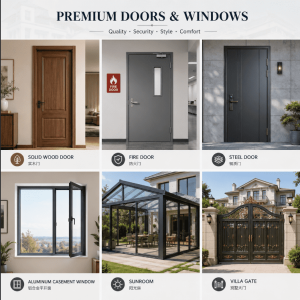
We manufacture thermally broken aluminum system windows and doors in a full range of black finishes, with profiles engineered for both standard and custom sizes. For projects requiring tall windows—including 10-foot-tall units—we adjust the profile structure and hardware specifications to meet the structural and wind-load requirements of your location. We also produce custom villa doors and windows, sunrooms, and aluminum entrance doors, all available in black finishes with full customization of size, color, glass, and hardware accessories.
Because we are a factory-direct supplier, our pricing reflects the manufacturer’s price rather than a distributor’s markup. Every order undergoes pre-shipment inspection covering air-tightness, water-tightness, and wind resistance—the three performance criteria that matter most for exterior windows. We also adjust profile structure and fittings to match local building codes in your target market, and we provide full customs documentation, packing lists, and proforma invoices for international shipments. Both FCL and LCL shipping options are available.
If you are planning a project with black windows and need pricing or specification guidance, contact our team for details on custom sizing and current options.
Frequently Asked Questions
Do black windows fade over time?
Powder-coated aluminum and steel frames are highly UV-resistant and will maintain their color for decades with minimal fading. Lower-quality vinyl with a laminated black surface can fade or chalk over 10–15 years of direct sun exposure. Ask the manufacturer whether the black finish is co-extruded (color through the full thickness) or laminated (surface layer only). For premium longevity, specify a high-quality powder coat with a UV-stable formulation.
Are black windows more expensive than white?
Yes, typically 10–30% more than equivalent white windows. The premium comes from the finish application process and the stricter quality control required to produce a uniform dark surface. Black frames also absorb more heat, which can require different materials or thicker profiles in some configurations.
Can I get black windows with custom dimensions like 10 ft tall?
Yes, most manufacturers offer custom sizing, including 10-foot-tall windows. However, operable 10-foot windows require commercial-grade hardware and structural reinforcement, which increases cost significantly. Fixed 10-foot windows are more straightforward and more affordable. Always confirm the wind-load rating and hardware specifications for oversized units.
What is the difference between black steel and aluminum windows?
Steel offers thinner profiles and a more refined industrial aesthetic but costs more and requires periodic repainting to prevent rust. Aluminum is lighter, more affordable, and needs minimal maintenance. Thermally broken aluminum also provides better insulation than steel, which conducts heat readily.
How do I clean black windows without streaks?
Use a mild detergent solution and a soft cloth or sponge. Avoid abrasive pads and ammonia-based cleaners, which can damage the finish. Dry the frames with a clean microfiber cloth immediately after washing to prevent water spots. For glass, use a squeegee rather than paper towels to avoid lint residue. Clean black frames more frequently than light-colored ones because dust and pollen are more visible against the dark surface.
Are black windows energy efficient?
The color of the frame has minimal direct impact on energy efficiency. What matters is the glazing specification (double or triple pane, low-E coating, argon fill) and whether the frame material has a thermal break. Black frames do absorb more solar heat, which can slightly increase heat gain in summer—a factor to consider in hot climates, but the difference is small compared to glass performance.
Do black windows make rooms darker inside?
No. The frame color does not significantly affect interior light levels. The glass area determines light transmission, and low-E coatings or tints have a far greater impact on brightness than frame color. Black frames can actually make windows appear larger by creating a higher-contrast edge against the glass.