Black French Doors Exterior: What You Need to Know First
Black French doors have become a default choice for exterior entryways, patios, and garden transitions. The dark frame creates a crisp contrast against light siding, brick, or stucco, and it reads equally well in traditional and contemporary architecture. But before you commit to a purchase, there are several performance factors that matter more than aesthetics.
The most important distinction is that exterior black French doors are not simply interior doors painted black. They must handle direct sun exposure, wind-driven rain, temperature swings, and security requirements. The finish, frame material, glass package, and hardware all need to be specified for external duty. A door that performs beautifully as an interior divider will fail quickly when exposed to the elements.
Here is what you need to evaluate: frame material, glass configuration, hardware grade, installation requirements, and the manufacturer’s quality control. Each of these affects durability, energy performance, and long-term cost. This guide walks through each decision point with the trade-offs made explicit.
Exterior vs. Interior Black French Doors: Key Differences
The functional demands are fundamentally different. Interior French doors control privacy and sound within a conditioned space. Exterior French doors are a building envelope component — they must resist air and water infiltration, provide thermal insulation, and withstand forced entry attempts.
Frame material requirements differ significantly. Interior doors can use hollow-core wood or lightweight MDF because they carry no weather load. Exterior doors need solid construction. Aluminum frames must have thermal breaks to prevent condensation and heat transfer. Wood frames require engineered construction or cladding to resist rot and warping. uPVC is viable but has structural limitations for wide, double-door spans.
Glazing standards are not the same. Interior doors can use single-pane glass or thin double glazing. Exterior doors should use tempered or laminated safety glass, with double or triple glazing depending on your climate zone. Low-E coatings are strongly recommended to reduce heat gain and UV damage to interior furnishings. The glass must also be sealed against moisture intrusion between panes.
Hardware is a major differentiator. Interior door handles and locks face minimal wear. Exterior doors need multi-point locking systems, heavy-duty hinges rated for the door weight, and corrosion-resistant finishes. A standard interior lockset on an exterior door is a security risk and will fail prematurely.
Weatherproofing is non-negotiable for exterior use. The door must integrate with a threshold, weatherstripping, and flashing system. Air infiltration ratings and water penetration resistance are measured under standard test protocols. Interior doors have none of these requirements.
Material and Glass Options Compared
Aluminum Frames
Aluminum is the most common choice for exterior black French doors in commercial and high-end residential projects. The material is dimensionally stable, does not warp or rot, and accepts a durable powder-coated finish. The critical specification is thermal break construction — two aluminum extrusions separated by a polyamide or similar insulating material. Without this, the frame conducts heat and cold efficiently, creating condensation and energy loss.
For black doors specifically, aluminum has an important advantage: powder coating in dark colors is highly durable. Black absorbs more heat than lighter colors, so the finish quality matters. A good powder coat with proper pretreatment will resist chalking and fading for years. Cheaper painted finishes will show wear quickly on exterior black doors.
Aluminum frames are also the best option for large spans. French doors are typically 5 to 6 feet wide in a double-door configuration. Aluminum’s strength-to-weight ratio allows for slim sightlines without structural flex.
Wood Frames
Wood offers the most traditional look and the highest insulation value per unit of thickness. However, exterior black wood doors present a maintenance challenge. Dark colors absorb heat, which accelerates the breakdown of paint and finish. A black wood door in direct sun will need repainting more frequently than a white or light-colored one.
For exterior use, the practical options are engineered wood with a cladding system or solid wood with a high-performance exterior finish. Aluminum-clad wood frames offer the best of both: wood interior for aesthetics, aluminum exterior for durability. The cladding can be powder-coated black to match the design intent.
If you choose solid wood, expect to repaint every 2 to 3 years in sunny climates. The frame joints must be properly sealed, and you should use a paint system designed for exterior wood with UV-resistant pigments.
uPVC Frames
uPVC is the budget option. It is inexpensive, requires no painting, and offers decent insulation. The downsides are structural: uPVC has a lower strength-to-weight ratio than aluminum, so frames must be bulkier to maintain rigidity. This is particularly noticeable on wide French door configurations. The black finish on uPVC is typically a foil laminate or co-extruded layer. Quality varies significantly between manufacturers. Cheap black uPVC can fade or chalk within a few years.
uPVC is a reasonable choice in mild climates or where budget is the primary constraint. For coastal or high-wind areas, aluminum is the safer recommendation.
Glass and Glazing
The glass package is where energy performance is won or lost. For exterior French doors, the minimum specification should be double glazing with a low-E coating and an argon or krypton gas fill. In cold climates, consider triple glazing. In hot climates, look for a low solar heat gain coefficient (SHGC) to reduce cooling loads.
Safety glass is mandatory for exterior doors in most jurisdictions. Tempered glass shatters into small, dull pieces on impact. Laminated glass holds together when broken, providing better security and sound insulation. For French doors, laminated glass is the stronger choice because the large glass panels are a potential entry point.
Tempered glass is generally required by building codes for doors and adjacent windows. Laminated glass exceeds code requirements and adds break-in resistance. If security is a priority, specify laminated glass on at least the lower panels.
Black French Door Styles: Farmhouse, Modern, and More
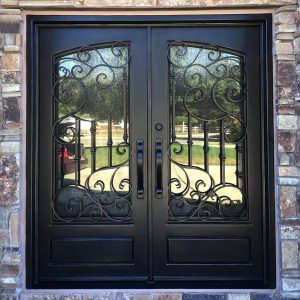
Farmhouse black French doors typically feature a divided-lite pattern — multiple small panes separated by muntins, often with a 15-lite or 8-lite configuration. The frame is usually thicker, and the hardware leans toward black iron or oil-rubbed bronze. This style suits traditional, craftsman, and rural architecture. The divided lites add visual interest but also create more frame surface area, which slightly reduces glass area and natural light.
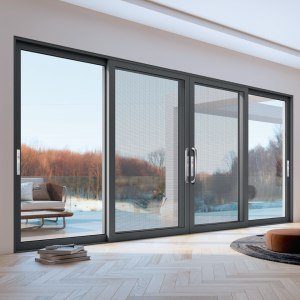
Modern black French doors favor large, uninterrupted glass panels. A 2-panel or 3-panel configuration with minimal framing and slim sightlines. The hardware is typically minimal — straight lever handles, concealed hinges, and a clean lock mechanism. This style works with contemporary, industrial, and minimalist architecture. The large glass panels maximize light and views but require stronger glass specifications for thermal performance and safety.
Transitional styles combine elements of both: a simple panel layout with optional internal blinds or grids. This is the most flexible choice for projects where the architectural style is mixed.
With built-in blinds is a popular option for exterior French doors, particularly for bedrooms or street-facing entrances. The blinds are integrated between the glass panes, protected from dust and damage. They can be adjusted with a magnetic slide or motorized controls. The trade-off is cost — integrated blinds add a significant premium — and the inability to repair the blinds if they fail; the entire glass unit must be replaced.
Comparison Table: Popular Black French Door Configurations
| Configuration | Frame Material | Glass Package | Hardware | Best For | Typical Cost Range |
|---|---|---|---|---|---|
| Farmhouse 15-lite | Aluminum-clad wood | Double glazing, low-E | Black iron lever, multi-point lock | Traditional homes, rural settings | Mid to high |
| Modern 2-panel | Aluminum thermal break | Double or triple glazing, laminated | Minimal lever, concealed hinges | Contemporary architecture | Mid to high |
| Budget uPVC | uPVC | Double glazing, low-E | Standard euro cylinder lock | Cost-sensitive projects | Low to mid |
| With integrated blinds | Aluminum thermal break | Double glazing, internal blinds | Magnetic or motorized blind control | Bedrooms, street-facing entries | High |
| Steel-look aluminum | Aluminum | Double glazing, low-E | Heavy-duty hinges, multi-point lock | Industrial or loft style | Mid to high |
Cost ranges are indicative and vary significantly with size, glazing upgrades, hardware grade, and regional labor rates. The frame material is the largest single cost driver, followed by glass configuration.
How to Choose the Right Black French Doors for Your Project
Step 1: Define Performance Requirements
Start with your climate and exposure. A south-facing door in Arizona has different requirements than a north-facing door in Minnesota. Determine the U-factor and SHGC targets for your region. These are the two numbers that define energy performance. Lower U-factor means better insulation. Lower SHGC means less solar heat gain.
Step 2: Establish the Rough Opening
French doors are typically available in standard sizes, but custom sizing is common in renovation projects. Measure the rough opening width and height precisely. The door frame must be sized to fit with proper clearance for shimming and leveling. Ordering a standard size that is close to your opening is usually cheaper than a custom size, but the installation quality matters more than the cost difference.
Step 3: Evaluate the Glass Package
For most exterior applications, double glazing with low-E coating is the baseline. If you are in a cold climate or have high energy costs, triple glazing may pay back over time. If security is a concern, upgrade to laminated glass. If privacy is needed, consider frosted or patterned glass in the lower panels.
Step 4: Select Hardware Grade
Exterior French doors need multi-point locking systems — these engage at multiple points along the door height, providing better security and weather sealing than a single-point lock. Choose hinges rated for the door weight. For black doors, the hardware finish should be matched to the frame: matte black, satin black, or black iron. Ensure the finish is rated for exterior use — some interior finishes will corrode outdoors.
Step 5: Confirm Installation Requirements
Proper installation is critical for exterior doors. The frame must be flashed correctly, the threshold sealed, and the gap between frame and rough opening insulated. You should verify that the installation crew has experience with the specific door type. A high-quality door installed poorly will fail faster than a mid-range door installed correctly.
Step 6: Check Local Building Codes
Building codes govern egress requirements, safety glass, and energy performance. For exterior doors, the code may require a minimum clear opening width and height for emergency egress. Verify that your chosen configuration meets the requirements for your jurisdiction. This is not a detail you can skip — a door that fails inspection will delay your project.
Frequently Asked Questions
Are black French doors a good idea for exterior use?
Yes, when specified correctly. Black is a durable and attractive finish for exterior doors when the frame material and coating are selected for outdoor exposure. The main consideration is heat absorption — black surfaces get hotter than light surfaces in direct sun. This affects the finish longevity and the thermal performance of the door. A quality powder-coated aluminum frame with a thermal break handles this well.
Do black doors fade or need special maintenance?
All exterior finishes degrade over time, but black shows the effects sooner. Powder-coated aluminum is the most durable option, with a lifespan of 15 to 20 years before refinishing is needed. Painted wood needs more frequent attention — repainting every 2 to 3 years in sunny climates. uPVC black finishes can chalk or fade within a few years on cheaper products. Regular cleaning with mild soap and water extends the life of any finish.
Are black French doors energy efficient?
The color of the frame has a minor impact on energy efficiency compared to the glass and frame construction. The glass package is the dominant factor. A black door with double glazing and low-E coating will perform the same as a white door with the same glass. The frame’s thermal break is what matters for the frame itself. Do not choose a door based on color for energy reasons — evaluate the U-factor and SHGC ratings instead.
What glass options are available for privacy?
Frosted, patterned, or textured glass is available for the lower panels or the entire door. These obscure visibility while still allowing light through. For maximum privacy, combine frosted glass with internal blinds. Note that patterned glass is typically more expensive than clear glass and may have a lower light transmission.
Do black doors make a house hotter?
The door frame surface will be hotter to the touch than a white frame, but this does not significantly increase interior temperature if the door has a proper thermal break and good glazing. The glass area is the primary source of heat gain, not the frame. Choose a low-SHGC glass for hot climates.
How do I measure for French doors?
Measure the width and height of the rough opening at three points (top, middle, bottom for width; left, center, right for height). Use the smallest measurement for each dimension. Account for the frame thickness and the required clearance for installation. If you are replacing an existing door, measure the existing frame’s exterior dimensions and compare with the new door’s specifications.
Additional Considerations: Blinds, Hardware, and Customization
Black French Doors with Blinds
Integrated blinds are a practical choice for exterior doors where privacy control is needed. The blinds are sealed between the glass panes, so they never need cleaning and are protected from wind damage. The main drawback is cost and repairability. If the blind mechanism fails, the entire glass unit must be replaced. For motorized blinds, ensure the power supply and controls are compatible with your building’s electrical system.
Hardware Finishes
Matte black and satin black are the two dominant finishes for black French door hardware. Matte black has a flat, non-reflective surface that hides fingerprints and smudges well. Satin black has a subtle sheen and is slightly more durable in terms of scratch resistance. For exterior use, choose hardware with a corrosion-resistant coating — stainless steel or brass base with a black PVD finish is the most durable option. Black iron is a traditional look but requires more maintenance to prevent rust.
Custom Sizing and Configurations
Most manufacturers offer custom sizing within certain limits. Custom sizes cost more than standard sizes due to additional fabrication and the need for custom glazing. If your project requires a non-standard width or height, factor in a 15–25% premium over standard sizes. Custom configurations — such as a single door with a fixed side panel instead of double doors — are also available and can be a good solution for narrow openings.
Interior Black French Doors
The same black finish works well for interior French doors, but the specifications are different. Interior doors do not need thermal breaks, multi-point locks, or weatherproofing. You can use lighter frame constructions and simpler hardware. If you are using black French doors throughout a project, standardizing on the same finish and hardware style creates a cohesive look, but the exterior doors will need the heavier-duty specification.
Choosing Between Aluminum, Wood, and uPVC
The decision framework is straightforward. Choose aluminum if you want durability, slim sightlines, and low maintenance. Choose wood if you want a traditional appearance and are willing to accept ongoing maintenance. Choose uPVC only if budget is the primary constraint and your climate is mild. For most exterior applications, aluminum with a thermal break is the best balance of performance and longevity.
What to Look for in a Manufacturer
The quality of the door depends heavily on the manufacturer’s fabrication standards. Look for a supplier that can provide test data for air infiltration, water penetration, and wind load resistance. These are the three performance tests that define an exterior door’s weather resistance. Ask about the glass supplier and the warranty terms — a door is only as good as its weakest component.
For international projects, confirm that the manufacturer can provide the necessary documentation for customs clearance and that the door specifications can be adjusted to meet local building codes. Profile structures and hardware can be modified to comply with regional requirements, but not every manufacturer has this capability.
As a manufacturer of aluminum doors and windows, our approach is straightforward: we build exterior black French doors with thermal-break aluminum profiles, tempered or laminated glass options, and multi-point locking hardware as standard. Every unit is tested for air-tightness, water-tightness, and wind resistance before shipment. We can adjust the profile structure and fittings to match your local building codes, and we provide full customs documentation for international orders.
We offer OEM and ODM services, so you can specify custom sizes, colors, glass configurations, and hardware. If you are working on a project that requires a specific style — farmhouse, modern, or transitional — we can match the design intent while ensuring the door meets the performance standards for your climate.
For a quote on black French doors for your project, contact our team directly.