12 min read
Which Doors Are Best for Hotels? A Manufacturer’s Guide to Smarter Hospitality Procurement
When you’re specifying doors for a 300-room hotel, the stakes are different than for a single-family home. Every door must withstand luggage carts scraping the base, housekeeping carts banging the stiles, guests slamming them at 2 a.m., and fire marshals inspecting them annually. But here’s the question we hear most from contractors and procurement directors: which doors are best for hotels?
The honest answer isn’t a single product — it’s a combination of the right door construction, the right finish, and the right manufacturing partner behind it. As a factory with over 20 years of experience in solid wood processing and aluminum door and window manufacturing, we’ve supplied thousands of doors for hospitality projects across the globe. In this guide, we’ll break down exactly what makes a door “best” for hotels, zone by zone, and explain how our manufacturing capabilities address the real-world challenges of large-scale hotel builds.
The Hidden Cost of Hotel Door Failure: Why Supply Chain Stability Matters
Let’s start with a hard truth: the “best” door on paper is worthless if it arrives six weeks late or with mismatched veneer across floors 8 and 9. For hotel projects, supply chain stability is arguably more critical than the door itself. A delay in door delivery can push back interior finishing, furniture installation, and ultimately your grand opening date — which costs far more than the doors themselves.
This is where our manufacturing model gives you a distinct advantage. Because we operate our own wood drying, spray finishing, and aluminum processing workshops, we control the entire production timeline from raw lumber to finished, packaged product [1]. We don’t outsource critical steps to third-party vendors who might miss your deadline. When your project’s schedule depends on a phased delivery of 400 doors, knowing that the factory has direct control over every board foot of timber is a level of certainty you can’t get from a trading company.
The “Just-in-Time” Myth vs. Factory Reality
Many procurement managers assume that ordering doors “just-in-time” saves money. In reality, relying on agents or traders who source from multiple factories often leads to split shipments, mismatched color lots, and installation delays. We’ve seen projects where doors from the same “supplier” arrived with visibly different grain patterns because they were manufactured at different facilities.
Because we manufacture everything in-house, we can guarantee consistent color and grain matching across entire hotel floors. Our production team batches materials from the same timber runs and tracks each batch through finishing, so what you approve in the pre-production sample is exactly what arrives on site — door after door, floor after floor.
Protecting Your Investment with Robust Packaging
Here’s something that doesn’t make it into most door spec sheets: how the product is packaged for international freight. A beautiful solid wood door is useless if it arrives with a cracked veneer or a dented edge. We’ve refined our export packaging protocols over two decades of global shipping. Each door is protected with high-strength corner boards, moisture-resistant barriers, and reinforced cartons designed for container loading [2]. Our after-sales support includes shipping damage protection, so if transit damage does occur, we work with you to resolve it quickly rather than leaving you to file insurance claims alone.
Interior vs. Entry: Matching Door Types to Specific Hotel Zones
Not all hotel doors face the same demands. The best door for a guest room is different from the best door for a lobby entrance. Let’s break down the key zones and the door types we recommend for each.
Guest Room Doors: The Acoustic and Fire Barrier
Guest room doors are the workhorses of the hotel. They need to provide acoustic insulation (guests don’t want to hear hallway conversations), fire resistance (building codes require it), and durability against constant use.
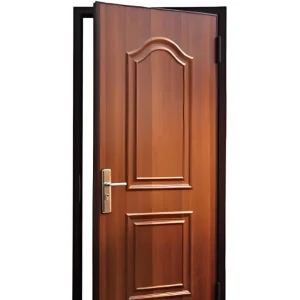
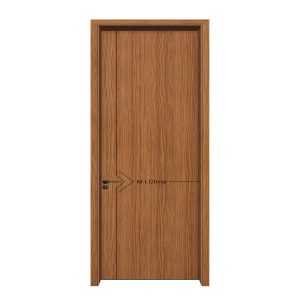
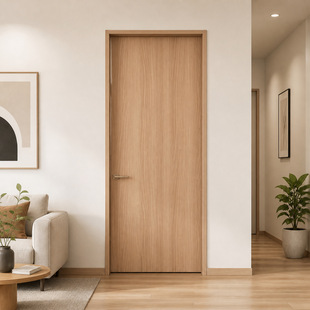
For guest rooms, we typically recommend our solid core interior wooden doors. The solid construction provides superior soundproofing compared to hollow-core doors — a critical factor for guest satisfaction and online reviews. Our doors are constructed with engineered wood cores that meet standard fire resistance requirements for hotel corridors, and our timber door frames are designed to work with intumescent seals for enhanced fire protection [3].
The finish on guest room doors also matters more than you might think. Housekeeping staff use chemical cleaners, and luggage carts regularly bump against door surfaces. Our spray finishing workshops apply a multi-layer lacquer or paint finish that’s significantly more durable than standard roller-coated finishes. The result is a surface that resists chemicals, impacts, and scratches — reducing your ongoing maintenance costs significantly.
Bathroom & Suite Doors: Moisture Resistance and Aesthetics
Bathroom doors face a different enemy: moisture. In humid environments, standard doors can warp, swell, or delaminate. For bathrooms and luxury suite bathrooms, we recommend doors with moisture-resistant veneers and sealed edges. Our engineering team can advise on the right core material and edge treatment for your specific climate conditions.
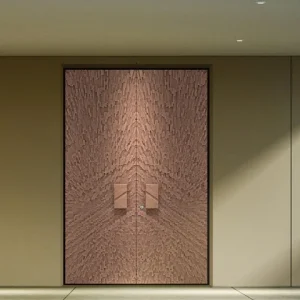
For luxury suites, this is also where OEM & ODM customization becomes valuable. Instead of settling for a standard door from a catalog, you can work with our in-house design team to create custom pivot doors, sliding barn doors, or oversized double doors that match the architectural vision of your property. We manufacture to your exact specifications, whether that’s a 7-foot tall door for a grand suite or a space-saving sliding door for a compact bathroom.
Main Entrances & Lobby Doors: The First Impression
The lobby door is the first thing guests touch when they arrive. It needs to make a statement while withstanding constant foot traffic and, in many climates, wind loads and temperature swings.
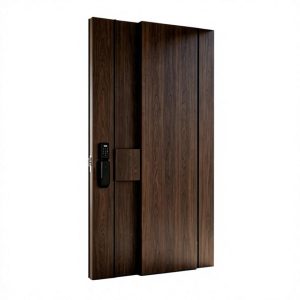
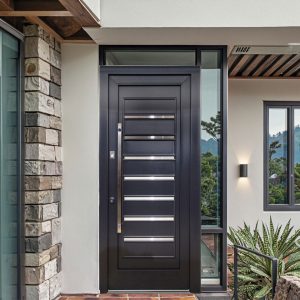
For main entrances, we supply solid wood entry doors and aluminum alloy windows designed for high-traffic commercial applications. Our aluminum frames offer thermal break performance to reduce energy costs, and our solid wood entry doors provide the warmth and elegance that defines a luxury hotel experience. We can also manufacture custom pivot entry doors that create that “wow” factor guests remember.
Material Science: Why Solid Wood and Engineered Wood Dominate Hospitality
When procurement teams ask us “which doors are best for hotels,” the underlying question is often about materials. Should you specify solid wood, engineered wood, MDF, or HDF?
The answer depends on the application, but for most hotel zones, engineered wood with a solid wood veneer offers the best balance of stability, cost, and aesthetics. Here’s why: solid wood expands and contracts with humidity changes, which can cause doors to warp or stick in climates with significant seasonal variation — especially in hotels where HVAC systems create constant temperature shifts.
Our 20 years of experience in solid wood processing has taught us exactly how to manage this. We operate our own wood drying kilns, where we carefully reduce moisture content to the optimal level for the destination climate before any construction begins [4]. This pre-stabilization prevents warping and cracking after installation, which is one of the most common warranty claims we see in the industry.
Solid Wood vs. Engineered Wood: The Structural Debate
For large-format doors like double entry doors or oversized suite doors, engineered wood construction with a stable core is often superior to solid wood. The engineered core resists twisting and bowing, while the real wood veneer provides the premium appearance guests expect.
Our engineering team can help you decide which construction method is right for each zone of your hotel. For standard guest rooms, a solid core engineered door with a wood veneer is typically the most cost-effective choice. For feature doors in lobbies or presidential suites, we can construct solid wood doors with reinforced cores for enhanced stability.
The Importance of the Finish: Spray Finishing vs. Roller Coating
The finish is what separates a premium hotel door from a budget one. Roller-coated finishes are thin and prone to chipping. Spray-applied finishes penetrate deeper into the wood grain and build a thicker, more durable film.
Our spray finishing workshops apply multiple coats of primer, color, and clear lacquer, with sanding between each coat. This produces a deep, rich finish that resists the chemicals used by housekeeping staff and maintains its appearance for years. We also offer a range of standard finishes, or we can match custom colors to your brand identity — a service that’s particularly valuable for hotel groups with specific design standards.
Customization: Aligning Door Designs with Brand Identity
Every hotel brand has a distinct design language. A boutique property in Miami has different door requirements than a business hotel in Frankfurt or a resort in Bali. The “best” door for your project is one that fits your specific architectural theme and brand guidelines.
This is where our OEM & ODM services come into play. We’re not a “one-size-fits-all” supplier — we welcome global interior designers and architects to bring us their sketches, CAD drawings, or even just a concept. Our in-house design and engineering team will work with you to develop a door that meets both your aesthetic vision and the technical requirements of your project.
Private Label and Branding
For hotel groups that want to standardize their door specifications across multiple properties, we offer Private Label services. We can machine your brand logo into door hardware, apply custom branding to the doors themselves, or develop a proprietary door design that becomes part of your brand standards. This ensures consistency across all your properties, regardless of which contractor is managing the build.
From Shop Drawing to Sample in 24 Hours
Speed matters in hotel construction. When you’re bidding on a project or need to present options to a client, waiting weeks for a quotation can cost you the contract. That’s why we’ve streamlined our quotation process: customized shop drawings and formal quotations can be provided within 24 hours [5].
This rapid response isn’t just about convenience — it’s about enabling you to iterate faster during the design and bidding process. Need to compare three different wood species or two different door constructions? Send us your requirements, and we’ll come back with detailed drawings and pricing quickly, so your team can make informed decisions without delaying the project timeline.
The Commercial Partnership: How to Source Doors for Large Hotel Projects
Once you’ve determined which doors are best for your hotel, the next step is figuring out how to source them efficiently. Here’s how our commercial model works for large hospitality projects.
Flexible MOQs for Phased Construction
Hotel projects typically involve hundreds of doors, but the procurement process isn’t always a single bulk order. You might need doors for a model room first, followed by the main order, with additional units for punch-list replacements later.
We offer flexible MOQs to accommodate this reality. Whether you need 50 doors for a boutique property or 2,000 doors for a large resort, we can structure the production to match your construction schedule. For phased construction, we can produce and ship in stages, ensuring you have doors when you need them without tying up your capital in excess inventory.
Managing Lead Times for Phased Construction
Our production planning team works with your construction schedule to sequence manufacturing. We can prioritize the model room doors first, then schedule the main production run, and finally produce any custom or non-standard items. This approach minimizes storage costs on site and ensures that doors arrive just as the interior finishing phase begins.
Hardware Integration and Accessories
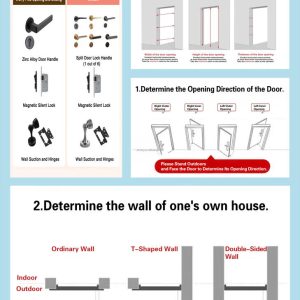
A door is only as good as its hardware. We supply supporting hardware accessories including hinges, locks, closing mechanisms, and door stops. Our engineering team ensures that all hardware is compatible with the door weight, fire rating, and acoustic performance requirements. We can also pre-machine doors in the factory to accommodate your specified hardware, reducing on-site installation time and potential errors.
Conclusion & Next Steps: Let’s Engineer Your Hotel’s First Impression
So, which doors are best for hotels? The answer is: doors that are manufactured by a partner who understands the unique demands of hospitality construction. That means durable construction, code compliance, consistent quality across high volumes, and a supply chain you can rely on.
At Jusen Doors & Windows Manufacturing Co., Ltd., we bring over 20 years of manufacturing expertise to every project. We’re a professional factory — not a trader — with full one-stop OEM & ODM customization service. We control our own wood drying, spray finishing, and aluminum processing, which means we control quality, timelines, and costs. Our experienced in-house design and engineering team is ready to support your project from concept to installation, and our after-sales support ensures your investment is protected.
If you’re planning a hotel project and need a door manufacturer who understands the stakes, we’re ready to help. Submit your project requirements and get a customized quotation within 24 hours.
—
Can you manufacture doors to meet specific fire ratings required for hotel corridors?
Yes. As a manufacturer with in-house engineering, we can construct our solid wood doors and timber frames to meet standard fire resistance requirements. Our engineering team can advise on the correct core materials and construction methods during the design phase to ensure compliance with your local building codes. Fire-rated glazing, intumescent seals, and certified hardware can all be integrated into the final product.
What is the typical MOQ for a hotel project (e.g., 300-500 rooms)?
We understand that hotel projects require high volumes, but we also support mixed projects. We offer flexible MOQs tailored to the project scope. While bulk supply is our specialty, we can discuss phased production to meet your budget and installation schedule without compromising on the custom design. For very large projects, we can also provide a dedicated production line to ensure your timeline is met.
How do you ensure color consistency across such a large volume of doors?
This is a critical point. Because we operate our own spray finishing workshops, we control the entire painting and veneering process. We batch-process materials and use calibrated finishing lines to ensure that the wood grain and color match perfectly across all floors and phases of your hotel project. Each batch is tagged and tracked through production, and we retain finish samples for reference throughout the project lifecycle.
Do you offer OEM support if we have our own hardware specifications (locks, hinges)?
Absolutely. We provide full OEM & ODM customization. We can pre-machine our doors to accommodate your specific hardware specifications, ensuring seamless installation on-site. We also supply our own range of supporting hardware accessories if you require a complete package. Our engineering team will review your hardware specs to ensure compatibility with the door construction and fire rating.
How do you handle shipping damage for fragile door surfaces?
We have extensive experience exporting globally. We use high-strength export-grade packaging with protective corner boards and moisture barriers. Additionally, our after-sales support includes shipping damage protection, meaning we work with you to resolve any transit issues quickly and efficiently. We also provide installation guidelines to our distributors and contractors to minimize handling damage on site.
References
[1] Jusen Doors & Windows Manufacturing Co., Ltd. — About Us. https://doorwoodendoors.com
[2] International Wood Products Association — Packaging Standards for Export. https://www.iwpawood.org
[3] NFPA 80: Standard for Fire Doors and Other Opening Protectives. https://www.nfpa.org/codes-and-standards/all-codes-and-standards/list-of-codes-and-standards/detail?code=80
[4] Wood Handbook: Wood as an Engineering Material — USDA Forest Service. https://www.fpl.fs.fed.us/products/publications/specific_pub.php?posting_id=84323
[5] Jusen Doors & Windows Manufacturing Co., Ltd. — https://doorwoodendoors.com/contact-us“>Contact Us. https://doorwoodendoors.com/contact-us