
Door Hardware Grades:ANSI/BHMA Grade 1, 2 & 3cycle counts by product family, traffic maths, finish codes and what the grade does not promise
Grade 1 on a hinge means 2,500,000 cycles. Grade 1 on an exit device means 500,000, run against a preloaded door. Same three words, entirely different machines — which is why “commercial grade” on a submittal is not a specification. Work out the traffic, pick the standard, then buy the grade.
A grade is a tested performance level inside one standard — not a universal number.
“ANSI Grade 1” only means something after you name the standard. ANSI/BHMA writes the A156 series, one standard per product category, and each defines its own Grade 1/2/3 criteria. Hinges, locksets, exit devices, closers and deadbolts all carry different cycle counts at the same grade.
A156.1 hinges, A156.2 bored locks, A156.3 exit devices, A156.4 closers — each with its own Grade 1/2/3 numbers, each tested its own way.
Cycles per day × 365 × design life, plus 25% margin. That total picks the grade — not the brand, not the price.
Durability and tested strength, yes. Restricted keyways and drill resistance are a separate decision.
A156.18 codes carry corrosion testing. 626 on brass is not 652 on steel, however alike they look on day one.
Grade 1, Grade 2, Grade 3 — side by side.
The grade is a performance level inside a specific A156 standard. The words “Grade 1” are always the top of that standard, but the numbers behind them change completely from hinges to exit devices.
Ten standards, ten different Grade 1 numbers.
The A156 series assigns each product category its own standard, its own test and its own Grade 1/2/3 cycle counts. This is the table that settles every “is that really Grade 1?” argument.
| Product family | Covers | Grade 1 | Grade 2 | Grade 3 | Notes & legacy figures |
|---|---|---|---|---|---|
| Butts and hinges ANSI/BHMA A156.1 |
Full mortise, half mortise, ball-bearing and swing-clear butts | 2,500,000 | 1,500,000 | 350,000 | Older references quote 1,000,000 / 500,000 / 250,000 — editions differ. Also tested for static load (door weight), operational torque, pin withdrawal and lateral load resistance. |
| Bored & preassembled locks and latches ANSI/BHMA A156.2 |
Cylindrical lever sets, knob sets, tubular latches, entry functions | 1,000,000 | 400,000 | 200,000 | Frequently still published as 800,000 / 400,000 / 200,000, and in some older material as 250,000 for Grade 1. The Grade 1 requirement covers far more than cycles: bolt strength, impact, torsion, finish and door-weight limits. |
| Mortise locks and latches ANSI/BHMA A156.13 |
Mortise locksets, mortise deadlocks, mortise latchsets | 1,000,000 | 800,000 | 800,000 | Some references list Grade 2 at 400,000 and Grade 3 at 200,000 for mortise products. Mortise bodies carry the highest security and strength requirements of any lock family; Grade 1 is the specification default for institutional work. |
| Exit devices (panic hardware) ANSI/BHMA A156.3 |
Rim, mortise, vertical rod and surface exit devices | 500,000 | 250,000 | 100,000 | Earlier editions required 250,000 cycles for Grade 1. The cycle test is run with the door preloaded — a harsher condition than an unloaded test, and the reason exit-device numbers look small. |
| Door closers ANSI/BHMA A156.4 |
Surface, concealed, top-jamb and floor-mounted closers | 2,000,000 | 1,000,000 | 500,000 | Consistent across recent editions. Grade 1 is the practical minimum on any fire-rated or main-egress opening. |
| Auxiliary locking devices / deadbolts ANSI/BHMA A156.5 |
Deadbolts, surface bolts, auxiliary deadlocks, keylocks | 250,000 | 150,000 | 100,000 | Residential deadbolt programmes are often certified separately, with a security grade in addition to the durability grade. Security testing here covers sawing, prying, impacting and bolt strength — not only cycle life. |
| Self-closing hinges ANSI/BHMA A156.17 |
Spring hinges and self-closing butts | 1,000,000 | 500,000 | 250,000 | Published figures vary by edition and manufacturer. Where a self-closing hinge is the fire-door closing device, it must carry the listing for the assembly rating. |
| Continuous (piano) hinges ANSI/BHMA A156.26 |
Full-length geared and continuous hinges | 1,000,000 | 500,000 | 250,000 | Verify against the current edition and the manufacturer’s certification. Chosen for abuse resistance and heavy leaves rather than for cycle life alone. |
| Electrified locking systems ANSI/BHMA A156.25 |
Electric strikes, electrified mortise locks, electrified levers and trim | 250,000 | 250,000 | 100,000 | Electrified products are also tested for electrical endurance, fail-safe/fail-secure behaviour and duty cycle. Always confirm the mechanical grade of the host lock as well — an electrified trim on a Grade 3 body is still a Grade 3 opening. |
| Power assist & low-energy operators ANSI/BHMA A156.19 |
Power-assist and low-energy automatic opening devices | 250,000 | 250,000 | 100,000 | Safety behaviour — obstruction detection, closing force and speed — is tested alongside durability. Full power-operated pedestrian doors fall under A156.10; low-energy operators under A156.19. |
What is actually tested behind the grade.
The cycle number is the headline, but a Grade 1 product must also survive loads, torque, impacts, corrosion and the security suite — all in one test programme, all verified by a third party.
Work out the traffic, then buy the grade.
Estimate cycles per day, multiply by 365 and by the design life, add at least 25% margin — then pick the smallest grade whose rated cycles comfortably exceed the total. The bench above the table does the arithmetic for any product family.
| Traffic class | Cycles | Typical openings | Per year |
|---|---|---|---|
| Light | 25 / day | Closets, storage, private offices, guest-room interiors | ≈ 9,000 |
| Moderate | 100 / day | Office interiors, classrooms, hotel corridors, small retail back doors | ≈ 36,500 |
| Heavy | 250 / day | School corridors, retail units, main office entries, hospital wards | ≈ 91,000 |
| Severe | 500 / day | Hospital main corridors, transit concourses, mall entrances, stadiums | ≈ 182,000 |
| Extreme | 1000 / day | Airport security lines, stadium vomitories, station barriers | ≈ 365,000 |
What to put on a hospital corridor — and a closet.
Grades by opening type, with the planning figures that justify them. The grade column is a starting point, not a substitute for the traffic calculation.
| Opening | Hinge | Lock | Closer | Exit | Finish | Note |
|---|---|---|---|---|---|---|
| Hospital main corridor | 1 | 1 | 1 | 1 | 630 (US32D) | Rated assemblies throughout; stainless for cleaning chemicals. |
| School classroom / corridor | 1 | 1 | 1 | 1 | 626 or 630 | Abuse resistance drives the specification as much as cycles. |
| Office interior door | 2 | 2–1 | 2 | — | 626 (US26D) | The value point; upgrade the closer if the door is on an egress path. |
| Hotel guest-room entry | 1 | 1 | 1 | — | 613 or 626 | Usually a rated leaf, so listed/labeled hardware and Grade 1 apply. |
| Retail storefront / exit | 1 | 1 | 1 | 1 | 630 (US32D) | 200 customers a day ≈ 150,000 cycles a year — Grade 3 is a season. |
| Multi-family unit entry | 1 | 1 | 1 | — | 626 or 613 | Rated leaf in most codes; keyed-alike or access-control ready. |
| Residential front door | 2 | 2 | — | — | 619/622 or 630 | Add a Grade 1 or 2 certified deadbolt; security grade is separate. |
| Industrial / warehouse | 1 | 1 | 1 | 1 | 630 (US32D) | Continuous hinges (A156.26) where forklifts and trolleys abuse the leaf. |
| Coastal or exterior | 1 | 1 | 1 | 1 | 629/630 stainless | Base metal is the decision; lacquered brass will not survive. |
| Opening | Uses / day | Grade | Note |
|---|---|---|---|
| Residential closet / bedroom | 2–8 | Grade 3 | Low use, low abuse, cosmetic priority. |
| Apartment entry | 8–30 | Grade 2 | Security and reasonable durability; confirm owner standard. |
| Boutique office | 30–80 | Grade 2 | Light commercial; watch the usage assumption. |
| Office corridor | 80–200 | Grade 1 or 2 | Grade 2 may suit low traffic; Grade 1 is the safe default. |
| School classroom | 150–400 | Grade 1 | Abuse resistance drives the decision as much as cycles. |
| Retail entrance | 300–800 | Grade 1 | High cycles plus exterior exposure. |
| Hospital corridor | 500–1,500 | Grade 1 | 24-hour operation, cleaning chemicals, accessibility. |
| Airport / transit | 1,000–3,000+ | Grade 1, heavy-duty series | Specify the top series, not just the grade. |
| Stairwell / fire exit | High | Grade 1 + listed | Life-safety and inspection regime apply. |
626 is not 652 — the finish is a grade of its own.
A156.18 assigns each finish a code, a base metal and a corrosion test. The look is what the client sees; the base metal is what survives. Write the BHMA code with the US equal in brackets.
A = steel, B = brass or bronze, C = stainless. Satin chrome on a brass body is 626; the same appearance on steel is 652. On a coastal door the difference is three years of service versus fifteen.
The grade is decided in the specification — and exposed at the door.
Lever force, hinge count, finish base metal and the listing: what looks like a detail on paper is the difference between twenty years of service and a call-back in season two.
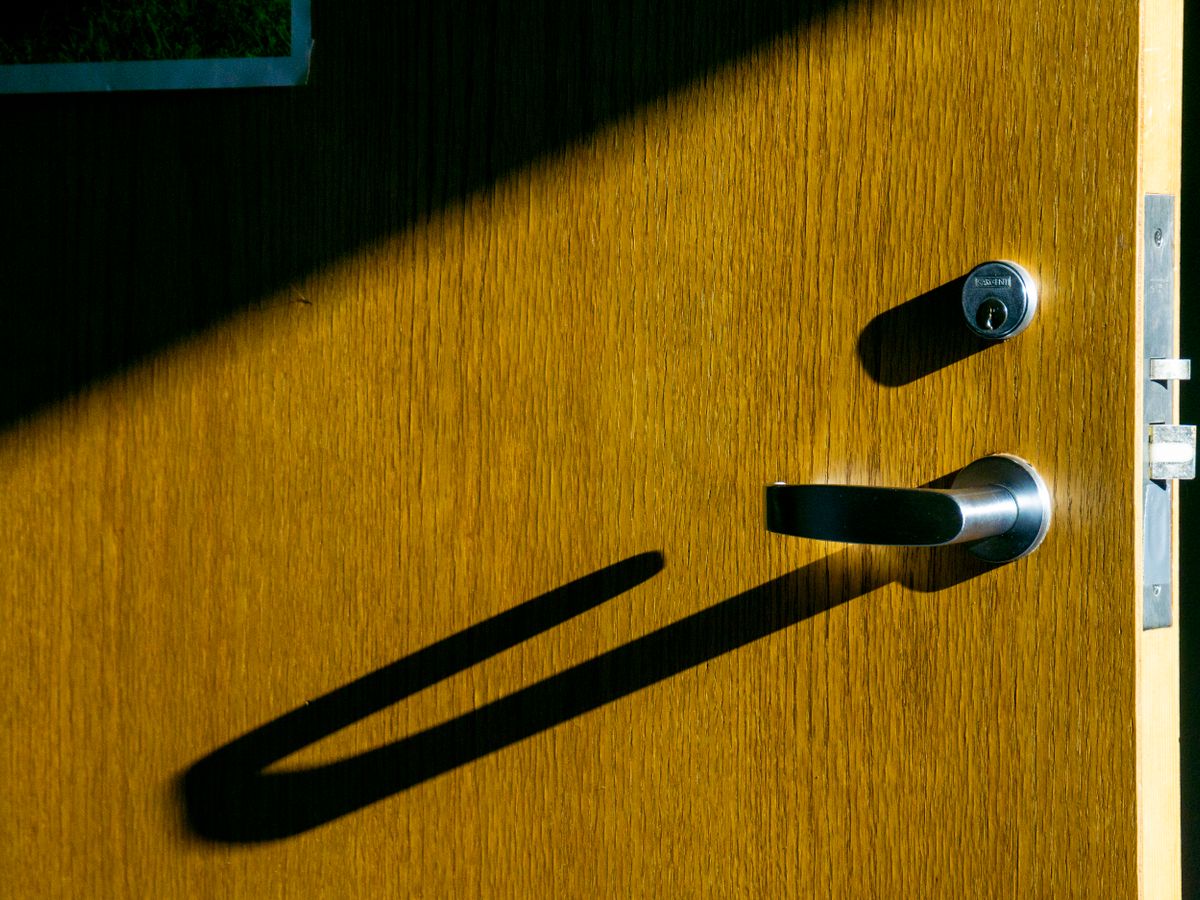
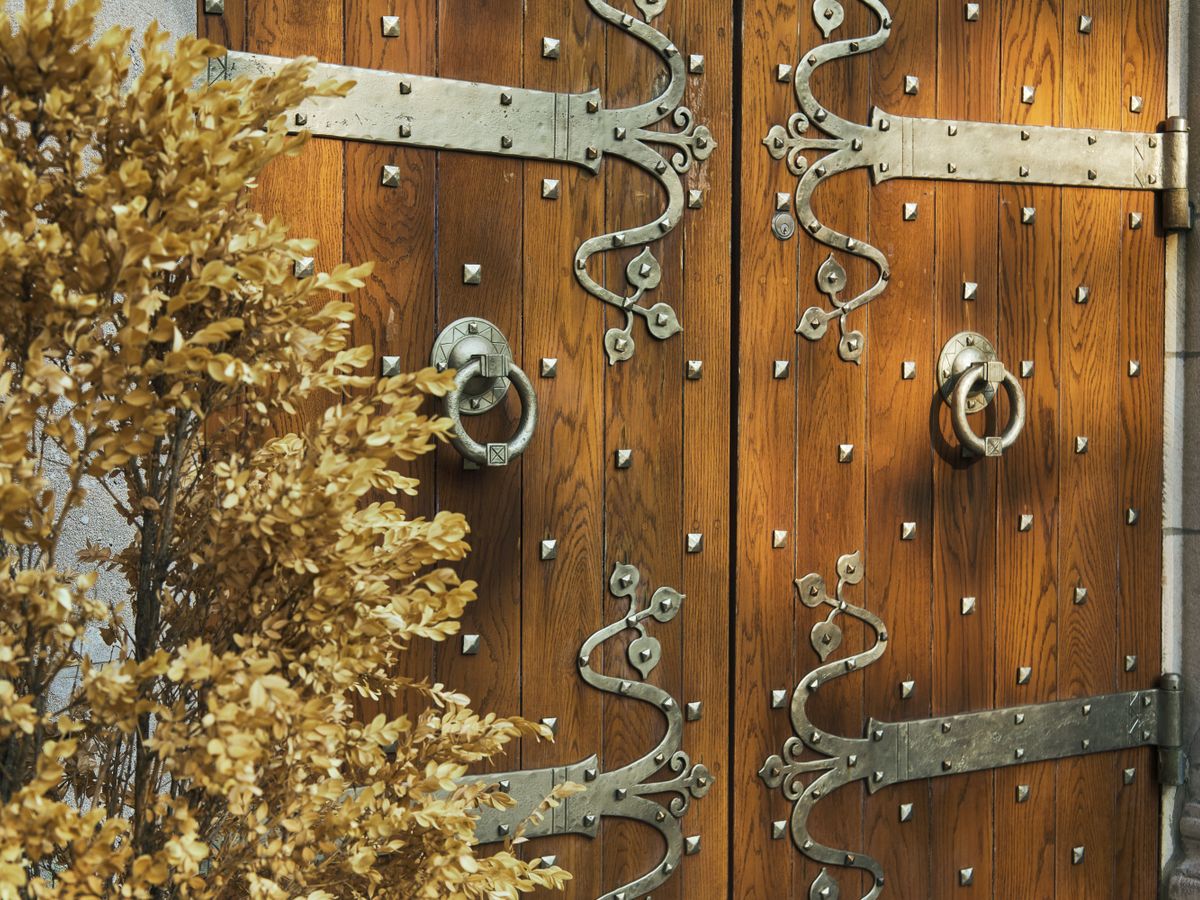
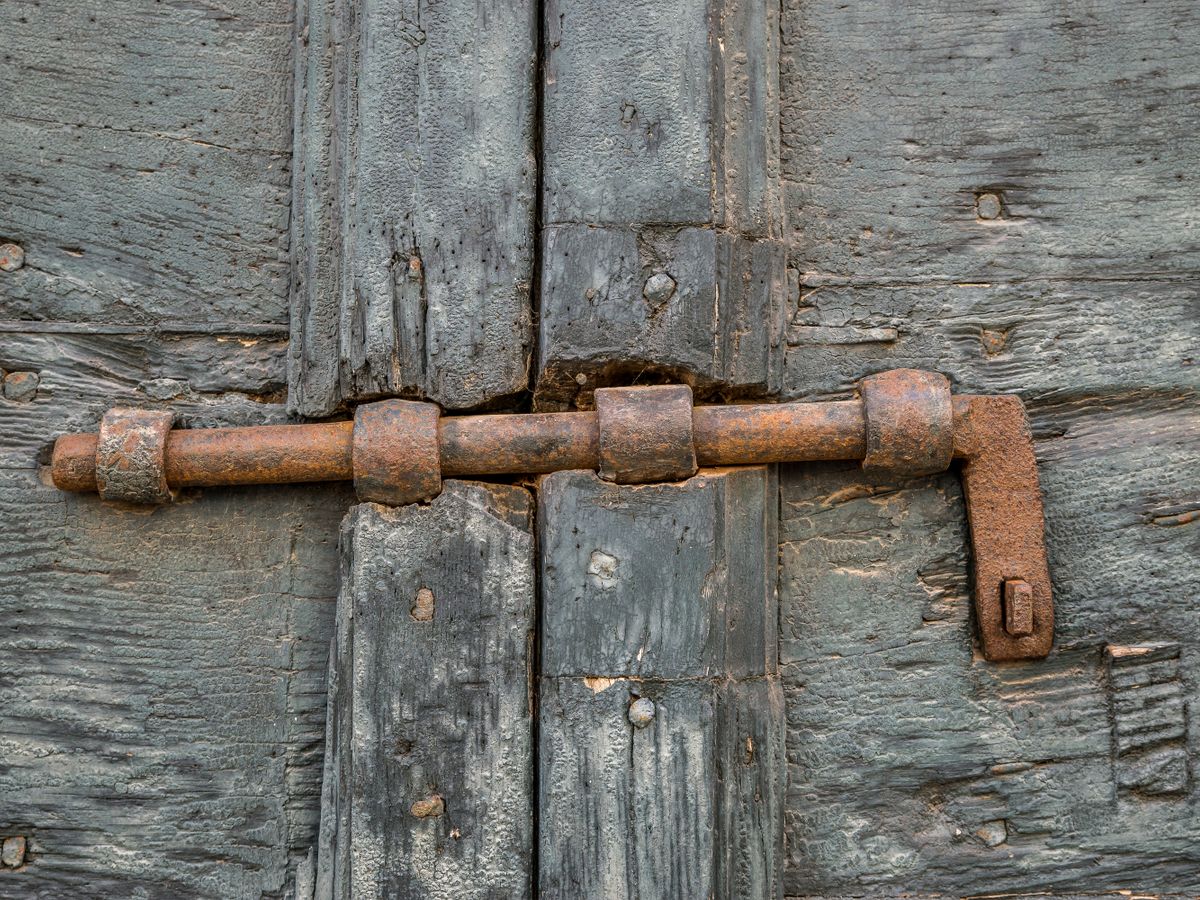
A rated door is only as rated as its weakest part.
Every component on a fire-rated assembly must be listed and labelled for that assembly’s rating. Grade and listing are separate requirements — most rated hardware is both, and the inspector checks both.
The numbers code cares about: 5 lbf, 34–48″, one hand.
Grade measures durability; code sets the operable limits. A million-cycle Grade 1 lock that needs two hands still fails accessibility review.
| Requirement | Limit | Reference | Note |
|---|---|---|---|
| Operable parts — force | 5 lbf maximum | ADA 309.4 / 404.2.9 | Applies to interior hinged doors on accessible routes; fire doors are exempt under ADA but not under ICC A117.1. |
| Operable parts — operation | One hand, no tight grasping, pinching or wrist twisting | ADA 309.4 | This is why lever hardware replaced knobs on accessible routes. |
| Hardware height | 34″–48″ above finished floor | ADA 309.3 / 404.2.7 | Measured to the operable part, not the rose. |
| Egress door operation | 30 lbf to release the latch · 15 lbf to open · 5 lbf to keep moving | IBC 1010.1.2 | Applies to doors on the means of egress, independent of accessibility. |
| Panic hardware triggers | Assembly and educational occupancies at 50+ occupants, and high-hazard | IBC 1010.2.9 | Exit devices must be listed to A156.3 and, on rated leaves, fire labelled. |
| No special knowledge or key | Egress must be immediate and obvious | IBC 1010.1 | Double-cylinder deadbolts and delayed egress are restricted and heavily conditioned. |
| Fire-rated assemblies | Self-closing or automatic-closing, positive latch | NFPA 80 / IBC 716 | Hardware grade follows: Grade 1 in practice on every rated opening. |
| Finish and durability | Per A156.18 for the location | ANSI/BHMA A156.18 | Wet, coastal, healthcare and food locations need stainless or PVD, not lacquered brass. |
Retail packaging uses the same three grades — differently.
Residential products are tested to the same A156 standards, but retail boxes quote the grades with different cycle expectations, and there is a separate certified security grading for deadbolts and locksets.
| Grade | Cycle expectation | Security | Where |
|---|---|---|---|
| Grade 1 | 800,000–1,000,000 cycles | Highest attack resistance in the certified programme | Main entries, multi-family unit doors, heavy-use residential |
| Grade 2 | 400,000 cycles | Mid-level attack resistance | Standard residential entries and exterior doors — the retail default |
| Grade 3 | 200,000 cycles | Basic functional resistance | Interior passage, privacy and closet doors |
How to write a grade that can be verified.
“Commercial grade” is not a specification. Write the standard, the grade, the function, the finish code with base metal, and the certification listing number — for every product on the schedule.
“Cylindrical lever lockset, ANSI/BHMA A156.2 Grade 1, classroom function, 626 (US26D) satin chrome on brass, lever style L07, 2-3/4″ backset, for 1-3/4″ leaf, BHMA Certified listing no. …”. Repeat for hinges (A156.1), closer (A156.4), exit device (A156.3) and any electrified component (A156.25).
| Function | Codes | Outside | Inside | Where |
|---|---|---|---|---|
| Passage | F75 / F76 | Always free | Always free | Hallways, closets, circulation doors. |
| Privacy | F76B / F81 | Locked by inside turn | Always free; emergency release | Bedrooms, bathrooms, changing rooms. |
| Entry / office | F82 | Key locks and unlocks | Always free | Offices, staff rooms, main entries. |
| Classroom | F84 | Key locks or unlocks | Always free | Teaching spaces and training rooms. |
| Storeroom | F86 | Key retracts latch only | Always free | Storage, electrical and service rooms. |
| Apartment | F90 | Key; inside thumbturn deadbolt | Free latch, turn bolt | Multi-family unit entries. |
| Exit only | F05 / rim exit | No trim; pull side only | Push bar free | Egress-only doors and rated exits. |
Hardware set — HW-03
Lockset — Mortise, Grade 1, A156.13, listed for fire door
Function — F86 storeroom, key retracts latch; free egress inside
Cylinder — Grade 1, 6-pin, keyed to master; core per owner standard
Closer — Grade 1, A156.4, listed, parallel arm, automatic-release holder
Hinges — Grade 1, A156.1, ball bearing, listed, stainless steel
Finish — US26D satin chromium throughout
Strike — Grade 1, electrified option not required
Confirmation — Product certificates and listing numbers attached
When the grade was wrong, this is what it looks like.
Every one of these failures was specified years earlier — under-specified traffic, a grade mix inside one opening, or a finish chosen for a different climate.
Hardware grading glossary.
The working vocabulary of hardware specification. Filter for a term, or jump to the broader door glossary for frame and construction terminology.
Hardware grade FAQs.
The questions architects, installers, owners and suppliers ask most often — answered with the standard kept explicit.
The grade is only real once the certificate is on file.
Send the opening schedule or a proposed hardware set. JuSen engineering will cross-check the standard, grade, function, finish and listing against the door preparation — before anything is bored, mortised or released.
- Grade and standard against the schedule
- Function, finish and keying coordination
- Listing and preparation before machining
- Door weight and thickness range
Where the grades and test figures come from
Grade classifications and test results on this page reference published standards. Primary sources:
- NFPA 80 — Standard for Fire Doors and Other Opening Protectives: hardware requirements for fire-rated openings, including closers and latching.
- UL Solutions: listing and classification of door hardware and fire door assemblies.
- ASTM International: test methods covering cycle endurance and finish performance.
- U.S. Access Board — ADA Standards for Accessible Design: operating force and hardware reach-range limits for accessible doors.