What Best Quality Means for Fiberglass Exterior Doors
For B2B buyers, the best quality fiberglass exterior doors are not defined by brand name or showroom finish. They are defined by four measurable layers: skin thickness and resin content, core material and density, stile-and-rail construction at the edges, and the frame system the slab is hung in. A door that scores well on all four will hold its shape through humidity cycling, resist denting and cracking at the edges, and keep its finish for years. A door that only looks good on the surface usually fails at the lock rail or the bottom rail first.
This matters commercially because fiberglass is often specified as a replacement for both wood and steel. It is dimensionally stable in wet climates where wood swells, and it does not dent like steel. But those advantages only hold if the slab is built correctly. Two doors with identical wood-grain texture can differ by several hundred dollars per unit in cost — and by a decade in service life — based purely on what is behind the skin.
The sections below break the product down by construction tier, style and glass configuration, size standards, and frame compatibility, then give a comparison framework and a sourcing checklist you can hand to a supplier.
Fiberglass Exterior Door Construction and Quality Tiers
A fiberglass exterior door is a molded fiberglass-reinforced polymer (FRP) composite skin bonded to a core, with engineered stiles and rails forming the perimeter. Quality differences concentrate in five areas.
Skin. The compression-molded skin carries the grain or smooth finish. Thicker skins with higher glass-fiber content resist impact and hold detail better; thin skins can telegraph core imperfections and crack at stress points over time. When evaluating samples, look at grain depth consistency across the whole face and check whether the skin is uniform at the panel edges rather than thinning out.
Core. The two mainstream cores are polyurethane foam and polystyrene foam. Polyurethane generally offers better insulation value per inch and better structural rigidity; polystyrene is lighter and lower cost. Some slabs use a composite or engineered-wood core for heavier hardware and higher security requirements. For B2B specification, core type should be stated in writing, because it drives both thermal performance and screw-holding strength at hinges and locks.
Stiles and rails. These are the vertical and horizontal edge members that carry hinges, locks, and deadbolts. Engineered stiles with hardwood or laminated construction hold screws far better than foam-only edges. A door with a solid lock rail and reinforced hinge stile will survive repeated hardware cycles; one without will loosen at the screws.
Edge banding and sealing. The edge is where moisture enters. Quality slabs have consistent edge sealing and clean, square edges that take weatherstripping and thresholds properly.
Thermal performance. Insulation value depends on core, skin, glass, and frame together. Ratings are expressed as U-factor (lower is better) and, where relevant, SHGC. These are model- and climate-specific. ENERGY STAR and NFRC ratings apply per door assembly and per climate zone — a slab that qualifies in one zone may not qualify in another, so always request the rating sheet for the exact configuration you are buying.
For durability against fading, warping, and impact, the practical test is the supplier’s own performance data: air-tightness, water-tightness, and wind resistance test reports on the finished assembly, not the slab alone.
Terms buyers should know
| Term | What it means | Why it matters when buying |
|---|---|---|
| FRP skin | Fiberglass-reinforced polymer outer layer molded with grain or smooth finish | Thickness and fiber content determine impact resistance and how long the finish holds |
| Core density | Weight and structure of the foam or composite filling the slab | Drives insulation value, rigidity, and screw-holding at hinges and locks |
| U-factor | Rate of heat transfer through the full door assembly | Lower values mean better thermal performance; ratings are model and climate specific |
| Rough opening | Framed wall gap the door unit is installed into | Determines whether you order a slab, a prehung unit, or a full frame system |
Style, Finish, and Glass Options: Wood-Look, Black, Flush, Full Lite, and Sidelites
Style selection is where B2B buyers most often over-specify on appearance and under-specify on structure. The finish and glass package should follow the project’s climate, orientation, and security requirements.
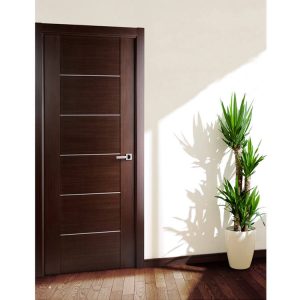
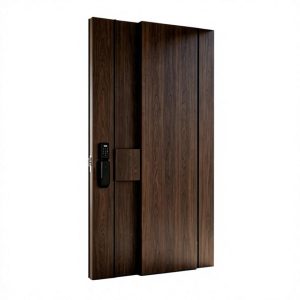
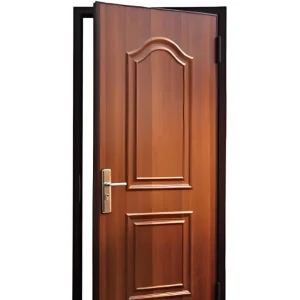
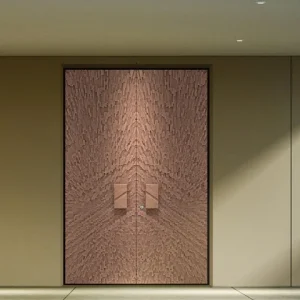
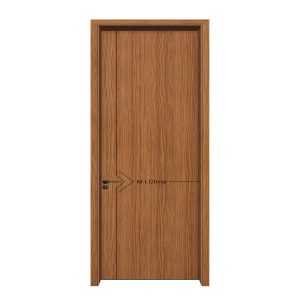
Wood-look finishes. Fiberglass exterior doors that look like wood are one of the main reasons buyers move away from real wood. A quality wood-grain fiberglass door reproduces grain and stain variation convincingly, but unlike wood it does not absorb moisture, swell, or need periodic refinishing. Compared with real wood doors, fiberglass holds dimensional stability better in humid and coastal conditions and resists rot at the bottom rail. The trade-off: it cannot be sanded and refinished the way solid wood can, so surface damage is repaired rather than sanded out, and stain-look finishes are factory-applied.
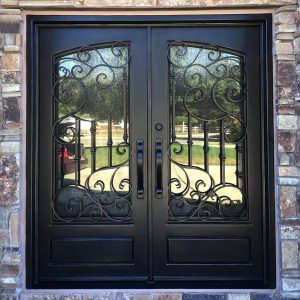
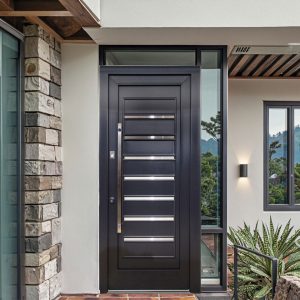
Black and dark finishes. A black fiberglass exterior door is a common specification for modern residential and hospitality projects. Dark colors absorb more heat and UV, which puts more stress on the skin and finish. In hot and high-sun markets, confirm the finish system is rated for dark colors and check the supplier’s fade-resistance data rather than assuming all finishes behave the same.
Flush doors. A flush fiberglass exterior door has a flat, unpaneled face. It suits contemporary architecture, commercial entries, and multi-unit projects where a consistent, low-profile appearance is wanted. Flush slabs are also easier to keep clean, which matters in rental and commercial settings.
Full lite and glass configurations. A full lite fiberglass exterior door carries glass across most of the face, maximizing daylight. Partial-lite and decorative-glass options balance light with privacy. Glass choice affects the assembly’s U-factor and SHGC, so the glazing package must be specified together with the slab — not chosen afterward.
Sidelites. Fiberglass exterior doors with sidelites add fixed narrow glass panels beside the door, widening the entry and increasing daylight. Sidelites change the rough opening width and the frame system required, so they must be planned at the framing stage, not added at installation.
Size and Dimension Guide: 30, 32, 36 Inch Widths and 80 Inch / 8 Ft Heights
Most exterior door sizing follows a small set of standard dimensions, but the exact combination you order determines frame, hardware, and rough opening.
Widths. The 30 inch fiberglass exterior door, 32 inch fiberglass exterior door, and 36 inch fiberglass exterior door are the three common single-door widths. A 32 inch fiberglass exterior door is the most frequent choice for primary residential entries and works with standard hardware backsets; 36 inch fiberglass exterior doors are preferred where accessibility, furniture movement, or higher traffic volume is a factor; 30 inch fiberglass exterior doors suit secondary entries, utility rooms, and tighter walls.
Heights. Standard height is 80 inches, giving the common 36×80 fiberglass exterior door and 32×80 fiberglass exterior door with glass configurations. An 8 ft fiberglass exterior door is specified where ceiling height, proportion, or a grander entry is required. The difference from standard height is not just appearance: taller slabs are heavier, need appropriate hinge count and reinforcement, and may require a taller frame and header detail. Confirm the supplier’s hinge and hardware schedule for 8 ft units rather than assuming standard-height hardware carries over.
Non-standard combinations. A 32 x 75 exterior door appears in older buildings and renovation work where the existing rough opening is shorter than modern standard. A 72 x 32 exterior door describes a double-door or door-plus-sidelite arrangement rather than a single slab. These configurations are normally made to order, which is why customization capability matters more in renovation supply than in new-build supply.
Glass and lite sizing. A 32×80 fiberglass exterior door with glass or a 32 inch fiberglass exterior door with glass must have the glazing frame, glass type, and slab specified as one unit. Changing glass after the order is placed usually means changing the slab.
Before finalizing any of these, work from the actual rough opening and confirm the door unit dimensions, frame allowance, and clearance. A dedicated size guide is the fastest way to avoid ordering errors: see the size and specification reference.
Frame Systems and Compatibility for Fiberglass Exterior Doors
Fiberglass exterior door frames do more work than most buyers expect. The frame carries the slab’s weight, holds the weatherstripping and threshold in alignment, and determines how the assembly performs against air and water infiltration.
Frame material and construction. Frames are supplied in wood, aluminum, composite, and fiberglass composites. Each has different behavior in humidity and temperature cycling. Aluminum frames need a thermal break to avoid condensation and thermal bridging; wood frames need consistent sealing and protection at the sill; composite and fiberglass frames offer good stability in wet climates. The frame and slab should be specified as a matched system, because weatherstripping profiles and hinge positions are designed to work together.
Prehung versus slab. A prehung unit arrives with the slab already hung in its frame, with hardware prep and weatherstripping in place. This reduces installation variability, which is one of the largest hidden factors in real-world door performance. Slabs ordered separately give flexibility but push alignment and sealing responsibility onto the installer.
Sidelites and multi-panel frames. When sidelites or a 72 x 32 arrangement is specified, the frame becomes a multi-panel system with mullions. Structural connection between panels, and the way the whole assembly is flashed and anchored, determines whether the unit stays watertight over time.
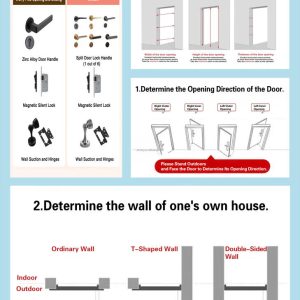
Hardware compatibility. Hinge count, hinge reinforcement, lockset bore, deadbolt position, and handle style must all match the slab’s stile construction. Heavy or tall doors need more hinges and stronger stile reinforcement. Confirm hardware compatibility in writing, including whether the supplier preps for your specified hardware or ships generic prep.
Installation quality. Framing squareness, flashing details, sill panning, and sealing affect performance as much as the product itself. A premium assembly installed out of square will leak air and water. This is why B2B buyers should specify installation requirements alongside the door specification.
Comparison Table: Fiberglass Exterior Door Options by Quality Attribute
The table below frames the main decision points. Treat it as a specification framework, not a fixed price list — cost varies by size, glass, finish, hardware, and order volume.
| Attribute | Entry / Builder Grade | Mid-Range | High-Performance / Specified |
|---|---|---|---|
| Skin | Thin molded skin, shallow grain | Standard molded skin, consistent grain | Thick compression-molded skin, deep uniform grain, dark-color rated |
| Core | Polystyrene foam | Polystyrene or polyurethane | Polyurethane or composite core, stated density |
| Stiles and rails | Foam edge, minimal reinforcement | Engineered stiles, reinforced lock rail | Full engineered stiles, reinforced hinge and lock zones |
| Thermal rating | Basic; rating may not be published per configuration | Published U-factor for common configurations | Full NFRC/ENERGY STAR documentation per model and climate zone |
| Glass options | Limited; often fixed basic glazing | Full lite, partial lite, decorative options | Full lite, sidelites, specified SHGC and U-factor glazing |
| Frame system | Basic wood or aluminum frame | Thermal-break aluminum or composite frame | Matched frame system with thermal break, tested assembly |
| Performance testing | Not consistently documented | Air and water testing on common models | Air-tightness, water-tightness, wind resistance reports per assembly |
| Warranty | Short, finish often excluded | Standard, partial finish coverage | Extended structural and finish coverage, terms in writing |
| Best fit | Low-traffic, budget-driven projects | Most residential and light commercial work | Coastal, high-humidity, high-sun, and high-traffic projects |
B2B Sourcing and Procurement Recommendations
Sourcing fiberglass exterior doors at volume comes down to controlling variables that are easy to leave vague in a quotation.
Write the specification, not the product name. State skin type, core material, stile construction, glass configuration, finish system, frame type, and hardware prep. A quotation that only says “fiberglass door, wood grain” gives you no basis for comparing suppliers or enforcing quality.
Request performance documentation. Ask for air-tightness, water-tightness, and wind resistance test reports on the finished assembly, plus NFRC/ENERGY STAR rating sheets for the exact configurations you are buying. Ratings are model- and climate-specific, so generic marketing claims are not a substitute.
Match the door to the climate zone. Hot and humid markets stress finish adhesion and core stability; high-sun markets stress dark-color fade resistance; cold markets stress thermal performance and condensation at frames; coastal markets stress hardware corrosion and edge sealing. Specify accordingly rather than using one specification across all markets.
Use a warranty comparison framework. Compare what is covered (structural, finish, glass seal), for how long, and what voids coverage — improper installation, unapproved finishes, or hardware substitution are common exclusions. Warranty terms differ by manufacturer and product line, so read the actual document.
Plan for installation quality. Specify flashing, sill panning, and sealing requirements, and confirm who is responsible for rough-opening verification. Installation is the most common cause of premature failure, and it is rarely covered by product warranty.
Control logistics and documentation. For international sourcing, confirm packing method, FCL or LCL options, and that the supplier can issue packing lists, proforma invoices, and full customs documentation. Poor packing, not poor product, causes most transit damage on door orders.
This is where a factory-direct supplier changes the comparison. As a manufacturer, our approach at Jusen Door and Windows is to keep the specification adjustable rather than fixed: profile structure and fittings can be adapted to match the building codes and climate conditions of the target market, and slabs are available with full customization on size, color, glass, and hardware. Every order goes through pre-shipment inspection covering air-tightness, water-tightness, and wind resistance, and we supply packing lists, proforma invoices, and customs documents with FCL and LCL shipment options. For buyers comparing suppliers on specification rather than appearance, that is the part worth testing first — request a sample and a configuration-specific quotation before committing volume. Get a Quote
FAQ: Fiberglass Exterior Door Buying Questions
What makes a fiberglass exterior door best quality?
Skin thickness and fiber content, core material and density, engineered stiles and rails with reinforced hinge and lock zones, a matched frame system, and documented performance testing on the finished assembly. Appearance is the least reliable quality indicator.
How do fiberglass exterior doors that look like wood compare to real wood doors?
Fiberglass wood-look doors resist moisture, swelling, and rot far better than solid wood and hold their finish longer in humid and coastal conditions. Real wood can be sanded and refinished repeatedly, while fiberglass surface damage is repaired rather than sanded out. For exterior applications in wet climates, fiberglass is usually the lower-maintenance specification.
What sizes are available, including 32 inch, 36 inch, 36×80, 32×80 with glass, 32 x 75, and 72 x 32?
Common single widths are 30, 32, and 36 inches, with 80 inches as standard height and 8 ft available. A 36×80 or 32×80 fiberglass exterior door with glass is a standard order; a 32 x 75 exterior door suits older or renovation rough openings; a 72 x 32 exterior door describes a double or door-plus-sidelite arrangement. Non-standard combinations are made to order.
What are the options for fiberglass exterior doors with sidelites or full lite glass?
Full lite doors carry glass across most of the face; sidelites add fixed glass panels beside the door. Both change the rough opening and frame system, and glass choice affects the assembly’s U-factor and SHGC, so the glazing package must be specified at order stage.
How do fiberglass exterior door frames affect installation and performance?
The frame carries the slab’s weight and keeps weatherstripping and threshold aligned. Frame material, thermal break, and how the frame is flashed and anchored determine air and water performance. A matched slab-and-frame system reduces installation variability and is generally the safer specification.
What should B2B buyers check before sourcing fiberglass exterior doors?
Written specification covering skin, core, stiles, glass, finish, frame, and hardware prep; performance test reports and rating sheets for the exact configuration; warranty terms and exclusions; packing and documentation capability; and installation requirements. Compare quotations against that list rather than against price alone.
Are black fiberglass exterior doors and flush fiberglass exterior doors suitable for commercial projects?
Yes, with the right specification. Black doors need a finish system rated for dark colors and high UV exposure. Flush doors suit contemporary and commercial entries and are easy to maintain. Both are widely used in multi-unit and hospitality projects when the frame and hardware package is specified to match.
How do 8 ft fiberglass exterior doors differ from standard height doors?
They are heavier and taller, which changes hinge count, stile reinforcement, frame height, and header detailing. Confirm the hardware schedule and structural requirements for 8 ft units rather than applying standard-height assumptions.