What Is a Half Door?
A half door—also called a split door, half-height door, or Dutch door—is divided horizontally so the top and bottom sections operate independently. You can open the top half for ventilation and light while keeping the bottom closed, or swing both halves together as a full door. This design is common in kitchens, bars, pantries, cafes, and rustic-style interiors where airflow and a casual, open feel are priorities.
The concept is straightforward: instead of one solid slab, you have two stacked panels with a center ledge where they meet. The top can be a single piece or glazed with glass, and the bottom is typically solid for privacy and durability. While historically associated with farmhouse aesthetics, half doors now appear in modern industrial, coastal, and transitional designs because they solve a practical problem: controlling access while maintaining visibility and ventilation.
For B2B buyers—contractors, architects, property developers, or procurement managers—the half door is not merely a stylistic choice. It affects space planning, hardware specification, and building code compliance. Understanding the structural differences between material options and how they perform under real-world conditions is essential before committing to a purchase order.
Types of Half Doors: Wood, Aluminum, and More
Half doors are manufactured in three primary materials, each with distinct performance characteristics that matter for different applications.
Wood Half Doors
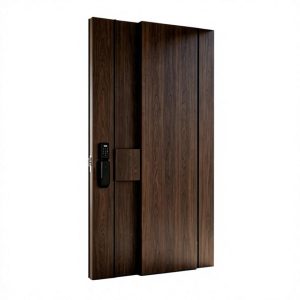
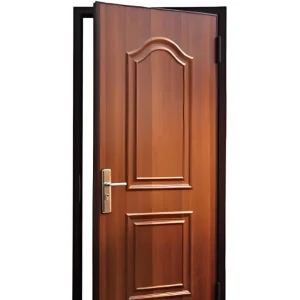
Wood remains the default choice for interior half doors, particularly in kitchens and living spaces where aesthetics dominate. Solid wood options include oak, maple, mahogany, and pine. Engineered wood—such as MDF with a wood veneer—offers a lower-cost alternative with better dimensional stability than solid timber.
The appeal of wood lies in its adaptability. It can be painted, stained, or finished to match existing cabinetry and trim. It accepts traditional joinery and hardware well, and minor dents or scratches are often repairable. However, wood responds to humidity changes. In a kitchen, where steam and temperature fluctuate, solid wood panels can warp or crack if not properly sealed. This is why many manufacturers offer engineered wood cores with veneer faces for kitchen applications—they look like wood but resist moisture-induced movement better.
Aluminum Half Doors
Aluminum half doors are a newer entrant in this category, driven by the growth of thermal-break aluminum systems in residential and commercial construction. These doors feature a powder-coated aluminum frame, often paired with insulated glass panels in the upper half. They are increasingly specified for indoor-outdoor spaces, sunrooms, and commercial kitchens where durability and easy cleaning outweigh the warmth of wood.
Aluminum does not warp, rot, or absorb moisture. It handles frequent use without showing wear, and the powder coating resists fading and chipping. For openings that connect a kitchen to a patio or service area, an aluminum half door with a fixed lower panel and operable upper window provides ventilation without compromising security.
The main drawback is thermal conductivity. Bare aluminum transfers heat and cold rapidly, which is why quality aluminum doors use thermal-break construction—a polyamide strip separates the interior and exterior frames to reduce heat transfer. For interior applications, this matters less, but for exterior half doors, a thermal-break profile is essential for energy efficiency.
Composite Half Doors
Composite half doors combine materials to optimize performance. A common construction is a fiberglass or PVC skin over a foam-insulated core, with a wood or aluminum internal frame. These doors mimic the look of wood grain but offer superior resistance to moisture, insects, and temperature extremes.
Composite is the pragmatic choice for exterior half doors or high-humidity interiors. It requires minimal maintenance—no painting or sealing—and holds its shape over decades. The foam core provides insulation values that solid wood cannot match. The trade-off is cost and repairability. Composite doors are more expensive than wood or aluminum, and damage is difficult to repair without replacing entire sections.
Half Door Materials Compared
To make an informed purchasing decision, evaluate materials side by side across the attributes that affect long-term satisfaction and total cost of ownership.
| Attribute | Wood | Aluminum | Composite |
|---|---|---|---|
| Durability | Good; susceptible to moisture damage | Excellent; does not warp or rot | Excellent; resistant to all weather conditions |
| Insulation | Moderate; depends on thickness | Poor without thermal break; good with thermal-break profile | Excellent; foam core provides high R-value |
| Maintenance | High; requires periodic sealing/painting | Low; occasional cleaning | Very low; essentially maintenance-free |
| Cost | Low to medium | Medium to high | High |
| Aesthetic flexibility | Maximum; paint, stain, custom profiles | Good; powder coating in custom colors | Good; wood-grain finishes, but less variety |
| Weight | Medium to heavy (solid wood) | Light | Medium |
| Typical use | Interior kitchens, pantries, rustic designs | Modern interiors, commercial, indoor-outdoor transitions | Exterior entrances, high-humidity areas |
The decision matrix above reflects general industry performance, but the final choice depends on your specific application. For a purely interior kitchen door that matches custom cabinetry, wood is often the right answer. For a door leading to an exterior patio or service yard, aluminum or composite will outperform wood in weather resistance and lifecycle costs.
How to Choose the Right Half Door for Your Kitchen
Kitchen half doors serve two distinct functions: separating spaces and providing ventilation. Before selecting a product, define the operational requirement.
Interior Kitchen Separation
If the half door separates a kitchen from a dining area or living space, the primary considerations are aesthetics, sound control, and safety. A solid wood half door with a painted or stained finish integrates with cabinetry. The bottom half prevents small children or pets from entering while the top remains open for visibility. In this scenario, the door does not need weather resistance, so wood or engineered wood offers the best value.
Kitchen to Exterior Transition
When the half door opens to an exterior space—a patio, courtyard, or service area—the specification changes. The door must resist moisture, temperature swings, and UV exposure. Aluminum with a thermal break or a composite door is the appropriate choice. The lower half should be solid for security, while the upper half can include insulated glass for natural light.
For exterior applications, pay attention to the threshold and weatherstripping. The bottom edge of the lower half needs a proper seal to prevent water intrusion and drafts. Adjustable thresholds accommodate floor slope and settling, which is critical for exterior installations.
Ventilation and Light Requirements
If ventilation is the primary goal, consider the upper half configuration. Options include:
- Solid upper panel that opens fully
- Single-pane or double-pane glass that opens
- Louvered or slatted upper section for passive airflow
Each option trades off light, airflow, and privacy. Louvered doors maximize ventilation but sacrifice light and insulation. Glass panels maximize light but reduce airflow when closed. A solid upper panel provides the most privacy and insulation but limits ventilation to the open position.
Half Door Buying Checklist: Key Features to Look For
When evaluating half doors from different suppliers, use this checklist to ensure the product meets your requirements.
Standard Sizes and Custom Dimensions
Half doors do not have universal standard sizes because they are often built to match existing openings. However, common interior door widths are 24, 28, 30, 32, and 36 inches (610, 711, 762, 813, and 914 mm). Standard heights are typically 80 inches (2032 mm) for interior doors and 80 inches for exterior residential doors.
The critical measurement is the total height when both halves are closed. A half door must align with the full-height opening and the surrounding frame. If you are replacing an existing full door with a half door, the total height must match the original to avoid altering the frame or floor.
Hardware Requirements
Half doors require specific hardware to function correctly:
- Hinges: Each half needs its own hinge set. Heavy wood doors may require three hinges per half; aluminum or composite doors typically need two per half.
- Center ledge: The horizontal surface where the two halves meet must support the weight of the upper half when closed. It also provides a surface for latching.
- Latch mechanism: Half doors typically use two latches—one at the center ledge and one at the top of the upper half. Some designs use a single latch system that connects both halves for full-door operation.
- Door pulls: Each half should have its own pull or handle. For the lower half, a pull that is easy to operate without bending is important.
For exterior half doors, the hardware must be corrosion-resistant. Stainless steel or marine-grade aluminum hardware is recommended for coastal environments.
Insulation and Weather Resistance
For exterior half doors, check the door’s insulation value (R-value) and the quality of the weatherstripping. A thermal-break aluminum frame is essential for energy efficiency. The door should include a bottom sweep or threshold seal to prevent drafts and water entry.
Glass Options
If the upper half includes glass, consider the glazing type:
- Single-pane glass: Low cost, poor insulation, suitable for interior use
- Double-pane insulated glass: Better insulation, reduces condensation, recommended for exterior doors
- Low-E glass: Coated to reflect heat, improves energy efficiency in extreme climates
- Tempered or laminated glass: Required for safety in doors, especially near the floor or in commercial settings
Pre-hung vs. Slab
A pre-hung half door comes with the frame, hinges, and hardware pre-installed. This is the recommended option for most buyers because it ensures proper alignment and reduces installation time. A slab-only half door (just the door panel, no frame) is cheaper but requires an experienced installer to fit it into an existing frame, which may not be square or level.
Additional Considerations for Kitchen Half Doors and Wood Half Doors
Kitchen Half Door Specifics
In a kitchen, the half door is often used to conceal a pantry, laundry area, or prep space. For these applications, consider the door swing direction. A half door that swings into the room requires clearance for the upper half. In tight spaces, a sliding or pocket configuration might be more practical, though these are less common.
Kitchen environments also expose doors to grease, steam, and frequent touching. Choose a finish that is easy to clean. Painted surfaces with a semi-gloss or satin sheen resist fingerprints and wipe clean easily. Unfinished wood or matte finishes will show marks and require more maintenance.
Wood Half Door Options
If you have settled on a wood half door, the species and construction matter:
- Solid wood: Oak and maple are hard and durable but heavy. Pine is lighter and less expensive but dents more easily. Solid wood is prone to seasonal movement, so the door must be properly sealed on all six sides, including the top and bottom edges.
- Engineered wood: An MDF or plywood core with a wood veneer offers better dimensional stability than solid wood. It is less likely to warp in humid conditions and is more affordable. The veneer can be matched to existing wood finishes.
- Stile-and-rail construction: Traditional half doors use a stile-and-rail frame with a panel insert. This construction allows the wood to expand and contract within the frame without cracking. It is the preferred method for solid wood doors.
Frequently Asked Questions About Half Doors
What is the difference between a half door and a Dutch door?
The terms are often used interchangeably, but a Dutch door traditionally refers to a specific style where the two halves are equal in height and operate independently. A half door can refer to any door that is cut to half height or divided horizontally, regardless of whether the top half is operable.
Can a full door be cut down to a half door?
Cutting a full door to half height is possible for solid wood doors, but it is generally not recommended. The cut edge must be reinforced and sealed to prevent moisture intrusion and warping. Hollow-core doors cannot be cut to half height because their internal structure does not support the exposed edge. Fire-rated doors must never be cut, as this voids their certification. In most cases, purchasing a purpose-built half door is more cost-effective and safer than modifying an existing door.
What is the typical cost range for half doors?
The cost of a half door varies significantly based on material, size, glass, and hardware. Wood half doors are the most affordable option, with prices varying based on species and finish. Aluminum and composite half doors cost more due to the materials and manufacturing processes involved. Custom sizes, special glass, and premium hardware add to the cost. For accurate pricing, request quotes from multiple manufacturers with your specific dimensions and specifications.
How do I measure for a half door?
Measure the width and height of the door opening at three points: top, middle, and bottom for width; left, center, and right for height. Use the smallest measurements for the door size. The door must fit within the frame with a consistent gap for proper operation—typically 1/8 inch on the sides and top, and 1/2 inch at the bottom for floor clearance. For pre-hung doors, measure the rough opening, which is the framed opening in the wall.
What hardware is needed for a half door?
A half door requires hinges for both the upper and lower halves, a center ledge with a latch, a top latch for the upper half, and door pulls for each section. For exterior half doors, use corrosion-resistant hardware. Some manufacturers offer a single multipoint locking system that secures both halves simultaneously, which is recommended for security.
Can half doors be customized to fit my opening?
Yes. Most half door manufacturers offer full customization on dimensions, materials, colors, glass types, and hardware. Customization is essential when the door must match existing architectural details or fit a non-standard opening. When ordering custom doors, provide precise measurements and specify the swing direction, hinge placement, and finish requirements.
Are half doors suitable for exterior use?
Half doors can be used as exterior doors, provided they are constructed with appropriate materials and weatherproofing. Exterior half doors should use aluminum with thermal break or composite construction, insulated glass, and complete weatherstripping. The door must also meet local building codes for egress and security. Check with your local building authority before installing a half door as an exterior entrance, as some jurisdictions have specific requirements for operable doors.
Supplier Evaluation and Where to Buy
Half doors are available through local millwork shops, building supply distributors, and direct from manufacturers. For B2B buyers, purchasing directly from a manufacturer offers advantages in pricing, customization, and quality control.
When evaluating a half door supplier, consider these criteria:
Manufacturing capability: Does the supplier produce doors in-house, or do they resell from third parties? Direct manufacturing typically means better quality control and more flexibility for custom orders.
Material quality: What materials does the supplier use? For aluminum doors, check whether they use thermal-break profiles. For wood doors, ask about the wood species, moisture content, and finishing process.
Testing and certification: Reputable manufacturers test their doors for air tightness, water tightness, and wind resistance. Request test reports for the specific door model you are considering.
Customization options: Can the supplier accommodate custom sizes, colors, glass types, and hardware? Do they offer OEM or ODM services if you need private labeling?
Export experience: For international buyers, the supplier should handle export documentation, packing, and shipping. Confirm they can provide packing lists, proforma invoices, and customs documents.
Lead time and MOQ: Understand the production lead time and minimum order quantity before committing. Custom doors typically require longer lead times than standard sizes.
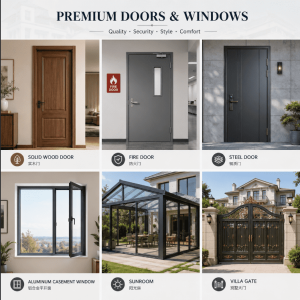
Here is how we meet these standards at Jusen Door and Windows Manufacturing Co., Ltd. As a factory-direct manufacturer of solid wood doors, thermal-break aluminum doors and windows, and system windows, we produce half doors and split doors to your exact specifications. Our manufacturing facility handles custom sizes, colors, glass configurations, and hardware selections in-house, which means we control quality at every stage rather than relying on third-party assembly.
Our pre-shipment inspection process includes air tightness, water tightness, and wind resistance tests on applicable models, so you receive documentation of performance before the door leaves our factory. For international buyers, we provide complete export documentation including packing lists, proforma invoices, and customs paperwork. We ship via FCL or LCL directly from our China factory, and our adjustable profile structures and fittings can be configured to match local building codes in your target market.
If your project requires OEM or ODM services, private labeling, or bulk supply for construction projects, our team can work with your specifications to deliver doors that meet your requirements. We understand that half doors are often part of a larger architectural plan, and we can coordinate production across multiple door types to simplify your procurement.
For pricing and lead time on your specific half door requirements, contact our team with your dimensions and specifications. We will provide a detailed quotation based on your project needs.