Knotty Alder Doors: A Direct Answer
If you are specifying interior doors for a residential or light commercial project and want a warm, natural wood look without the premium price of clear lumber, knotty alder doors are a strong candidate. They are solid wood doors made from alder that retains its natural knots, mineral streaks, and color variation. This gives each door a distinct character that suits rustic, farmhouse, Craftsman, and even contemporary interiors when finished correctly.
Before you commit, understand this: knotty alder is softer than oak or maple. That is not a flaw, but it is a trade-off you need to plan for. The wood’s machinability makes it excellent for detailed panel profiles, and its grain takes stain exceptionally well. The key is matching the door’s construction and finish to the traffic and humidity of the space.
Types of Knotty Alder Doors: Solid, Engineered, and Hollow Core
Not all knotty alder doors are created equal. The term refers to the face veneer or solid lumber, but the internal construction determines performance, weight, soundproofing, and price.
Solid Knotty Alder Doors
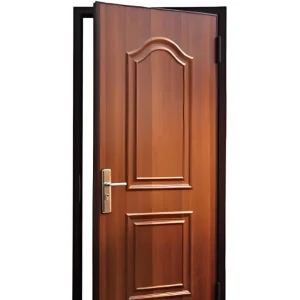
These are constructed entirely from alder lumber, typically stile-and-rail construction with floating panels. They are the heaviest option, offer the best sound insulation, and can be re-sanded and refinished multiple times over their lifespan. Solid doors are the standard choice for high-end residential work. The primary consideration is dimensional stability; solid wood moves with humidity changes, so proper sealing on all six faces is critical.
Engineered Knotty Alder Doors
An engineered door uses a stile-and-rail frame made of solid alder, but the large center panels are replaced with a stable core—often medium-density fiberboard (MDF) or a laminated wood product—veneered with knotty alder. This construction resists warping and cupping better than solid panels, especially in wide door designs or environments with fluctuating HVAC systems. For a 30-inch or 36-inch door in a climate-controlled home, engineered panels are often the more reliable choice. They are slightly lighter than solid doors but still offer substantial weight and acoustic performance.
Hollow Core Knotty Alder Doors
These have a solid wood frame around the perimeter but a honeycomb cardboard or foam interior, with a thin knotty alder veneer on the faces. They are lightweight, inexpensive, and used almost exclusively for interior passage doors where privacy and sound transmission are not major concerns. Hollow core doors do not qualify as “wood doors” in many architectural specifications and are generally not suitable for entryways or large openings. They also cannot be planed or trimmed much at the job site because the internal structure is exposed.
Prefinished vs. Unfinished
You will also choose between prefinished doors and those delivered raw. Prefinished doors arrive with the stain and topcoat already applied in a factory-controlled environment, which is more durable and consistent than most field-finishing. Unfinished doors are cheaper and offer flexibility, but the final quality depends entirely on the painter or finisher. For large projects, prefinished is usually the lower-risk option.
Staining and Finishing Knotty Alder Doors
Knotty alder is one of the most forgiving woods for staining, provided you understand its behavior. It is a diffuse-porous wood with a fine, even texture, which means it absorbs stain uniformly without the blotching common to pine or cherry.
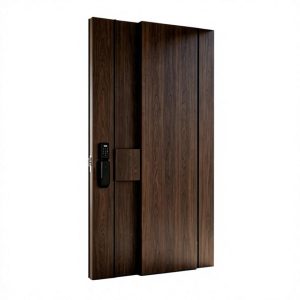
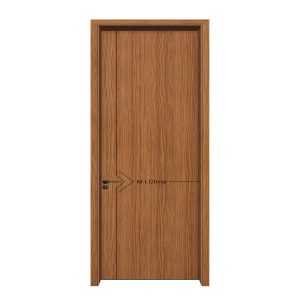
Stained Knotty Alder Doors are the most popular choice because the stain enhances the contrast between the darker mineral streaks and the lighter cream-colored wood. The knots themselves absorb stain differently and will appear darker, which is part of the aesthetic appeal.
For a predictable result, use a wood conditioner before applying an oil-based stain. This seals the most porous areas and equalizes absorption. Gel stains are another good option because they sit on the surface rather than penetrating deeply, giving you more control over color intensity.
Popular finish approaches:
- Clear or natural finish: A simple clear coat with a matte or satin sheen. This highlights the natural color variation and keeps the room light.
- Honey or amber tones: Oil-based polyurethanes add a warm amber cast that deepens over time. This complements traditional and Tuscan-style interiors.
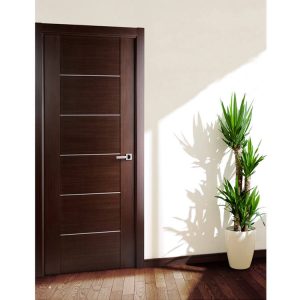
- Espresso or dark walnut: Dark stains mask the lighter wood and emphasize the knot pattern. This works well in modern farmhouse and industrial designs.
- Painted knotty alder: If you want a painted door, you can still use knotty alder, but it is a waste of the wood’s character. If paint is the goal, a less expensive wood species like poplar is more cost-effective.
Topcoat selection: For interior doors, a water-based polyurethane is recommended for its clarity and low odor. It does not yellow over time like oil-based finishes. Apply at least three coats, sanding lightly between coats with 220-grit paper. The edges, top, and bottom of the door must be sealed to prevent moisture absorption, which is the primary cause of warping.
Knotty Alder vs. Other Wood Species: A Comparison Table
When comparing interior door materials, the decision usually comes down to appearance, durability, and budget. Here is how knotty alder stacks up against common alternatives.
| Wood Type | Appearance | Durability | Cost | Best Use |
|---|---|---|---|---|
| Knotty Alder | Warm light-to-medium brown, prominent knots, mineral streaks | Moderate; dents and scratches easier than oak or maple | Mid-range | Rustic, farmhouse, Craftsman, casual contemporary interiors |
| Clear Alder | Same wood, no knots or mineral streaks, uniform color | Moderate; same hardness as knotty alder | Higher than knotty alder | Modern or minimalist designs requiring uniform grain |
| Red Oak | Prominent grain pattern, pinkish-brown tone | High; hard and resistant to dents | Mid-range | Traditional, transitional, high-traffic areas |
| Hard Maple | Subtle, uniform grain, light cream color | High; very hard and scratch-resistant | Higher than oak | Contemporary, modern, areas with heavy use |
| Cherry | Fine grain, rich reddish-brown that darkens with age | Moderate; softer than oak but harder than alder | High | Formal, traditional, executive offices |
| Hickory | Bold grain contrast, rustic appearance | Very high; extremely hard | High | Rustic, country, high-traffic family homes |
The trade-off is clear: oak and maple offer better dent resistance for the same or slightly higher cost. Knotty alder offers a unique aesthetic that cannot be replicated with stain on other woods, and it is generally less expensive than cherry or hickory.
How to Choose Knotty Alder Doors for Interior Spaces
Knotty alder doors interior applications are broad, but the material performs best in specific contexts.
Design style matching: Knotty alder pairs naturally with warm color palettes—earthy tones, cream, olive, and terracotta. It complements stone, brick, and wrought-iron fixtures. In a modern farmhouse setting, use a lighter stain and simple five-panel or flat-panel designs. For a Craftsman or Arts-and-Crafts style, choose a darker stain with a more intricate panel profile.
High-traffic areas: For hallways, kitchens, and family room entries, consider the door’s construction more than the wood species. A solid or engineered door with a durable factory finish will hold up well. The wood will show dents over time, so if you have young children or pets, you may prefer oak for these specific locations and reserve alder for bedrooms and offices.
Humidity considerations: Alder is stable when properly sealed, but it is not the best choice for bathrooms or laundry rooms with high, constant humidity. If you must use it there, ensure the door is fully sealed, including the bottom edge, and use a vent fan to control moisture. For these spaces, an engineered door with a veneer face is safer than a solid wood slab.
Pairing with trim and hardware: Knotty alder doors should be paired with matching alder casing and baseboards to create a cohesive look. For hardware, oil-rubbed bronze, matte black, and brushed nickel all work well. Avoid polished chrome, which can feel out of place against the wood’s warm tone.
Buying Guide: What to Check Before You Order
Before you place an order for knotty alder doors, verify these quality indicators.
Moisture content: The lumber should be kiln-dried to a moisture content of 6–9% for interior use. Ask the manufacturer for their specification. Doors made from improperly dried lumber will warp, twist, or split after installation.
Panel construction: For solid doors, check how the panels are set into the stiles and rails. A floating panel that is not glued into the frame is correct—it allows for natural expansion and contraction. If panels are glued rigidly, they will crack.
Joinery: The corners of the stile-and-rail frame should be joined with dowels, mortise-and-tenon, or a similar mechanical joint. Avoid doors that use only staples or glue. For engineered doors, verify that the veneer is thick enough to allow at least one light sanding and refinishing—a minimum of 1/16 inch is reasonable.
Finish quality: If you are buying prefinished doors, inspect the uniformity of the stain and the smoothness of the topcoat. Run your hand along the edges and corners; a quality finish will be smooth with no drips or rough spots.
Warranty and tolerance: Check the manufacturer’s warranty for warping and defects. Also, confirm the door’s actual dimensions and recommended rough opening. A reputable manufacturer will provide a technical data sheet with installation specifications.
Cost factors: The price of knotty alder doors varies significantly based on construction type, panel design, size, and finish. Expect solid doors to cost more than engineered, and custom sizes to cost more than standard. Prefinished doors add cost but reduce field labor. When comparing quotes, ask for a breakdown of the door, the finish, and the hardware separately so you can compare apples to apples.
How We Meet These Standards as a Manufacturer
As a factory-direct manufacturer, our approach to knotty alder doors is built around the procurement concerns discussed above. We understand that buyers need consistency across large orders, not just a beautiful sample.
We source alder lumber that is properly kiln-dried and sorted for structural integrity. Our solid and engineered door constructions follow the joinery and floating-panel principles outlined here, and we offer full customization on size, panel profile, stain color, and hardware to match your project’s specification.
Because we operate the factory, we can provide detailed pre-shipment inspections, including checks on air-tightness and water-tightness for exterior-rated units, and we adjust profile structures and fittings to align with local building codes in your target market. For interior knotty alder doors, this means we can match your required fire ratings, clearance tolerances, and finish specifications. We also handle FCL and LCL shipments with full customs documentation, which simplifies logistics for contractors and importers.
If you are comparing manufacturers, the key questions are whether they can document their moisture content testing, describe their joinery method, and provide a clear specification sheet. We meet those criteria and are prepared to send samples for your review.
Frequently Asked Questions
What are the main types of knotty alder doors available?
The main types are solid wood, engineered (solid frame with veneered core panels), and hollow core. Solid offers the best acoustics and refinishing potential. Engineered provides better dimensional stability. Hollow core is a budget option with limited durability.
How do stained knotty alder doors differ from unfinished ones?
Stained knotty alder doors arrive with a factory-applied color and topcoat, offering consistent color and a more durable finish than most field-applied options. Unfinished doors require on-site sanding, staining, and sealing, which gives you full control over the final color but introduces variability and labor costs.
What are the pros and cons of knotty alder doors compared to oak or maple?
Knotty alder offers a warmer, more characterful appearance and is generally less expensive. Oak and maple are harder and more resistant to dents and scratches, making them better for high-traffic areas. Alder’s softer nature also makes it easier to machine into detailed profiles.
Can knotty alder doors be used for both interior and exterior applications?
Yes, but exterior use requires a different finish system and construction. For exterior doors, the wood must be sealed with a high-quality exterior-grade finish on all surfaces, and the door should be protected by an overhang. Alder is not as rot-resistant as mahogany or teak, so it requires more maintenance outdoors.
What should I look for in a manufacturer to ensure quality?
Verify moisture content specifications, ask about joinery methods (dowels or mortise-and-tenon are preferable), confirm panel construction is floating, and request a warranty in writing. For large orders, ask for pre-shipment inspection reports and a sample of the actual production run.
How do I choose the right stain color for my interior design?
Match the stain to the fixed elements in the room—flooring, cabinetry, and trim. For a cohesive look, the door should be slightly darker or slightly lighter than the floor, but not the same tone. Test stains on a sample of the actual wood, as knotty alder’s mineral streaks will affect the final color.
Are knotty alder doors durable enough for high-traffic areas?
Yes, with the right construction and finish. An engineered or solid door with a factory-applied polyurethane topcoat will withstand normal residential use. In commercial or very high-traffic settings, consider a harder wood or accept that the door will show character marks over time.
For a specific project requirement or to discuss your knotty alder door specification, Contact Our Team with your sizes and finish preferences.